




![‘Dark Matter’ Review: Joel Edgerton & Jennifer Connelly Save A Complex, Sometimes Confusing Multiverse [Season 2]](https://cdn.theplaylist.net/wp-content/uploads/2026/08/28125444/Apple_TV_Dark_Matter_key_art_16x9.jpg "‘Dark Matter’ Review: Joel Edgerton & Jennifer Connelly Save A Complex, Sometimes Confusing Multiverse [Season 2]")
Multiverse fatigue may have long since set in, but apparently no one told the creators of “Dark Matter”—and that’s mostly a good thing. Apple TV’s heady quantum-physics thriller returns for a second season that goes bigger, stranger, and considerably more complicated, yet remains anchored in something recognizably adult: regret, marriage, grief, parenthood, and the impossible desire to recover people and lives that have already disappeared.
Created by Blake Crouch and adapted from his bestselling novel, “Dark Matter” was already a story about the road not taken. As we wrote in our review of the first season, the series distinguished itself as something of a “multiverse for adults,” using parallel realities to explore regret, ambition, and the lives we might have lived. Season one followed Chicago physicist Jason Dessen (Joel Edgerton), abducted by an alternate version of himself and thrown into a multiverse in which every choice could lead to another reality.
The answer is often enormously compelling. It is also sometimes confusing as hell.
At the end of Season 1, Jason, his wife, Daniela (Jennifer Connelly), and their son, Charlie (Oakes Fegley), fled their home reality through the Box. This quantum device provides access to infinitely branching worlds. Season 2 begins with the family attempting to settle into a seemingly safer alternate Chicago. However, “safe” is relative when other versions of Jason can theoretically follow them anywhere.

That threat soon becomes brutally tangible when a Jason doppelgänger invades their home, retraumatizing Daniela after she already spent much of Season 1 unknowingly living with an impostor version of her husband. Though she keeps much of that distress hidden, she can no longer accept that everything is fine. She and Jason may technically be together again, but they are no longer the people they were before. Trauma has fundamentally altered their marriage, and Daniela’s lingering fear that the man sleeping beside her might somehow not be her husband becomes one of the season’s richest ideas.
Jason responds differently. Rather than retreating from the Box, he becomes obsessed with understanding how it works, determining what Jason2 knew that he doesn’t, and figuring out whether it can finally be destroyed. Crouch’s stated question for the season is, “how do you put The Box back in its box?”—a clever formulation that increasingly becomes a moral rather than merely scientific problem.
Meanwhile, everybody starts going their separate ways.
Daniela leaves Jason to gain some emotional distance, eventually discovering that her deceased father, Gabriel (Gil Birmingham), is alive in this reality. Jason disappears into his work. And Charlie, increasingly alienated from both parents and desperately missing the twin brother who died when they were four, secretly enters the Box himself, hoping to find a reality where Max survived. Once Daniela realizes Charlie is missing and Jason isn’t there to help, she follows her son into the multiverse.
That scattering of the family is dramatically effective but structurally hazardous. There are multiple Jasons, multiple Leightons, alternate versions of other characters, several numbered worlds, and occasionally a scene in which you can spend several minutes assuming you are watching a new variation of someone before realizing it’s actually the second one you already met. Keeping track of who belongs where can become genuine mental labor, and that confusion occasionally gets in the way of simply feeling what the characters are going through.
Fortunately, when “Dark Matter” slows down and remembers the people inside its elaborate sci-fi machinery, it can be exceptional.
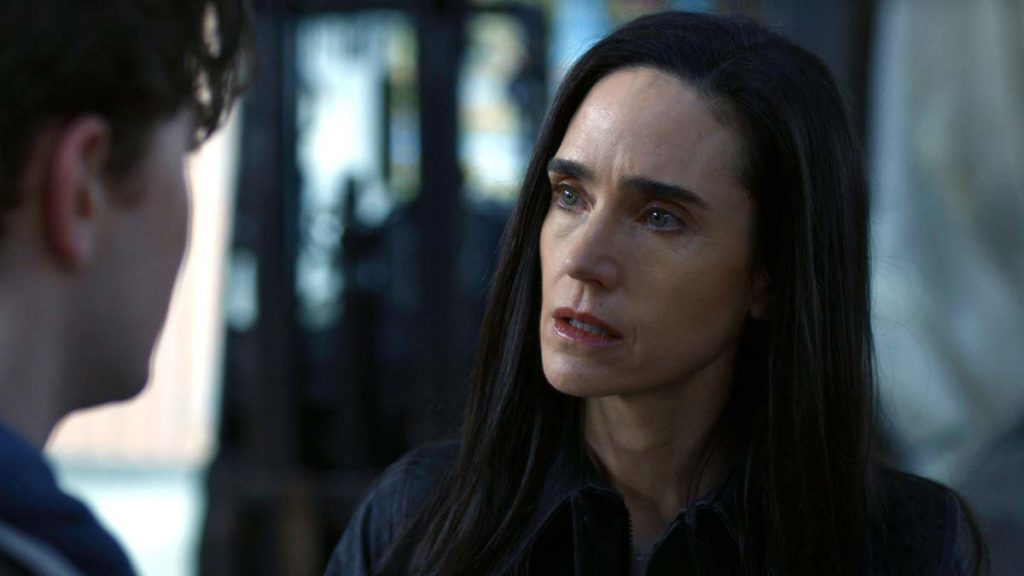
The storyline between Daniela and Gabriel may be the season’s emotional high point. The multiverse gives Daniela something no person in ordinary life could ever receive: another chance with a parent she lost. Birmingham enters a relationship we have essentially never seen before and somehow makes it feel as though Gabriel has been absent from the series—and from Daniela’s life—for decades. There is history in their silences, affection complicated by unresolved pain, and the almost unbearable knowledge that this reunion can never truly undo the original loss.
Connelly is extraordinary here. Daniela’s trauma never becomes generalized anguish; there’s a brittle specificity to it. She wants her husband, her son, her father, and something resembling her former life, while slowly realizing that returning to the past is impossible, even in a universe where it can seemingly be reconstructed.
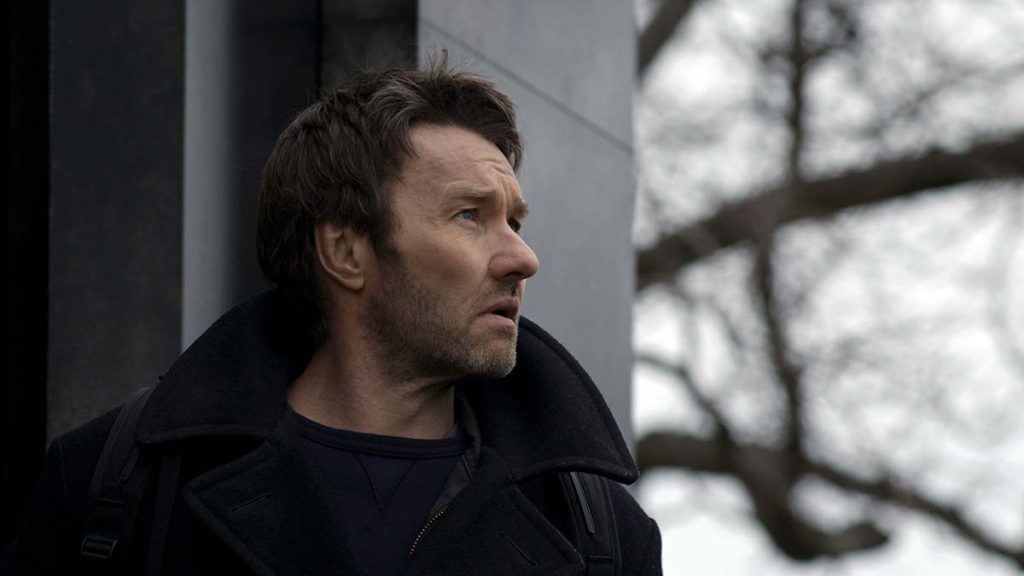
Edgerton gets similarly poignant material through another Jason—but, crucially, it is Jason24 rather than the formerly villainous Jason2. Season 2’s fifth episode branches away from the central narrative to follow the devastated Jason24 left behind after helping the Dessen family escape. He eventually enters another reality and reconnects with his Deaf mother, Ellie (Linda Bove), while forming a relationship with bookstore owner Maria (Angela Sarafyan). Edgerton learned ASL for the storyline, and the episode adds emotional meaning to sign language seeded earlier in the season.
It’s moving, quiet, and deeply compassionate—the kind of episode that demonstrates why “Dark Matter” works despite its narrative excesses. Suddenly, an endless multiverse isn’t about spectacle at all. It’s about getting one impossible afternoon with someone you thought you would never see again.
Season 2 also complicates Jason2, no longer treating him simply as the villain of the piece, while Dayo Okeniyi’s Leighton Vance increasingly fills that vacuum. Multiple Leightons pursue grandiose plans to expand the technology, culminating in an even more ambitious device known as the Pyramid—essentially the Box pushed toward an even more dangerous technological extreme.
Elsewhere, Alice Braga’s Amanda Lucas and Jimmi Simpson’s Ryan Holder undertake their own consequential journey through alternate realities. After their experiments contribute to catastrophe in another world, their attempts to find a cure push the series beyond the Dessen family and toward a larger question: if people can cross realities, what responsibility do they have to the worlds they enter?
That gives Season 2 a noticeably darker edge. The Box is no longer simply a fantastical mechanism for examining existential regret or wondering whether the grass might have been greener somewhere else. It is technology, and technology inevitably becomes subject to ego, ambition, governments, entrepreneurs, opportunists, and people convinced that they alone know how it should be used. Even federal investigator Mitch McNamara (Chris Diamantopoulos) becomes fascinated by its possibilities after encountering multiple corpses of Jason with identical DNA.
In that sense, “Dark Matter” becomes a cautionary story about invention outrunning responsibility. Human beings discover something extraordinary, immediately ask what else it can do, and only afterward consider whether they ever should have opened the door. What began as one man wondering whether he chose the right life becomes a story about what unrestricted access to alternate worlds could do to everyone.
There are also what would normally qualify as far too many narrative contrivances. Across an effectively infinite number of realities, the same handful of multiverse travelers keep finding one another, crossing paths, and landing in exactly the worlds where the people they need happen to be. What are the odds? Essentially impossible.
Yet “Dark Matter” wisely begins to develop a metaphysical answer: the suggestion that these people are somehow connected across realities, quantumly entangled and therefore pulled toward one another rather than simply disappearing into innumerable worlds. The season hasn’t completely explained the mechanics of that idea, but it gives those miraculous reunions a larger thematic purpose. Perhaps infinite possibilities don’t necessarily mean infinite separation; connection itself may be one of the forces governing where these people end up.
And that idea neatly complicates what the Box appears to promise. It offers limitless possibility—the ability to go anywhere, find anyone, and potentially solve almost anything—but the series increasingly suggests that people may never be as untethered from one another as that freedom implies.
For all its talk of superposition and quantum physics, then, “Dark Matter” remains a love story and family drama disguised as an existential sci-fi thriller. Season 1 asked whether another life might have made you happier. Season 2 arrives at the darker implication: once you know that other life exists, how do you ever become satisfied with yours again?
Maybe the greener grass is out there. Maybe your dead father is alive behind another door. Maybe your lost brother grew up somewhere else. Maybe another version of you made every decision correctly. But eventually, you still have to decide which life is yours.
“Dark Matter” Season 2 occasionally gets lost inside the labyrinth of its own infinite possibilities. But Edgerton, Connelly, and the painfully human emotions surrounding them repeatedly show us the way out. [B+]
“Dark Matter” Season 2 premieres August 28 on Apple TV, with new episodes arriving Fridays.

