



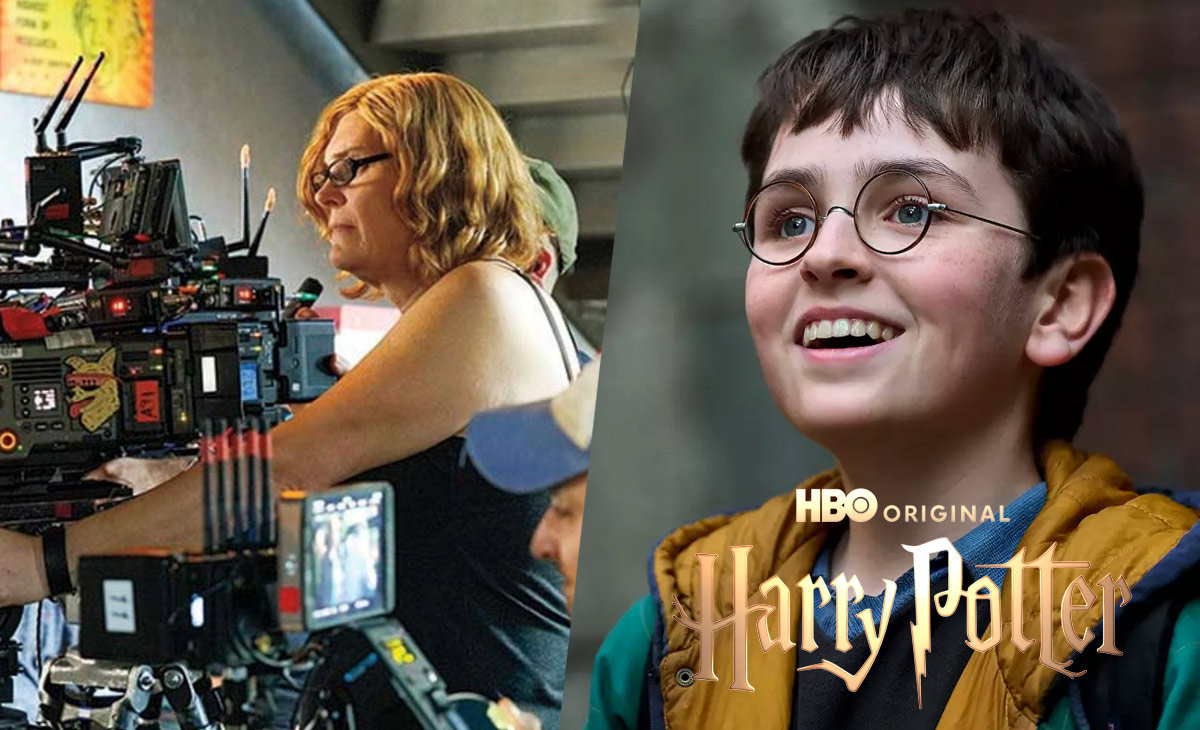
Famously having already dunked on Elon Musk and Ivanka Trump for their spectacularly ignorant takes on “The Matrix,” Lilly Wachowski has never been particularly shy about speaking her mind. Now, the “Matrix” filmmaker has delivered some of her harshest criticism yet of J.K. Rowling, arguing that continuing to support the “Harry Potter” franchise financially also means supporting what Wachowski calls “trans genocide.”
Speaking to Variety in a wide-ranging interview about transgender rights, Hollywood, Elon Musk, “The Matrix,” and her new artist-run studio Anarchists United, Wachowski was asked about the upcoming HBO “Harry Potter” series and the resistance it has faced because of Rowling’s views on transgender issues.
Wachowski’s response was unequivocal. “She is funding trans genocide. J.K. Rowling funds trans genocide, full stop,” Wachowski said. “So, if you support ‘Harry Potter,’ you’re supporting trans genocide.”
Wachowski argued that the issue ultimately comes down to where consumers choose to spend their money, saying that revenue generated by “Harry Potter” products benefits Rowling and, in Wachowski’s view, helps bankroll political efforts harmful to transgender people.
“The money that goes into you enjoying these products, a portion of that money goes to J.K. Rowling, and that money goes into her funding anti-trans legislation all over the world,” she continued. “In the same way that if you are against Elon Musk, you boycott or don’t buy Tesla; and if you’re against global warming/climate change, you try not to buy as much gas, you try to mitigate your use of these products.”
“It’s simple math,” Wachowski added. “So, your enjoyment of these shows, and continued support of these shows, is supporting my eradication.”
The filmmaker’s comments came immediately after an even broader condemnation of both Rowling and Musk. Asked what she thought about the two figures and their impact on the trans community, Wachowski didn’t hold back there either.
“I mean… these people are Nazis. They’re literal Nazis,” she said, specifically pointing to Musk and arguing that social-media platforms have helped extremist rhetoric proliferate in the United States and U.K. Wachowski also characterized Musk’s controversial gesture at a public event as a Nazi salute and argued that other countries should do more to contain the spread of hate speech originating from American social platforms.
Wachowski’s anger comes amid what she describes as a dramatic contraction of opportunities for transgender filmmakers, actors, and stories in Hollywood. Elsewhere in the interview, she said that after Showtime canceled her critically acclaimed series “Work in Progress,” she spent years trying to set up queer and trans projects around town without success.
Among those were “Cosmoknights,” an adaptation Wachowski described as “‘Star Wars’ with lesbians in space,” which she developed with “Wynonna Earp” creator Emily Andras and producer Amy Poehler, as well as an adaptation of Gretchen Felker-Martin’s “Manhunt.” According to Wachowski, studios passed on both projects.
“I’ve pitched a lot of wonderful, cool queer stories and trans stories, and Hollywood didn’t want any of it,” she said. Wachowski added that four years have passed since she made “Work in Progress,” and despite repeatedly pitching new projects, “I cannot find a studio that will do any of it.”
That experience helped motivate Wachowski to co-found Anarchists United, an artist-run studio and nonprofit intended to support filmmakers from marginalized communities while providing grants, mentorship, production infrastructure, and eventually an alternative to the traditional Hollywood studio system. Its first project, “Cassie Workman Is Witchy AF,” debuts on YouTube on September 16.
As previously mentioned on KCRW, Wachowski has also struggled to finance “The Hunted,” an action project with an all-trans cast that she co-wrote with her partner. In the Variety conversation, she argued that Hollywood’s retreat from transgender stories reflects a larger political shift driven not simply by public sentiment but by what she described as a sustained campaign of right-wing propaganda against trans people.
“It’s not that public opinion shifted; it’s that billionaires started pumping out negative propaganda against trans people,” Wachowski said. She also connected the changing political climate to the continuing consolidation of Hollywood into larger corporate entities, arguing that conservative ideology has increasingly begun shaping those companies from the top down.
Her frustration with Rowling therefore sits within a much larger concern about the cultural and political environment surrounding transgender people. And while some fans have argued for separating “Harry Potter” from its creator, Wachowski clearly rejects that distinction when money remains involved.
For her, the equation is much simpler. If Rowling continues to profit from the Wizarding World, then buying into the franchise also means financially supporting someone whose political activities Wachowski views as an existential threat to her community. And given the damage Rowling has arguably caused through years of relentless anti-trans rhetoric, it’s increasingly difficult, or impossible, to argue that Wachowski’s broader point is wrong.