


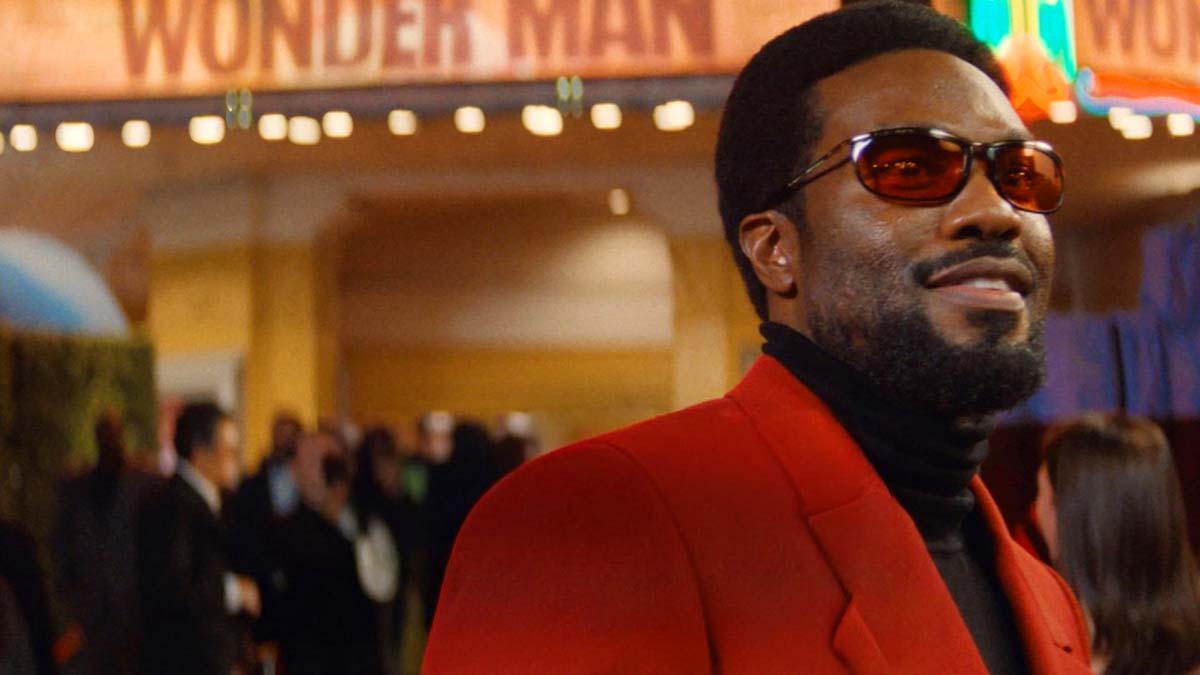
Marvel’s long-running superpower has arguably always been its malleability. “Captain America: The Winter Soldier” was a paranoid spy thriller dressed in franchise clothing; the “Guardians of the Galaxy” films were space-fantasy adventures; “Doctor Strange” leaned into magical mysticism; and TV shows like “Werewolf by Night” and “WandaVision” played with horror language and classic sitcom architecture, respectively. On paper, “Wonder Man” fits right into that genre-hopping tradition: a Hollywood-set buddy comedy about the lonely grind of acting in L.A.
That premise is fine; however, the series is woefully unfunny, rarely moving, and rarely compelling. And for a show that’s ostensibly a superhero entry point, it’s startling how little of it has anything to do with superheroes. In another context, that restraint might feel like a cleansing pivot away from cape noise. Here, it mostly registers as listless avoidance—an MCU series that refuses the fuel that might’ve given it momentum.
READ MORE: The 75 Most Anticipated TV Shows & Mini-Series Of 2026: ‘Wonder Man’ & More
Set in Tinseltown and superficially meta without ever sharpening into something observant, the story centers on a remake of an in-universe film called “Wonder Man,” a schlocky 1980s superhero relic that plays like a busted Roger Corman knockoff crossed with a bargain-bin “Star Trek” episode: rock quarry planets, rubber-suit aliens, and cheap spectacle pretending it isn’t. That movie is an all-time comfort watch for actor Simon Williams, played by Yahya Abdul-Mateen II, and the show ties it to sentimental memories of watching with his late father.
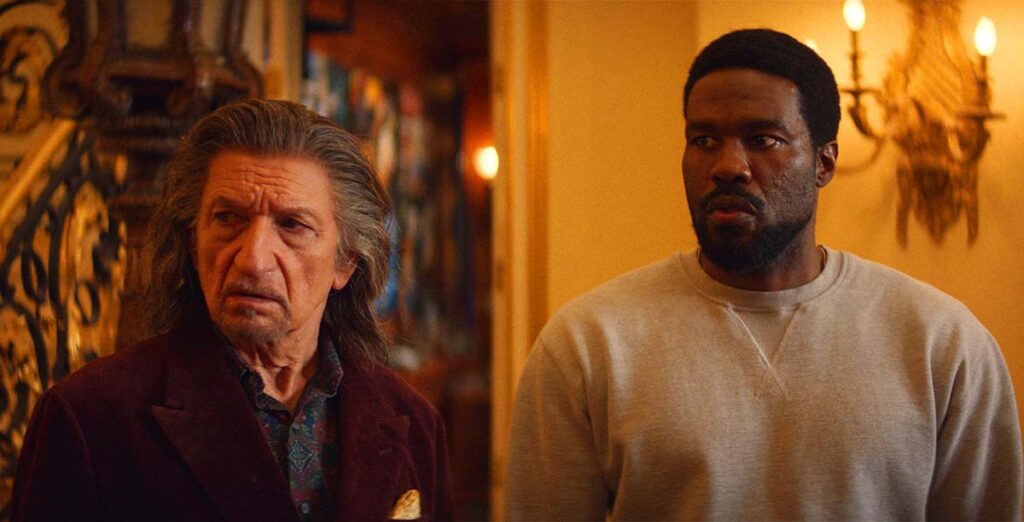
But “Wonder Man” opens by deflating Simon’s present-day life. His exhausted girlfriend, played by Olivia Thirlby, leaves, and he gets fired from a one-scene “American Horror Story” gig for not knowing his place and becoming a nuisance on set. Disillusioned and already wired with self-doubt, Simon—more solitary than social—finds unexpected solace in Trevor Slattery, played by Ben Kingsley. An unlikely recurring MCU figure, Slattery is the actor who was recruited to impersonate the Mandarin in “Iron Man 3” and later resurfaced in “Shang-Chi and the Legend of the Ten Rings,” a career albatross that’s followed him ever since.
Slattery becomes a friend and mentor as Simon panics over an audition for the new “Wonder Man” iteration. Then the series reveals its primary complication: Slattery has been nudged into Simon’s orbit as part of a deal with the Department of Damage Control. One of its most resolute officers, Agent P. Cleary (played by Arian Moayed), suspects Simon is superpowered and pressures Slattery to earn his trust and deliver enough evidence to bring him in.
And that’s basically the show—an idea with a hook, stretched thin across episodes without real narrative drive. For all of its trappings as a “superhero” series, it’s a two-hander about friendship, betrayal, secrets, and self-doubt, but it never finds a propulsion system. There’s no real foe, no escalating threat, and no satisfying substitute for either. A superhero story can be bold without a traditional villain, but it still needs conflict that builds. “Wonder Man” often feels like an origin story missing a plot.
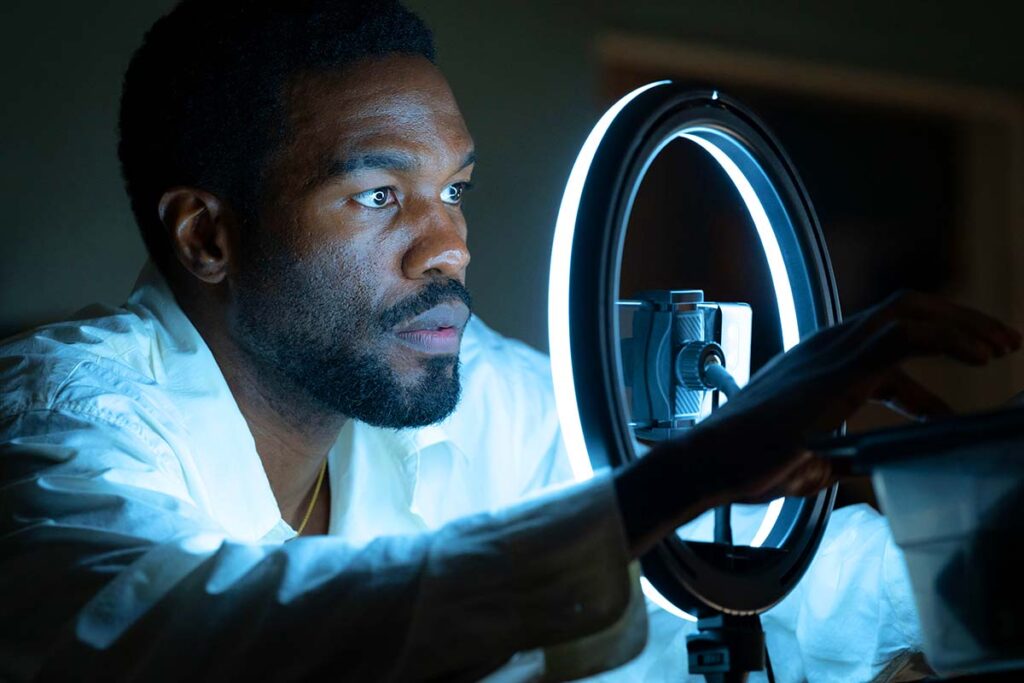
The worst example is the “Doorman Clause,” a Sokovia Accords-style detour that eats up an entire episode to explain a single regulatory MacGuffin meant to keep superpowered people out of film and TV. It’s a pointless tangent—thirty-five minutes of non-sequitur bureaucracy that exists mostly to reinforce why Simon wants to hide his abilities, rather than dramatizing anything that raises stakes or deepens character. The irony is that the series barely shows those powers anyway; Simon mostly registers as a Hulk-like pressure cooker, trying not to explode—literally and figuratively—whenever he’s embarrassed or humiliated, which is an idea the show keeps circling without ever landing.
Thematically, “Wonder Man” draws inspiration from “Midnight Cowboy,” a cinematic motif that pops up in the series from time to time, including at the first meeting between Williams and Slattery. The allusions aren’t hard to spot; it’s a film and a series about the unlikely, poignant friendship between two lonely, marginalized men—one a naive one, the other a hardened veteran of the game—who form a bond while they hustle and scrape by to achieve their dreams. It’s the connection of survival in a harsh and unforgiving world, and this time it’s Hollywood.
The parallels might be obvious, but the substance and pathos just aren’t remotely close.
Part of the problem is Simon himself. He isn’t particularly heroic or inspiring—plagued mainly by anxiety and insecurity that makes him annoying and neurotic—and the show never offers a meaningful arc where he actually overcomes any of that baggage. It tries to round him out with backstory (including family history and a Haitian-rooted angle). Still, none of it is captivating enough to reframe his behavior as something we can invest in, rather than endure.
Even his brother, Eric Williams/Grim Reaper, played by Demetrius Grosse, is written as a caricature: the “stable” insurance guy who exists mainly to scold artists for chasing dreams. Simon does chase his dream, but the show never gives him a redemptive moment that feels earned—no breakthrough, no catharsis, no scene where the grind finally clicks into purpose. It’s just repetition, and repetition is not character growth.
The comedy doesn’t save it, because the show’s sense of humor is broad, corny, and often painfully unfunny. Cameos from Josh Gad, Mario Lopez, and Joe Pantoliano (all playing exaggerated versions of themselves) don’t add texture so much as amplify the cringe factor. The series keeps trying to be ironic and meta while also deeply sincere, and those two modes keep canceling each other out.
Miscasting adds to the flatness. Zlatko Burić, as the supposed auteur director Von Kovak, plays like a cartoon of “difficult genius,” but the show never supplies the specificity that would make him feel like an actual filmmaker—no distinctive rhythm, no sense of intelligence or taste, just loud affect and broad joke-writing. The same goes for the profile-writing journalist character hovering around Simon and Slattery: a device more than a person, performed in a way that underlines how “Wonder Man” defaults to caricature even when it wants to feel human.
Even the directing—credited across names like Destin Daniel Cretton, James Ponsoldt, and Stella Meghie—rarely adds snap or personality. For a series this unexceptional in visual ambition, it’s unclear what was gained; it plays like regular, serviceable TV, which would be fine if the writing were sharper. It isn’t.
The finale does stumble onto a semi-interesting note: Slattery tries to fall on the sword to protect Simon, and Simon returns the favor by blowing his own cover to save his friend. It’s the first time the relationship hints at real cost. But by then, you’ve already clocked out of caring—because the show has spent so much time being uneventful and emotionally weightless that empathy never fully takes.
Appropriately, the series was shot under the working title “Callback,” and “Wonder Man” ultimately plays like a failed audition—both for Simon as a performer and for Wonder Man as a character being “introduced” to fans. It walks into the room with a clever premise, reads flat, and never finds the choice that makes you want to see the next take. It doesn’t help that there was credible chatter during the strike era that Marvel had weighed not moving forward with the series at one point, and the finished product has that in-between quality: half-baked, half-written, and barely justifying its own existence.
Marvel exec Brad Winderbaum recently said “Wonder Man” was “caught in the middle” of Marvel’s TV reset—that infamous period when Marvel overhauled how it made TV—and indeed, the show plays like a transitional artifact—uncertain, unresolved, and rarely confident in its own lane. Furthermore, the timeline essentially tells the story: production wrapped in April 2024, yet the series doesn’t debut until late January. And because there’s barely any VFX-heavy ambition here, the long gap doesn’t read as technical polish—it scans as a show being reworked, reshaped, and still never finding a confident tone. What’s left is Marvel TV at its most inertia-driven: plotless, listless, and difficult to defend as a necessary chapter.
“Wonder Man” is an unusual audition choice for Marvel—a fresh take meant to turn heads—but it lands like a misread of the sides: a bold swing in the room that plays as a misstep on camera, more uncertainty than the conviction that actually wins you the starring role. [C-]
“Wonder Man’ debuts January 27, 2026, on Disney+.

