


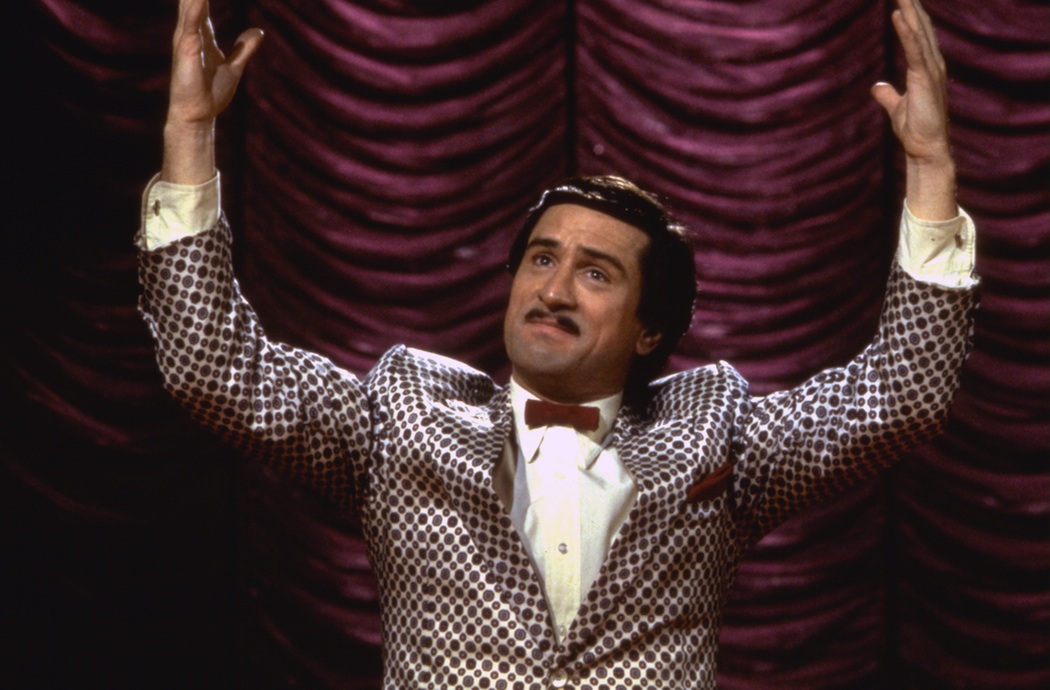
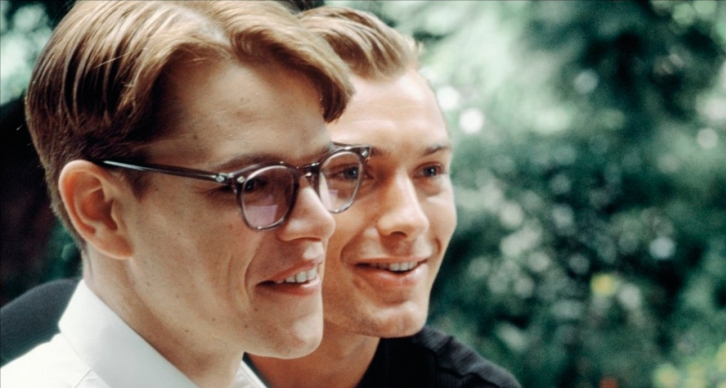
 Tom Ripley (Matt Damon) in Anthony Minghella‘s “The Talented Mr. Ripley” (1999)
A recurring feature of many of the entries on this list is that our antiheroes are themselves in the throes of some kind of hero worship. Something about seeing how they fall drastically short (often in their own eyes) of the standards of the person they aspire to be highlights their antiheroic qualities: where their idol is successful, they are failures; where he is popular, they are outcasts; where he is glamorous, they are mundane. And having their dazzled adoration of their hero turn bitterly in on itself is where many of these films derive their dark power. Rupert Pupkin and Jerry Langford fit this model, as do Robert Ford and Jesse James, as do Sidney Falco and J.J. Hunsecker (more on those latter two below). But one version who sprang from the written page was Tom Ripley, Patricia Highsmith‘s amoral, creepy chameleon, who’s been brought to the screen by John Malkovich, Barry Pepper, Alain Delon, Ian Hart, Dennis Hopper and Jonathan Kent, but is best known to general audiences as played by Matt Damon in Anthony Minghella‘s “The Talented Mr. Ripley.” Damon’s Tom is a classic antihero, an amoral, blank slate whose only real characteristics are a sense of his own inadequacy and a desperate desire, not just to be with someone unattainable, but to actually be them — in this case golden boy Dickie Greenleaf (Jude Law). Tom’s covetousness of Dickie eventually turns murderous but it’s the knowledge that Greenleaf is just one in a series that really chills: Ripley’s is a hunger that can never truly be sated, and at his core is an emptiness that can’t be filled.
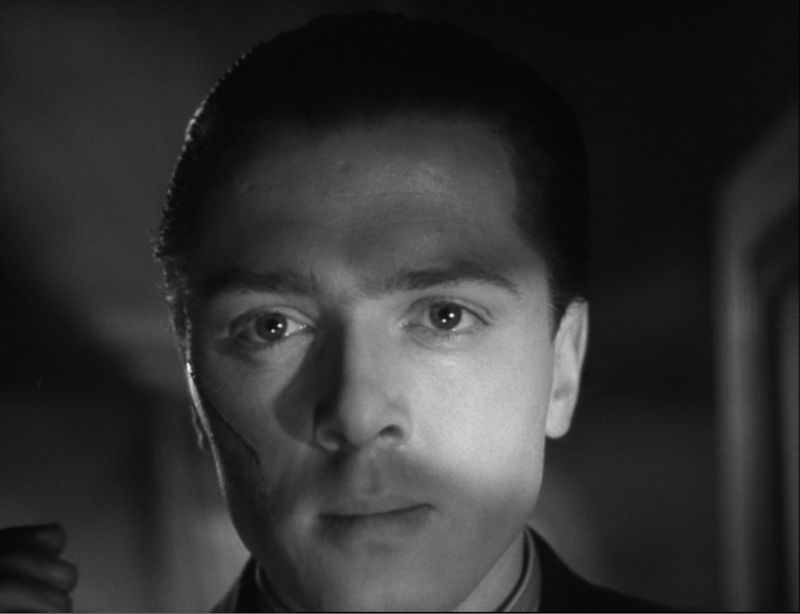 Pinkie Brown (Richard Attenborough) in John Boulting‘s “Brighton Rock” (1947)
Forget the rather plodding recent remake with Sam Riley in the role, the Pinkie Brown who left the most indelible mark on us was Richard Attenborough in the 1947 British film directed by John Boulting. Based on Graham Greene‘s novel of the same name, the film features the astonishingly blackhearted Pinkie as the sudden de facto leader of a small gang of thugs who terrorise the eponymous seaside town. Murdering to cover up murders, and blackmailing and vicitmizing everyone he comes across, it’s in his treatment of Rose, the misguided dope of a girl who falls for him, that Pinkie’s character is most tellingly drawn. He fools her into marrying him so she can’t testify against him, and is only prevented from offing her too by the eleventh-hour intervention of the police. So far, so cut-and-dried villain, but while Attenborough’s Pinkie is undoubtedly that, what brings him back from caricature are the hints we get of his psychology — a self-hating but devout Roman Catholic, Pinkie is not amoral, but actively immoral, and believes he’s hell-bound. And as wicked as he thoroughly, undoubtedly is, the story puts us into a strange line of empathy with him, as contrasted with the petty somnambulism of the seaside town and the pleasure-seekers it attracts. Not to mention the abrasive and crude Ida (Hermione Baddely) whose moral “decency” (she tries to get him brought to justice) manages to come off as vulgar and small-minded. No, Pinkie is despicable, all right, but his character has complexities and contradictions that make him worthy of such fertile characterization, and of our fascination.
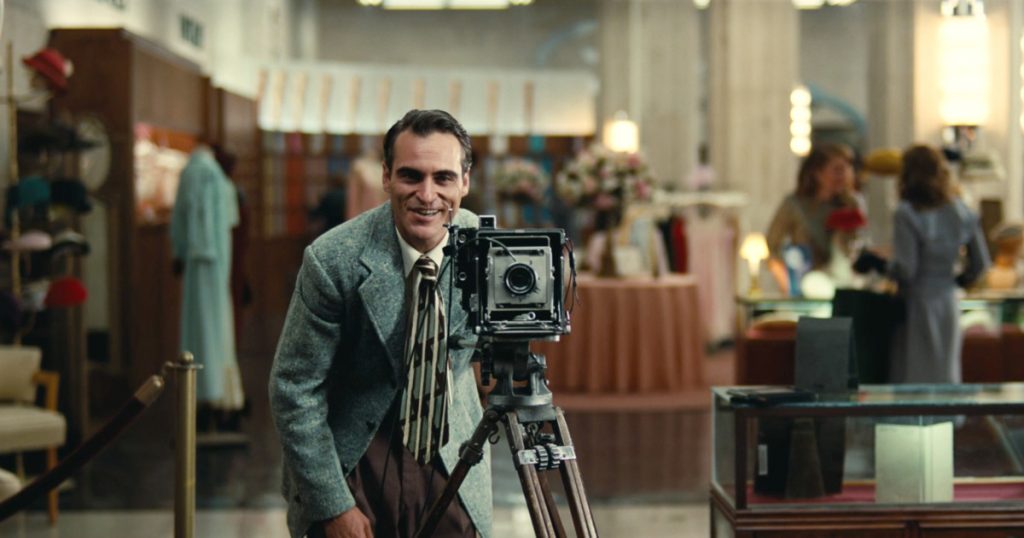 Freddie Quell (Joaquin Phoenix) in Paul Thomas Anderson‘s “The Master” (2012)
There are some directors who make the antihero their stock in trade, and we’d put Paul Thomas Anderson at the top of that list. We could have chosen any number of his characters: Paul Dano and Daniel Day-Lewis‘s characters both qualify from “There Will Be Blood” (Eli Sunday is the more obviously snivelling, but Daniel Plainview is a towering, raging antihero, too); Adam Sandler in “Punch Drunk Love“; most characters in “Magnolia” and “Boogie Nights“; indeed, we can go all the way back to John C. Reilly in “Hard Eight.” So with this wealth of choice, we went for the most recent, and in a way most archetypal: Joaquin Phoenix‘s fearless turn as Freddie Quell in “The Master.” Spiritually, mentally and emotionally broken (by which we mean shattered to smithereens) Quell’s volatility puts him almost beyond the reach of relatability, until he does yet another unexpected thing and takes the “help” offered to him by self-styled guru Lancaster Dodd (Philip Seymour Hoffman). As their fractured relationship spirals away from simple mentor/protege into something odder and less definable, with each somehow coming to define the other in questionable, unhealthy ways, Quell’s deep well of longing and hurt is gradually revealed, providing no excuses, but partial reasoning for his actions. It’s a relationship that must end, and can never really end in Quell’s favor as the balance of power is so thoroughly against him. And yet by the end, though there’s an even greater gulf between their circumstances than before, we feel that perhaps the only real difference between them is that Dodd believes he’s sane while Quell knows that he is not. Quell loses on every conceivable level, and we can’t stop watching.
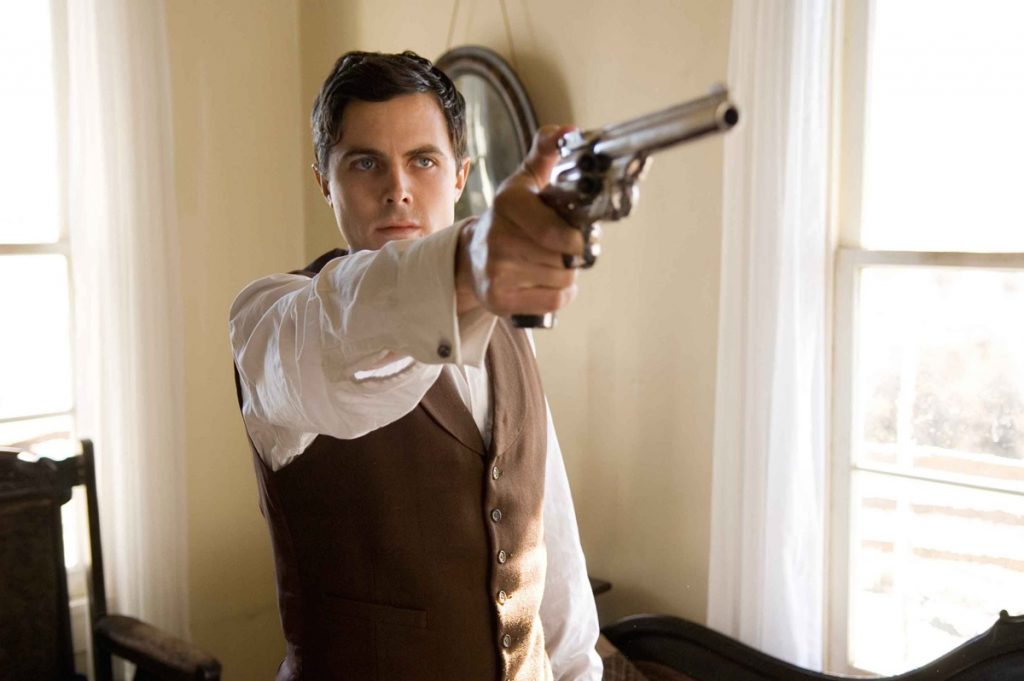 Robert Ford (Casey Affleck) in Andrew Dominik‘s “The Assassination of Jesse James by the Coward Robert Ford” (2007)
Andrew Dominik may be another of those directors who is more likely to populate his films with antiheroes than anyone you could recognise as an outright hero, but while his more recent “Killing Them Softly” has its advocates among us, really it felt slight in its cynicism compared to the arching, aching loss and sadness that permeates his elegiac anti-western “The Assassination of Jesse James by the Coward Robert Ford.” And a great part of the reason for that is the simply incomparable performance of Casey Affleck as the titular coward, possibly, hyperbole aside, this writer’s favourite screen performance of the past decade. Brad Pitt‘s casting here was clever too, and his performance is perfectly modulated in that he allows himself to be, essentially, peripheral to Affleck’s Ford. He’s the outline of a man, the shoes and clothes and hair and voice of a legend — he is what Ford is obsessed by, but the film is not about him. Instead it’s about hero worship turned twisted and sour, captured unforgettably in Affleck’s expression every time he looks at him: warring instincts of painful adoration and admiration, pierced by jealousy and cravenness and self-hatred. Like some of the other admirer/admired pairs on this list, the relationship turns violent, but here we go even deeper into the psychology of the antihero-as-killer. Ford just wants to be important to James, but without any of the necessary resources, it feels the only way he can make any sort of impression on his hero’s life is to end it. Directly and chillingly evoking other, more recent real-life assassinations (Mark Chapman killing Lennon, or John Hinckley’s Travis Bickle-inspired attempt on Reagan’s life both spring to mind), Affleck’s Ford is a scintillating study of misplaced ardor, the desire for notoriety and what results when you give an impotent, disaffected man a gun.

