


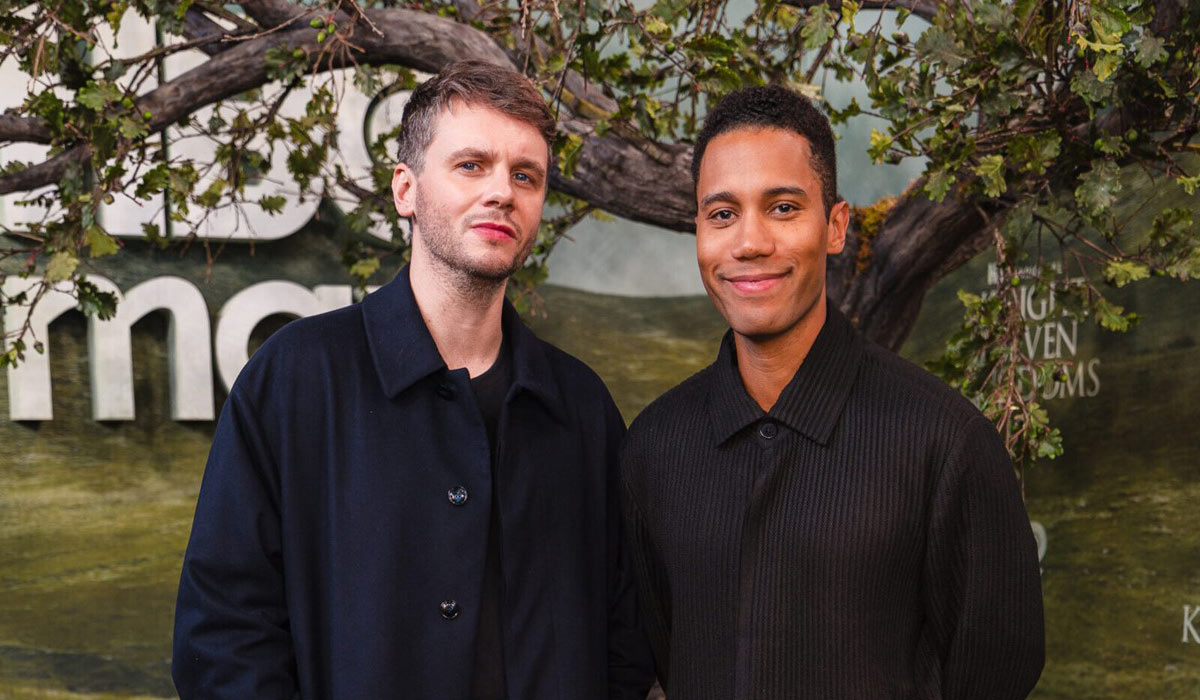
There’s still something mysterious about Mickey Down and Konrad Kay. And it may not even be intentional. The first-time showrunners have seen their London-set HBO series “Industry” grow in popularity and critical acclaim season after season. And while they have had their fair share of press over the years, they have somehow remained under the radar. Maybe it’s because they have always been super focused on getting the next season out. Maybe it’s because they spend most of their time in the U.K. Whatever the case, the fourth installment of their ensemble series may be “Industry’s Emmy breakthrough. And it’s given the duo their biggest spotlight yet.
READ MORE: “Industry” Season 4 Review: HBO’s Best-Kept Secret Reboots Itself for a Cynical, Conspiratorial Age
Tied with “Heated Rivalry” and “Widow’s Bay” for the most TCA Awards nominations this year, the fourth season of “Industry” saw fictional payment company Tender endure a rollercoaster of scrutiny, putting massive pressure on the marriage of new CEO Henry (Kit Harington) and his wife Yasmin (Marisa Abela), who has left the finance world to become a political operative. Meanwhile, Tender CFO Whitney (Max Minghella) may have surprising intentions that no one would ever suspect. Meanwhile, Harper (Myha’la) partners with her former colleague Eric (Ken Leung) to lead a hedge fund attempting to profit off Tender’s stock offering. In a season of delightful twists and turns, someone will get rich, and someone won’t, but don’t expect Down or Kay to take all the credit. In an interview with The Playlist last month, the pair were refreshingly humble. Perhaps too humble, giving a ton of credit to the other writers on the series over the years. In fact, the former Morgan Stanley employees are remarkably candid about their talents and their rise in the television world.
“If an eagle-eyed viewer would look back in season one and realize there is no real story until episode five when Harper gets locked in that room with Eric, up to that point, it’s just a lot of play setting,” Down says. “Quite honestly, Greg, we didn’t know how to write TV until season two onwards, but thankfully we’re now talking to you and campaigning for awards.”
And, in their view, the success of the show has as much to do with their fantastic cast as their skills as writers and directors. Abela won a BAFTA Award for her work on season three and show alumni David Jonsson and Harry Lawtey have gone on to star in films such as “Alien: Romulus” and the new “Beatles” movie(s), respectively.
Of their luck, Down admits, “I mean, we caught up to their talents, to be honest. They’re just fantastic and have been from the jump, and we’re now good enough writers to give them material that warrants their talent. So yeah, I mean, they’re just f**king fantastic.”
During our conversation, Kay and Down explain how Henry and Whitney’s relationship was actually more romantic on the page, how the show somewhat shifted focus to Harper and Yasmin’s friendship, whether we’ve truly seen the last of Eric, their hopes for the final, fifth season, and much more.
This interview has been edited for length and clarity.
____
The Playlist: For prestige television, how are you both able to get out subsequent seasons so quickly? Vince Gilligan has already warned “Pluribus” fans it’s gonna take a while. How do you guys make it all happen so quickly?
Mickey Down: Well, it helps that it’s two of us.
Konrad Kay: Yeah. We should tell on the record Vince Gilligan to pull his finger out. [Laughs.] No, no, no. I don’t think we’re that fast. We’re not like “The Pitt” guys. They turn around 15 episodes every 12 months. I mean, what do we average? Somewhere between 18 months and two years? What’s our fastest, Mick?
Mickey Down: Fastest is 18 months. Given that we write pretty much all of it and direct a lot of it, it is quite a quick turnaround. It feels like back in the day that would be considered very slow, 18 months. I think HBO essentially told us to start getting faster in the last couple of seasons because we were luxuriating in the development process a bit too much.
The Playlist: You’ve done an incredible job then. Over the first four seasons, the series has been topical but not overly topical. How do you manage that line of not making it too close to current headlines while still telling the stories you want to tell? Is it something you’re cognizant of?
Mickey Down: It is. We don’t want it to feel documentarian or that it’s too much of an explicit nod to things that are happening in the real world. I think the closest we got to that was season two, where we explored COVID. And that was just a question of we’re writing a contemporaneous show about the workplace and this biggest thing that’s happened to workplaces in a century is happening. It would be really weird and insincere to ignore it completely. So, the season was imbued with the feeling of it, and they were coming back to work after the pandemic. Beyond that, though, we just try to reflect the atmosphere of our times rather than actually reflecting exactly what’s happening. It’s like an echo of what’s happening in the real world rather than actually what the real world is. In the last couple of years, we feel like there’s been a sort of move towards this sort of transactional, incentive-driven culture. There’s a bold transactionalism. There’s an avarice. There’s just a bold, unchecked ambition linked to a kind of technocapitalism, which is rearing its ugly head in every single facet of our lives. There’s the slow march towards authoritarianism. All that stuff is really fascinating for us. And we’re a contemporaneous show, and we’re reading all the time, and we have great consultants. We have a great writers’ room. All that stuff is just talked about in the writers’ room, and it feels like It’ll be very difficult to ignore it, especially after season three when we blew up the precinct of Pierpoint, and we basically left those four walls. We’re really, really interested in how the culture is changing and how our characters are shifting as well in response to that. Again, but no one wants to get numbed over the head of it, and no one wants to feel like they’re watching a public service announcement or that the writers, me and Conrad, are wagging a finger at them. So, hopefully we try and not be too didactic or naked in our opinions and the audience can just watch it objectively and just make up their own minds.
The Playlist: The show is effectively an ensemble, but also a two-hander centered on Yasmin and Harper’s friendship. You left them at such an awkward place at the end of this current season as they went in very different directions. Do you view the show through them or does it feel like it’s just gravitating that way?
Konrad Kay: Well, I mean, the show’s an ensemble show. It was about a group of graduates coming into a bank. We’ve whittled that group of graduates down over time. And around the end of season two, Mickey and I became as interested in writing about the older generation, people like [Eric] and Bill Adler and all these guys at the top of the bank, Wilhelmina, Otto Mostyn. That was just us getting more mature as writers. And, to be honest, just challenging ourselves to widen the breadth and domain of what we were writing about because it was a trading floor drama that became more of a drama about the intersections of politics, media, and maybe capitalism more broadly. But the women, I mean, look, I always talk to this sports analogy to death, but returning TV is like managing a sports team in a way. Every season you put the season out, you’re like, “Oh, did we win the league? How can we make this team better? And having watched that game play out, who are the star players?” And what inevitably happens is you’re like, “Well, we have these two star players,” and you’re like, “Well, we need to give them the ball more because everything will just be easier. The scenes will be easier to film. The edit will be easier because you don’t have to search for the performance, and they’ve got enough charisma to carry the show, so the audience will be engaged.” And to be honest, we captured lightning in a bottle with all of the grads. If you go and look at their careers, David Jonsson, Harry Lawtey, the women, they’ve all had these amazing careers in and around “Industry” because of their own talent. But with Marisa and Myha’la, me and Mickey always felt like not only did the talent to carry the show in that tortured sports metaphor kind of way, but we also just found within them there was this kind of weird yin and yang that they began to represent for us. Which, to be honest, it was established in the pilot, but we just dove into what does that person have that I want to emulate and what do I see mirrored back to me in terms of my strengths and deficiencies. So, they’re constantly orbiting around each other because they kind of inhabit different spheres. They have different strengths, different intellectual capacities, and they get their respect from different places. So, it became this kind of interesting study for us in friendship, love, jealousy, bitterness, and now into season five, I think you’re right in saying it’s kind of the centrifugal point around which everything orbits. In the final season, we definitely think about what points in the journey are we hitting with them and where do we want to eventually land the plane in their relationship for it to be as satisfying as possible?
The Playlist: Did you have this specific through line in mind for season four before you broke the season out in the writer’s room?
Mickey Down: It’s a really good question. We feel like we land on what’s organic through the character’s decision-making rather than trying to retrofit the decision-making to the story we’ve already come up with. That said, in season four, because we were away from Pierpoint for the first time and we had this through line of the Tender fraud investigation strand, that was the through line of this season, and everything was hanging off that. And we thought the quite easy equation of Harper on one side and Yasmin on the other, and it was always about how those two things are intersecting. That said, there were huge pivotal moments of the show. Eric’s departure was an organic moment just born out of us feeling that he had run his course and that he had had this quite operatic swan song. We never thought of that episode as Eric’s leaving the show. We just thought, “O.K., the only thing this character can do now is leave.” And it felt like it was the right moment. It wasn’t like we’d got into the first day of the writer’s room and said, “O.K., in episode six, Eric’s going to leave the show.” So yeah, it was a little bit of both. I mean, not to talk about season five too much, but it’s returned to that kind of organic trajectory for some of the characters in terms of we were like, okay, well, actually how the decisions of the characters pushed the story rather than the other way around. We had to get to the point where Tender was falling apart and that the investigation was going to work, and we were sometimes trying to fit around that and not having that as a through line for the season five has been quite freeing as well.
The Playlist: But in theory, season five is in the “last season.”
Konrad Kay: It is. Definitely is.
The Playlist: When you were even working on season four, did you already know where the show ends? Or is it all organic until you get there?
Mickey Down: We started to think about and end a little bit more in season four, and then especially when we decided that season five was going to be the last one, the first thing we did was think of the ending. So again, quite different in that we go from episode to episode, we break the episodes linearly, and then in season five when we went into the writers’ room, we went in with images to end the show, and we kind of beat out the last 10 minutes of the last episode first and thought, “O.K., we have to get to this end point.” But we’re in the middle of the writing process now, and there’s still changes that feel very organic based on the decisions the characters are making in those episodes. So it’s a bit of both. I mean, season one, honestly, Konrad and I were incredibly inexperienced. So, the only way we could write was in that linear fashion where, “O.K., what would she do in this situation? O.K., she’ll do that. O.K., well then the next episode will be this then. And that’s just how the show was created, and that’s kind of given it some of its charm. But if an eagle-eyed viewer would look back in season one and realize there is no real story until episode five when Harper gets locked in that room with Eric, up to that point, it’s just a lot of play setting. Quite honestly, Greg, we didn’t know how to write TV until season two onwards, but thankfully we’re now talking to you and campaigning for awards.
The Playlist: But also your cast has won awards.
Mickey Down: That’s it. I mean, we caught up to their talents, to be honest. They’re just fantastic and have been from the jump, and we’re now good enough writers to give them material that warrants their talent. So yeah, I mean, they’re just f**king fantastic. I really think the humanity they bring to the characters that on the page could be considered and have been talked about in such harsh terms is just a testament to their skill. They’re just really, really, really skillful, nuanced, empathetic performers, and we’re very lucky to work with them.
The Playlist: You did come from a finance background before you became writers…
Mickey Down: Very briefly. Very, very briefly.
The Playlist: Does briefly mean three months, six months?
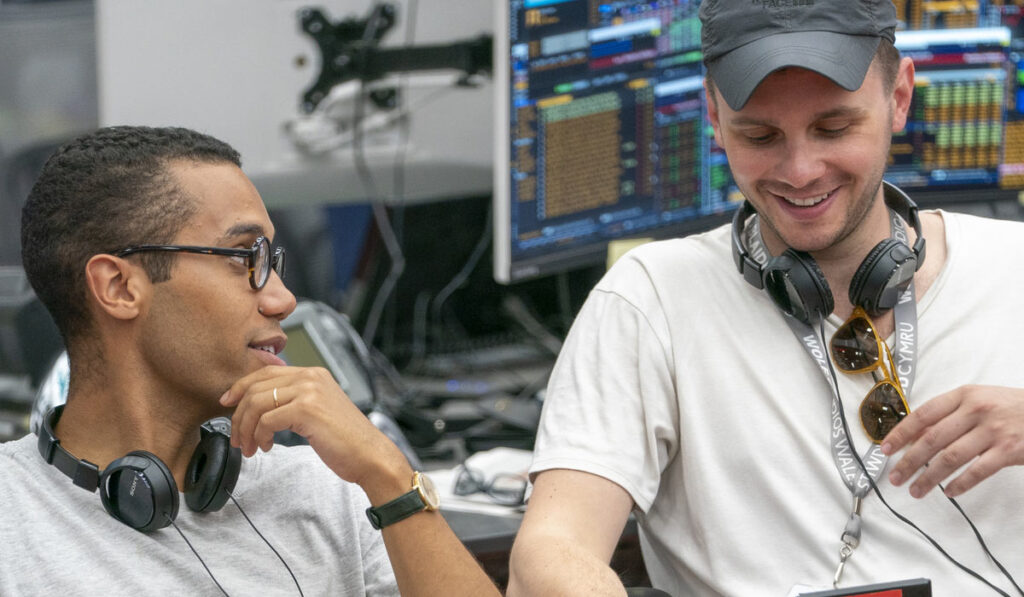
Mickey Down: No, longer than that. [Konrad’s] coming up with three and a half years. I was there in total, probably a year and three months. I think this story of they were so s**t and they fell out of the business and it chewed them up and spat them alive, chew them up and spat them out. It’s a good story. But for my case, it gave me a really good work ethic in some respects. And when we started writing together, we treated it like a job. We had just come from jobs that were quite demanding and took a lot of our time and, in some respects, a lot of hours, and we sort of transposed that down to our writing career. And because there were two of us as well, we were just like, even when we were doing f**k all, literally nothing, no plates were spinning in our lives in terms of how we were going to get ahead in our careers. We still treated it as if conversations like this were around the corner.
The Playlist: I did not know that was the story going around. I just thought your dreams were to write and be in television and film.
Mickey Down: It was. But, I mean, it’s changed now because the market for content since then has exploded and then contracted, but it felt like a vocation. No, it wasn’t vocational. It was a hobby. It didn’t feel like a job in the UK as much as it does now. It felt like it was quite a closed shop. It was quite difficult to break into. It didn’t feel like the sort of thing that people from our backgrounds did, and we had no real connections in it. So, again, we credit Jane Trent, who discovered us essentially and gave us this opportunity along with HBO hugely because who else was really going to take a punt on two guys, as you said, who were falling out of finance?
The Playlist: Well, your pitch must have been super good.
Mickey Down: It wasn’t. [Laughs.]
The Playlist: It wasn’t? Well, you guys have proved yourselves wrong. I know you have a team of writers, but for this season, there are so many iconic moments that fans of the show will always remember. You just mentioned Eric’s unexpected departure. That was one of them. And by the way, that can’t be it, right? Or is that his goodbye?
Mickey Down: Can’t say. Can’t give too much away.
The Playlist: But that moment and then also how you revealed that Max’s character, with the name Whitney, and when he sang her song lyrics, it’s clear he’s a scammer. Were those ideas you had had in the back of your heads? Are there any other writers who want to credit for any of those?
Konrad Kay: We have a very good room. I mean, Joe Charlton has been with us since season two. We had Ava Wong Davis for seasons three and four. We had Azam Mahmood for seasons two and three, and he sadly left us for four. We’ve had a pretty core group. I mean, Joe’s sort of been with us now for the majority of it. Truth is, we don’t keep score of our ideas. I think if we did that, it would be a bit of a weird, non-collaborative process. But the joy of the room, me and Mickey’s writing process really hasn’t changed since we wrote scripts together 10 years ago. And one of the best things about any kind of writer’s room is the speed at which one idea can become exponentially better by someone either interrogating it, bolting something to underneath it, or just putting a flourish onto the top of it. I love that Whitney scene. I mean, we were talking for a long time about whether to cut that whole phone call from the episode because we thought it was too long and a little bit too arch, but it ended up working really quite beautifully. And I’m glad you made the connection between his name and the song. But yeah, I don’t know. I mean, do you want to credit anyone for any of our great ideas, Mick?
Mickey Down: TV is a collaborative medium. It’s the most collaborative art form probably. It takes a village to use a truism. There’s 150 people on set trying to make something that we ultimately get a lot of credit for, but the credit should be spread because from every HOD, production design, costume designer, to the music team, to the writers at every single point, it’s Konrad and me with an enormous, really excellent team around us and an infrastructure that allows us to be creative. The writers should be credited at every stage because even though Conrad and I write the majority of it and we have this writer’s room, which is in terms of the actual weeks, it’s a quite small part of the process. It’s so important to laying the foundations for everything that comes after it. It’s funny, we’ve started directing it in the last three seasons, going into five. And I think Seth McFarlane said [something along the lines of], “Making a movie, making TV shows, is a process of watching other people work.” It’s a machine that is just working and making something really good. We’ve had many of the same crew since seasons one and two, and people come back to the show because they like working on it and it’s a really familiar atmosphere. And again, we’re an HBO show, but we also make it for a relatively small budget in Wales for seven months of the year, and it feels kind of like indie filmmaking sometimes. We just shoot eight pages a day sometimes. It’s quite a kinetic set. Ideas are coming from every day of correction, whether they’re from Konrad and me or producers or costume design. And it’s an organism that’s continually changing. And I’d say it’s not a very restrictive set. Max Mingella talked about the fact that when he came on day one, he couldn’t believe how we shot because there are no marks. We shoot 360. He can do anything, and we just capture it and follow him. And it’s always about the action being followed by the camera rather than the other way around.
The Playlist: I’ve got two last questions I’ve got to ask you. One is actually about Henry and Whitney’s relationship. Where did that inspiration come from? Did you ever think you were pushing it too far, especially with that club scene? Were you waiting for that club scene to come online and for the reaction?
Konrad Kay: I mean, look, the really clear analog is the “Ripley” analogy, I think. And obviously we were quite jazzed that Max’s dad was Anthony Minghella, and that wasn’t lost on us [that he directed “The Talented Mr. Ripley”]. But it’s funny. Obviously it’s got a huge amount of homosocial, homoerotic stuff going on, and the glory hole is an incredibly homoerotic scene, but it was actually gayer when we wrote it, and it had more of an undercurrent of genuine non-sociopathic love from Whitney towards Henry. And as we were writing it and as we were shooting it, we ended up hushing a lot of that stuff away in the finale because it just didn’t quite ring true. We hadn’t built it into the scripts enough. And often what happens in writing is me and Mickey will talk, talk, talk, and we’ll write, write, write, and we’ll have the writer’s room. And then we’ll realize that everything that we’ve talked about, we haven’t left quite enough on the page for the audience to be underneath all of that iceberg of thinking. So, we ended up just cutting that stuff back. I think he brought out the best of Kit’s acting in some ways. They were incredibly collaborative on set. It was a kind of romantic relationship for us. I mean, all of the relationships, even the most professional ones in the show, have a romance in them, not necessarily a sexual one, but every relationship is kind of about an unspoken yearning between characters. Literally everyone in the show. I mean, obviously there are more practical ones, but the major axes of the show are all about this kind of unspoken thing between these characters, and Max and Kit really had that.
The Playlist: Now that you guys have gone through this whole show and done this experience, what do you see yourselves doing next?
Mickey Down: I don’t know, to be honest. We’re really focused on a really boring answer, Greg. We’re super focused on this season. We really want to play and have the legacy of the show be that it was excellent and that they didn’t really hold back on the last season, and it didn’t fizzle out, but it went out with a bang. I don’t know. I’m quick to say it’d be good to do something that feels a little bit more finite, like a long returning series, but who knows. Inspiration coming from the weirdest places. I feel like we’ll probably take a week off after we wrap the show and then get really bored and start figuring out what to do next. We’re quite ambitious, and we love making a show, and we’ve got big ambitions for where our career’s going to go. And there’s a kind of style that we’ve now landed on, and there’s a punchiness to our writing, which we think can be transferred into lots of different genres and different stories. But yeah, I think we just want to keep working, which is all you can really say in this world now.
“Industry” is available on HBO Max
Follow Gregory Ellwood on Bluesky
Follow Gregory Ellwood on Threads
Follow Gregory Ellwood on Instagram
Follow Gregory Ellwood on TikTok
Sign Up For The Breakdown Newsletter


