



The time may be now for Joel Edgerton. Almost a decade ago, he was lauded for his role in Jeff Nichols’ “Loving.” He’s earned kudos for his work in “Black Mass,” “Ned Kelly,” “Animal Kingdom,” and “Boy Erased.” And he’s been fantastic in projects such as “Zero Dark Thirty,” “It Comes At Night,” “Warrior,” “The Great Gatsby,” and “The Underground Railroad.” He even earned a DGA nomination for his feature debut, “The Gift” (the film that launched Jason Bateman’s “serious” career). But “Train Dreams” is something different. There’s even a chance a deserved Oscar nomination may be in his future.
Clint Bentley’s adaptation of Denis Johnson’s novel is an epic drama that chronicles the life of Robert Grainier over 80 years, from the late 19th century to the space age of the 1960s. It also, like only a few films before it, puts Edgerton front and center for the entire picture. It’s a monumental performance that has earned him his first Golden Globe, Film Independent Spirit Awards, and Critics Choice Awards nominations. And, as a long-time supporter of independent cinema from the U.S. to his native Australia and back again, Edgerton also earned a Spirit Award nomination as a producer of the lauded thriller “The Plague.” He says he’d “be lying” if he said the long overdue recognition didn’t matter to him.
“It definitely tickles the ego to know that your work’s recognized,” Edgerton says. “But I will say, and I’m not even downplaying this, but to me, being nominated for anything is a win and always will believe that art is not a competition, but when AFI recognized ‘Train Dreams’ as one of their top 10 films or you’re on a list of the performances of the year, it’s nice to know someone’s paying attention and that they care. They’re reflecting that they appreciate the work, and it does tickle the ego and inspires me to keep trusting my instincts to go and get involved in projects like that. And from the outside, I think it’s cool to know that a relatively small movie like ‘Train Dreams’ can be sitting alongside the bigger, fancier films to a certain degree, and a movie like ‘The Plague’ with a first-time filmmaker.”
Over the course of our interview, Edgerton reflects on why “Train Dreams” spoke to him on a personal level, his commitment to new filmmakers, the dangers of “undeveloping” a project, the advice Gavin O’Connor gave him he still stands by, and much, much more.
This interview has been edited for length and clarity.
_____
The Playlist: You’ve been in this business long enough. You’ve been part of big movies and small movies. And even with the power of Netflix behind it, this movie could have gotten lost. How reassuring, how satisfying is it to know that so many people have seen it and that it’s also resonating with your peers?
Joel Edgerton: Oh, look, I don’t know any actor or filmmaker who wants to make movies that no one sees. And the world is so crowded and there’s so many incredible films that come out each year and each of them is their own animal, their own tone or genre or whatever. Whenever I get involved in a thing, I start to really care about it, whether it’s a piece of entertainment or it’s something very thoughtful and moving like “Train Dreams.” And I start to care about it so much that when it came out at Sundance, it becomes an impossible situation to be objective about it. And you can only hope that your initial instinct was right. And that the filmmaker you trust, and Clint I trust implicitly, puts it together just so. And I was like, “The process was great. The result feels so special. I just hope that the third part of the equation is it going to resonate with people?” And Netflix being so aggressive about taking the film on was a sign on the business side of things that they saw value in it and merit in the film itself. And then I started to feel audiences reaction to the film was very potent. And I think I knew back in Sundance that it was great. And then of course, then you’re like, “Well, how do you take this movie for a walk in the world?” Netflix helps, but there’s been this incredible exchange with audiences as we do Q&As, a chance to feel people’s reaction in the movie, and watching people discover it. And I just love that a movie that’s relatively small in size, but big in its own way and scale, is echoing in the way that it should. And I love that a small movie can sit alongside all the big movies.
Two follow-ups on that. First is from these Q&As that you’re doing or what you see on social media, what do you think has resonated with audiences?
Well, I think what’s great about what Clint’s crafted is that it can be whatever it needs to be for you. I can reach into it and find my own different meaning and everybody can look into this sort of life of this ordinary man through his experiences of highs and lows, and see something of their own experience, or look at their life in its entirety and wonder, like Robert does, what’s the purpose of all of it? Do I want to be part of the community or not? And so I think I see different people’s emotional reaction being different things. To me, again, as objective as I can be about it, it became a sense of the immediacy of being present to the things that are valuable in my life, the people that are in my life and cherishing things lest I look back at the end of my life and wonder why I didn’t pay attention to things that were right there in front of me. And I think it shows to me the importance of just the people that we spend our time with in this life. And it’s great to think that we could look at a story of a logger at the beginning of the 20th century and see ourselves in his life.
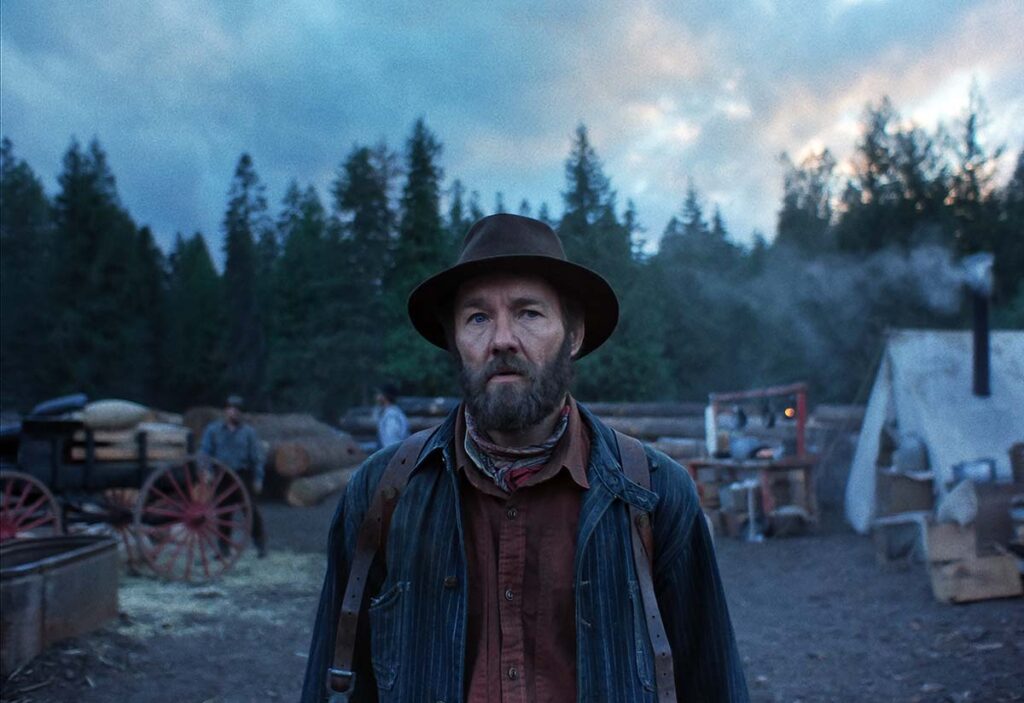
The second follow-up is that this is a small film, and it was a relatively indie small budget, but what Clint and all of you have done makes it feel much more epic than that. It feels so much bigger. Can you explain to just a regular, everyday moviegoer how hard that is to pull off in today’s movie economy?
Well, I guess the film sits at an under $10 million budget, and filmmakers might look at it as they did a bit with “The Brutalist” and go, “Wow, the price tag of this movie must have felt so much bigger.” So, much of that has to do with the careful and intentional planning of Clint and his team of where to shoot. To make use of these big natural environments, to let the camera open up, to see these sorts of very almost prehistoric environments of the forest to the Pacific Northwest, and to manage to do all of this in 29 days in a way that, on a visual level, I agree. I think the film feels and looks more epic and expensive and big than it really is by being very intentional. I reread the novella again the other day on the plane over from Sydney to LA. It was like the fourth time I’d read it, and it took me three and a half hours. And you’re like, “Wow, I’m reading a three and a half hour novella, 115-page novella that manages to harness 80 years of one human being’s life.” And we’re watching a lot of movies, usually at the end of the year, that have a running time of two and a half to three hours sometimes. I believe a movie should be as long as it needs to be. And I hope that it keeps me engaged along whatever many minutes it is. But for Clint to have taken a lead from the novella and to have harnessed all of Robert’s life in what, like an hour and 40 minute film, and yet it never feels like it’s rushing. It never feels like it’s pushing you along too quickly. So, there’s an epicness to the breadth of time and the scale of the visuals that makes this film feel much more majestic and epic than you might expect, given it’s dollar sign.
You’re playing this character over what, 50 to 60 years of his life. Did you need to arc out your performance?
There are certain traits of Robert’s that sort of carry all the way through the film in terms of him being quite stoic and patient and observant and kind, and there’s a decency to him. And yet, the film was shot in chapters, so we shot all of the family life with Felicity [Jones] in a two-week span. Then I went off into the forests withBill Macy and John Diehl, and all the loggers. And then I had a little pot of time withKerry Condon. But in terms of mapping out the character, one of the big conversations we had, because I figured the film deals in highs and lows and joys and sorrows, was just finding the aspects of Robert that he can express joy. And, this purposeful choice to take the lead from a lot of men in my life that their margin or octave range of expression is quite limited, that their expression for joy is not that far away from their expression of depression, but to find a sense of humor with Robert so that when he gets knocked to his knees, that we miss the fact that he can smile and enjoy a terrible dad joke of his own. And then once he encounters Nathaniel Arcand‘s character’s kindness, that’s when we first hear Robert’s laughter again. We see the bud in the forest after a fire. He has a chance to regrow. And then I became very fascinated by the physicality of the later-year stuff. It’s like, how does the physical work and the emotional weight of experience bear down on a person’s spine, and how does it make him move so that we could feel Robert in those later decades of his life being sort of etched away by the work that he’s done and the experiences that he’s had. So it was sort of about having the confidence to narrow the octave range of his expression, but still feel like we’re going through the gamut of things with him.
Was there one moment in the novella or script you were most focused on? That you felt you needed to specifically prepare or? Or was Robert’s arc so steady it wasn’t necessary?
Look, Gavin O’Connor, who directed “Warrior,” taught me a really valuable lesson as a filmmaker, which was that it’s like he saw every single scene as the most important scene in the movie, that whatever scene was in front of you had to be treated as if it was so important that it had to earn its right to be in the story. And I try and remember that as an actor, but despite that, there is a sense that you look at each project and go, “Oh my God, I’ve got to do this scene, this scene, this scene, and this scene.” And they’re the four big flags in the ground. And usually, any actor will say the same. They’re usually either some big monologue you have to do or, low and behold, you’ve got to show emotion. You’ve got to shed a tear on screen, and you’re like, “Can I do that? And is it going to feel real?” And you start to brace yourself for those scenes. And sometimes you look ahead at them with too much importance and too much anxiety. For “Train Dreams,” my life had somewhat intersected so much with what the character was going through, as in I’m a guy that’s in love, and my twins were two years old when we shot the film, which you can imagine created all sorts of anxieties for me about what I was being asked to do. I’m constantly going away for work and wondering about being away from family and how to make that a better situation. And I’m terrified about anything happening to my kids. So, it felt like more than any character I played in ages. All this stuff was not about me casting my imagination too far away from my own experience. It was very much stuff I could feel and relate to.
So, in many ways, some of the more emotional scenes for me, was not a case of the fear of whether I could do the scene service or not, it was make sure I did service to the character, which was that if I were to express emotion, that Robert’s the kind of guy who doesn’t care to get emotional in front of other people and pushes his feelings down and feels almost ashamed to show softer emotions. And so I think in many ways I was like, “All right, I’ll trust that my feelings about my own family can bring me to the place I need for the scene.”
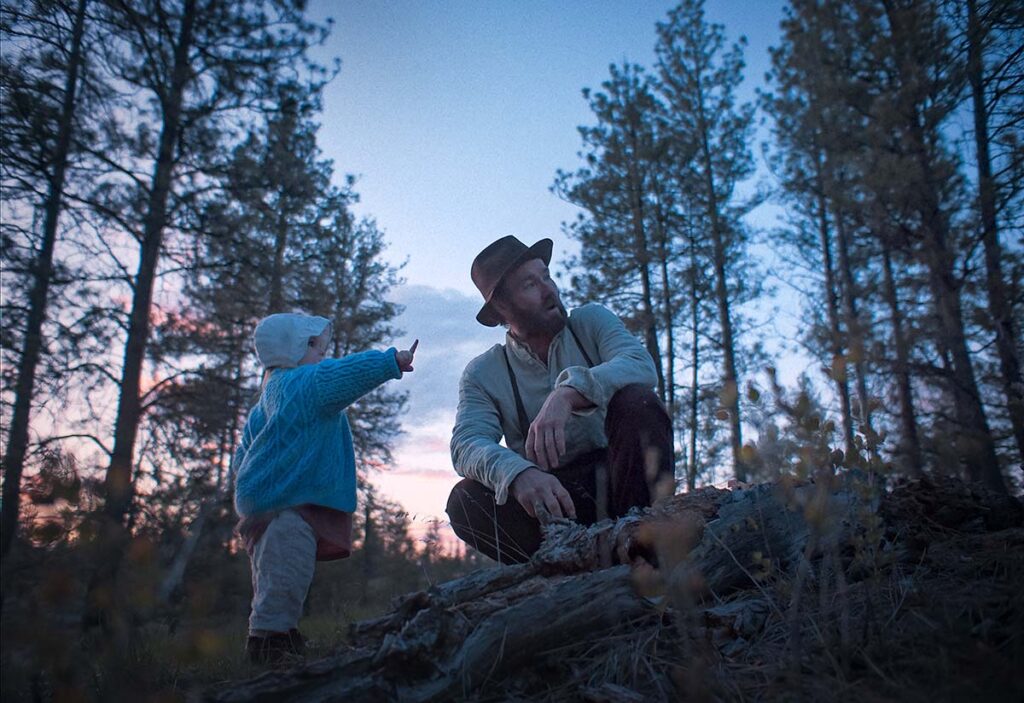
You have shown yourself to be an actor who just doesn’t talk the talk; you walk the walk, you consistently do these smaller movies that you don’t have to do. Why is it important for you to make “Train Dreams”? Why is it important for you to produce a movie like “The Plague”? Which you did not have to do. Where does that passion come from?
I feel like I’ve never really changed since I first started wanting to make movies and making them on a relatively small scale. And I guess if anything, as an actor, if I look at a big thing and imagine myself trying to act in it, and I feel like I don’t have a way in, I feel really terrified about getting involved. And there’s something about it, it’s not just smaller movies, I guess I’m looking at story, and if a story grabs me, then it’s worth being a part of. And quite often those things have been for me, things that don’t have a big price tag. I will say that I feel like there is a relationship with the bigger the budget, then quite often spectacle takes precedent over character, but that’s not always the case, as we noticed this year with f**king “One Battle After Another” and “Sinners” and the movies that Nolan makes. But they’re sort of rare islands. I feel like a lot of movies are built for the spectacle, and then character is jammed in at a stage of what I sometimes call undevelopment, which is not my own phrase. Someone once described it as undevelopment where too many people get involved in the development of the story, and it seems to steer in the wrong direction. I’m just always, character and story become the most important things.
![‘The Plague’ Review: Charlie Polinger’s Stylish, Bombastic Debut Feature Has Little Emotion Under The Surface [Cannes]](https://cdn.theplaylist.net/wp-content/uploads/2025/05/16120413/THE-PLAGUE-Charlie-POLINGER-Photos-Joel-Edgerton-Cannes-1024x599.jpg)
When I read “The Plague,” I was just like, “Who wrote this? How do I meet this guy?” I looked at his short films and was like, “I want to be a part of this, and I want to help him in whatever way I can to get his movie made.” And I had good instincts, I think, because I saw the movie at Cannes, but I will say in honor of Charlie Polinger, whatever my expectations of what he would do with that movie was, he blew me way out of the water with the choice of how he cast the film, how cinematic it was, the sound and music. It’s such a mature first film, and it made me more excited about doing that more in the future, to the point where I just shot his partner Lucy [McKendrick]’s first film in Australia. And again, it’s she’d never made a movie before, but she’d made an excellent short film or two. She’d written an amazing script. She knew how to talk. She knew about the process already, before even really having much experience. So, the idea of trusting these first and second-time filmmakers and knowing that they’re the future and they really care about story because they don’t have the money to undevelop things, but they can really focus on human beings and their story. So, I get excited by that. I still love to, if I get involved in something big, I would love that. I’d always welcome that opportunity. I just sometimes, very honestly, I read things, and I literally imagine myself on set doing whatever the scene I’m reading is. And if I can’t imagine it, or I feel like I would be embarrassed doing it, or I can’t envisage it in some way, then I’m like, “I can’t do it.” And often to my detriment, because it might be something that I just can’t imagine the visual effect of the future thing. It’s like, “Your character’s flying around the city.” And I’m like, “How do I do that? Am I dangling on a cable?” And I’ve got to have better foresight to see that so that I don’t potentially neglect a really interesting project in the future.
You earned your first Spirit Award nominations ever for “The Plague” as a producer and as an actor. And you landed your first Globe nomination and a Critic’s Choice nomination for “Train Dreams. What does it mean to you to finally get your flowers now? Did you care about it?
Yeah, I’d be lying to say I didn’t care about it. It definitely tickles the ego to know that your work’s recognized. But I will say, and I’m not even downplaying this, but to me, being nominated for anything is a win and always will believe that art is not a competition, but when AFI recognized “Train Dreams” as one of their top 10 films or you’re on a list of the performances of the year, it’s nice to know someone’s paying attention and that they care. They’re reflecting that they appreciate the work, and it does tickle the ego and inspires me to keep trusting my instincts to go and get involved in projects like that. And from the outside, I think it’s cool to know that a relatively small movie like “Train Dreams” can be sitting alongside the bigger, fancier films to a certain degree, and a movie like “The Plague” with a first-time filmmaker. And it shows me that people like you are doing your job and paying attention and have good taste to go, “All right, there’s a movie like ‘The Plague,’ we never heard of this guy, but he can be considered one of the best films of the year.” Or an actor like Everett Blunk, who you don’t have much familiarity with, deserves as much of a place to sit alongside Leo or Timmy.
“Train Dreams” is now available on Netflix worldwide
Follow Gregory Ellwood on Bluesky
Follow Gregory Ellwood on Threads
Follow Gregory Ellwood on Instagram
Sign Up For The Breakdown Newsletter


