


![Ed Solomon On ‘The Christophers,’ Creative Constraints, And Working With Steven Soderbergh [Interview]](https://cdn.theplaylist.net/wp-content/uploads/2026/04/13144316/Ed-Solomon-On-%E2%80%98The-Christophers-Creative-Constraints-And-Working-With-Steven-Soderbergh-Interview.jpg "Ed Solomon On ‘The Christophers,’ Creative Constraints, And Working With Steven Soderbergh [Interview]")
A chamber piece about art, resentment, disappointment, and the lies people tell themselves, Steven Soderbergh and screenwriter Ed Solomon’s (“No Sudden Move,” “Full Circle”) latest collaboration, “The Christophers,” began as a conversation about making something small, self-contained, and built around an art-heist premise. But the finished film turned into something richer and more complicated—a character piece that lets Solomon fold in mentor wounds, class tension, and generational friction while asking what happens when an artist quits before the work inside them is finished.
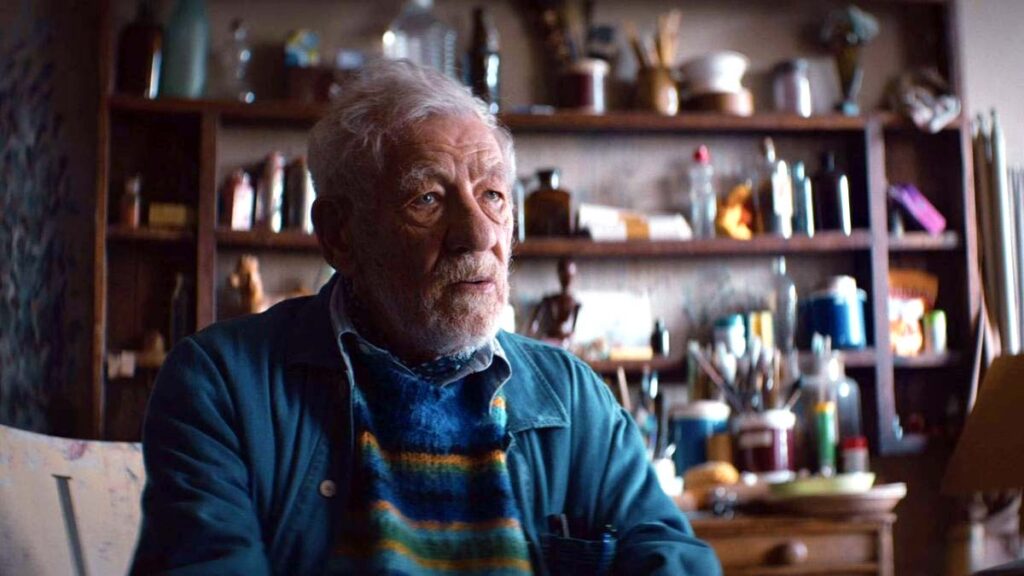
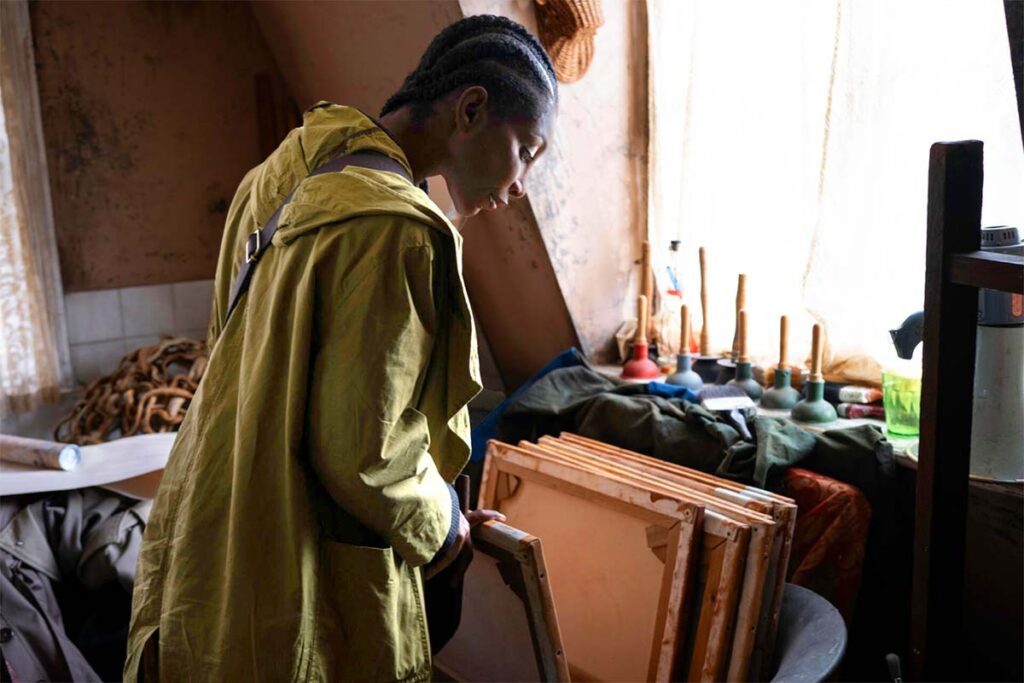
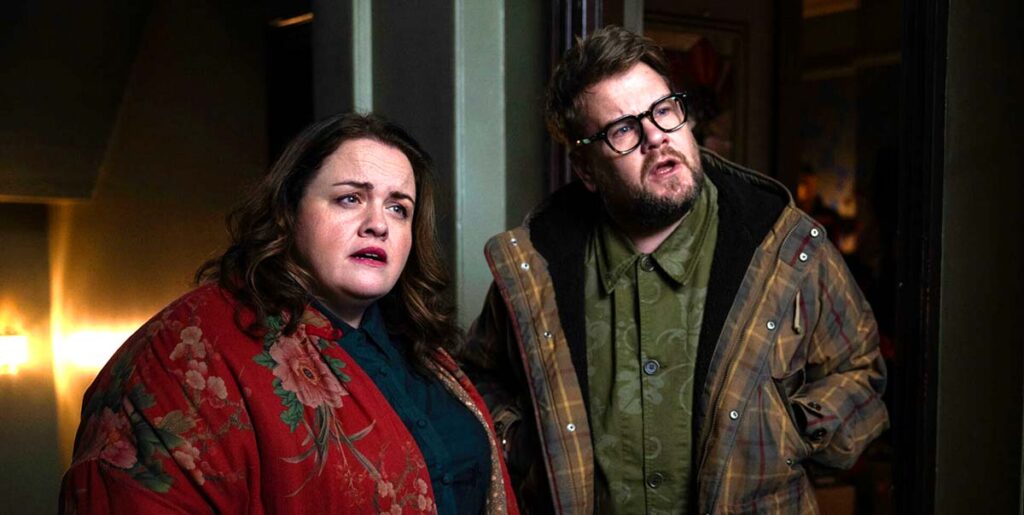
Onscreen, that setup revolves around Ian McKellen’s Julian Sklar, a once-celebrated London painter now living in cluttered seclusion, and Michaela Coel’s Lori Butler, a young painter and sometime forger who is recruited to pose as his prospective assistant. The scheme is set in motion by Julian’s estranged children—Barnaby and Sallie, played by James Corden and Jessica Gunning—who want Lori to gain access to Julian’s unfinished canvases, complete them, and help turn the buried work into the inheritance they fear they will never otherwise receive (read our review).
In the film’s bones, Solomon saw something personal almost immediately. Soderbergh had the initial setup—an older artist, a younger artist, a contained space, maybe a little Patricia Highsmith-style subterfuge—but Solomon recognized a deeper story in the idea of creative disillusionment, especially in the relationship between someone still chasing the work and someone who had, for whatever reason, stopped.
That sense of tension extended beyond the premise. In our conversation, Solomon talked about why limitations can be liberating, why Soderbergh thrives on problem-solving inside a genre’s rules, and and how his work with the filmmaker keeps beginning from the same productive place: a prompt, a limitation, and a challenge.
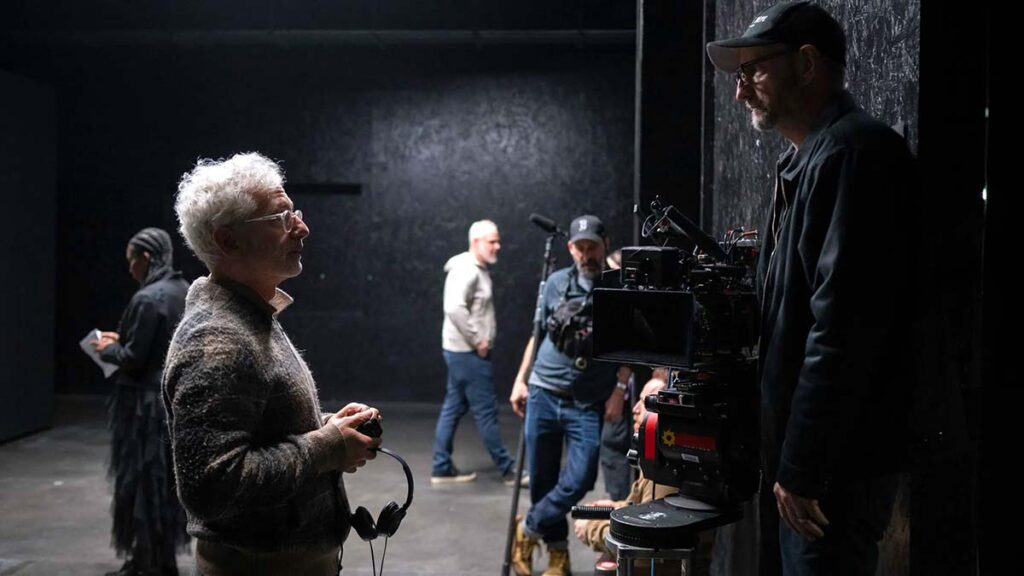
How did this one first come together with Steven?
We were meeting for a drink and catching up, and he said he had this hankering to do a really contained, low-budget, independent film where we could control what we made and completely bet on ourselves. He was thinking maybe an older artist, a younger artist, and maybe there was a little bit of a heist or subterfuge involved—some reason one person was entering the other person’s world under false pretenses.
That instantly linked to something very deep in me that I’d been wanting to try to express for a long time, which was a relationship I’d had with several mentor figures in my life who had, for one reason or another, given up. None of them were painters, actually, but the emotional connection was immediate for me.
Then we started asking practical story questions. Why is this younger woman entering his life? That led to the idea that he had two kids he absolutely despised, that they had no inheritance because he’d spent all his money, and that he had unfinished paintings buried away. So suddenly, she becomes a forger hired to come in and complete them so the kids have something when he dies. Once we had that, there was a premise.
I went away and took it into a more personal and emotional direction, and less of a heist direction. I was really inspired by the challenge of making a movie with limited financial, geographic, and actor resources, yet still telling a story that’s fun to engage with.
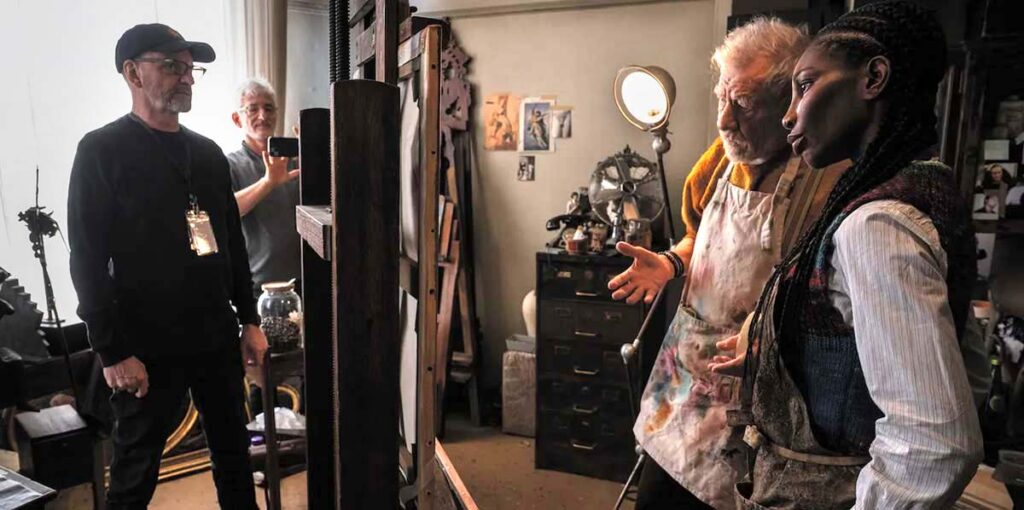
You and Steven both seem to respond to rules and parameters. Why are those restrictions so useful?
Absolutely, because a blank page is terrifying. If you put a square and a triangle, and a circle on the page, and say those are the only things you get to play with, that’s incredibly helpful.
A lot of the best creative choices come from restrictions. If you suddenly have to add a scene you weren’t expecting, but you only have half the cast, you can only shoot in one direction, and it has to be at night instead of day, sometimes the best decisions are made precisely because of those limits. There’s something very freeing about having restrictions.
People always talk about needing freedom and inspiration, but I actually think the opposite is true. Embrace your restrictions. It’s a doorway into another way to express yourself. Genre works like that, too. It provides a language. It’s a little toolbox—its own toolbox. These are the tools you have to work with, and within that, there’s something very freeing.
What specifically does Steven bring to that process?
He’s very much a problem solver, which I really love. When you’re working inside small parameters—two actors, a small space, all of that—it gives you a lot of challenges, and he really responds to that. He likes the Rubik’s Cube of it. He’s also somebody who likes to take a genre and apply what he knows about that genre to the material, rather than imposing one fixed style over everything.
He’s always said, “My brand is I have no brand,” and I think that’s true.
Yeah, one of the things he and I talk about a lot is the essential quote-unquote “it-ness” of the thing. What is it? What does it want to be? For him, as a director, that becomes: what is the cinematic lexicon within which he’s constructing the visual language? For me, it becomes: what do I think it is, and then what can I learn from it as I go into it? We spend a lot of time talking about what this specific thing wants and what the rules are for this specific thing.
And that keeps evolving. Once you’re actually making something, your original vision is almost irrelevant. It becomes a collaboration with the thing itself. The actors come on board, and it changes. Then the edit changes it again. If you try to hold on too tightly to what it was, you miss what it’s becoming.
How much does that “it-ness” keep changing once you’re actually making the thing?
Always. People talk all the time about “your vision,” and I always think: I had an inspiration, I had a reason to do it, I had a thing I thought I was going to do. But once you’re doing it, your vision is irrelevant. It’s literally irrelevant.
Once you’re inside it, it becomes a collaboration with the thing itself. You’re guiding it, but you’re also learning from it. It has a manifestation that you’re seeking. It’s sort of like when you have a kid—you think your child will be like this, and then the child is born and says, actually, I’m going to be like this. Your job is not to force it into what you thought it would be. Your job is to help it realize.
At each stage, what it is changes. Then the actors come on board, and it changes. If you try to hold on to what it was, you miss what it’s becoming and what it wants to be. Editorially, same thing. Suddenly, you have a whole new language—everything you shot, plus sound, mix, score. Actually, my least favorite part of the whole process is when it comes out, because it no longer is what it might have been. It simply is what it is. It’s like the death of the dream.
The film also plays with generational and cultural tension. Were you trying to make a specific social point there?
Not really in the sense of trying to make a direct piece of social commentary. I was more interested in creating an environment that added another level of tension between them.
A lot of that came out of talking to Lucy Prebble and our friend Marnie Appleton. We were talking about cultural, generational, and wealth divides—the idea that property feels impossibly far away now for younger people. That’s obviously true in the U.K., but it’s also true more broadly. I have adult-age kids and a young one, and the idea of owning property can feel incredibly remote to a younger generation for many reasons.
I’d also known people in the U.K. who lived in these massive spaces and somehow still felt cramped in them, and I’d always think, “Do you understand how many people could actually live here? Do you understand how different things are for most people now?”
So that divide became part of the movie’s issue. And it’s similar to something Steven and I were drawn to in “No Sudden Move.” We started there with a desire to do a really spare mid-century noir, but we’re both drawn to giving something a social context that infuses the environment with drama. Then you don’t have to lean on plot alone, because there’s already tension in the space. In “No Sudden Move,” the restructuring of land and neighborhoods was in the background. In this one, it became the cultural, financial, and generational divide between these two people.
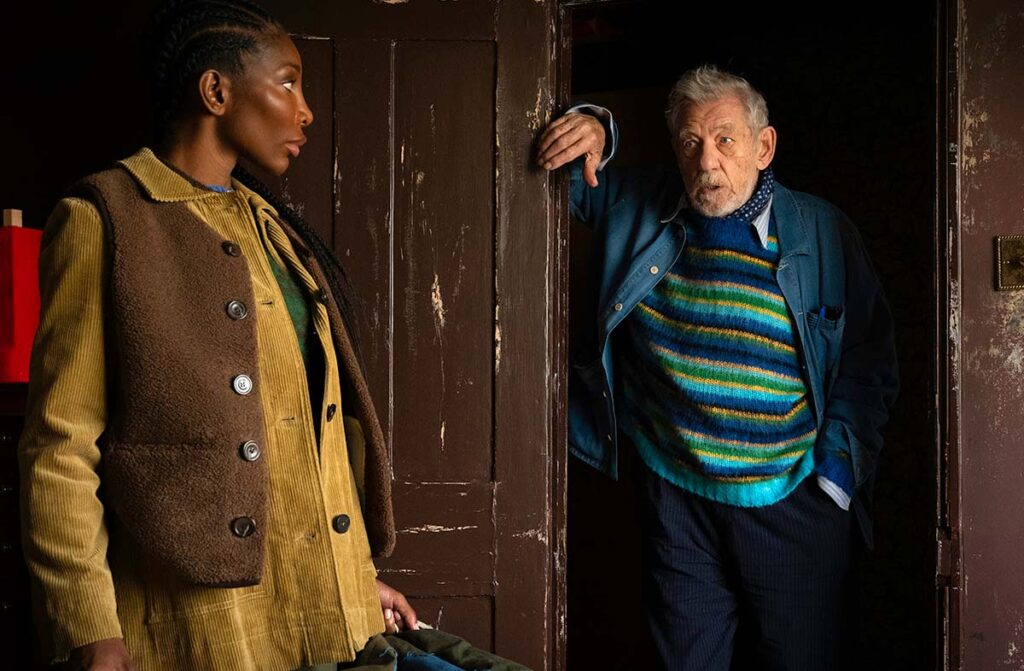
That shared disappointment is what makes the relationship land. They’re not bonded by warmth at first. They’re bonded by failure and damage—atypical for most films.
Exactly. What they do have in common is a level of bitterness and disappointment. His is very clear, but she has hers too, and hers is tied to him because he’s the one who shot her down in that defining moment, and it’s hung over her head. She hasn’t fully realized her potential. She’s this great artist with her own level of bitterness and disappointment, and he has his.
That interested me because you don’t usually see characters conjoined by disappointment or bitterness. Usually it’s something else.
On every front, I was trying to make them have a well-earned antipathy toward each other that was more than just cultural. It becomes personal for her because of the past, and personal for him because of something she did that he realizes in the present.
And in a way, this is really Lori’s story—a kind of forgiveness of herself for having given up. Because of that, it felt important that they both share that so-called negative history. But at the same time, they don’t simply fuel each other’s bitterness. It becomes the opposite of that. They reignite something in each other.
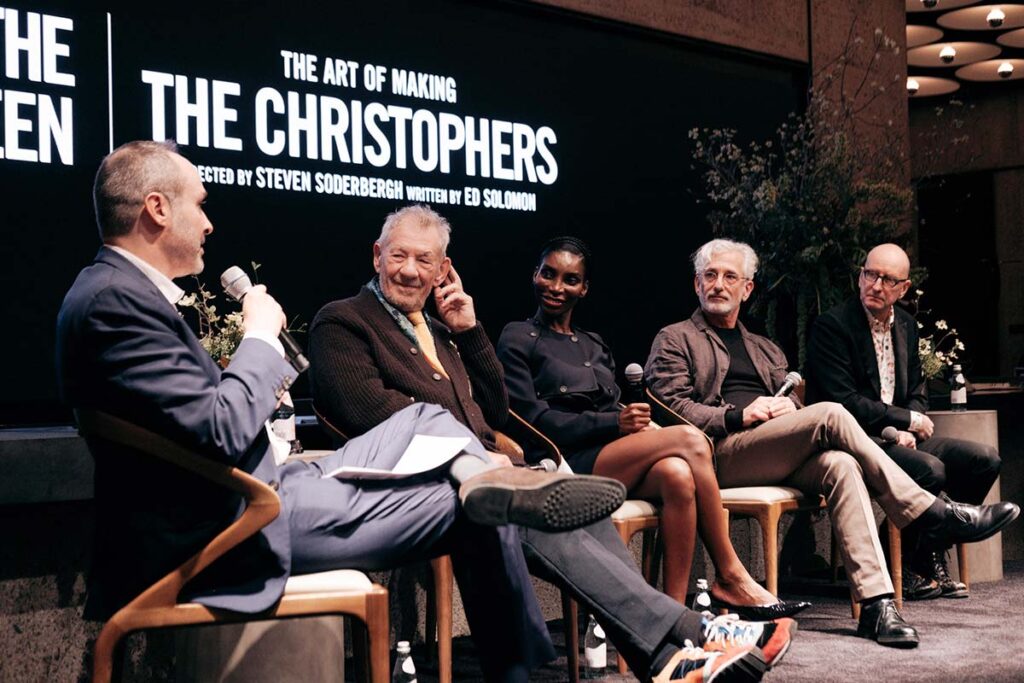
How did you think about emotional resolve without tying everything up too neatly?
That was a huge question for me, because watching a film is an emotional experience, not a lecture. We had longer conversations about art in the script, but they got too discursive and lost what really mattered: the relationship.
So the challenge became: how do you create something cathartic without tying it up too neatly or turning it into something overly heartwarming? I have an aversion to that kind of sentimentality, and Steven does too. That’s one reason we didn’t want to resolve the relationship with the kids neatly. The idea was that these two people are bonded by disillusionment and disappointment, but they also reignite something in each other. At the same time, I didn’t want his character to suddenly change in some big way, because that would have felt false.
How conscious are you of theme while you’re actually writing?
I try to do just enough research to feel the world and to make sure anything that needs to be factually correct is correct. After that, I don’t really think about theme. I might think about an emotional milieu or emotional palette, but once I feel what the movie is, I trust that whatever themes emerge will emerge on their own.
In my experience, the more I get into my head, the less interesting I become. The more interesting I think I’m being, the less interesting I actually end up being. I’d rather try to get as deep inside a character as I can and let any cleverness be a surprise to me, or a discovery along the way.
And I also like letting characters be truthful at moments when you might otherwise expect a movie character to dissemble. Sometimes that has turned out to be the most enticing surprise in writing. I think with these characters, too, some of the bigger plot turns come from a character just telling the truth to another character.
Do your collaborations with Steven usually begin this way, or is each one different?
Each one’s a little different, but they all tend to begin from some prompt or challenge. “Mosaic,” which was our first collaboration, began as something Steven created and Casey Silver brought to me as a 10-minute experiment. Steven and I worked together on that little branching-narrative idea, which led us to think, let’s try and do a long-form version of this. We talked about doing a murder-in-a-small-town story where the plot and history of the characters were the same, but depending on whose point of view you were seeing it from, the story would feel remarkably different. It was really about subjectivity and perspective.
After that came “No Sudden Move.” Steven said he wanted to do a really spare noir tale set in the mid-’50s. I went away, thought about it, did some research about Detroit, and then came back, and we pitched out a story together and brainstormed from there.
Then I brought him on “Bill & Ted Face the Music” to executive produce and serve as a consigliere figure. And “Full Circle” was something I brought to him.
By the way, everything we’ve done together has begun on spec. “Mosaic” was on spec before we set it up at HBO. “No Sudden Move” was written on spec and was originally intended for Warner Bros. before COVID changed its landing. “Full Circle” was the whole thing on spec before we did anything with it. And “The Christophers,” as we discussed, was mutual. He wasn’t pitching it to me. It just came out of a conversation.
And what’s interesting is that each one really does start with a kind of prompt. If the prompt sparks you, you suddenly find yourself pouring yourself into something that already has a language created by the prompt itself or by the genre. That’s one reason genre is so useful—it gives you a vernacular through which you can tell all kinds of stories, and in a funny way, it can make bigger ideas feel less amorphous.
So “The Christophers” was a mutual one. He wasn’t formally pitching me. It just came out of a conversation. But that’s part of what makes the collaboration fun. It’s usually some version of: here are the parameters, here’s the genre, here’s the prompt—go. And if the prompt sparks something, then you pour yourself into it.
You mentioned Steven’s curiosity, and I think it extends to his recent experimentation with AI, which he spoke about recently. As a writer, how do you feel about it right now?
I honestly don’t know what Steven said specifically because I tend not to read much entertainment coverage, especially when something’s just come out. But for me, at the moment, I feel pretty safe from it in terms of my own purview. I was talking to two young filmmakers at Lincoln Center who had used AI to create animation, but they still had the thing written by a human, and one of them told me they’d tried to write it with AI first and it fell very, very flat.
I don’t use it to write. The only time I really interact with it is when I’m Googling something, and suddenly AI gets forced on me. I’m trying to compare two spaghetti bolognese recipes, and somehow I’ve drained a lake. I’m not really an early adopter of it at this point.
For me, at least, AI in writing seems like something for people interested in having written something, not writing something. And I don’t have any interest in writing anything. I’m interested in the day-to-day, moment-to-moment process. That’s where I get my purpose. That’s where I get my joy as a working person. So to me, it takes away the most fun part, which is why I don’t need it.
I joked once on a Writers Guild Zoom that if people wanted to type in “write a screenplay in the style of Ed Solomon,” they should please do so and send it to me, because I could use the help. But I was kidding. I enjoy the process too much. That’s the part I get the most fun out of. Maybe there are healthy, safe uses for it, but I haven’t really found them yet.
Are you working on any of Steven’s upcoming projects, or are you off in your own world right now?
No, I’m currently working on a television show I created, “The Spot,” for A24 and Hulu, starring Claire Danes and Ewan McGregor. We have three different directors, and I’m the creator and showrunner. That’s what we were shooting last night, which is why I’m a little fried [laughs]
“The Christophers” is in theaters now via Neon.

