


 “Body Double” (1984)
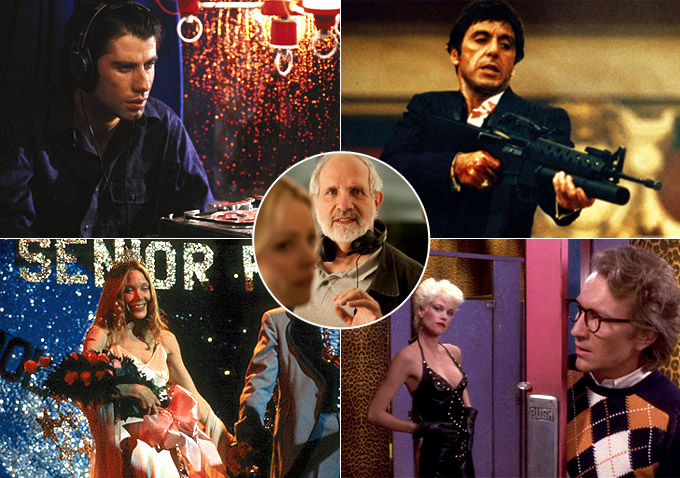
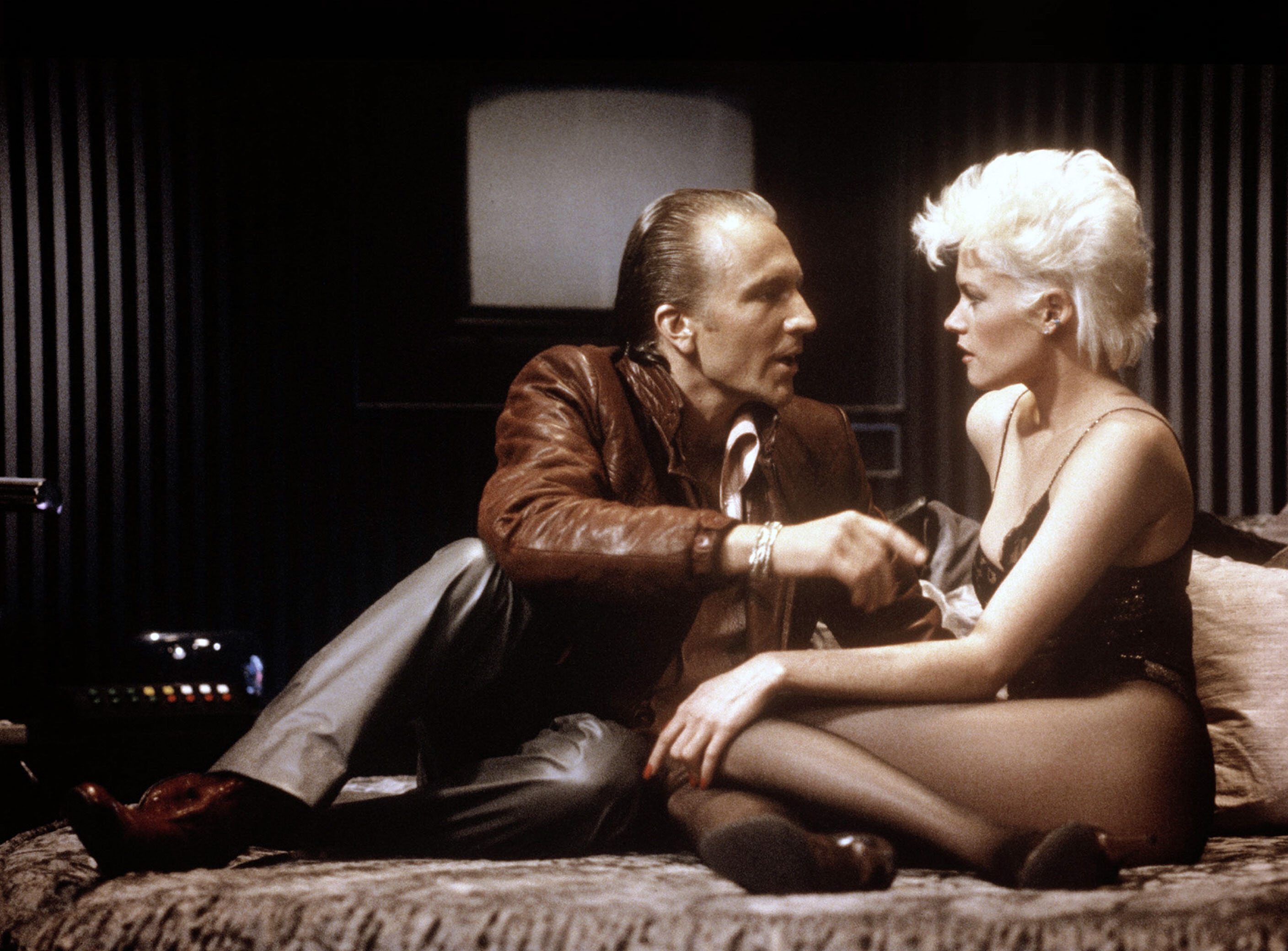
While “Blow Out” is the undisputed masterpiece from De Palma’s so-called “red period,” “Body Double” might be the most flat-out fun, though it was inspired by De Palma’s experience working with a body double for the opening of “Dressed to Kill” (no, that was not Angie Dickinson‘s bush) and intended initially as an honest intersection of adult film and Hollywood (complete with X-rating). Even after it was decided that the movie would be a more mainstream Hollywood piece, De Palma flirted with actually casting an adult film actress in the lead role of Holly Body. But when Columbia brass found out he was auditioning porno queens, they had a shit fit, leading De Palma to cast a largely unknown Melanie Griffith in the role. From the infamous teaser poster (which won an advertising award) to the movie itself, “Body Double” was marred by controversy that often tipped over into outright hate. De Palma, who had flirted with being labeled a misogynist mostly due to his uncanny ability to think of creative ways to kill beautiful young women, was finally condemned as villainously anti-woman, with most of the criticism centered around a scene where a woman is impaled by an oversized phallic drill (get it?) Of course, the hysteria feels misplaced now, with the movie playing more as a clever mash-up of elements of “Vertigo” and “Rear Window,” significantly sexed-up for the music video eighties (there’s even a music video within the movie)) It’s also infused with De Palma’s trademark absurdist sense of humor, particularly when, towards the end, the narrative shuffles between the actual plot and the cheesy vampire movie that our main character (Craig Wasson, charming in his own, wooden way) is making. But even if you find “Body Double” deplorable (“sadistic” was probably the word most often used to describe it), it’s hard not to be awed by some of the set pieces (even the drill-killing sequence, which features the same pooch from Sam Fuller‘s “White Dog” trivia fans), including the extended chase that travels through an outdoor mall and out onto the beach, the aforementioned Frankie Goes to Hollywood music video, and anything involving a naked Melanie Griffith. There’s a certain amount of joy in every frame of “Body Double” that is sometimes lacking in De Palma’s more clinical technical exercises, with little flourishes like frequent De Palma confederate Dennis Franz playing De Palma (he’s even wearing De Palma’s clothes); a phony all-pornographic channel that Wasson watches (“And for you home viewers, you can pick it up at Tower Records all-night video sales”); Wasson auditioning for a porno while another one is being shot on the stage below (viewable, since this is a De Palma movie, thanks to a rectangular sliver of glass in the producer’s elevated office); and Pino Donaggio‘s purposefully cheesy, electronics-infused score. (The screenplay, too, by De Palma and Robert J. Avrech, is endlessly quotable — “I’m not some fucking stunt cock, I’m an actor!”) It’s got the conspiratorial tone of someone telling a really dirty joke, something that makes the outrage that followed the film’s release even more baffling. Plus, if De Palma was really a misogynist, why would he give Griffith all the best lines? [A-]
 “Wise Guys” (1986)
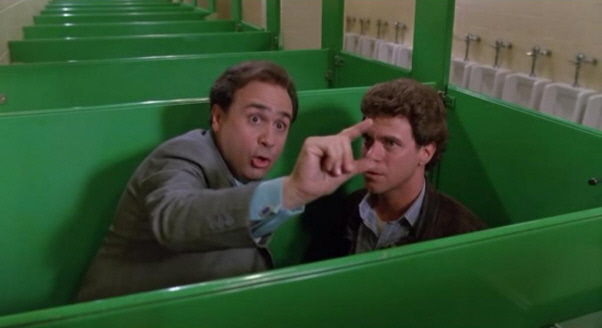
Oftentimes Brian De Palma movies can be funny, sometimes outrageously so (as is the case with “Body Double” and “The Fury“), but when he tries to do out-and-out comedies the results are decidedly more mixed. In the case of “Wise Guys,” though, his attempt at humor was more or less a complete disaster. Danny DeVito and Joe Piscopo (!) play a couple of low-level leg-breakers who squander a mob boss’ money and go on the run together (in a pink Cadillac, no less). There are a couple of noteworthy supporting performances, particularly Dan Hedaya as the mob boss who loves wearing bulletproof business suits (don’t ask) and Harvey Keitel as an Atlantic City hotel owner, whose mere presence makes the movie a few degrees cooler, but that doesn’t amount to much. What could have been an intriguing, fun concept is marred from the very beginning by cartoonish performances and a kind of heightened reality that doesn’t, as is usually the case with De Palma movies, enrich the action but instead detracts from it to a crippling degree. Everyone seems to be shouting and waving their arms around and De Palma’s direction more or less follows suit, with a number of visual flourishes that only serve to remind us that the director could very well be using his complex technical expertise on much better material. (Although there is a great, super single shot of an entire street clearing the way for an exploding car, only hampered slightly by his decision to speed up the action a la the trying-on-the-tuxedos moment in “Carrie.”) “Wise Guys” proves that a tone deaf, dumb-ass comedy with a bunch of nifty split diopter shots is still a tone deaf, dumb-ass comedy, and for all its frenetic energy it can’t muster much enthusiasm in those watching. [D]
 “The Untouchables” (1987)
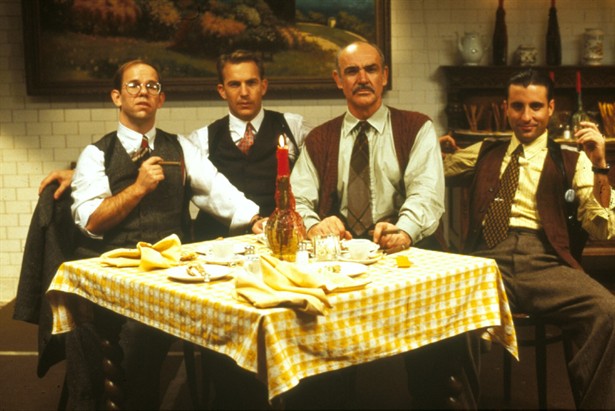
While many critics were right to dismiss the kinda awful “Gangster Squad” earlier this year, it seemed like a major criticism leveled against it was that it was a lesser “L.A. Confidential” knockoff. We’d argue that’s a more apt description of another, more recent De Palma film (yes, “The Black Dahlia“). “Gangster Squad’ was much more derivative of “The Untouchables,” attempting (and failing) to hit that sweet spot between comic book style iconography, true life crime tale, and hard-R action. If anything it was proof that screenwriter David Mamet, seemingly having a ball writing lots of theatrical, tough guy dialogue (“He sends one of yours to the hospital, you send one of his to the morgue. That’s the Chicago way!”) and De Palma together fashioned something quite special with their truth-be-damned take on the Elliot Ness autobiography and TV series of the same name. While plenty of facts are smudged to tell the audience the legend instead of the truth—this is like the dime-store paperback edition of the truth, “Dick Tracy” for adults if you will—it’s hard to argue in favor of verisimilitude when the results are this entertaining. And now that Kevin Costner has been such a welcome presence in certain big movies lately (“Man of Steel”), can we all just admit that in his prime, he was a wonderful everyman star actor? His take on Elliot Ness as a goody-two-shoes cop who just wants to take down Capone is just the right center to give balance to all the high quality (and high decibel) work done by the supporting cast: Robert De Niro as Al Capone is lights out; Best Supporting Oscar winner Sean Connery (being awesome and so wonderfully Conneryish as a badass Irish beat cop); fellow untouchables Andy Garcia and especially Charles Martin Smith, who brings so much joy, be it firing a shotgun for the first time or digging into Capone’s taxes for any angle at an arrest. And we can’t forget Ennio Morricone’s lovely, bombastic score, old fashioned in all the right ways. It’s a tough trick to pull off something as strong as “The Untouchables,” which is artful purely and only for being so damn entertaining. [A-]
 “Casualties of War” (1989)
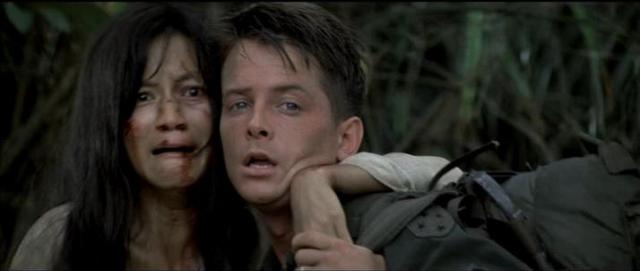
When “The Untouchables” proved to be an unexpected box office bonanza, De Palma utilized his newfound popularity to get “Casualties of War,” a singularly bleak war movie, off the ground. Inspired by an actual event that was covered in a New Yorker article from 1969 (three short years after it occurred), “Casualties of War” concerns a small deployment in Vietnam whose highest ranking officer (Sean Penn) orders his men to kidnap a young Vietnamese girl for, in his words, “A little portable R & R.” A sorely miscast Michael J. Fox stars as a young infantrymen, recently deployed, who serves as the moral compass for the movie. We watch, in horror, as Fox wrestles with his guilt and culpability. Sex crime during war is a subject that has largely gone unattended to in the genre of the war film, and “Casualties of War” shows you why: it’s disastrously bleak stuff and the movie pretty much suffocates the viewer in this darkness, like blanketing the entire audience in a thick toxic fog. “Casualties of War” is not without it’s merits; most of the performances are great, notably Penn and a few supporting players who De Palma would reteam with later, like Ving Rhames and John Leguizamo (it was also, it should be noted, John C. Reilly‘s first movie), and occasionally the filmmaking is dazzling in a way that only De Palma movies are dazzling, like when the camera moves below ground, to show the inner workings of the Viet Cong’s tunnel system, hollowed out like an ant farm. It’s just that there’s no recovering from the blackness of the subject matter, and the occasionally heavy-handed way that De Palma handles said subject matter. Still, it’s not without its supporters (Quentin Tarantino called it his favorite war film ever and stole a sequence from the film for “Reservoir Dogs“) and it’s infinitely better than De Palma’s later, thematically similar “Redacted.” But that’s damning it with faint praise. “Casualties of War” is an essential movie in the De Palma filmography, but more for the role that it played in his life rather than the film itself. After its disastrous response, both critically and commercially, De Palma fell into a deep depression, thinking that his personal projects were uniformly doomed. It’s the reason that he wound up making one of the worst decisions of his career: taking on “Bonfire of the Vanities,” because he was eager for an easy, surefire, crowd-pleasing hit. Little did he know. [C+]

