


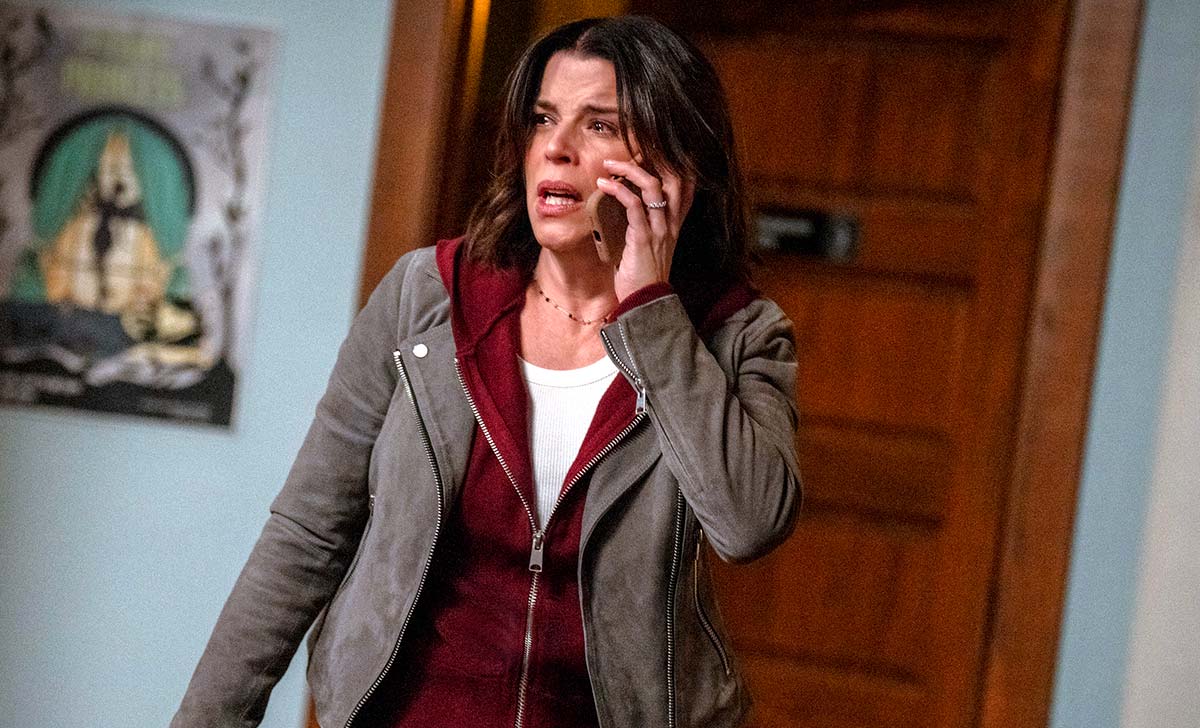
When does wryly commenting on the clichés of a movie genre—the slasher film—cease to be clever and engaging? Somewhere around the point where the bit becomes the brand, and the brand becomes the cliché, it’s still being treated like a fresh observation. “Scream” used to turn that self-awareness into a sharpened edge: it could wink at the rules and still make you tense up when the knife came out. In “Scream 7,” the wink has become muscle memory, and the franchise’s commentary is just another loop it can’t stop replaying.
READ MORE: The 150 Most Anticipated Films Of 2026
Everyone can be a suspect in a “Scream” movie, but the most suspect element in Kevin Williamson’s tedious melodrama is the film itself—an entry that keeps insisting it understands the series’ mechanics while steadily bleeding out the one thing those mechanics were meant to deliver: dread that accumulates instead of cheap jump scares that reset the room.
The last two films at least managed a transfusion. Centering Melissa Barrera and Jenna Ortega gave the series a jolt of personality—two actors with real snap who could sell the heightened rhythms and make the franchise’s self-referential shtick feel charged again, even when the plotting fell back on familiar grooves. One of those chapters even changed the geography, pushing the mayhem into New York and giving the series a different physical texture. Here, without that duo’s spark, “Scream 7” feels like a body missing its pulse point: still technically moving, still doing the motions, but drained of the thing that made the repetition watchable.
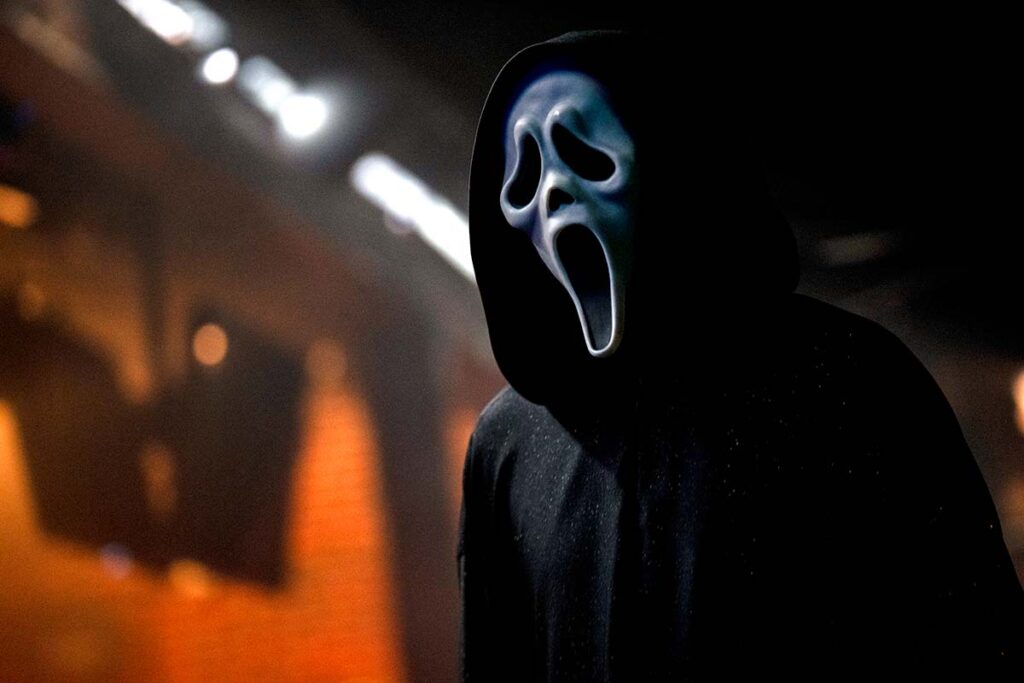
The new angle is nostalgia with lineage. Sidney Prescott (Neve Campbell) has built a life in a quiet town, only for a new Ghostface to drag the past back to the surface by targeting her family—especially her daughter, played by Isabel May, who’s positioned as the next scream queen in line. On paper, it’s a clean evolution: survival as inheritance, trauma as something you try to bury and still end up passing down.
In practice, the movie rarely earns the fear required to make that idea sting. It doesn’t build tension; it triggers alerts. It doesn’t tighten suspense; it lunges, splatters, resets. Yes, there are a few creative and extremely gruesome kills, spurts of gore, and the expected jump scares that can still catch you if you’re inattentive. But the film doesn’t trust patience, and slashers without slow pressure feel like a string of interruptions—noise, impact, cleanup—never the creeping sense that the walls are closing in.
A big part of the problem is that “Scream 7” looks and moves like network TV stretched to feature length. The images have a clean, functional sheen; the lighting is flat; the staging is built around coverage rather than unease. The settings often feel oddly small and under-populated, as if the movie is operating in a shrink-wrapped world where nothing exists beyond what the scene needs at that moment. It’s the kind of visual blandness that makes even violent beats feel weightless—blood on the floor, no atmosphere in the air.
The casting choices don’t help, either. The ensemble leans aggressively glossy—like the movie raided an Abercrombie catalog for interchangeable hot teens and smug boyfriends, then asked them to play grief and terror at full volume (Michelle Randolph, Jimmy Tatro, McKenna Grace, Asa Germann, Celeste O’Connor, Sam Rechner, et al). It gives the whole thing a faint “Dawson’s Creek” haze: earnest relationship chatter, jealousies and confessions, then a Ghostface interruption to remind you what genre you’re supposed to be watching.

Penned by Williamson and Guy Busick, that terrible TV-soap-opera rhythm infects the writing, and bleeds into it, and it’s where the movie really starts to curdle. The dialogue is blunt, witless, and weirdly self-satisfied—characters talking like they’re auditioning for a CW spin-off of a “Scream” movie rather than living inside one. Scenes don’t build tension so much as kill time, shuttling people from one obligation to the next until the film remembers it still owes you a stabbing.
It’s also aggressively checklist cinema: echoes, callbacks, familiar rhythms, recycled “rules” chatter—nostalgia as a blunt instrument, swung again and again like volume equals insight. When recognizable faces return, the script doesn’t deepen them; it reduces them into a few easy traits and then hits those notes until they go flat. The characters aren’t evolving. They’re being boiled down into brand-safe shorthand.
The most irritating part is how “Scream 7” wants credit for side-eying legacy-sequel cynicism while indulging it at full volume. It gestures at the ugliness of dragging icons back as trauma props, tethering them to the same wounds, treating history like content—then does exactly that, only with less bite and less style. It scolds the practice and cashes the check, and the movie’s idea of a point is primarily just pointing.
Without getting into spoilers, the modern-tech angle plays the same way: not as a fear that sharpens the movie’s paranoia, but as a franchise gadget—another tool for rummaging through the attic and yanking out familiar shapes on command. It’s recognition as a shortcut, a way to get “oomph” without earning dread.
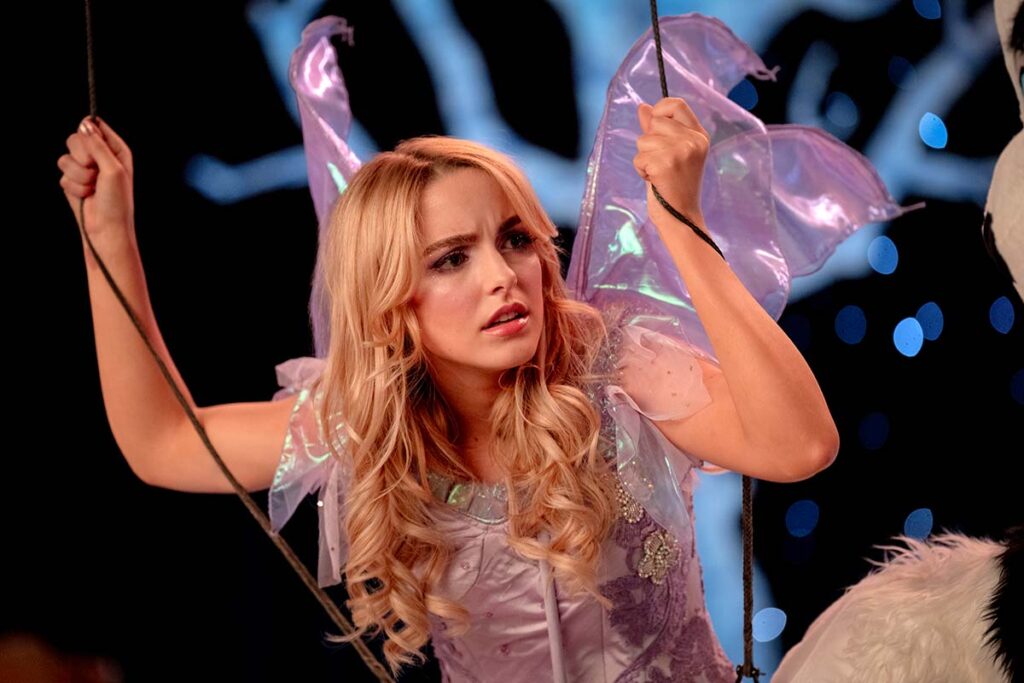
And the whodunit engine—the bloodstream of a “Scream” movie—runs sluggish. By the time Ghostface is unmasked, the reveal doesn’t feel clever or nasty or inevitable. It feels perfunctory, like the movie has cleared enough bodies off the board that the answer becomes administrative. The finale doesn’t twist the knife. It drops it and moves on.
There’s still a gravitational pull to Sidney Prescott, and Neve Campbell remains a sturdy anchor—resolute where these movies often prefer hysteria, grounded where the franchise keeps chasing noise. Watching her step back into the nightmare should feel like a hard reset, a reminder of what this series once did better than anyone: make the audience complicit in the joke while tightening the screws. But “Scream 7” can’t make her return feel vital. The film around her is too padded, too flat, too pleased with its own recycling. She isn’t a tourniquet; she’s proof there’s still blood left to waste. [D-]

