




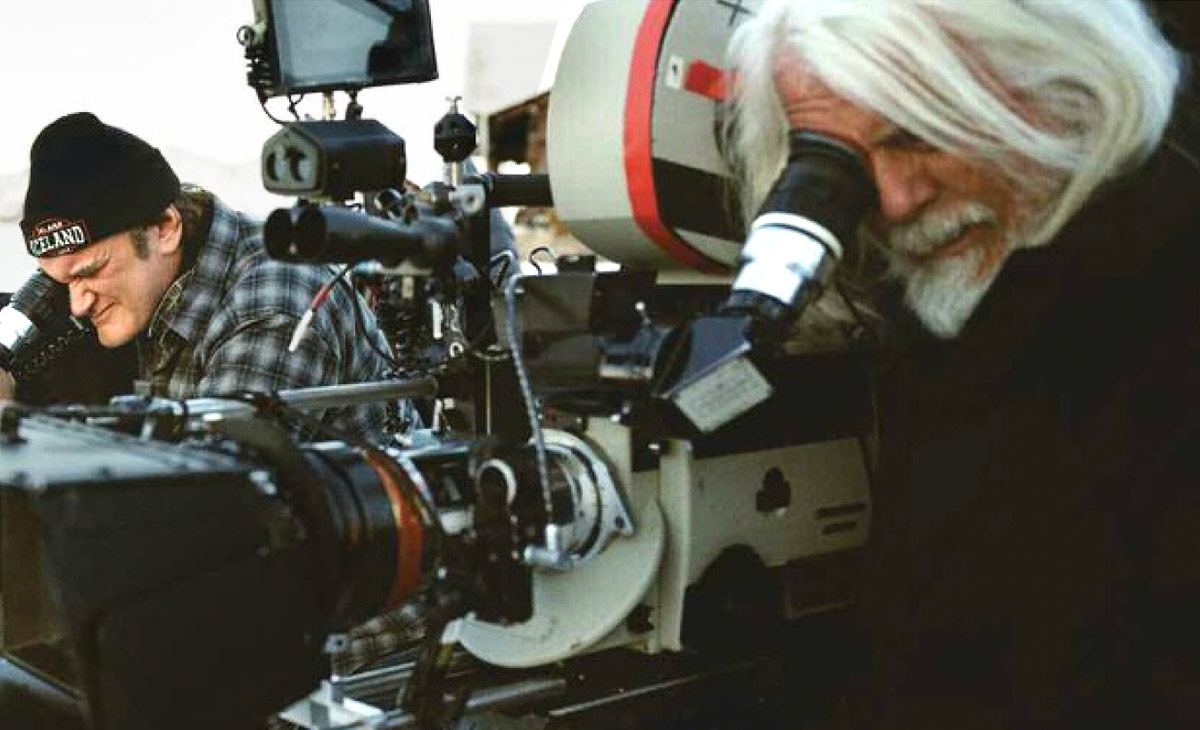
Artificial intelligence has obviously become one of Hollywood’s biggest anxieties, particularly when it comes to what parts of filmmaking can eventually be automated or replaced altogether. And while many see AI as a threat, three-time Oscar-winning cinematographer Robert Richardson believes the technology will inevitably become part of cinematography. At least on certain productions, though he also believes Hollywood needs firm rules governing how it is used.
“I think on some projects it will, and it’s inevitable to the industry,” Richardson said during a recent Awards Chatter Live conversation at the Karlovy Vary International Film Festival. “So, we have to learn how to regulate it and move with it and embrace it like you did VFX. And you can only do so much with it currently.”
Richardson, whose credits include “JFK,” “The Aviator,” “Hugo,” “Kill Bill,” “Inglourious Basterds,” and “Once Upon a Time in Hollywood,” was at Karlovy Vary to receive the festival’s Crystal Globe for Outstanding Artistic Contribution to World Cinema and for the world premiere of “Robert Richardson: The White Devil,” Jana Hojdová’s documentary about his life and career.
It should be noted: Richardson said he didn’t believe AI would necessarily replace the people in front of the camera, stressing that actors will have their own reasons for resisting technology that can fabricate their work.
“When it gets to a higher level, I mean, actors aren’t going to want their performances made by a machine,” he said. “So, there’s always going to be a level of security in that respect.”
Cinematography may be another matter. Richardson could already see advantages in using the technology to manipulate lighting, essentially allowing a cinematographer to reshape the light in a scene after the fact. That possibility led him to wonder whether AI-assisted cinematography could eventually become different enough from traditional photography to warrant its own Academy Awards category.
“There are lighting advantages,” Richardson admitted. “I can light a scene any way I want to light a scene. Now, the question will become whether that becomes something that everybody wants. Like, is that going to have to be a new category in the Academy Awards? Because it’s not being lit. You’re lighting it like you would light an animated movie.”
Richardson has some experience working that way. He briefly served as a visual consultant on Disney’s animated “Big Hero 6,” where lighting could be moved virtually from shot to shot without the physical restrictions of a live-action set.
“I could move the light anywhere in the scene I wanted on any shot,” he said. “Cut to cut, I can move the sun from one side to the other. Move the backlight over here. Put the side light here, and it was actually quite beautiful. It was very liberating.”
For Richardson, then, AI isn’t something cinematographers can simply ignore. He said filmmakers need to prepare for its use while pushing for ethical safeguards around the technology.
“I can see utilizing it,” Richardson said. “I know it’s going to happen, and you just have to get ready for it and then hope that there’s regulations that come in, and ethical ones and moral ones.”
Richardson has won Oscars for “JFK,” “The Aviator,” and “Hugo,” and has spent decades working with filmmakers including Quentin Tarantino, Martin Scorsese, and Oliver Stone. His latest comments put him among the filmmakers preparing for AI to become another tool in the process, even if Hollywood hasn’t remotely figured out where the boundaries will be.
Watch the full KVIFF conversation below.
Alex Miller writes about film and television for The Playlist, covering everything from independent cinema and major studio releases to the latest industry news.