




 “Hell in the Pacific” (1968)
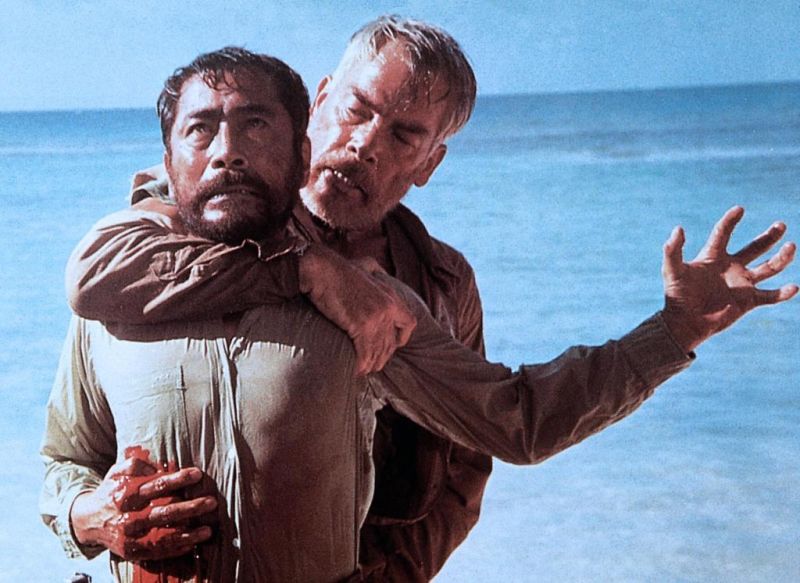
Recently discovered classic, spectacular hit, box office bomb, irredeemable turkey: Boorman’s filmography may not be lengthy, but it checks every conceivable category of critical or commercial success or failure, including “often overlooked gem,” aka “Hell in the Pacific,” his third film. Released the year after “Point Blank,” also starring Lee Marvin and served in a similarly spare style with minimal dialogue, evocative framing (from DP Conrad Hall) set to a deliberately intrusive Lalo Schifrin score, the film also boasts perhaps the best Hollywood performance from the great Toshiro Mifune. When you so closely associate an actor with a great filmmaker, as one does with Mifune and Akira Kurosawa, the experience of seeing he or she outside that context, especially in a film that so even-handedly favors that character, is revelatory. The allegorically simple story of a Japanese naval officer (Mifune) and an American pilot (Marvin) stranded on an island at the height of WWII, Boorman’s film examines clashing masculinity deftly, all but ignoring the familiar beats of the across-the-barricades narrative, instead letting a gruff chemistry build as the film evolves into an elegant survival story. But it was an even bigger commercial failure than “Point Blank,” for which its similarity to the Frank Sinatra film “None but the Brave” was blamed, along with an abrupt ending that leaves many feeling cheated. But that finale is perhaps a measure of the film’s effectiveness till then: amid all that underplayed formal rigor, the thread of humanity that links the two men is as fragile and beautiful as a flower blooming on a battleground, and it almost hurts how much you want to protect it.
 “Deliverance” (1972)
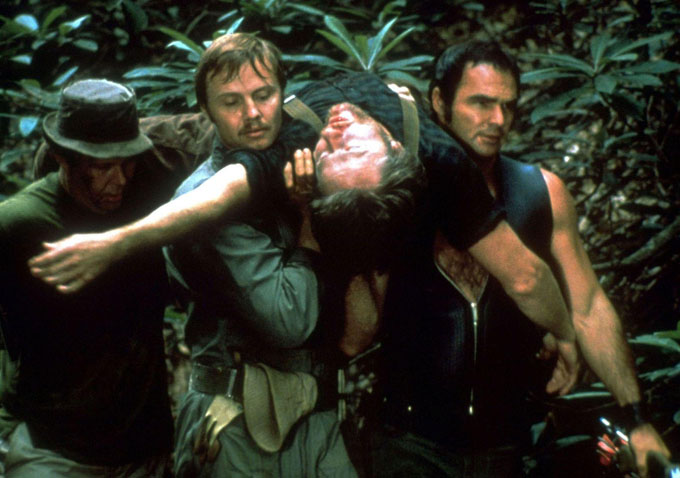
Returning for his second Hollywood feature after the experimental UK detour of “Leo The Last,” Boorman delivered what might be his best known film and certainly is his biggest combined critical and commercial hit: a seminal, three-time Oscar nominee that was the fifth biggest box office hit of 1972. That’s all the more remarkable given that “Deliverance” is an extremely tough, almost bleak picture featuring brutal violence, male rape and plenty of moral ambiguity. Based on the novel by James Dickey (who also penned the screenplay but also reportedly feuded with the filmmaker, even breaking Boorman’s nose in a fistfight), the film sees four friends, played by Burt Reynolds, Jon Voight, Ned Beatty and Ronny Cox, go on a male-bonding canoe trip together in on a river in Georgia, only to come into conflict with the locals, one of whom rapes Beatty’s Bobby and is shortly thereafter killed by Reynolds’ Lewis. An unsparing and gripping tale of men trying to survive nature and men who are closer to nature than them, the film’s at its most interesting when examining issues of modern masculinity, with the big city day-trippers turning up to the wilderness full of confidence only to discover that they’ve bitten off far, far more than they can chew. It’s a film that falls neatly between Western and horror flick, and Boorman niftily walks that line (aided by his excellent cast: was Reynolds ever better than he is here?) with his quietly observational but wire-taut approach that never intrudes, making his subjects seem all the more helpless.

