




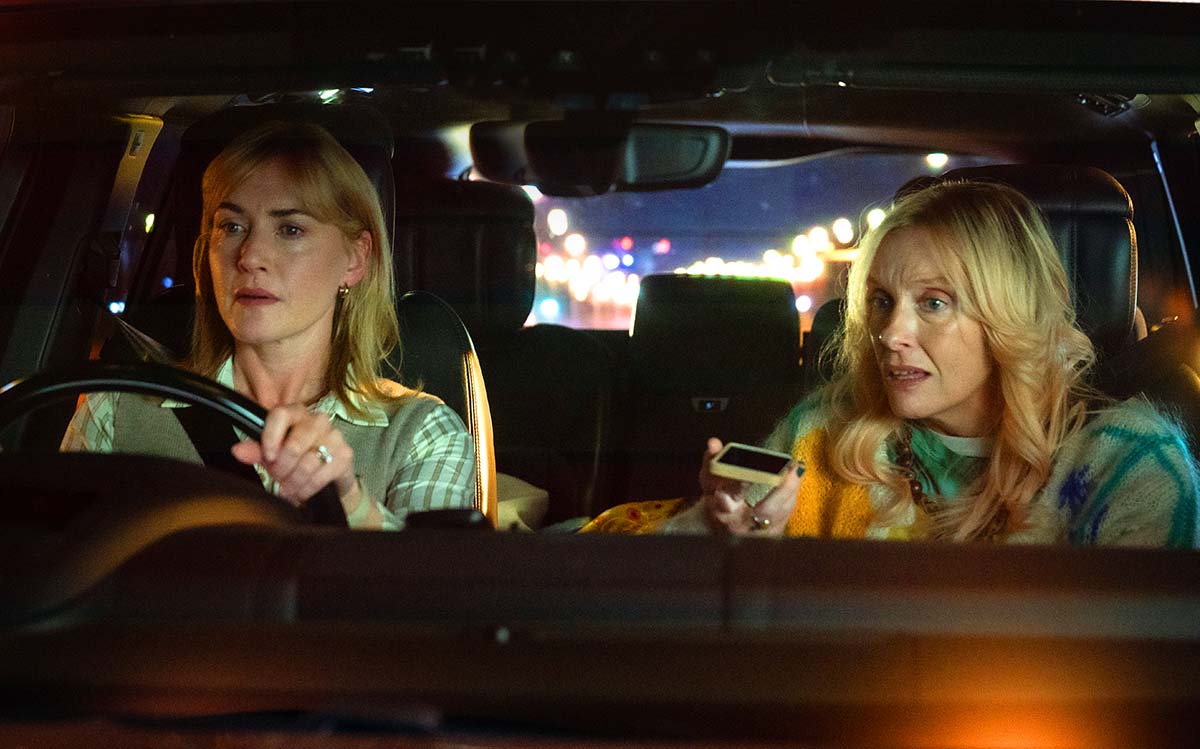
A clinic in telling versus showing, there’s little left to the imagination in “Goodbye June” and even less that goes unsaid. A too-tidy narrative about a sensible middle-class family dealing with the passing of their matriarch, the movie is well acted and ably shot, leaving precious little cover for the uninspired story beats to hide behind.
READ MORE: The 150 Most Anticipated Films Of 2026
“Goodbye June” opens with the eponymous character (Helen Mirren) struggling to make a cup of tea before collapsing in her kitchen. June’s adult son, Connor (Johnny Flynn), calls an ambulance and heads to the hospital with dad (Timothy Spall) in tow, where sisters Julia (Kate Winslet) and Molly (Andrea Riseborough) meet him shortly after. A third sister, Helen (Toni Collette), flies back to England to be with everyone as well, and the cracks and fissures that have kept the small clan at arm’s length up to this moment begin to expand in and around them.
June’s prognosis isn’t a good one, so she elects to stay in the hospital for her final days, where she uses the family’s close proximity to try and mend some of the aforementioned cracks and fissures. She has an ally in hospital nurse “Angel” Angeli (Fisayo Akinade), who observes the family drama from the start and tries to encourage reconciliation whenever possible. It’s a tall order, however, as Molly is mad at Julia, and both have had their fill of Helen, while Connor is fed up with all of them, including their dad, most of all.
“Goodbye June” isn’t the first movie to use a parent’s passing as a catalyst for confronting long-standing family drama among the survivors, though few are as awkward and obvious as this one. Winslet also directed the effort, and she does a fine job of moving the story out of its first act with efficiency and clarity. However, this good work is somewhat undermined by the second act’s insistence on exploring each character’s catharsis and motivation. Interesting set-ups about the friction between Julia and Molly, or Connor and his father, or even Angeli and the family, crumble into simple exposition when each takes their turn explaining their pathos.
The dialogue itself doesn’t feel out of place so much as the conversations themselves do, and it’s something the script by first-timer Joe Anders struggles with. There are a few interesting questions introduced early on, such as the history behind Julia and Molly’s feud or the reason behind Angeli’s interest in the family. Yet, the script doesn’t develop these ideas; instead, it sets them up for flat conversations or confrontations that are resolved in full. Worse still, there’s nothing for the characters to do in this story except come to terms with each other, with any hint of their troubles outside of this little bubble falling to the wayside.
The result is a movie about a group of characters whose sole purpose in the story is to serve as a backdrop for the drama presented over its 114 minutes, leaving no room for a nuanced understanding of any of them. Who is Julia outside of her feud with Molly (and vice versa)? Who is June, aside from a mediating mother who just wants everyone to get along in her final days? Who is Connor when he’s not exasperated with his dad’s behavior and exhausted from his duties as an untrained, live-in caretaker?
It’s hard to say. The movie doesn’t develop its characters or this world beyond the handful of days it portrays, so it’s somewhat difficult to know and connect with them. Indeed, nothing is discovered in “Goodbye June” except the revelation that nearly every member of the cast has worked with screenwriter Joe Anders’ Oscar-winning parents at some point, making this feel less like a movie and more like a favor bank withdrawal.
Winslet does admirable work with D.P. Alwin Küchler, a frequent collaborator with her on “Steve Jobs,” “Divergent,” and “The Regime.” The visual language of “Goodbye June” is clear and tells a straightforward story, with a commitment to long takes, trusting in the considerable talents of this cast to convey any subtext or internal dialogue. The pacing keeps things moving at a good clip and is a testament to how far a bad script can take an audience when a solid cast and crew propel the effort.
It’s just that all of this has been done before…and better (see “The Savages,” “Ordinary People,” or even 2016’s “Other People”). Mirren is magnificent as the fading mother losing her fight against the inevitable, and Winslet wisely leans on this, as well as the other reliable performances from her overqualified cast. Audiences have seen them all do more with far less on the page than what’s offered here, however, making this feel like a slow-moving pack of Formula 1 cars pulling parade floats. It’s not bad, per se; it’s just a bit of a waste. [C]

Warren Cantrell is a film and music critic based out of Seattle, Washington. Mr. Cantrell has covered the Sundance and Seattle International Film Festivals, and provides regular dispatches for Scene-Stealers.com. Warren holds a B.A. and M.A. in History, and his hobbies include bourbon drinking, novel writing, and full-contact kickboxing.


