


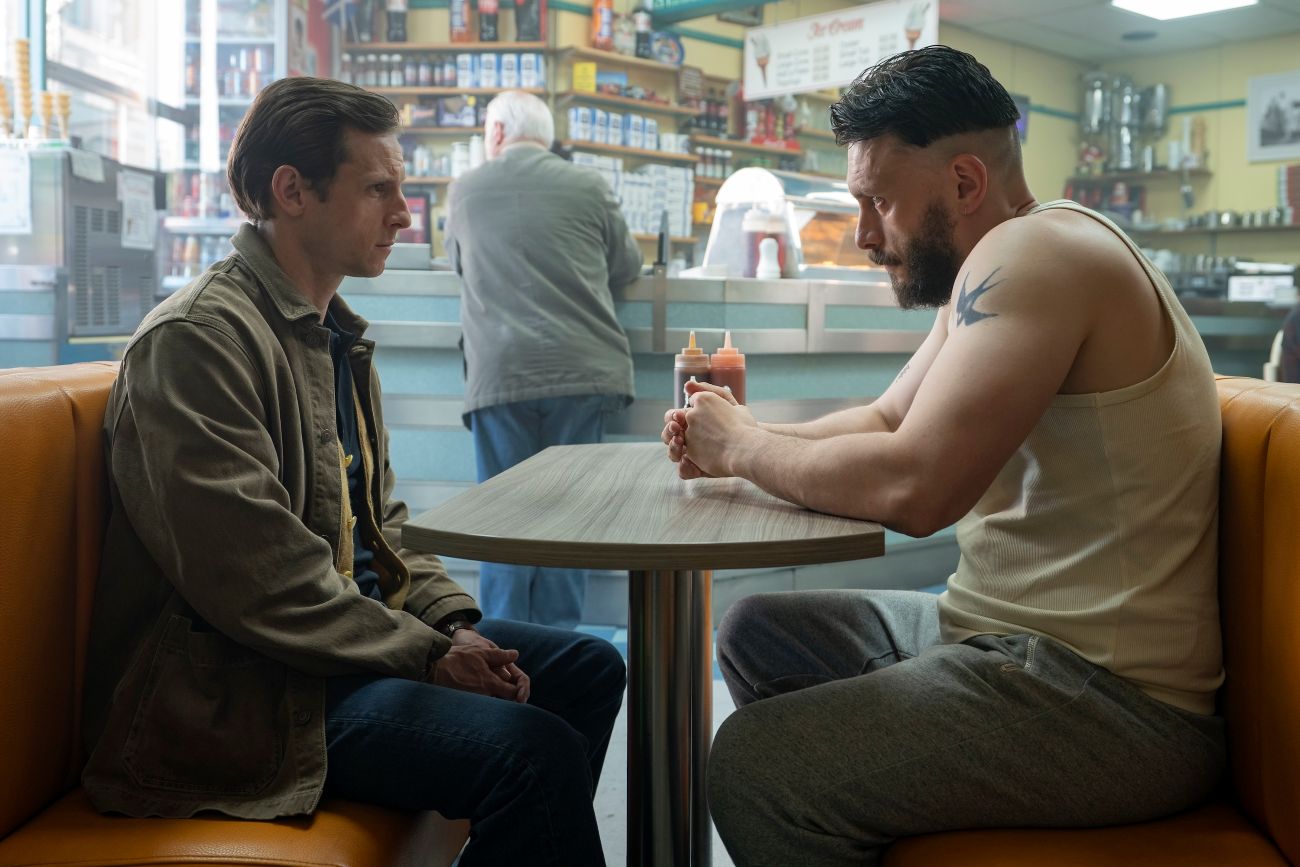
In the 2024 “Baby Reindeer,” the blistering, furious, and reflective original Netflix series, creator and star Richard Gadd was following a recent trend of narrative authorship. Similar to Michaela Coel’s “This May Destroy You” and Phoebe Waller-Bridge’s “Fleabag,” “Baby Reindeer” is driven by a singular voice that crafted a story around itself, probing a spectrum of darkness with whiffs of off-kilter comedy. It was a startling debut, drawing on Gadd’s experiences with a stalker and adapting the script from his own autobiographical one-man show. The series went on to win six Emmy awards, including trophies for Gadd as both a writer and an actor. It was a surprise hit, becoming a word-of-mouth success. Now, two years later, Gadd returns with another bruiser of a drama series. As it depletes the character’s energy, its blows become less and less effective.
READ MORE: 15 Must-See April TV Shows: ‘Beef,’ ’ Euphoria,’ ‘Margo’s Got Money Troubles’ and More
The six-episode limited series, told in broken-up segments that jump liberally between the past and present, tells the story of two stepbrothers. The two are as different as can be, near to the point of caricature. Niall (Mitchell Robertson in the past, Jamie Bell in the present) is meek, described as “easy prey” by Ruben. (Stuart Campbell in the past, Gadd in the present) With his unflattering closed-cropped cut, his feeble disposition, and the bullying he faces at school (and, frankly, at home), the story is very much setting him up as the mousy counterpart of Ruben’s larger-than-life bravado and lurking, prowling, powder-keg rage.
It becomes much more interesting when the two forces blend, as in the early moments when Robertson demonstrates unexpected vulnerability, or when Bell highlights Niall’s desire to get what he wants. But the beginning, which delves deep into Ruben and Niall’s early days in high school and university, struggles to handle the dramatic shift between the two personas. Because it becomes increasingly frustrating to watch Niall succumb to the same pattern of toxicity, it similarly becomes exhausting to watch the unfathomably easy cruelty of characters who are all rooting for Ruben despite his hellacious acts of violence. Maybe this is just another story about how society will always prioritize and nurture a certain type of masculinity above others. But “Half Man” doesn’t seem to know what to do with its own messaging.
The opening of “Half Man” evokes an oppressive sense of impending doom. Personal doom, of the cringe-inducing sort. Because the moment that Ruben arrives in Niall’s life, he spells trouble. Niall’s mother seems to have no qualms about inviting the violent boy who bit off another’s nose into their home, having begun a relationship with Ruben’s mother. And there’s a constant sense of friction as Niall seems unable to settle or flourish in his own home. Ruben’s brand of violence perpetuates acts of freedom.
From threatening Niall’s school bullies, to orchestrating the loss of Niall’s virginity following the latter’s assistance with helping Ruben pass his tests, to Ruben seeking unexpected comfort in their first reunion due to his father’s drunken antics, their relationship is tied in a palpable unease. Ruben may say that family comes first and might demand loyalty, but he cultivates a sense of danger in his interactions with the world.
And there’s certainly an interesting thread in how these two interact with one another. Ruben clearly influences Niall. And it makes how he interacts with the world, his internal hostility towards his sexuality, and even how he engages with his mother, who is gay, all the more fraught. He’s accepting, to a degree, but there’s a catch when it comes to himself.
And it all comes to a head is an unflinchingly violent act that further pushes the brothers apart, and sets the course for the next leg of the journey, both on their own and, ultimately, together when they intersect again. Because, as “Half Man” makes clear in the opening moments, the two are destined to be in one another’s lives, no matter the disruptive actions they engage in along the way. It makes Niall’s self-loathing all the harder to process because his story is inevitable.
With its oppressive score and the drab grays that blanket the visuals, the series declares its self-serious intent. This is a story about two broken individuals who must either confront or avoid their demons, or risk uncovering unwelcome truths about themselves. But there comes a point where we begin to question just how awful everyone can be. Because for all the tangled threads that the series explores, and the inciting incidents that introduce layers upon layers of pervasive abuse, both emotional and physical, the series quickly becomes an endurance test. Because so much of it comes down to whether we’re able to stomach the transgressions against Niall and the characters who see his struggles as either comeuppance or the result of his own sole error.
In one of the more scathing lines, someone tells Niall that one of the most damaging forms of self-harm is “convincing yourself you’re worthy of a higher purpose.” It sucks the air out of the room. It’s a truly devastating interaction, shining a glaring light on how fate and circumstance continuously disrupt his life. Later, he finds himself hiding out in a literal doghouse. He has, unceremoniously and quite abruptly, found himself at rock bottom. Or, one level of it, at least. But the writing and the pacing fail to land with the telegraphed impact.
The story is painful. And Gadd has a knack for truly reaching for the most nauseating truths, our own internalized, slow-motion car crashes. The best moments throughout the series, which grow increasingly heavy and miserable, are two sequences in which Niall and Ruben bare their souls to one another. Gadd writes both with a scripted, theatrical precision that lends itself more to a monologue than to a naturalistic back-and-forth. But through these moments, we get to the heart of what Gadd is trying to accomplish: a character study that sinks its nails under the scabbings of trauma, abuse, and the noxious, prevailing reductive notions of what it means to be a man.
Bell and Gadd have a strong chemistry, and Bell, in particular, does phenomenal work. And the series ultimately works much better with the characters in the present than in the past. Bell delivers a heartbreaking performance as a man who operates on a level of performative heteronormativity, all the while so undiluted and raw that his innermost emotions and hatred ring true.
But despite some strong writing and the undeniable energy between the two central performers, “Half Man” loses itself, succumbing to a tired necessity to evoke pain without justifying it. It’s misery for the sake of misery. A slow descent where any chances for redemption or self-realization are either extinguished or fed to some overarching and cheap desire to shock the audience. The trajectory doesn’t feel natural or organic, but hyper-choreographed.
What the series wants to be is clear to the point where the thesis might as well stamp itself across the screen. But because of it, the series loses its authenticity and becomes reductive. By the time the finale rolls around, the tragedy of these characters reaching a fever pitch, it’s clear that no resolution is coming. Just another example of how violence begets more violence with no clear interest in interrogating beyond a thematic narrative we’ve seen tested again and again.
There’s something repugnant about the series that exhausts its premise long before the more interesting part of the story begins. In how the series explores Niall’s sexuality, and how it depicts the violence between him and Ruben, the latter of which is overbearing and ugly. Gadd clearly has a lot of ideas, and he knows how to harbor simmering hostility and volatile undoings that dress themselves with unassuming bouts of dark comedy. But, after six hours of watching the unraveling of physical and emotional torment, and a story that exists with a caustic, nihilistic edge that allows little, if any, room for hope or healing, the effect is redundant. It needed another pass or another set of hands to guide the story inwards, rather than something that projects ideas without asking why. [C]
“Half Man” premieres April 23 on HBO.

New England-based Tomatometer-approved film and television critic. Ally is a member of the Boston Society of Film Critics, the Boston Online Film Critics Association, and the Online Film Critics Society. Her writing has also appeared at RogerEbert.com and The Mary Sue.


