



But there is a difference between the culture now and the culture spawned by “Jaws.” The rise of the internet, of streaming services and social media platforms has also led to a strange, contradictory fragmentation-but-also-homogenization of Hollywood’s offerings. With so many entertainment options on offer, Hollywood has found itself responding by putting more money and resources into fewer, bigger properties and with that practice comes increased risk. Anything that can lessen that risk in the eyes of whichever actuarial consultants green-light big movies these days has to be a good thing, and a film’s storyline being already demonstrably popular with millions of readers is one such potentially mitigating factor.
And the fact is inescapable that many of our recent highest-grossing films have been book-to-film adaptations, like “The Lord of the Rings” trilogy and the ‘Harry Potter,‘ ‘Twilight‘ and ‘Hunger Games‘ franchises. Indeed, the Young Adult movie adaptation is a whole category of seemingly risk-averse money printing unto itself, until you look into it and realize how many more failures there have been than successes — either critically or commercially. There’s scarcely space to do that waning phenomenon justice here, but for a quick rundown, check out Oli Lyttelton’s November 2015 ranking of every YA franchise since ‘Harry Potter’ (and not just because the poor guy had to watch “Eragon” to compile it).
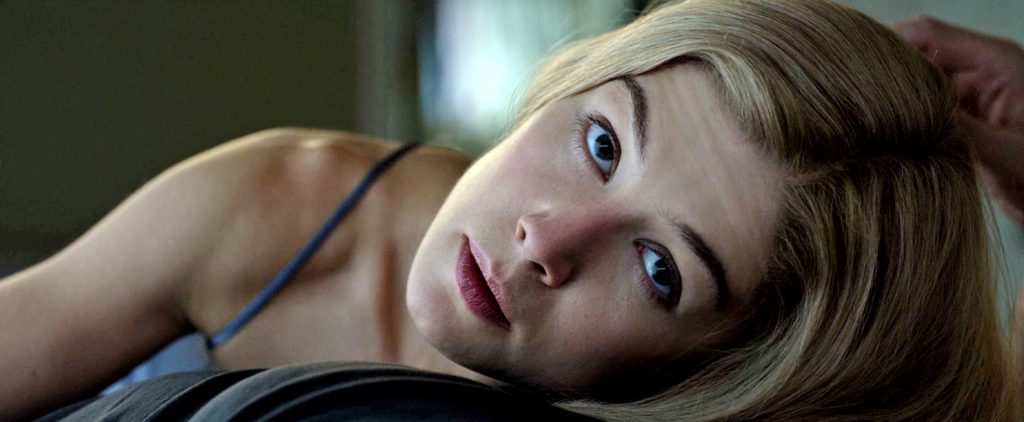
The young adult explosion may seem on the surface somewhat removed from that of the older-skewing “phenomenon” books that have been made into films recently, like “Fifty Shades of Grey,” “The Girl With the Dragon Tattoo,” “The Da Vinci Code,” and “Gone Girl.” And yet they present many of the same challenges. Around the time of the first ‘Hunger Games’ movie, Scott Tobias and Tasha Robinson of the AV Club had an enjoyable back-and-forth about the pitfalls of literary adaptation, particularly in regards to how faithful a film should be to its source. But it feels like, just a few years later, that seemingly fundamental question has become somewhat esoteric, even naive in its assumption of a hard-and-fast binary between the book and the film, and that viewers are going to contend with the film on the basis of their knowledge of the book and not simply see each as an extension of the other. In the age of fandom, it’s not just comic book movies that are created phenomena that succeed or fail based on factors outside of anything to do with their inherent qualities. In fact, it feels like the hitherto crucial question of whether an adaptation is slavish enough to satisfy the diehards, while cinematic enough to work as a film in its own right, is also becoming increasingly irrelevant.
How else are we to account for the fact that so many of the high-profile adaptations in the adult category, like “The Da Vinci Code,” “The Girl With The Dragon Tattoo” and “Gone Girl” are in the thriller category which, more than most, is reliant on a twisty, surprising plot for which reading the book obviously acts as one massive spoiler (this in a media culture where “spoiling” is a discursive crime roughly equivalent in gravity to murder, or at least hit-and-run manslaughter). It really seems as if the these films, even the ones with an auteur director at the helm like David Fincher, are consumed less like roll-of-the-dice standalone movies, and more as commodified parts of a larger scheme, in which the inherent familiarity of the property is actually its chief appeal.

So shunting along in this age of intertextuality comes “The Girl on the Train,” which from the off as both book and movie was marketed as a new “Gone Girl” (both the book and the movie). “Gone Girl” was directed by the same name director who did “The Girl With The Dragon Tattoo” (sidebar bugbear: all these films about interesting, complicated, ambivalent women have ‘girl’ in the title, so look out for the book-to-film adaptation of my 2019 runaway bestseller “The Girl Who Was Actually A Woman But Felt Uncomfortable Using That Word To Describe Herself” starring Lupita Nyong’o and Elle Fanning as her sassy sidekick). Each of those elements has fed into the next, which will in turn birth another.
There have always been books that have taken off and sold in unprecedented numbers, and whose success fed into this self-generating cycle of branded buzz. Certainly, studio era Hollywood regarded their films as “products” at least as much as the majors do nowadays. But if there is a difference it’s perhaps that they regarded them as the end product. It’s a depressing idea that a book can be reduced to little more than a kind of large-scale market research for the ensuing film (via the transposition of “The Girl on the Train” to the U.S. for the movie, where the book performed just as well, but can reach a greater number of people), but in our age of endless commodification there’s some stone-cold comfort for the book lovers among us, in the exhausting observation that actually neither is really the “finished” end product. Whether or not it performs well at the box office, whether Tate Taylor is deemed to have done the book justice or not, whether the film is embraced by critics on its own merits at all, “The Girl on the Train” will chug along into the next Hawkins book, or the next ‘Girl’ movie, or the next thriller in a muted palette to feature a woman as an unreliable narrator. We’re picking up speed, but it’s the Circle Line.


