


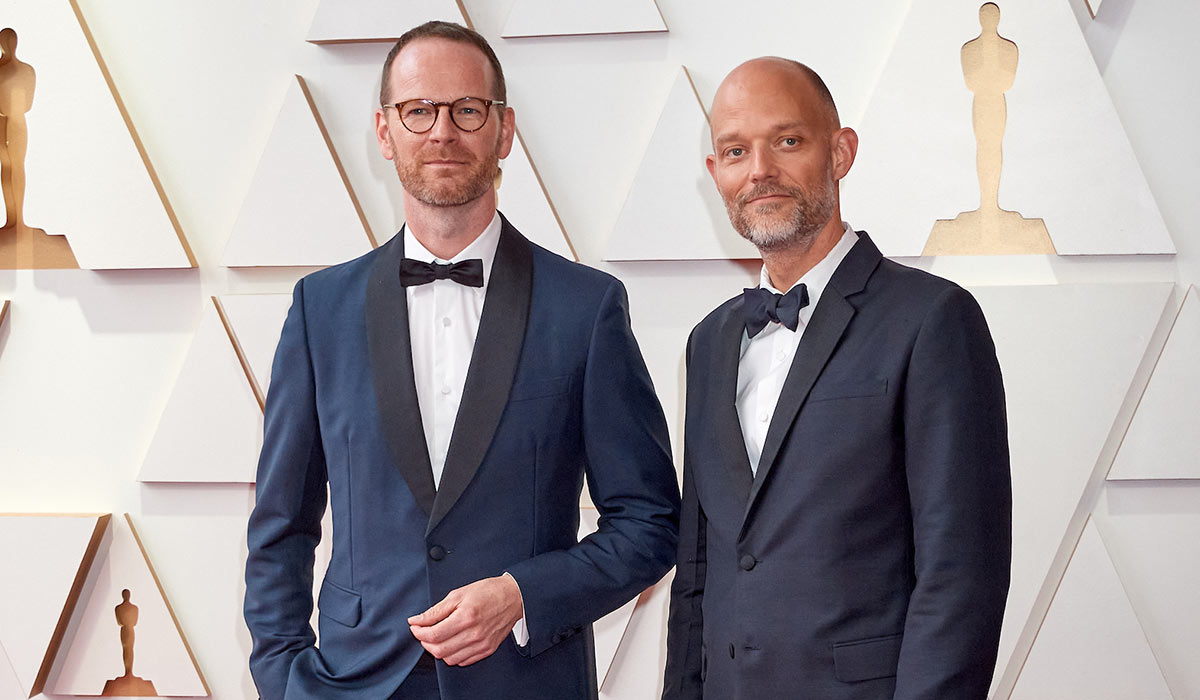
Joachim Trier and Eskil Vogt already have an Academy Awards nomination on their resumes. They were recognized in 2022 for their magnificent drama “The Worst Personal in the World.” Four years later, it’s hard to imagine the longtime collaborators missing the cut a second time around for their latest celebrated feature, “Sentimental Value.”
READ MORE: Renate Reinsve Is Having A “Sentimental Value” Moment: “My Fear Is My Friend”
A staple on year-end top 10 lists and a recepient of practically every precurssor nomination an Oscar contender can land, “Value” reunites Trier with his incredible “Worst” muse, Renate Reinsve. As Nora, Reinsve plays an actress who has a difficult relationship with her father, a filmmaker portrayed by Stellan Skarsgard, who wants her to star in his next project. As Trier and Vogt explained how they collaborate, the former pointed out several times the importance of making films such as “Worst” and “Value” feel authentic to the times.
“To me, ‘Sentimental Value’ is trying to go into a tender, intimate space when the world in contrast is quite rough and people are very polarized and opinionated and polemical,” Trier says. “Then we’re like, ‘O.K., let’s really go subtle and sensitive and human, because that’s the energy that we felt would counter a lot of the kind of cynical hard s**t that’s going on.’ And that’s just our interpretation of the moment. And to keep that relevant to us in our lives, it’s nice to start over, actually. It’s risky. We feel scared as s**t every time. We have complete anxiety of failure, of course, like we all do when creating anything, but I think it’s a good system.”
During our conversation a few weeks ago, Trier pitched Ted Sarandos being visited by filmmakers as ghosts in the vein of ” A Christmas Carol,” Vogt did a very deep dive into their unorthodox (to some) writing process, and the pair share how common actors with the severe theatrical stagefright depicted in the movie is and much more.
This interview has been edited for length and clarity.
_____
The Playlist: How are you guys doing?
Joachim Trier: Hey, we’re good. How are you?
The Playlist: Good! Congratulations on the movie. How would you describe your writing process?
Joachim Trier: Have you seen the opening of “Ishtar” when the two guys play piano? No, this is an in joke because we know who you are and you’re a real cinaste. You love movies. Sorry, I can make that joke.
The Playlist No, it’s good. I haven’t seen “Istar” since I was in elementary school, but I get it. I think I remember it.
Joachim Trier: Yeah, they’re trying to be Simon and Garfunkel, and it’s a beautiful film, beautiful scene. Eskil, how do we write? I’m in the room behind Eskil. He’s in our office right now.
Eskil Vogt: Yeah, this is the place where we write. I think we kind of became very craft savvy just by working a lot and writing a lot and being film lovers and analyzing and talking about films all the time. So, we kind of try to keep a part of us that’s being very unprofessional when we work. It’s like Bernard Sumner in New Order, who refused to learn to play the guitar properly because then he would just be a musician. We want some personality in our process, and we were friends before we started to make films together. So, when we begin the process, we want to forget what’s difficult or what’s hard to find or those other things, just leave them at the door and just be free. I think that’s our philosophy, and being naive. Try to have that idea that we had when we started out, that everything can fit in a film. There are no rules you need to follow, and then just see what happens. And then, of course, we have to adapt to realities because that’s filmmaking. But we like to start out just talking. We don’t really know what the film is going to be. We have some ideas, and then we talk about life and music, and we play music all the time while we’re writing, and then slowly something starts to come together. That’s our process. And all those things that kind of frustrated me in the beginning is that we spend too little time actually writing. I just learned to accept that that’s part of our process and that feeds into the film in strange and unpredictable ways that we would never have, I think, if we had a more professional way of working.
Joachim Trier: So what we do is that we have a lot of ideas that are specific and very often formal. “Worst Person in the World.” How do we do a breakup scene that’s original so we don’t tire people with what they’ve seen before? How do we do a meet and greet at a wedding where they’re saying, “How can we not be unfaithful and see what the transgressive limits are?” So, we try to do almost set pieces of drama, dramatic comedy. And then we have tons more scenes than what we actually need. And that’s what Eskil means. The freedom of moving things around to the last minute, so that we don’t only sit there and try to fill in blanks of a story. We have tons of material, tons of character scenes, and we try to structure a story from that material so that we feel that the scenes are worth making, showing, and seeing. That’s the energy that we try to sustain like music. And naively said because I’m a bad drummer who was kicked out of the park when I was young. I still want to make an album. I still want to do all the opening sequence like Renate’s, and we have an essay about a house. Then there’s a set piece that she has stage-fright. Then there’s building a film from these sequences because I think that’s what people want to go to the movies to see. Not some classical dramaturgical solution, but that piece of cinema that is engaging, human, and entertaining .That’s our goal. We’re trying our best here, but that’s kind of what we’d love to do. And then to also keep an open mind that the actors will come in and be super smart and interesting because we cast them well, we think. So, I take them into rehearsal for a while, test out some stuff, and we do a little refinement at the end, where Eskil sees what I videotaped in the rehearsal room so we can get rid of some stuff. I think that’s the best way of explaining it.
The Playlist: Knowing you have all these ideas, do you have a big board, were you have little Post-it notes or little cards with ideas that you have? Or is it more organic?
Joachim Trier: Big Document.
Eskil Vogt: Big document for a long time. And then we kind of skip the treatment stage, or we try to go from notes and discussions of the structure, and then we make some notes and we put it up on the board that’s offscreen here. A lot of colleagues, they work very well starting with a plot and then fleshing out that plot like “pitch, synopsis, treatment, first draft.” We don’t work that way. Like Joachim says, we have a lot of things we want to tell. We have a lot of characters with a lot of scenes, and we know some of how it fits together, but then we put it up on the board, and then we make the plot. The plot is important because it structures the piece, but it’s more like how do we make a plot where we can fit as many of our darlings as possible to make that album, as Joachim says. So, we go to the plot much, much later than our colleagues. In a way, I always use a bad metaphor that the plot is not the thing in itself. It’s like the hanger you put the item of clothing on, and the clothes are the film, and the hanger is just something you need so it can be displayed.

The Playlist: A friend of mine teaches screenwriting, and he’s no doubt horrified by the idea of you doing the plot at the end, but I love it. But those darlings and scenes that you wanted. Do you have passionate debates over what to include? Are there moments you let go and then realize were integral to the film?
Eskil Vogt: Oh, no, no.
Joachim Trier: It’s editing.
Eskil Vogt: Editing is also a place where that discussion really happens with the editor, Olivier Bugge Coutté, as well. But I remember one thing from the script, and I can’t remember exactly what your take on it was, Joachim, but it was a small scene where Gustav [Skarsgard] visits his old collaborator, his DP [Lars Väringer]. B
Joachim Trier: Yeah.
Eskil Vogt: Brilliant. And I find it was one of my favorite scenes in the script, but it kept getting attacked. People felt it was too far removed from the central piece of the father and the daughters, but that was one that almost was cut.
Joachim Trier: Yeah. And we fight for digressions. And then I also slowly become the director, and I fight strategically to get it in the shooting plan. And of course, to be quite frank, I mean, I guess we revealed ourselves, man. I mean, we like to have the idea that we do these kinds of loose, jazzy things, but we’re actually super structurally oriented as well at certain points in the process. Before I shoot we know that certain scenes that they can swap or play. So, I don’t lock us into costumes that can’t change or make something into one day that might have to have space between them. And I mean, we’re doing a polyphonic story here with multiple characters where actually the younger sister takes over the latter third almost without me wanting an audience who haven’t seen the film to know that. So, we’re trying some tricks that are a bit muscular and complicated in dramaturgical terms. So, obviously we discuss a lot of those challenges, and that’s on my mind as I go into the shoot. And since we’re close friends, I call Eskil during the shoot sometimes when we rewrite along the way. When we have busy days on set, Eskil will know what’s going on. Meanwhile, the editor is editing alongside. And remember, diting is also a place where that discussion really happens with the editor, Olivier, as well And Oliver, Eskil and I made films together 25 years ago. Short films in film school. And I’ve written six films with Eskil. All six have been directed by me and been made. Eskil has his own career on the side and does wonderful work as well, but we don’t have anything in the drawer. Every time we do a script, we do the film. And it’s almost superstitious, but we know we’re going to land with Olivier, who’s an extremely sophisticated editor, great at understanding performance, but also he gets our style. We have a style together. So, I think that kind of organic process of not dividing it up between everyone and rather collaborating is the strength of our team here in a way. So at the end of the latter half of editing, Eskil comes back in, and he’s been away from it for quite a while. Then he can have a new set of eyes on it. And then we really have a lot of arguments. But there’s always love at the end, andwe embrace. We all agree on the film, even though it’s my final call, I don’t think we have fundamental disagreements about any of our six films, Eskil. Correct me if I’m wrong, but we always land it, but it’s a dialectic, man. It’s a strong-minded people that need to be backed. So you’re asking a good question. It can be a bit gnarly and fun sometimes.
The Playlist: But you just said superstitious about your process. I’m assuming then that there’s no notepad of ideas for future movies down the road. You haven’t thought about what it’s going to be until you sit down and get in the room.
Joachim Trier: Yeah. We come in with ideas, of course, I’m thinking all the time now that I’m on the road, and Eskil started early conversations, but we don’t want to decide until we have the time and space to breathe and be focused on that. And you see the shelf behind Eskil back there? Full of film magazines, Film Comments, Sight and Sound, film books? We always ask a parallel question: “What’s filmic? What’s interesting in cinema right now? What would we like to see? We’re very taste-driven.” So, I think it’s also healthy to not necessarily have to pick up something that’s 10 years old because right now how cinema is communicating with the form continually. To me, “Sentimental Value” is trying to go into a tender, intimate space when the world in contrast is quite rough and people are very polarized and opinionated and polemical. Then we’re like, “O.K., let’s really go subtle and sensitive and human, because that’s the energy that we felt would counter a lot of the kind of cynical hard s**t that’s going on.” And that’s just our interpretation of the moment. And to keep that relevant to us in our lives, it’s nice to start over, actually. It’s risky. We feel scared as s**t every time. We have complete anxiety of failure, of course, like we all do when creating anything, but I think it’s a good system.
The Playlist: You have a very distinct timestamp by having a Netflix press conference in the movie. This sequence could have gone wrong in the context of the film and the tone you were attempting to craft. What made you decide to put that moment in and not have the streamer be fictional or generic?
Joachim Trier: I’ll give you a quick answer. I think it’s very clear that Netflix is a major part of cinema history right now. So, I think all we’re saying is that it’s kind of fun to look at a man who’s an older director in his 70s who hasn’t made a film for 15 years, to not get why the hell his film might not be shown in the theater. Ted Sarandos is a smart man who’s actually contributed to supporting a lot of great filmmakers, made a lot of great films, but why can’t he just show it on a big screen? Estil, here’s a thought for you. Now we’ll take Greg into a writing room. So, my Christmas wish, guys, is that Ted Sarandos will have a Ghost of Christmas past. During Christmas, they’ll have Brisseau, Chaplin, and let’s say Kurosowa visit him and talk about what it means for humanity to have the theatrical space. And he will wake up, and by the time he’s probably obtained Warner Brothers, he’s going to come out after Christmas, say to everyone, “I’m good at making movies, but I was wrong about how we need to prove to show them to people. Let’s go theatrical across the line.” Wouldn’t that be wonderful?
Eskil Vogt: Yeah.
Joachim Trier: That’s what we’re saying. I’m terribly naive here, but wouldn’t it be beautiful?
The Playlist: Eskil, I don’t know if you’re as excited about that idea for a movie as Joachin is, but I do love that idea. Also, Stanley Kubrick needs to be there because, I mean, Warner Bros.
Joachim Trier: Stanley Kubrick. Good one.
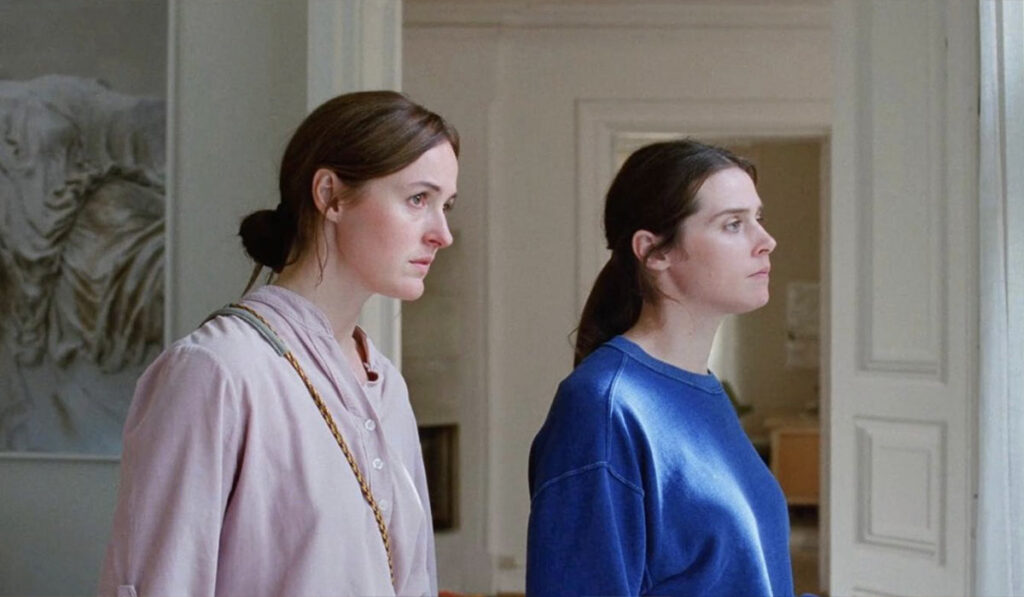
The Playlist: When people watch the trailer or they hear about it, they would not necessarily suspect that there is a very serious storyline about family and legacy and what happened in Norway during World War II. There have been so many movies about World War II, but these days it’s rare to e neighbors reporting on neighbors and what happened back then depicted ons creen. Where did incorporating this narrative come from?
Joachim Trier: Yeah, I think it’s kind of an untold story of how the second World War affected people. There are a lot of heroic stories about the 1940s and the occupation [in Norway]. I come from a family where my grandfather was captured during the war. He was in the resistance, and you know how you get older and time shrinks when you’re a kid, you think, “Oh, the second World War was so far away.” But the older you get, you see that actually it’s not so long. It’s a paradox of time. And I think Eskil and I have talked about my family story, things Eskil has experienced, and other people we know. How generational trauma travels. And my parents were of a generation as [well as Stellan’s character] who grew up in the ’50s and ’60s when that whole generation had experienced the war. His parents’ generation had a stiff upper lip, “Let’s move on, let’s look at the future, let’s not look back.” And things were quite undigested in our culture, and a lot of trauma and grief were not named, not spoken, not even mentioned. And it was a tough climate for that generation of kids. And then you saw the sort of ’60s explosion of individualism and breaking the f**king rules and “F**k our parents” and then punk came in the ’70s. The latter half of the 20th century and how it affected families interests me. At least in our neck of the woods. But I think many places now that I travel to have had that experience. And both Eskil and I have kids now. So, we look to our kids and think, “What will we transfer, or is the war now stopped with us? Does it take three generations only?” So. these thoughts led to some of those ideas, I think. Am I correct, Eskil? I think that’s kind of the ballpark where these things started.
Eskil Vogt: Yeah, I think so. It was such a tremendous event, of course, in so many countries. And that illusion that we just dealt with after the war, and then we were through, because we had an economic boom and everything was O.K. And of course, those traumas, they persist. And I guess that’s what we were interested in. Seeing how personal family traumas or the bigger traumas are interwoven in this story. How they are passed from one generation to another in insidious ways. You don’t really know, and you don’t realize it, but they do. And so we were just very curious to see if we could craft a story that wasn’t about the rock hitting the surface of the water, but about the ripples, which is something we always find very challenging and interesting is not go straight to the most dramatic moment, but instead see what consequences they might have in a more subtle way.
The Playlist: Before we end I have to ask about the initial opening of the film with Renate as an actress who is so afraid to go out on stage. And she told me that was never her personal experience. Who have you witnessed this happen to? Or was it an anecdote somebody else told you? Where did that idea come from in the screenplay?
Eskil Vogt: I mean, it’s surprisingly common when you speak to actors in the theater, and we found that so fascinating. They’re doing the thing they need to do, the most rewarding things. The thing that they kind of built their lives towards, and they can’t do it at the same time. We found that discrepancy fascinating and also, of course, fun to explore. So it wasn’t modeled on someone in particular, was it?
Joachim Trier: Well, we have this one friend I think should remain nameless who played Hamlet recently, and you know who he is, that vomited on a Tuesday night occasionally because he was still so nervous after having had a six-month run and leaving his family. Going to do some yoga at the theater in the basement, doing some voice exercises, getting warmed up and then going into panic mode, vomiting, going doing Hamlet for four hours. And isn’t that just beautiful? Isn’t that incredible that people do that for us, the audience? I think that’s a great kind of tribute to the human will of communication to try to do something for each other like that. It’s beautiful.
“Sentimental Value” is playing in limited release and is now available on VOD.
Follow Gregory Ellwood on Bluesky
Follow Gregory Ellwood on Threads
Follow Gregory Ellwood on Instagram
Sign Up For The Breakdown Newsletter


