


 “Shoeshine” (1946)
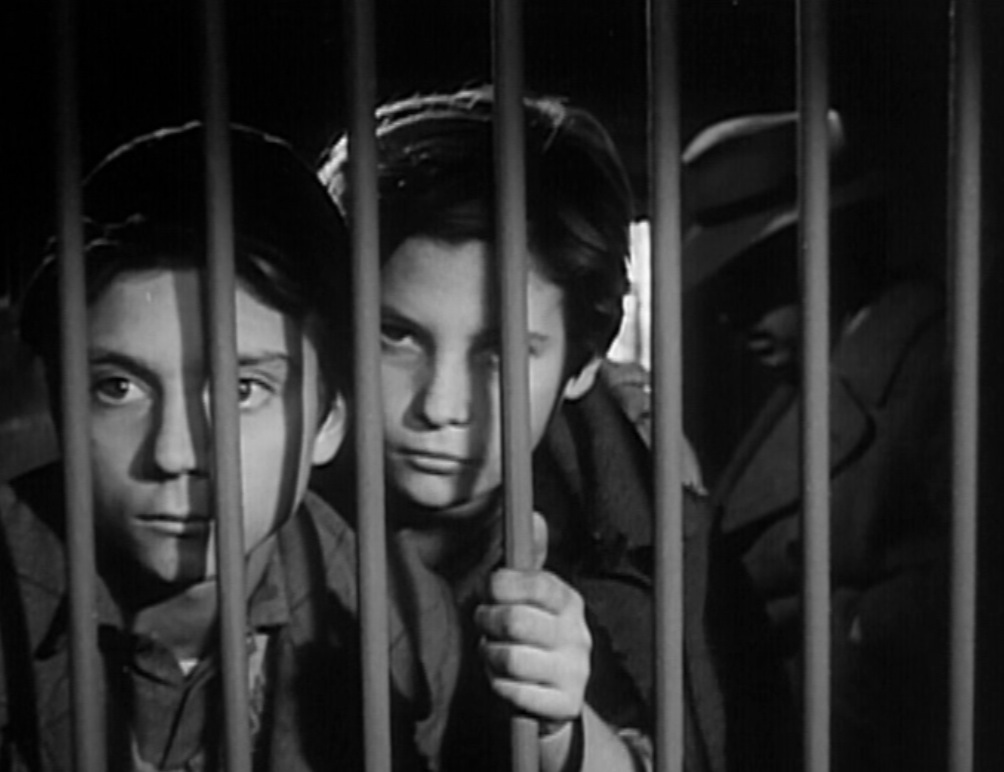
While “Bicycle Thieves” is the ne plus ultra standard-bearer of neo-realism, De Sica had a couple of arguable home-runs in the genre already before he hit that grand slam. “Shoeshine” is another urtext exemplar of neo-realism: non-professional actors grittily facing the brutal realities of the time to heartbreaking effect. A post-war tragedy not unlike Roberto Rossellini’s “Germany Year Zero,” “Shoeshine” places its lens on the aftermath of WWII, centering on Italian street children abandoned by their parents after the war. Struggling to survive, two boys Giuseppe (Rinaldo Smerdoni) and Pasquale (Franco Interlenghi) who have no one but each other, scrape together what they can shining shoes on the streets of Rome. The share a naive dream to buy a horse, but are duped by a shyster and land in a juvenile prison, where their friendship is strained to breaking point — much of the movie centers on the slow disintegration of the boys’ bond. Innocence and comradeship are destroyed by the time film’s bleak ending comes, but it’s a keenly humanist and empathic one, in which De Sica comments on the terrible after-effects of WWII even while breaking your heart. It proved so moving that the film earned an honorary Academy Award, and paved the way for the establishment of the Best Foreign Film category shortly thereafter.
 “Bicycle Thieves” (1948)
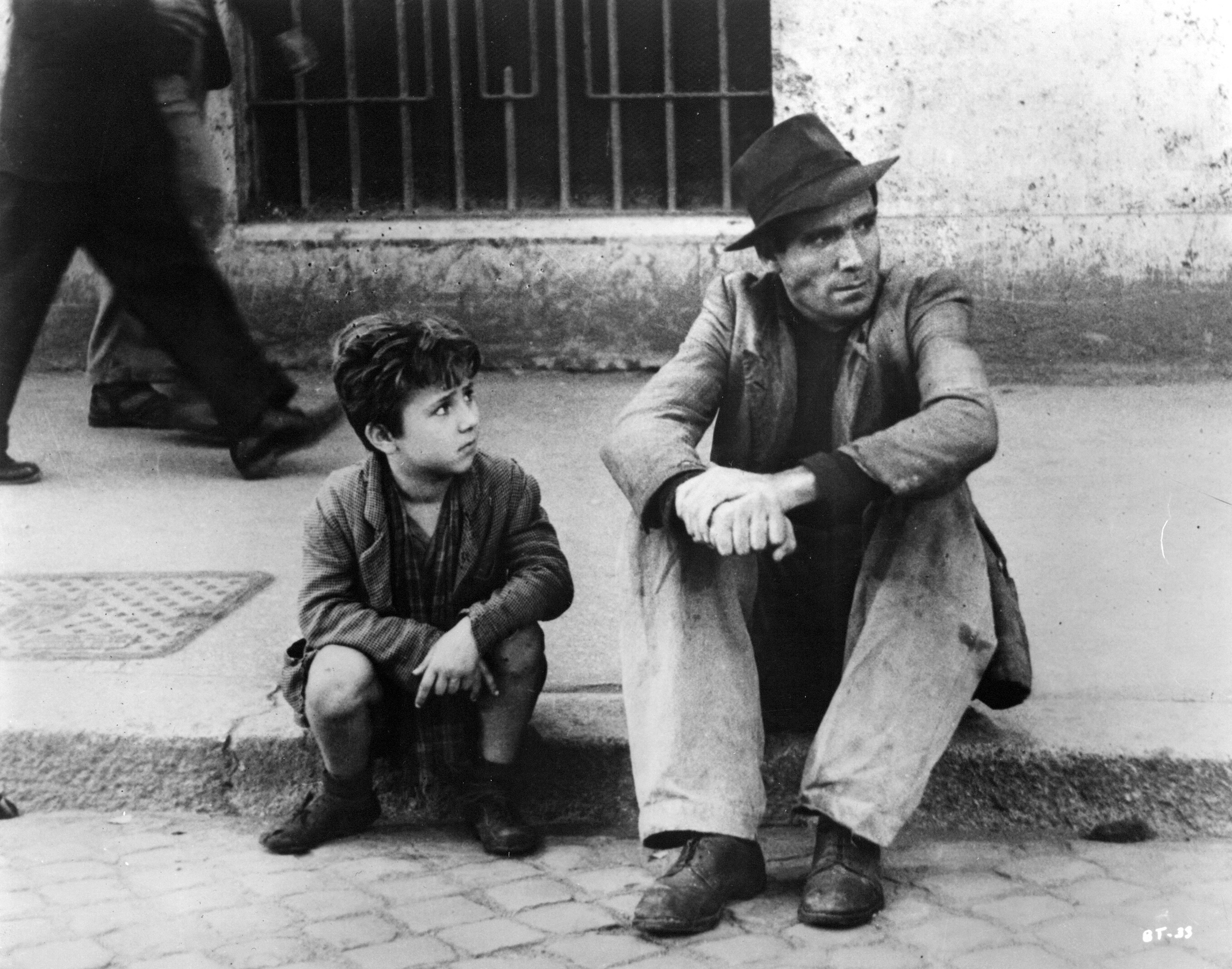
Why does De Sica’s 1948 neorealist masterpiece remain as powerful as ever to this day? Sure, the universal import of its barebones story is one major reason for its lasting power, with its everyman main-character father, Antonio Ricci (played by nonprofessional actor Lamberto Maggiorani), embodying the struggles of the working class to provide for their families. But perhaps the quality that remains evergreen about “Bicycle Thieves” is its sense of exploration. Bursts of desperate activity alternate with stretches of even tenser low ebb as Antonio and his son Bruno (Enzo Staiola) search for the former’s stolen bike — surely as would happen in real life. Such attention to cinematic rhythm allows the film to expand luxuriously into a devastating portrait of an entire society: one clearly divided into haves and have-nots, populated by people who are focused entirely on their own immediate concerns at the expense of empathy toward their fellow man. Alas, our main character isn’t above such insularity, as his desperate final act proves — but the beauty of De Sica’s film lies in how we are made to fully empathize with his plight by then, making the act as gut-wrenchingly inevitable as it is heartbreakingly tragic.
 “Umberto D.” (1952)
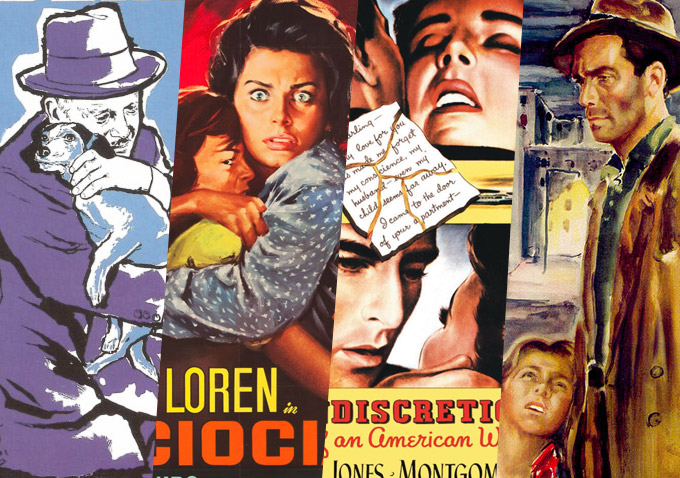
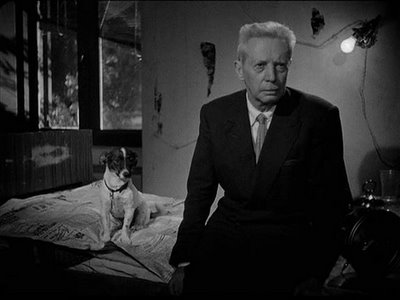
A heartbreakingly humanist film, and the De Sica title most likely to rival “Bicycle Thieves” in terms of cinephile appreciation, “Umberto D.” is perhaps the most overtly emotional of the Italian neo-realist masterpieces. But while it plays a veritable symphony on our sympathies, in perhaps a more overt way than the strictest realism should allow, it is simultaneously so boundlessly sincere that it can hardly be accused of manipulation. Simple and devastatingly humane (it was said to be Ingmar Bergman‘s favorite film ever) the story details the onset of genteel poverty for middle-class pensioner Umberto (Carlo Battisti) in post-war Rome, whose only companion is his devoted dog Flike — the human/canine relationship being drawn with such grace and gentle fervor that it highlights the cruelty and indifference of many of the human interactions by counterpoint. Near penniless and homeless, the only thing postponing Umberto’s suicide is concern for Flike, so the film becomes not just about the love of a pet, or the lonely invisibility of old age, it becomes about legacy. And about how sometimes, while there are so many reasons to die, loyal unwavering love, even from and for a dog, might just be enough of a reason to live.

