


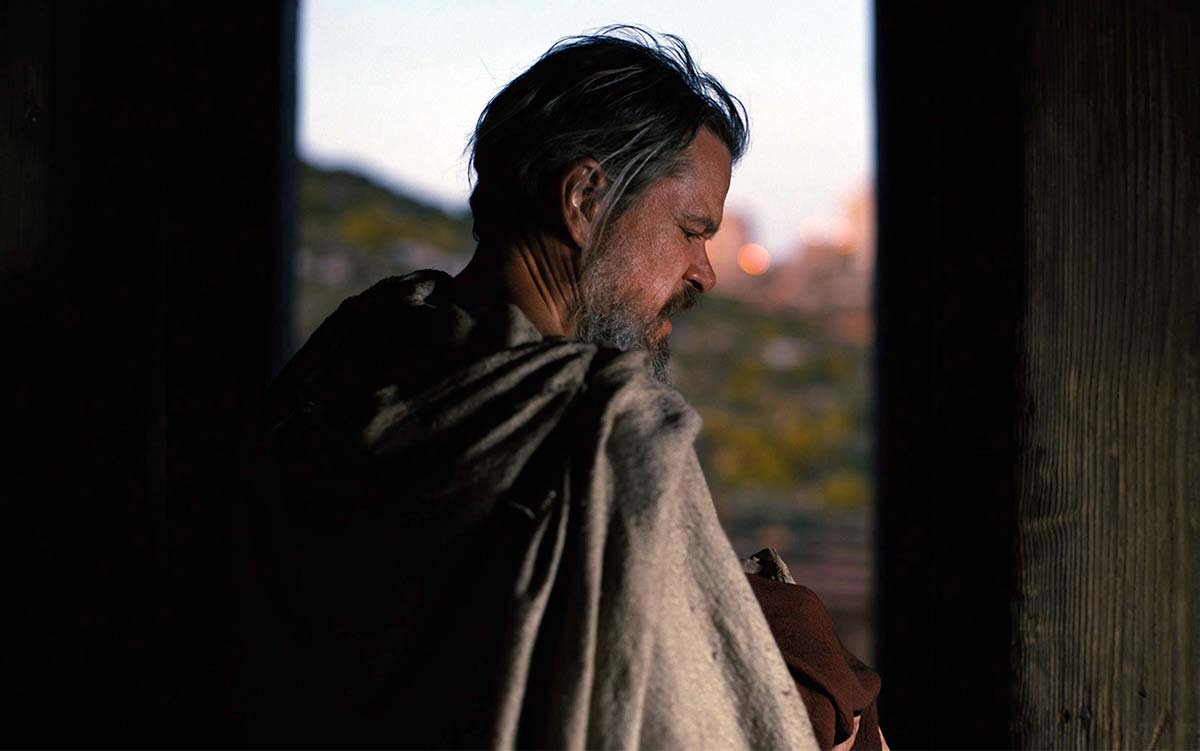
If the Oscar-winning “Oppenheimer” proved anything, it is that Christopher Nolan can turn almost any subject into a summer blockbuster without hollowing out its soul. The theoretical physicist’s private torment somehow became an event movie with the force of a superhero spectacle just through the filmmaker’s sheer will. In “The Odyssey,” Nolan applies that same conviction to the oldest adventure story in the Western canon, delivering an immense, ferocious, thundering epic whose imposing physical scale is ultimately a Trojan horse for something far more intimate: the raw longing to return home.
READ MORE: 53 Must-See Films To Watch Summer 2026
Home, however, is no longer a simple destination. For Odysseus, it is a half-remembered life buried beneath bloodshed, trauma, grief, and years of absence. Nolan’s adaptation of Homer is powered by the possibility that the king of Ithaca may survive gods, monsters, storms, and armies only to discover that war has made him unworthy of the place he has spent decades trying to reach.
That existential wound gives “The Odyssey” its bruised emotional weight. Nolan finds tragedy inside the supposed triumph of the Trojan War, presenting victory as a curse that lingers long after the battle has ended. Odysseus, the most cunning of the Greek leaders, helped win the war, but his skill and intelligence cannot contain the consequences of what he set in motion —not unlike Robert J. Oppenheimer. His men die, innocents suffer, and every difficult decision becomes another burden he must carry across an unforgiving sea.
Matt Damon is perfectly cast as this humbled, battle-scarred hero. His Odysseus is formidable without ever seeming invulnerable, a man whose determination is constantly shadowed by shame, self-doubt, and exhaustion. Damon gives the performance a battered inwardness. Odysseus can outthink nearly anyone around him, yet he remains helpless before the fragments of his past and the fear that redemption may no longer be his to claim.
Nolan structures the journey through flashbacks, parallel plots, stories within stories, and elliptical shards of recollection, all brilliantly assembled by editor Jennifer Lame. The approach turns the familiar myth into something dreamlike and unstable, as though Odysseus is reconstructing his life from wreckage. Even viewers who know where the story is headed may begin to doubt whether he will ever reach Ithaca because Nolan’s expert grip on urgency keeps tightening the film around him.
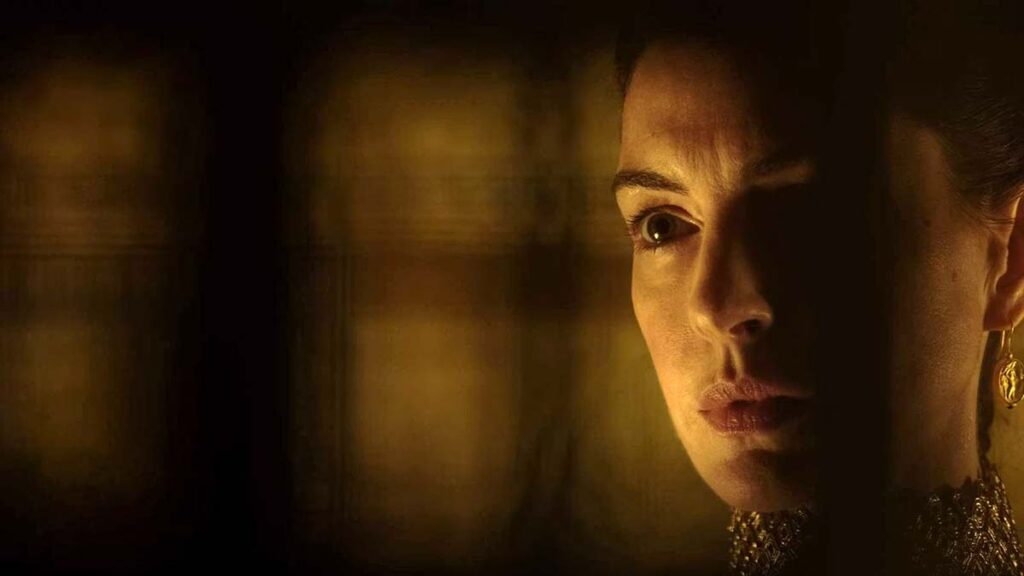
Back home, Penelope and Telemachus endure a different kind of siege. Odysseus has been presumed dead, and a ravenous group of suitors circles his household, waiting for patience, hope, and resistance to collapse. Led by Antinous, played by a magnificently weaselly Robert Pattinson, they behave like a pack of hungry wolves, gradually isolating Telemachus and pressing closer to Penelope.
Their presence creates the ticking clock the voyage needs, turning every delay at sea into an immediate threat to the family Odysseus may already have lost. Their occupation also violates Zeus’s law, the sacred code of hospitality, exploiting the household’s traditions as cover for intimidation, coercion, and control.
Anne Hathaway brings Penelope intelligence, poise, and an undercurrent of dread, while Tom Holland holds his own as Telemachus, a son forced to defend a father he barely knows. Their loneliness runs parallel to Odysseus’ isolation. Each lives with the possibility of being forgotten or replaced, and their shared longing gives the sprawling narrative a potent emotional center.
The ancient idea of nostos, or homecoming, runs through every grueling trial. Return means far more than crossing a threshold. It demands a transformation, an accounting, and the recovery of an identity that prolonged violence has nearly erased.
An interlude with Calypso, played with seductive authority by Charlize Theron, pushes that conflict into especially haunting territory. Odysseus’ mind becomes foggy, and forgetting begins to resemble an act of self-punishment. He can surrender the blood on his hands only by surrendering the people waiting for him.
That spiritual dimension separates Nolan’s film from a straightforward procession of mythological set pieces. The gods may control the winds, the seas, and fate, but human pride repeatedly creates a deeper catastrophe. Odysseus’ greatest gifts—his ingenuity, authority, and refusal to yield—can save lives or destroy them, and they do both. The film admires his endurance while refusing to excuse the damage his choices have caused. Heroism becomes a matter of responsibility and the willingness to face what survival has made of you.
None of this diminishes the sheer cinematic violence of Nolan’s filmmaking. Shot entirely in IMAX by Hoyte van Hoytema, “The Odyssey” often feels carved from stone. The vast landscapes, real locations, towering sets, weathered costumes, and merciless seas give Ancient Greece a tactile, brutal grandeur. Nolan seems determined to discover whether an IMAX camera can withstand the fury of the gods.
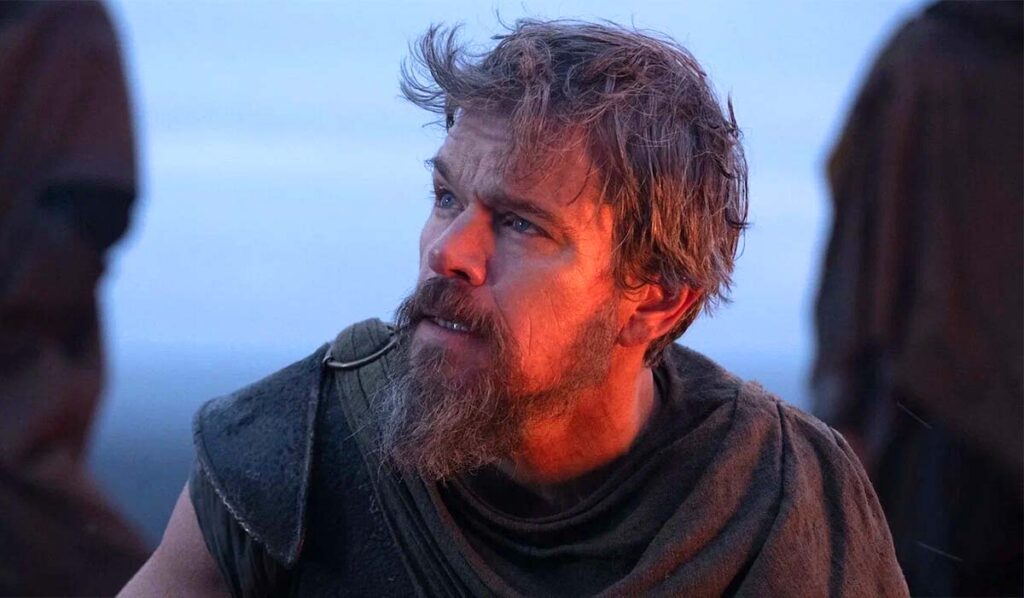
The set pieces are overwhelming in the fullest sense of the word. Nolan builds them into walls of sound, motion, danger, and almost inconceivable scale, engulfing the viewer until the screen seems too small to contain the chaos. Their size is staggering, but so is their severity. Men are diminished beneath the natural and divine powers surrounding them, reduced to fragile bodies trying to survive forces beyond their comprehension.
The images have the sweep of legend and the rough physical pressure of human beings being crushed beneath it. There are passages in “The Odyssey” when it becomes nearly overpowering, its sound and imagery bearing down with such intensity that the experience feels closer to an ordeal than to conventional entertainment. Nolan does not merely depict Odysseus’ punishing journey. He makes the audience endure a measure of it.
Ludwig Göransson answers that scale with a tremendous score built for rising panic. Nolan’s familiar fascination with the Shepard tone—the auditory illusion of endlessly ascending pitch—becomes especially effective here, driving the action toward almost excruciating levels of tension. Music, sound, and image accumulate until the film feels capable of shaking itself apart. The aggression suits a story in which every mile toward Ithaca is paid for through blood, sweat, tears, and sacrifice.
The ensemble keeps the myth human amid all that upheaval. John Leguizamo, as Eumaeus, Odysseus’ faithful servant, is a major standout; Himesh Patel gives Odysseus a fiercely loyal second-in-command; and Samantha Morton is bewitching as Circe.
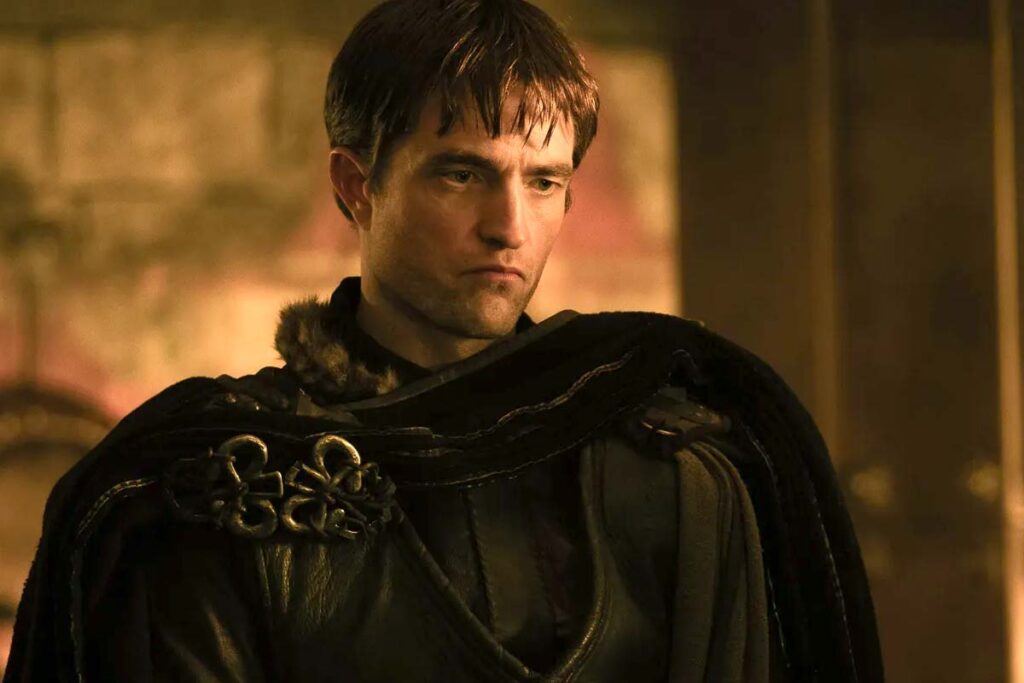
Zendaya’s Athena functions almost as Odysseus’ accompanying conscience, appearing in moments of doubt and despair to give shape to the voice he can no longer silence. Nolan has assembled stars across the film, but the casting rarely feels ornamental. Each figure becomes another temptation, warning, recollection, or accusation on the long, hard road back.
“The Odyssey” shares the existential anxiety of “Oppenheimer,” returning to the moment when an ingenious plan becomes a moral disaster. Odysseus wants to control the journey, the story of the war, and the legacy he will leave behind, but the weight of his choices follows him long after victory has lost its meaning. History has its own appetite, however, compressing violence, contradiction, and regret into heroic songs that make suffering easier to inherit.
Nolan embraces that contradiction without surrendering the legend’s crowd-pleasing power. The film is apocalyptic, melancholic, spiritually frightening, and alive to the tragic horror of societal collapse, but it never loses its belief in loyalty, compassion, family, and perseverance.
Odysseus is flawed, prideful, and responsible for devastating losses. He is also capable of sacrifice, humility, and moral courage that feels genuinely heroic. His homecoming becomes the ultimate test of whether character can survive failure.
For all its monsters, gods, armies, and thunder, “The Odyssey” finds its grandest image in a man confronting the dark mirror of what he has wrought. Nolan’s massive achievement understands that home is a place, a family, a memory, and a judgment. Odysseus may still recognize Ithaca when he reaches its shores; however, the more frightening question is whether Ithaca will recognize him. [A]

