


Douglas Sirk – “Imitation Of Life” (1959)
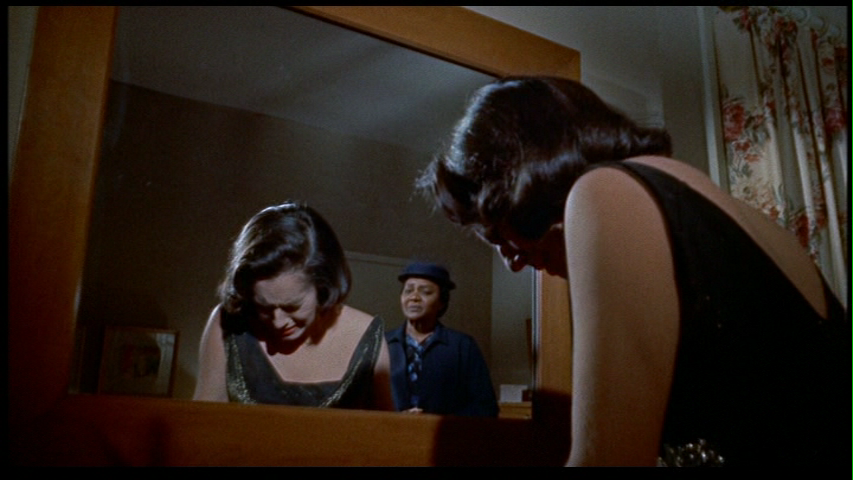
Douglas Sirk was barely into his sixties when he made his last feature film: despite living for another thirty years, he never again made a feature film, fed up of being misunderstood and underestimated by critics (he did make a handful of shorts while teaching at film school at home in Germany in the 1970s, but that was it). It’s fortunate, then, that “Imitation Of Life” might have been his finest achievement, or at least up there with them. A remake of the 1934 Claudette Colbert-starring adaptation of the Fannie Hurst novel, it sees Lora Meredith (Lana Turner) and her daughter Susie (child—Terry Bunham, teenager—Sandra Dee) take Annie Johnson (Juanita Moore) and her daughter Sarah Jane (child—Karin Dicker, teenage— Susan Kohner) under their wing by hiring Annie as a housekeeper and providing them all with a place to live. Lora goes from being a struggling actress to a Broadway star, bringing prosperity to their makeshift family, though not much peace. While Lora is away shooting a film, Susie develops a crush on her mother’s would-be boyfriend (John Archer) and Sarah Jane struggles with her pale skin in a segregated world, in which she tries to pass as white until her race is ultimately uncovered. Sirk specifically had the film focus more on Annie and Sarah Jane than previous versions (its borderline experimental narrative takes an early subplot and eventually makes that the main focus—a trick that still feels fresh and innovative today) thereby creating one of the most compelling and moving racial commentaries up until that point. By operating with this soap operatic quality, “Imitation of Life” was able to bring the issue of race further into a more traditionally feminine, domestic sphere—and Sirk’s lush visuals and setting therefore become the spoonful of sugar that helps the “medicine” of racial commentary go down. Poorly reviewed on release, it nevertheless became a huge hit (the fourth biggest-grossing of 1959) and won Oscar nominations for both Kohner and Moore, but that wasn’t enough to keep Sirk in the game, sadly. [A]
Charlie Chaplin – “A Countess From Hong Kong” (1967)
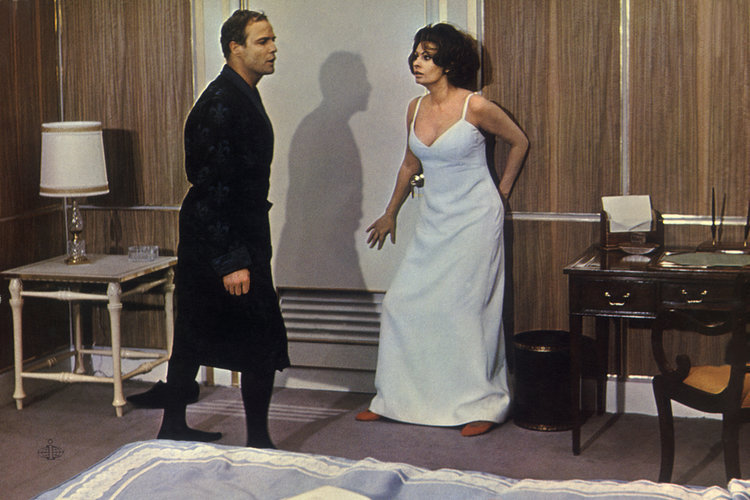
Ten years before his death, towering pioneer of cinema Charlie Chaplin directed the last film of his 50+ year directorial career. ‘Countess,’ starring Sophia Loren and Marlon Brando is not so much a bad film (though it tanked on release amid fairly poisonous reviews) as a pointless one, one of a few would-be frothy comedies that can now be seen as the hallmark of staid, late ‘60s Hollywood filmmaking badly in need of the shake-up that would arrive in the ‘70s. A contrived farce set mostly on a cruise ship, the story follows Russian aristocrat Natascha (Loren) who’s had a hard life and been reduced to a kind of genteel prostitution in Hong Kong, where she meets visiting American dignitary Ogden (Brando) and stows away in his cabin when he leaves. What follows is simply a film of too many doors—too much comedy that relies on one person dashing into the bathroom or a walk-in closet every time there’s a knock at the door, as Natascha makes Ogden an unwilling, but gradually thawing accomplice to her escape plan. The film does look great—it was Chaplin’s only foray into color and its ballrooms and suites are resplendent with technicolor gloss—but the plotting is nonsensical, and the characterization, especially of Natascha who veers from genuine desperation to whimsical insouciance, feels forced. And that’s not helped by the inherent broodiness of Brando (you can see why Chaplin originally wanted Cary Grant for the role) that just feels out of place in such an insubstantial farce. Despite the poorly written character, Loren fares better, or perhaps we were just mesmerized by her beauty—that’s a distinct possibility (both leads took the film without ever even seeing a script). In all, it really feels like there’s no air of finality to ‘Countess’ at all (and it had been originally written all the way back in the ‘30s as a Paulette Goddard vehicle). Twelve years prior Chaplin had made his last masterpiece with “Limelight,” followed by the very funny “A King in New York” in 1957, either of which would have made a more fitting farewell. But ’Countess’ feels like an interim bauble, a little nothing, really, that has only ever gained traction as the final film of a cinema titan, and otherwise, even with these stars, would have sunk altogether from sight. [C-]

Ernst Lubitsch – “That Lady In Ermine” (1948)
Most of the filmmakers on this list, regardless of the state of their health, were able to see their final movies through to completion. Sadly, the great Ernst Lubitsch joined the likes of Max Ophuls and Anthony Mann as those who weren’t able to complete their last projects. Unlike Ophuls and Mann, Lubitsch did shoot every frame of fantasy musical “That Lady In Ermine,” but had a fatal heart attack on November 30th, 1947, only eight days after the movie wrapped. Otto Preminger, who’d taken over from Lubitsch on 1944‘s “A Royal Scandal” when the filmmaker became ill, saw the film through, and it’s perhaps partly because of untimely tragedy that the film doesn’t quite rank among the finest of the German wizard’s comic output. His first musical since “The Merry Widow” in 1934, it’s a slightly silly trifle based on an operetta, with a curiously convoluted plot involving a European countess (Betty Grable) who, aided by dreams of her ancestors and magical paintings, falls in love with the Hungarian hussar (Douglas Fairbanks Jr) out to conquer her castle (not a euphemism. Well, kind of a euphemism). The film’s never even remotely dull, throwing all kinds of antics in the screen, including some that prove that the Lubitsch touch hadn’t deserted him this late in the game (the trickery that brings the paintings to life still feels magical). But it doesn’t feel as tight or effortless as the best of his work, partly because of a slightly scrappy, uneven story, and partly because of his absence from the editing room. Still, there’s more than enough here to demonstrate why Lubitsch was such a titanic loss to the art. At his funeral, collaborator Billy Wilder sadly remarked “No more Lubitsch,” to which fellow director William Wyler replied “Worse than that. No more Lubitsch pictures”… [C+]

Robert Altman – “A Prairie Home Companion” (2006)
Like we said, short of premature retirement, few directors get to definitively pick their final movie. But if financiers are forcing you to hire another A-list filmmaker to stand beside you on set in case you don’t make it through the day, you can probably be fairly sure that you’re making your final on-screen statement, and that was the case with Robert Altman and “A Prairie Home Companion.” 80 years old and suffering from leukemia, the great helmer was asked to pick out a stand-by replacement, and his friend and acolyte Paul Thomas Anderson happily stepped up. Fortunately, it never came to that: Altman was able to complete his film, an adaptation/homage of/to Garrison Keillor’s famous public radio show, and premiere it at the Berlin Film Festival in 2006 before passing away later that year. And, while it’s far from his finest hour, we’re glad that he could do it. An all-star ensemble piece that shares a certain amount of DNA with “Nashville,” it’s a curious picture: simultaneously a folksy crowd pleaser and love letter to Keillor’s show, and a meditation on Altman’s approaching final hours: the on-screen radio show is about to cancelled, and Virginia Madsen plays a literal specter of death who haunts the movie and its characters. The latter film is more effective than the former: it can sometimes feel a bit fan-servicey, and a little baffling to viewers who aren’t familiar with Keillor’s work. But the cast (which includes Tommy Lee Jones, Kevin Kline, Meryl Streep, Lily Tomlin, Woody Harrelson, John C. Reilly and Lindsay Lohan (!) alongside Keillor and Madsen) all do terrific work, and Altman’s ability to juggle them is certainly not diminished. Indeed, as much as the film sees the director coming to terms with the Grim Reaper, it’s also, (like its underrated predecessor “The Company”) a tribute to a life spent working with artists, and a very fitting one at that. [B]

