


 “Say Anything” (1989)
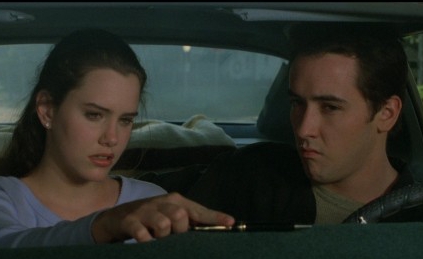
Having already had a hand in one great teen flick of the 1980s, Cameron Crowe managed to top “Fast Times At Ridgemont High” with his directorial debut. Detailing the romance between big-hearted, aimless aspiring kickboxer Lloyd Dobler (John Cusack in his quintessential role), and the bright, socially awkward valedictorian with family problems (Ione Skye, who somehow failed to become the biggest star in the world on the back of this), Crowe never once subscribes to stereotypes or cliches, following an authentically stunted, awkward romance that makes the heart swoon more than once; few filmmakers have captured the stomach-churning thrill of first love better. That might suggest that the film isn’t hilarious, but it absolutely is: Crowe’s endlessly quotable script is still among his best work to date. Crowe’s begun to talk about a possible sequel of late, and while part of us thrills to the idea, we’re not sure our mental health can take seeing Lloyd and Diane anywhere else but on that plane to London together. [A+]
“Heathers” (1989)
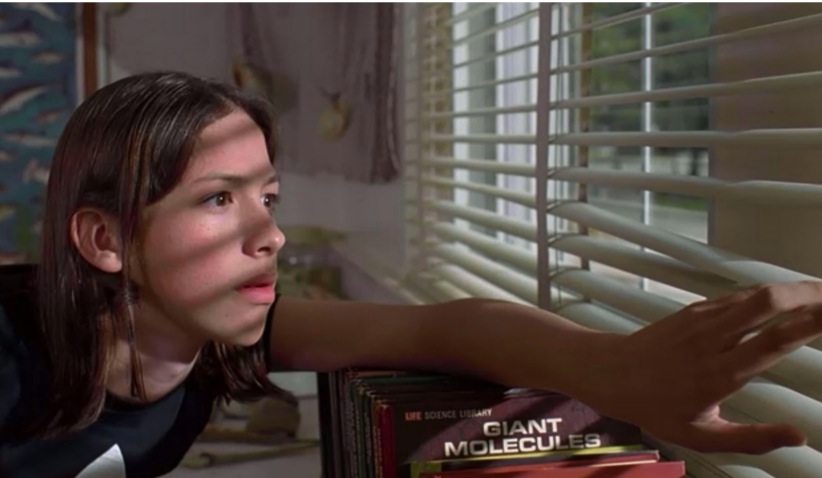
Coming in two years after the sappily titled “Pretty in Pink”, “Heathers” is a darkly comic satire on the brutality of high school cliques. Veronica Sawyer (Winona Ryder, in one of her first roles), a relatively normal middle-class girl with an above average IQ, has been adopted by the popular girls, all called Heather, but isn’t sure she can hack the moral ambiguity and all-around vapid bitchiness that comes with the crown. Everything changes when she meets the new kid J.D. (Christian Slater, aping Jack Nicholson), whose disdain for the high school hierarchy, and readiness with a weapon, provides her with a way out: Offing the popular kids. J.D. deceives Veronica and funnels her adolescent fury into violent action. Painting their murders as suicides, Veronica and J.D. get revenge and attempt to upend the social order, however little changes at the high school, as suicide becomes a trend (with number one single “Teenage Suicide (Don’t Do It)” by Big Fun, playing in the background), while the Queen Bees at Westerburg High (named for the frontman of The Replacements) are quickly replaced. Veronica manages to foil J.D.’s dramatic plans to blow up the school, create “a Woodstock for the 80s,” and simultaneously usurp and break free of the Heathers, taking up instead with the school dork Martha Dunnstock, and striking a blow for teenage misfits everywhere. The script is a sarcastic gold mine for made-up teen quotables, from ‘What’s your damage?’ to “How very” and the cynically romantic “Our love is God, let’s go get a slushie.” The out-of-touch teachers and parents all make hilarious straight men, whether they are ignoring the events or going into overzealous touchy-feely smother-mode, as one hippie teacher earnestly informs the kids, “Whether to kill yourself or not is one of the most important decisions a teenager can make.” Its hard to believe that Winona Ryder was just 17 when she made “Heathers,” — the world weary one-liners and simultaneous eye-roll seem like second nature, and the combo-release of “Beetlejuice” that same year made her the object of outsider adoration the world over. “Heathers,” though a box office dud. became a cult classic and source material for a spate of black high school comedies in the future. [A]
 “Dazed And Confused” (1993)
Coming out in 1993, a year when the Internet was still a novelty concept, and set in 1976, “Dazed and Confused” was already steeped in nostalgia, that feeling has only grown in the nearly two decades that have followed. The film begins and ends in the 24 hours that surmises the last day of school before the long summer break in a small town in Texas. The to-be seniors wander the halls, kings and queens of the school, getting ready to haze the freshman, girls are tortured with humiliation, and boys with good ‘ol fashioned paddling. The ensemble cast is filled with your usual high school archetypes — nerds, jocks, popular kids, and stoners, which just happened to be played by to-be-celebs including Ben Affleck, as the repeating senior with a chip on his shoulder; Parker Posey as the ultimate mean girl; and Matthew McConaughey as the iconic, sleazy stoner Wooderson, whose character defining line – ‘That’s what I love about these high school girls, man. I get older, and they stay the same age.’ helped make this role a break out for the future rom-com star. Loosely structured, the film follows two intertwining narratives of one senior (Randall ‘Pink’ Floyd played by Jason London) and one freshman (Mitch Kramer played by Wiley Wiggins), one at the top and the other at the bottom of the high school food chain respectively, when the film starts. While the older popular Pink is struggling with the powers that be forcing him into adult choices and threatening his youthful freedom, Mitch is just beginning to enjoy the first fun parts of being older: girls, parties, booze etc. Throughout the film, scenes are punctuated perfectly by one of the best soundtracks of all time, which should make those born well after the 80s nostalgic for 70s classic rock; the film is bookended by the now classic combo of Aerosmith’s “Sweet Emotion” and Foghat’s “Slow Ride.” Though Linklater seems to deny the heady nostalgifcation that abounds in ‘Dazed’ with lines like, “If I ever start referring to these as the best years of my life, remind me to kill myself,” perhaps he’s also hinting at the inevitability of donning rose tinted glasses that come with age, and losing the frustration with the world (however small) that comes with being 17. Its hard not envy the seemingly lost innocence of the 70s as the kids car-hop, drink and smoke before heading off to “party at the moon tower.” [A]
 “Clueless” (1995)
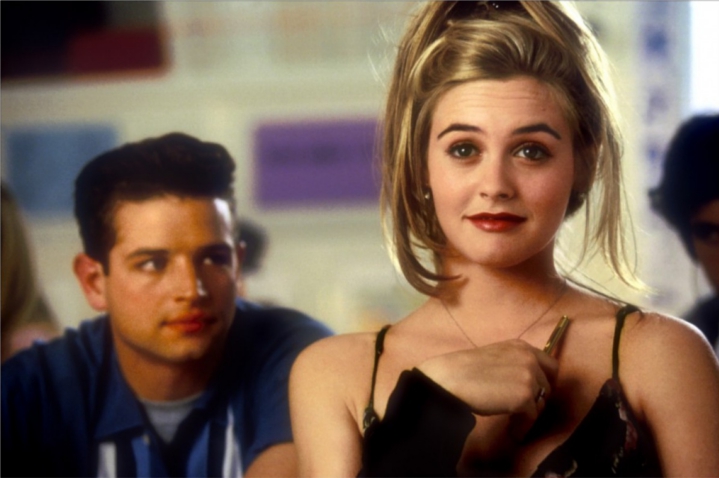
If the only merit of “Clueless” were introducing the world to Paul Rudd (who turns us into giggling sophomores), we’d give it a passing grade. But we don’t even need Alicia Silverstone’s Cher Horowitz to argue on its behalf to give it high marks; this is a deceptively smart satire that brings Jane Austen’s “Emma” from Regency-era England into a modern-day Beverly Hills high school. Emma Woodhouse has never been the most beloved of Austen’s heroines, and in turn, we probably would have hated her 20th-century equivalent Cher if she sat next to us in class and compared the plight of the Haitians to her father’s overstuffed party. However, that doesn’t mean she isn’t the film’s most quotable character, one who ably bounces between brilliance and the idiocy that only a teenage girl can possess. The witty, bubbly script from writer/director Amy Heckerling (returning to the teen milieu after “Fast Times at Ridgemont High”) manages to reference Contempo Casuals (may it rest in peace), Nietzsche, Pauly Shore and Oscar Wilde, sometimes in the same breath, while fully establishing the lines between the loadies, the Baldwins, and the Barneys on the quad. With revolving closets, a party dress by Alaia (“a-what-a?”) and not knowing who Pippi Longstocking is, this wasn’t our high school experience, but at least the music was the same. We can still quote along with the movie and nod our heads along with the requisite mid-’90s soundtrack that featured The Cranberries, Mighty Mighty Bosstones, Jill Sobule, Coolio, Luscious Jackson, Counting Crows and even Radiohead. [B]
 “Rushmore” (1998)
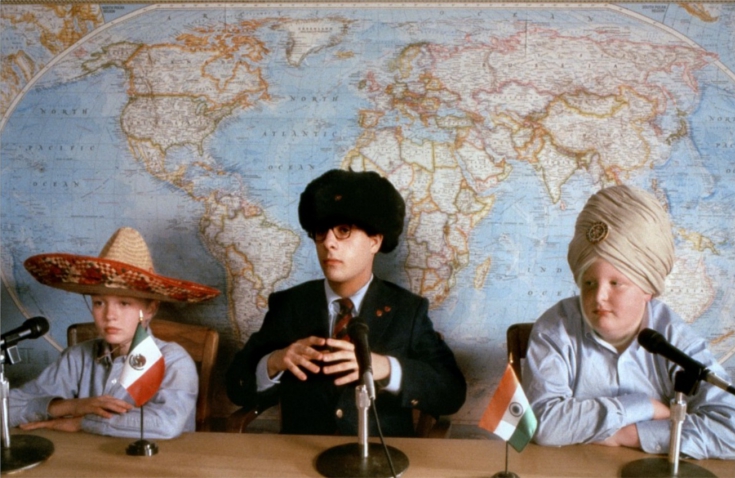
Wes Anderson‘s sophomore film, the one that truly landed him on the cultural map, sees the filmmaker scratching his J.D. Salinger itch, to superb results. This is essentially Anderson’s “Catcher in the Rye” (his followup “The Royal Tenenbaums” is clearly indebted to the author’s Glass family stories), with Max Fischer serving as the film’s Holden Caulfield. Jason Schwartzman was perfectly cast in his first acting role as Max; he’s yet to better this performance. And of course, how can we forget Bill Murray? He simply owns this movie whenever he’s present, making the most of a great part that fits him like a glove. This was a big step in Murray’s move away from more mainstream comedies to indie-inflected comedy/dramas, and his first collaboration with Anderson, one that has proven ever-fruitful and rewarding (it just wouldn’t be a Wes Anderson film without him in some capacity). The film is consistently funny and touching and its not-quite-reality-as-we-know-it, just-left-of-center world (something Anderson would push even further in subsequent films) belies its honest look at growing up a confused, misguided kid in high school. And how can anyone not love the soundtrack? Memorable tracks abound in the collection, most notably John Lennon’s adorable “Oh Yoko” (which should put a smile on the face of even the grumpiest of people), Creation’s “Making Time” (played over the awesome opening credit sequence), The Rolling Stones’ “I Am Waiting” and the closing song “Ooh La La” by Faces. There’s been some debate around The Playlist water cooler whether or not this is in fact a high school movie. Some of the crew argues it’s more coming of age, but aren’t they essentially interchangeable? This writer thinks so. Also, you can’t deny the importance of the titular school itself, one that’s truly a fully-rounded character in the film. It’s Max Fischer’s reason for being, after all. [A]

