


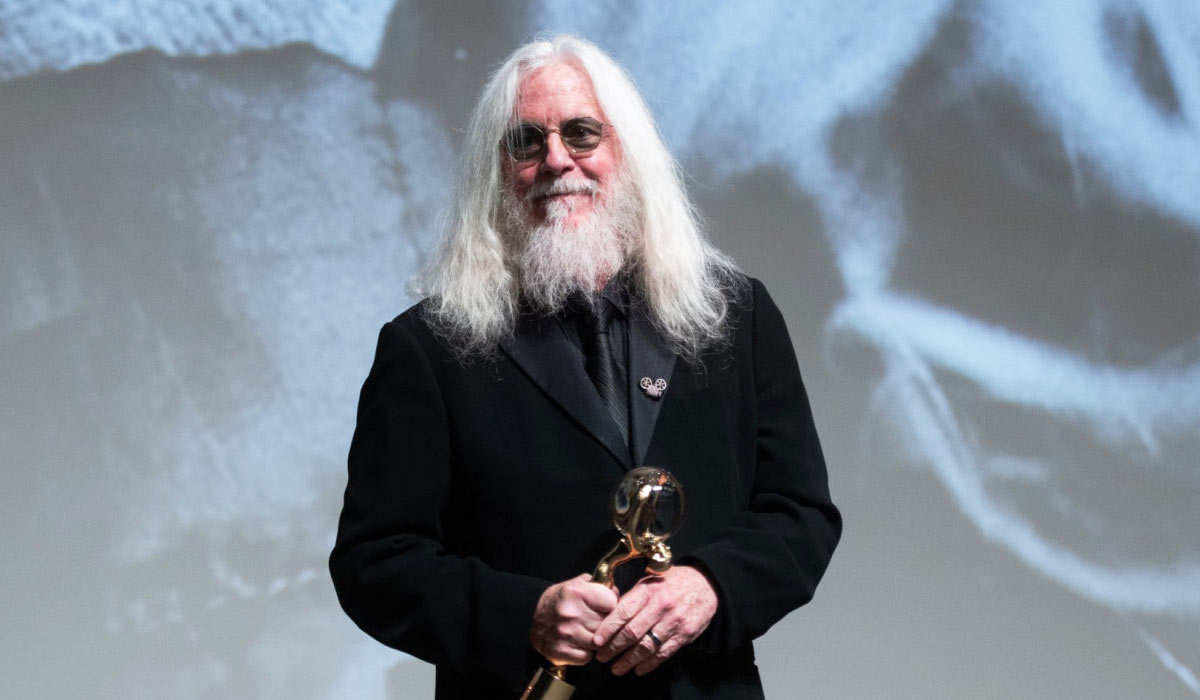
KARLOVY VARY – When famed cinematographer Robert Richardson responded to a request for an interview from a Prague film student in 2016, he never thought there would be a documentary about his life directed by the same student a decade later. And yet, at the 2026 Karlovy Vary International Film Festival, Richardson and filmmaker Jana Hojdová are on hand for the world premiere of “Robert Richardson: The White Devil.” And it’s a fascinating and complex portrait of an artist who, in many ways, chose his career over his family.
To be fair, many viewers will be shocked to discover Richardson has been married or had long-term relationships with three different women. And that he has multiple children from those women. And the first two relationships were victims of his constant need to be working. Hojdová doesn’t judge him for this, but uses Richardson’s own decades-old personal camcorder footage – which he provided – to chronicle his relationship with his children. They are also interviewed for the documentary. As are three of his most frequent collaborators: Oliver Stone, Quentin Tarantino and Martin Scorsese.
During our interview at the festival, the three-time Oscar winner (who famously skipped his first win, which he recorded his nervous reaction to at home and is in the film) is super honest regarding his frustration over the documentary process, his incredible archive of production materials (which AFI or The Academy need to inquire about), the toughest film he’s ever made, and much more.
Oh, and he also noted that the Antoine Fuqua “Hannibal” epic with Denzel Washington at Netflix he was meant to shoot is effectively dead and Tarantino’s next (or final) movie may shoot next summer. For those that care, of course.
This interview has been edited for length and clarity.
____
The Playlist: Congratulations on the doc. I’m sure you’ve seen many edits of it.
Robert Richardson: Yes, I have, but I haven’t seen the finished version.
Do you want to, or do you feel like you’d seen enough?
Oh no, I’m going to go to this premiere. I don’t know how I’m going to react because it’s in front of 1,200 people because the theater sold out. I’ve heard it’s actually quite a beautiful theater, but a lot of this is on video.
Having seen the movie, I think it will look good! But I have to ask, had you ever been approached about a documentary about your career before?
No. Never, not once. Nobody’s ever asked me to shoot a documentary.
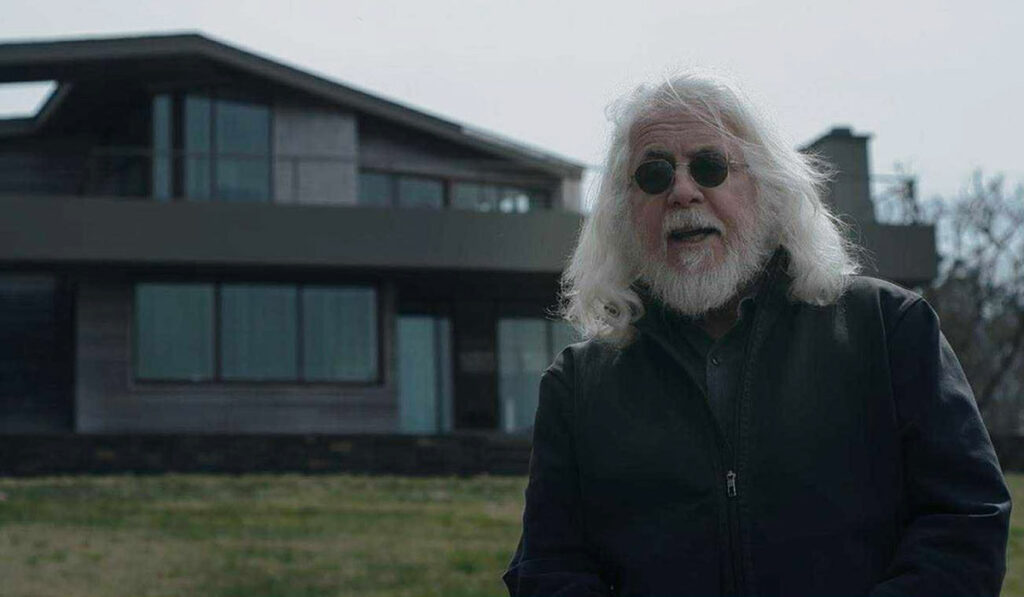
But that’s not what Jana wanted to do originally, right? She had just reached out about…
A thesis.
How did that transfer into this project?
The thesis answered her questions, which you saw [in the movie]. She said X number of pages came back, and it continued. The series of questions kept coming for the thesis because the thesis [advisor] wanted more technical content. I didn’t want to talk technical and then this and that. And by the time we got it had to be a hundred and something pages. I’d be like, “How much more do you need for a thesis?
It’s a book.
Her teacher said, “You need this, that, and this.” And so after we just kept going, and she said, “I’d like to make a book called ‘Cameraman.’ So do you mind if we just keep working?” So, now she has 400 pages. In that process of writing those pages, I think Damiani may have said they’re going to make the book. I don’t know if it’s still going to be the case, what’s going to happen. And we had talks, and she wanted to meet. We hadn’t met. We’d only talked on Skype and things like that. And she came [to watch me on set], and when she was in New Zealand, she started to shoot shots behind the scenes, and I’d catch her. And she’d be shooting shots of “Adrift.” It was Shailene [Woodley], and there were green screens and water sets, and she’d be taking these images. And I was like, “All right, something’s up.” And I noticed that she was taking more images when I wasn’t shooting. And suddenly she said, “Well, I want to just record this part.” And then I knew, and she said, “Look, I’m thinking that I want to make a feature. And I thought about it because I already given her 400 pages.
But it was more technical stuff, correct?
No, it was all life stuff. That’s why I wouldn’t answer the technical. She asked personal questions. “What was your father like? Your mother? What were the issues with this, that and this and that? “And she got much of what she eventually ended up having as a source for asking me the right questions. And I said, “O.K., let’s do it.” And we shot some stuff in New Zealand. I went on to another project. I think it was a commercial. And she joined me there. And then I went to another commercial, shot it there. She came to Montreal, shot me there, behind the scenes and things like that, and was constantly asking to shoot. I’d get permission from people to let her shoot certain amounts of the material. And she came to the set of “Once Upon a Time in Hollywood,” shot there. She’d carry a Super 8 camera and a video camera. And then I don’t know how we got closer and closer to the COVID period. And we were going to go to the Cape to shoot the grounds that my family had owned, Cape Cod Sea Camps. And she got there, and COVID hit us when we were there. She was supposed to be there for a week, two weeks, and they wouldn’t let her leave the country.
How long did she actually stay?
Three months.
Oh, wow. So this happens. It’s one thing to be self-reflective when you know someone is writing something. It’s another to talk to someone on camera about it. Did you have any trepidation about that at all?
Huge.
Was it harder for you than you thought it would be?
It was horrible. It was like being put in a prison because I couldn’t get out.
You could have said…
I did tell her to stop. And, actually, in some earlier cuts you would have disliked my point of view. It was very harsh. “Stop. You need to stop. I can’t do any more. I don’t want to do any more.” And she would always go, “You’re doing it. And here’s what we’re doing next.” She was truly like a dictator. And constantly improvising and creating situations that I’d have to get involved with. Here are these photographs we found. She went into all my boxes, found all that stuff, brought it up, started to separate images, put them on the floor, shoot. And then she’d say, “O.K., I want you to talk about these photos over here.” It’s like 7:30 in the morning. And it was really fascinating, but it did keep my mind from going crazy…
During the stay-at-home.
Yes. So we would shoot certain shots like waiting in line for the food or the various things that we could do or walk on the beach. But it was extremely difficult. But I had so much other footage. I don’t know how many hours of personal stuff. I had my grandfather’s material that he had shot at the camps, which was in 16 millimeter. And then she interviewed people that were around that were close to me and my mother.
And so she continued just nonstop. And then she started editing, and then I’d see cuts. I think she said she has 600 hours [of footage].
Oh, damn.
And how do you cut 600 hours?
That’s why it’s taken so long.
That and finances. To finance a documentary. She doesn’t have the money. She has so much. And you’re pulling from different people to help you get to the next stage. And you have to deal with the rights to [clips] as well. And then she’d go off and interview Marty, or she’d interview Quentin. We tried to get Leo [DiCaprio], and he had no response at all.
But Kate Hudson did. I thought it was nice that Kate did a little interview.
Oh yeah. She was fantastic actually. And she fed right into a zone that it was like… because I knew her when I was making this film called “Four Feathers,” And she was with Chris Robinson. Her world was – she knows where the psychedelics are.
One of the things that was so remarkable about the film is you have kept so much archival material for all the projects you’ve worked on, all these diaries, all this video, some of which is from when you were shooting, some of which isn’t. Do you have a plan for it all? I mean, first of all, it’s amazing that it was semi-organized. I would never be able to…
She did it.
She organized it?
Yes.
I feel like whether it’s your alma mater, AFI, or The Academy or somebody, they would want it for historical purposes. I mean, this is incredible historical stuff. Is there a plan for it?
There’s no plan at the moment, but I would think that at some point I need to do something with it if somebody has an interest in taking it.
I mean, just watching the film, I was like, this is a treasure trove of film history.
She actually took all the videotapes and organized them into a bureau. In years. So, the one thing that did take place in that period was that, and it was sort of extraordinarily fruitful to watch for me, was to see the things that I had. And then someone willing and wanting, because she cared so much that she was willing to build this archive. And she took all my books, like 2,000 film books, put them into stacks. And she still has a job to do. She should come back and finish. I must have a couple more hundred or maybe 300 laser discs and DVDs that go and Blu-rays and cassette tapes from films that I’ve collected over time. She can come back and organize that.
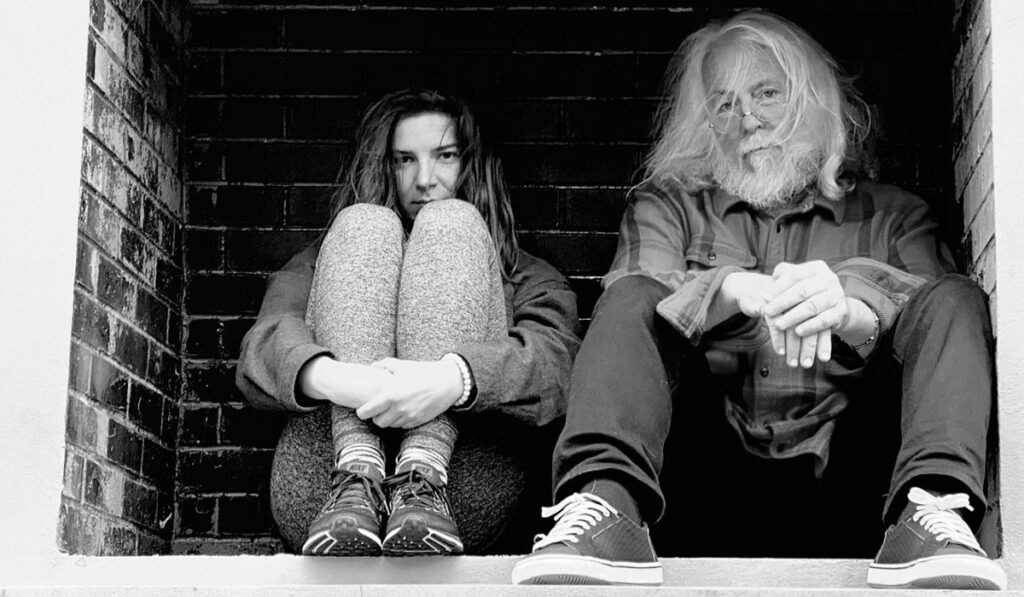
When you were going through those notebooks, were there any memories that popped up that you had totally forgotten about?
There’s one moment when it opens up the book and it sees half a picture of Oliver. I put a huge smile on my face because it was like that was that space. And [in the documentary] he goes like, Oliver. And he goes like, “I don’t know what you guys do. You put that monocle up to the sky.” Because Oliver and I would always have this, “I’m the word man, you’re the bird man.”
Because you’re the one that sees, and he’s the one who puts it on the page.
And also, Oliver was why when I look at scripts, I go to the writer-director. Because as Quentin says, the only director is a writer-director. There are no other directors. They’re the number one director, a writer and a director when they’re the same person.
So, if a project comes your way where a director didn’t write the script, does it make you trepidatious about it?
No, not at all. A good script is a good script. It’s a story. I’m not that way. Quentin says this, but he also loves the work of many other directors that weren’t writer-directors, but he admires the ones that most were. And you bring me a good script. Hello!
One of the most fascinating aspects of the film is you have these long-standing relationships with Oliver, Quentin and Scorsese. And they are such distinct personalities. They are very auteur, obviously. You know their films the second you see them. You know their personalities in that way. Why do you think you have bonded with those particular filmmakers?
I think with Oliver, if you look at the way Oliver made films, he was a student of Scorsese. There was a tremendous level of respect. “Mean Streets,” which is going to play here. It was one of the turning points of filmmaking for me. Just massive, and all of his work…even films he doesn’t like, “New York, New York.” I found that to be a brilliant movie and performance by Bob [De Niro]. So, I think that it allowed me in the door with Marty. He was working with Michael Chapman, and when Michael wasn’t available, he was entertaining other DPs. He called me in for “Cape Fear.” And that was my first meeting with him. I remember going to whatever top floor it was in some building. I went into the department, and I had brought some images with me like Edward Muybridge and some other ideas. And as I talked to him, he looked at them, and then he said, “O.K.: And then I laughed, and I said to myself, “O.K., you just threw that one out the window.”
You thought it was a bad meeting. You didn’t think it went well?
Not well. I knew it went O.K. But he said to me really more or less when I left, “I’m not sure this is going to be the project for us. I want a DP that works old school, big lights. I want a certain look.” And I was like, “O.K.”
And then Michael fell out of “Casino.” And then he brought me in.
One anecdote about that, which I hadn’t seen you talk about before. It sounds like out of every project you’ve worked on, “Casino” was one of the toughest films you ever made. Do you think that now?
No, I think it’s not the toughest film I’ve ever made. “The Doors” was the toughest film I ever made.
Really?
Yeah. It was massive. No CGI. Those are 5,000 extras. And they’re unruly motherf**kers. And you’re full into rock and roll, and Val [Kilmer] was absolutely giving you the top. And you could just feel that film was going to hit. And everyone making it was on center stage on that one, center point. Marty was difficult because it was a change of the way I had worked. With Oliver we could talk shots, ideas, lighting, anything. And I do board. And even with Marty, I would board myself since I knew that he didn’t want any of that after I learned this lesson because it helped me to be able to get into how I see the lighting. “How do I see this? So what can I do? O.K., this move.” But for me, he’s like dimming down the light. Well, that came to me because of work I’d done on “Talk Radio” with the windows and seeing this and that and also with Morrison in the studio. So, all these things came back, and I thought, “I can see that, but I don’t need the window. I just need the idea of like, can we isolate him in a way which is really beautiful?” And so everything fed, and everything does feed into each other. There is a through line! I met Quentin for the first time at Marty’s Sunday screenings.
In LA or New York?
No, we were making “Casino,” and were in Las Vegas. It was myself, Joe Reidy, the AD, and this one other guy, Quentin Tarantino, who I hadn’t met. But we just said hello, and that was that. And he had come to see Marty and, of course, a screening. Quinn, you got to do a print. It didn’t really result in anything, but I think he knew that if this guy’s down here at 9:30 AM in the morning watching a movie, he’s got something.
This business is small. Sometimes it is very small. Two quick questions for you. One, is there a film you’ve worked on that you thought was going to turn out better than it did? And then, on the flip side, is there a movie where the experience was a mess, and then the movie turned out well?
There have been a few that are like a mix of that. I had a very bad experience working with Bob Redford on “The Horse Whisperer,” but I still think he made a good film. He didn’t make the best film. I think one of his issues was that being the actor and the director was not the best choice for him. That should have been passed on. It’s like “Snow Falling and Cedars,” which I think is a much better film than was received. It was depressing to have such a good film come out. And I had great relationships with Kathy Kennedy and Scott Hicks, and I think they made a really beautiful movie, and it holds up now in a different way that people weren’t willing to see back then. So, it’s disappointing to have that when you know you did something fresh. It’s almost like an hour and 45 minutes of poetry.
Yeah. It’s funny. Again, I could talk forever, but films hold up in different ways. I remember when I saw “Natural Born Killers.” I was like, “This is going to be dated in like 10 years.” And now today it just feels fresh and contemporary. You never know how things are going to play. Does that satisfy you at all?
Yeah, that was a film made for demons. And demons will live forever.
Follow Gregory Ellwood on Bluesky
Follow Gregory Ellwood on Threads
Follow Gregory Ellwood on Instagram
Follow Gregory Ellwood on TikTok
Sign Up For The Breakdown Newsletter


