


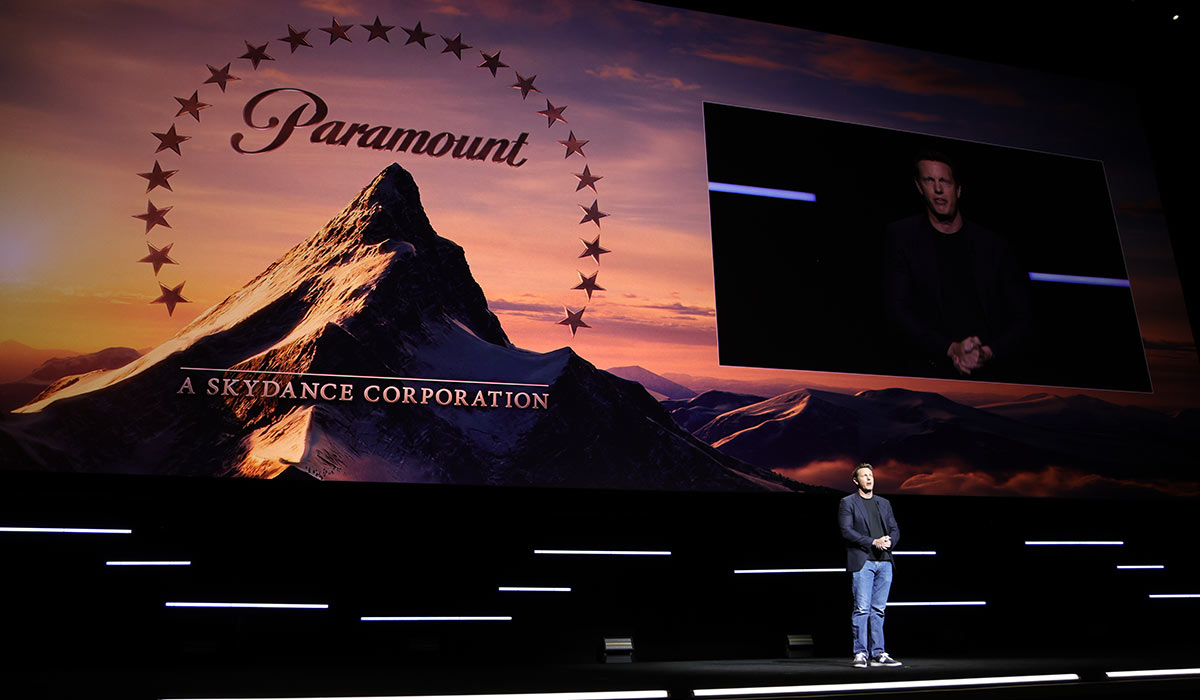
Many wondered why it took this long, but it appears the state Attorney Generals and their teams had a strategy. Today, California and 11 other states filed suit in federal court to block the merger of Paramount Skydance and Warner Bros. Discovery. The merger is in the final regulatory approval stages after Paramount effectively outbid Netflix for WBD in a hostile bidding action in February.
In a statement, the office of the Attorney General of the State of California, Rob Bonta, noted, “The proposed merger, the largest in Hollywood history, would combine two of Hollywood’s five major film distributors and two of the five major basic cable channel owners, extinguishing competition between Paramount and Warner Bros., and inflicting substantial harm on movie theaters, basic cable distributors and, ultimately, audiences nationwide. In the U.S. alone, if allowed to merge, the combined titan would control nearly one-third of theatrical motion pictures, and nearly one-third of basic cable programming. The coalition has asked Warner Bros. and Paramount not to close the merger until after the judicial process concludes, and if they do not agree, the coalition will be filing a temporary restraining order.”
Bonta was quoted as saying, “Today, I am leading a coalition of states in challenging the proposed merger of Warner Bros. and Paramount and asking the court to block the deal. The unlawful merger of these two entertainment behemoths would lead to higher prices, lower quality, and less content for film and television, harming movie theaters, basic cable distributors, and ultimately, audiences on every sofa and movie theater seat in the U.S. California’s film and entertainment industry touches the lives of Americans daily — it comes into the living rooms of families, has a starring role in many young people’s first dates, and is a point of immense pride and employment for Californians up and down our state. Consolidation here not only leads to higher prices — it also leads to fewer opportunities for important stories to come to life, and fewer ways for audiences to encounter stories, ideas, and perspectives beyond their own experiences. In this country, no one is above the law. With this lawsuit, California and our sister states are fighting for free and fair markets, not rigged markets. America has no kings in government or our economy.”
The other states participating in the lawsuit are New York, Arizona, Nevada, Washington, Oregon, Colorado, Connecticut, Massachusetts, Minnesota, New Mexico and New Jersey. Each state has a democratic Attorney General. Surprisingly, blue states such as Illinois, Virginia, Hawaii, and Maryland did not participate.
The U.S. Department of Justice approved the merger, but reports indicate it was a political decision made before DOJ staff could weigh in. The E.U. and U.K. have not formally approved the deal, with the latter suggesting they are minded to “intervene” just last week.
In their filing, the states say the merger violates Section 7 of the Clayton Act. That statute holds that mergers that may substantially lessen competition or tend to create a monopoly are illegal. The states argue that if Warner Bros. and Paramount are allowed to merge, it would lessen competition in the areas of:
“Wide Release Theatrical Film Distribution, where Warner Bros. and Paramount are two of the five major film distributors and would combine for around 27% share of the market. After the merger, only three distributors will control 75% of these films and only four distributors (Defendants, Disney, Universal, and Sony) will control 86% of them.
Anticipated Top-Grossing Theatrical Film Distribution, a submarket of theatrical film distribution focused on anticipated blockbuster films with wide audiences and large production budgets. After the merger, Defendants will control more than 30% of these films, and four distributors (Defendants, Disney, Universal, and Sony) will control more than 90% of them.
Licensing Basic Cable Television Channels, or the market for distributing basic cable channels to cable and satellite providers. Warner Bros. is the second largest, and Paramount is the third largest in this market, and they would combine for a 27% share.”
Paramount issued a statement saying, “The lawsuit filed by the state attorneys general, in the most generous light, reflects a fundamentally flawed application of the antitrust laws and is wrong on both the facts and the law. We will vigorously defend the transaction and demonstrate that this challenge is inconsistent with sound competition policy and the competitive realities of the media marketplace. Delaying this transaction will only harm entertainment workers who have already suffered over recent years as technology has disrupted their livelihood and cost California tens of thousands of entertainment jobs.” That contradicts a Los Angeles County report which indicated over 2,400 people could lose their jobs in Los Angeles alone. In fact, most investors are under the assumption that over 8,500 jobs would be lost worldwide.
While Paramount hoped to close the merger by no later than September, they were signaling they could rush it this month. The U.S. District Court for the Northern District of California still needs to act, but most expect an injunction will be issued so this can play out in court. That is a wrench in Paramount’s plans. In their deal with Warner Bros, if it does not close by September, they will have to pay 25 cents per share per quarter. At 2.51 shares, that’s $621 million a quarter. Plus, if the deal does not close overall, Paramount will owe WBD a $7 billion regulatory termination fee. Paramount has already paid Netflix $2.8 billion for their termination fee.
David Ellison and Skydance’s investors are also looking over their shoulder at the current legal impasse between Nexstar and Tegna. In April, a similar lineup of states as well as DirecTV sued to block that merger in court. A federal judge has determined a trial for that case will not begin until June 2027.

Editor-at-Large Gregory Ellwood is one of the entertainment industry's most respected journalists and critics. Based in Los Angeles, he's the only current awards expert who previously worked on Oscar campaigns at a major movie studio. Over the years, he has written for the LA Times, Variety, The Hollywood Reporter, and Vox, among others. He also co-founded the entertainment news site HitFix, which spawned a legion of influential Emmy and WGA Award-winning alumni.


