


 “Two For The Road” (1967)
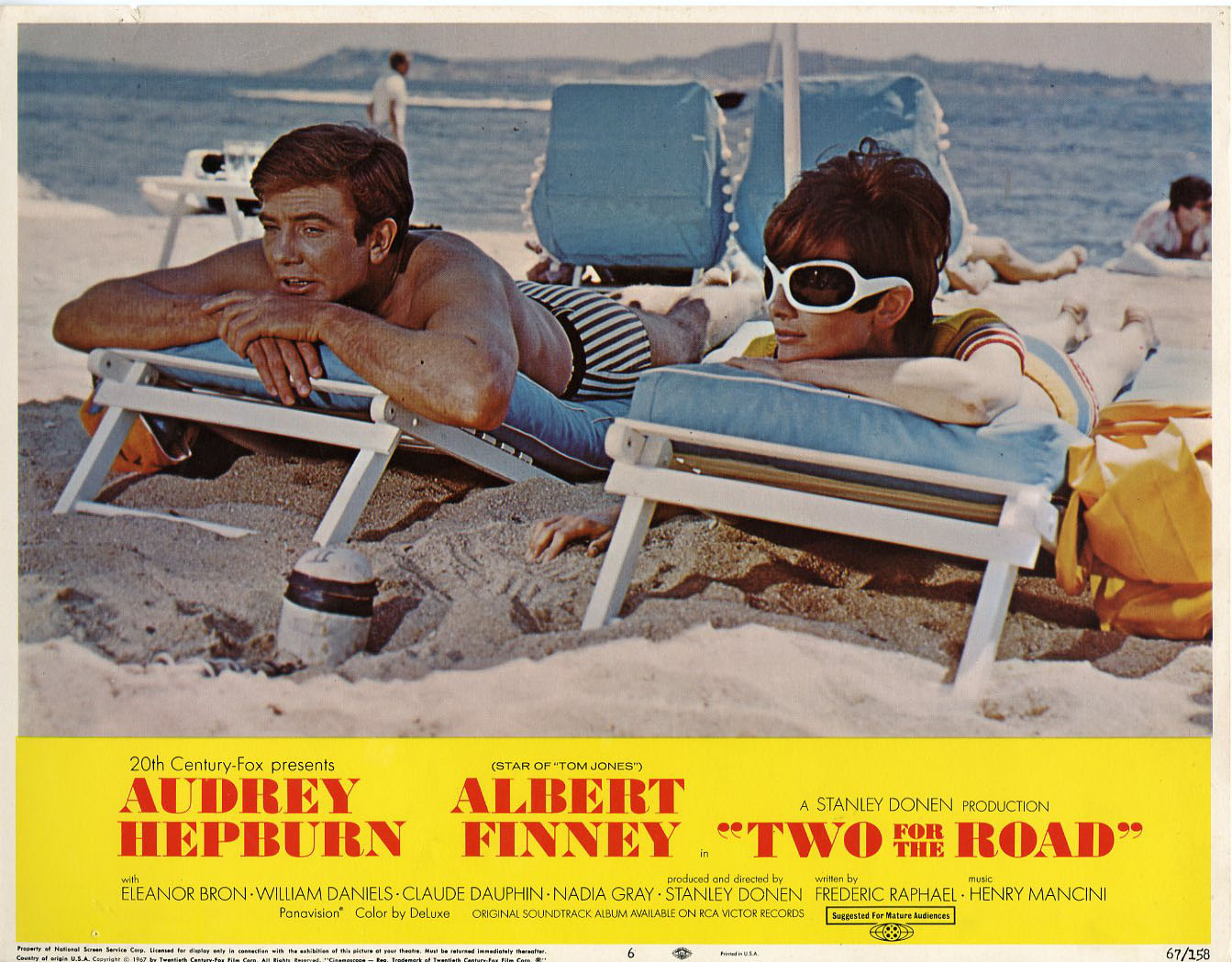
Landing smack-dab in the middle of three ’60s films depicting fractured relationships with a French New Wave influence to accompany it (the other two being the Julie Christie vehicles “Darling” and “Petulia”), Stanley Donen‘s 1967 gem “Two For the Road” excels above the rest by delving beneath its surface romantic-comedy appearance to its characters’ romantic desperation underneath. Albert Finney and Audrey Hepburn play the doomed couple in question, wondering over the course of a European vacation about the solution to their marriage crisis, told in a near-experimental non-linear fashion, and the result is a beautiful travelogue, filled with still-relevant insights, a stellar Henry Mancini score, and Frederic Raphael’s bold, witty screenplay at its core. The film is dated, sure, but never in an embarrassing way. Hepburn’s eccentric fashion choices (read: leather pantsuits) still somehow look incredible, and the slightly stale observations (What kind of people just sit in a restaurant and don’t say one word to each other?” Finney asks Hepburn during dinner) are rescued by Finney and Hepburn’s flawless chemistry and comedic timing. They aim for that conflicted feeling of simultaneous hatred mixed with undeniable affection, and it’s to both actors’ credit that they shed any self-image worries to portray it accurately. “Annie Hall” and “Eternal Sunshine of the Spotless Mind” would be nothing without these radical genre attempts, so you owe it to yourself to catch up on this Donen classic, if you haven’t already. — Charlie Schmidlin
 “High Fidelity” (2000)
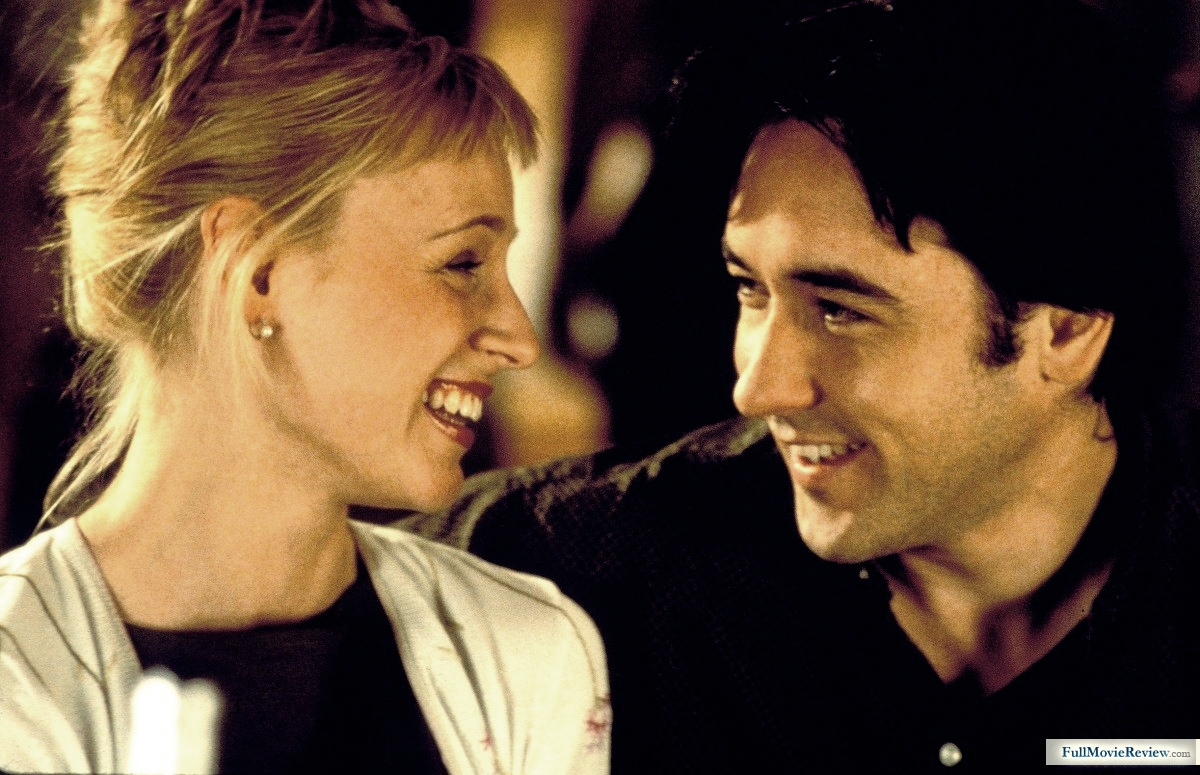
Is “High Fidelity” a romantic comedy devoid of romance? The main thrust of Stephen Frears’ (seamlessly relocated from London to Chicago) adaptation of Nick Hornby‘s novel comes when John Cusack’s Rob Gordon splits up with his long-time girlfriend Laura, prompting him to go back and pick over the bones of his Top 5 Break-Ups. It’s all rather more tragic than it is romantic, and as a result the associated comedic moments are dry and sardonic. This is a very different John Cusack romantic lead – while Lloyd Dobler stood outside his girl’s window holding a boombox, the laconic Rob Gordon stands in the same place shouting bitter obscenities. Even as the story progresses and the outlook becomes brighter, the romance is still decidedly lacking in areas which are usually ripe for it – a sex scene and a proposal, in particular. But while the romance may be lacking, the things that you associate with it aren’t. “High Fidelity” is about learning how to love someone, the importance of companionship, and the beauty in two people simply being able to make one another happy. That brings with it an authenticity, which — coupled with a stunning musical backdrop and a pitch-perfect, fourth-wall breaking performance from John Cusack –- sets it apart from the crowd, while ultimately remaining just as sweet and life-affirming as so many of its peers. — Joe Cunningham
 “Harold and Maude” (1971)
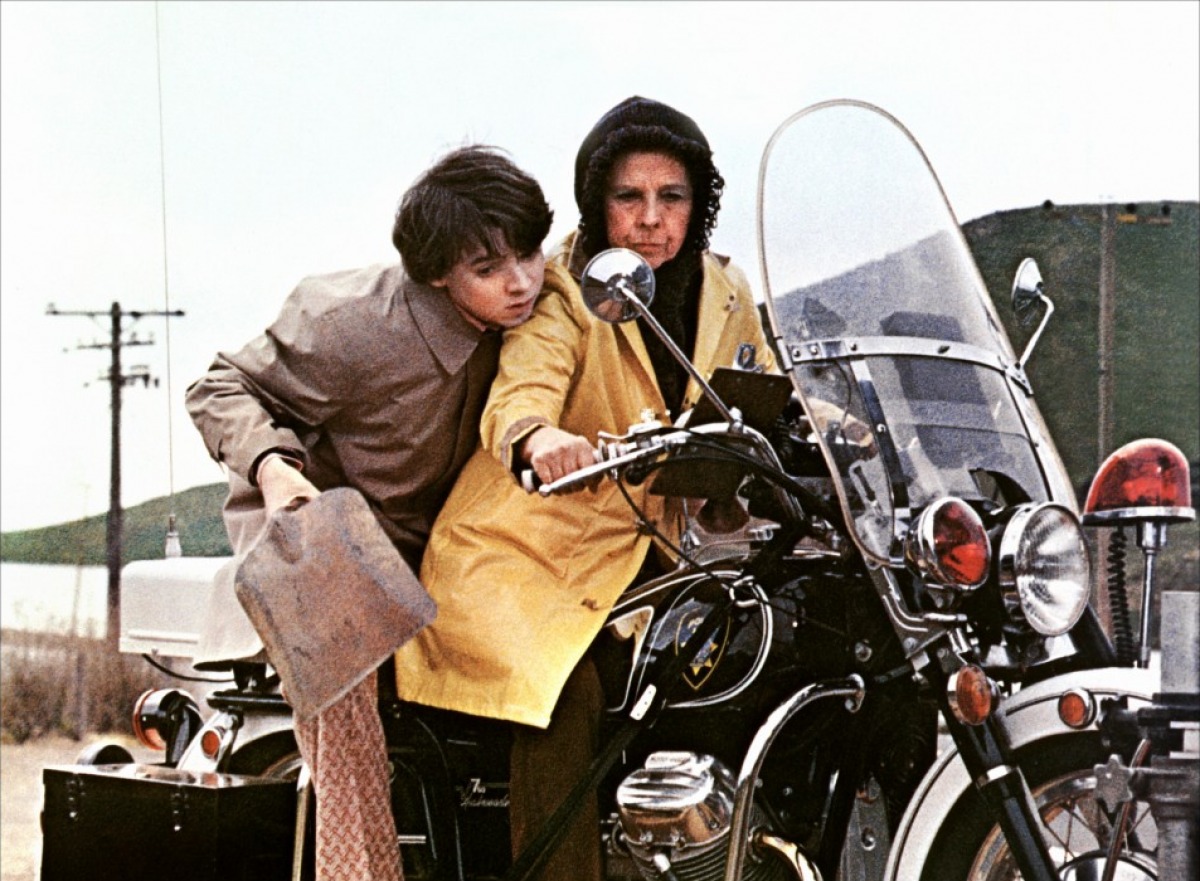
As far as loveable rom-com couples go, it’s hard to look past Hal Ashby’s “Harold and Maude.” It’s the kind of film I can’t really imagine being made today, with the story centering on the innocent romance between the young death-obsessed Harold (played by Bud Cort) and the 79-year-old and carefree Dame Marjorie “Maude” Chardin (Ruth Gordon). The film’s setup of Cat Stevens singing “Don’t Be Shy,” as Harold methodically goes through the motions of faking his own death, to the complete lack of amusement or shock of his mother who walks in on him, sets the tone beautifully for this romantic comedy, that balances its blackish heart with a sweet first love/coming of age story. Harold and Maude meet at a mutual stranger’s funeral, and Harold falls hard for Maude, who shows him there is more to life than death e.g. flowers, dancing and playing the banjo, which in the hands of a lesser actress would be insufferably twee. Though Cort was in his early 20s when the film was made, his wide-eyed stare and floppy hair make him appear eternally boyish, in contrast with Gordon’s Maude, who is in no way the graceful ageing lady – but as a couple they are incredibly endearing, and the film’s effective statement of a deep connection winning over superficiality in the game of love should not be overlooked. Laughs come courtesy of Harold’s idiot mother who tries to set him up with various prospective wives, who he frightens off with more phony, gore-filled suicide attempts so he can instead go on adventures with Maude and her petty-crime sprees. Ashby made the inspired choice of having Cat Stevens soundtrack the film, perfectly underscoring some of the sadder moments, to the point of tears on more than one occasion for this writer. In fact, it’s the film’s mix of deadpan humour and heartfelt emotions that make it so adorable and continuously watchable. — Sam Chater
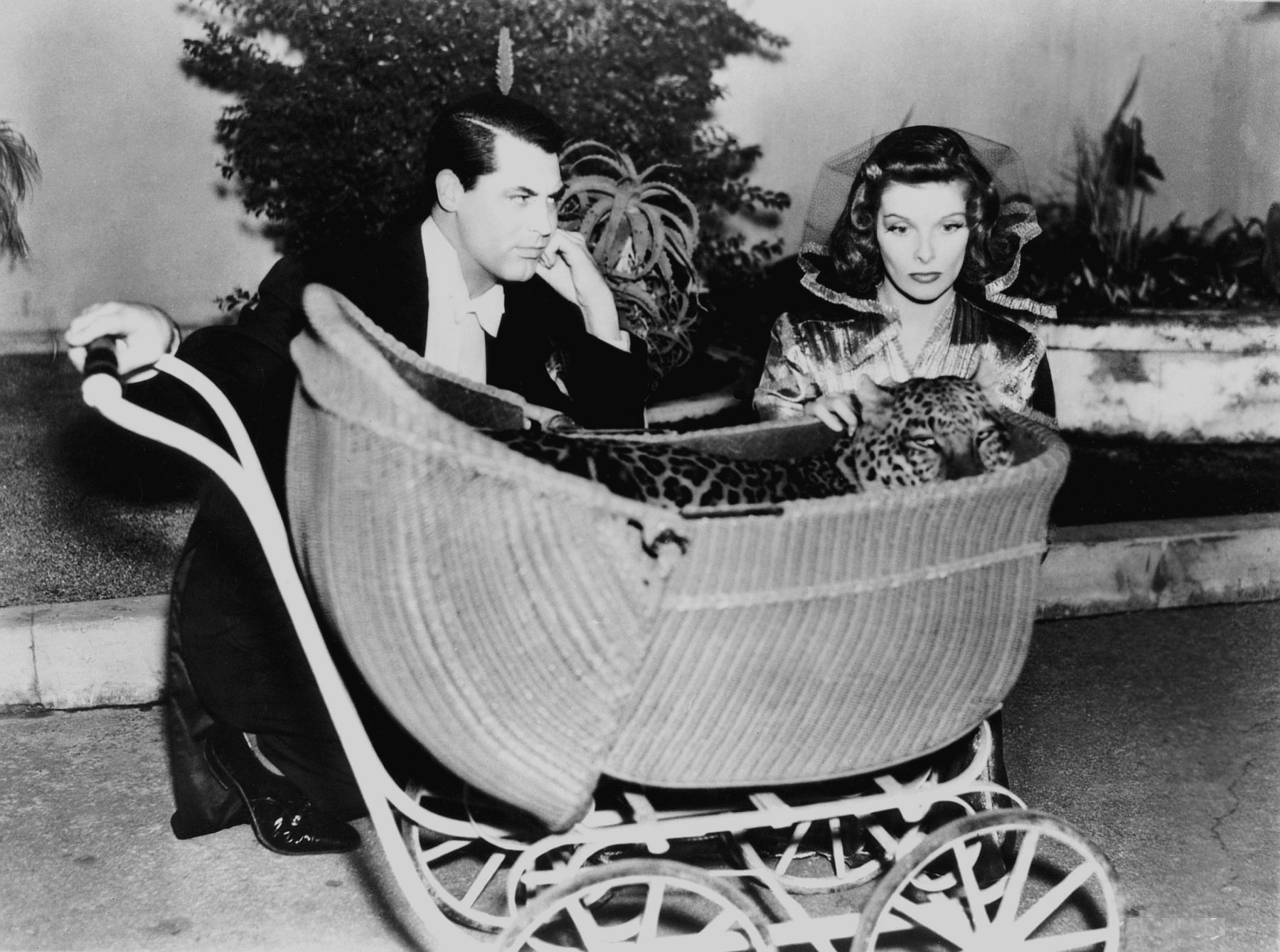 “Bringing Up Baby” (1938)
Boy meets girl. Girl stalks boy in order to get him to look after her leopard. Girl falls in love with boy who’s about to get married. Girl’s dog steals dinosaur bone. Leopard runs away. Boy and girl sent to prison. Boy ends up in a dress. Boy falls in love with girl right back. Not exactly a Garry Marshall movie, but so much the better. Howard Hawks‘ 1938 film neatly followed the template set up by “It Happened One Night” in setting up a boy and a girl — in this case soon-to-be-wed paleontologist David (Cary Grant) and prototypical Manic Pixie Dream Girl heiress Susan (Katharine Hepburn) — to bicker and flirt across a series of adventures before falling in love at the end. But the formula was never quite as perfect as it was here, in part because Hawks retained what’s so often absent in romantic comedies today. Simply, “Bringing Up Baby” is one of the funniest films ever made, riding the outstanding chemistry between Grant and Hepburn, each arguably giving the performance of their careers, through a series of uproarious set pieces. But as funny as the film is, Grant and Hepburn’s courtship feels genuinely hard won, and you don’t question the way that Grant’s defenses gradually come down. It’s also unusually subversive, especially for the era — Grant is increasingly feminized, even to the point of ending up in a dress, while Hepburn was always one of the more masculine starlets, and it’s her that’s doing the pursuing. Maybe it’s not a film that makes you swoon in the way of some of these other choices, but you’ll be too busy battling a chortle-induced hernia to notice. — Oliver Lyttelton

