


 “The Jerk” (1979)
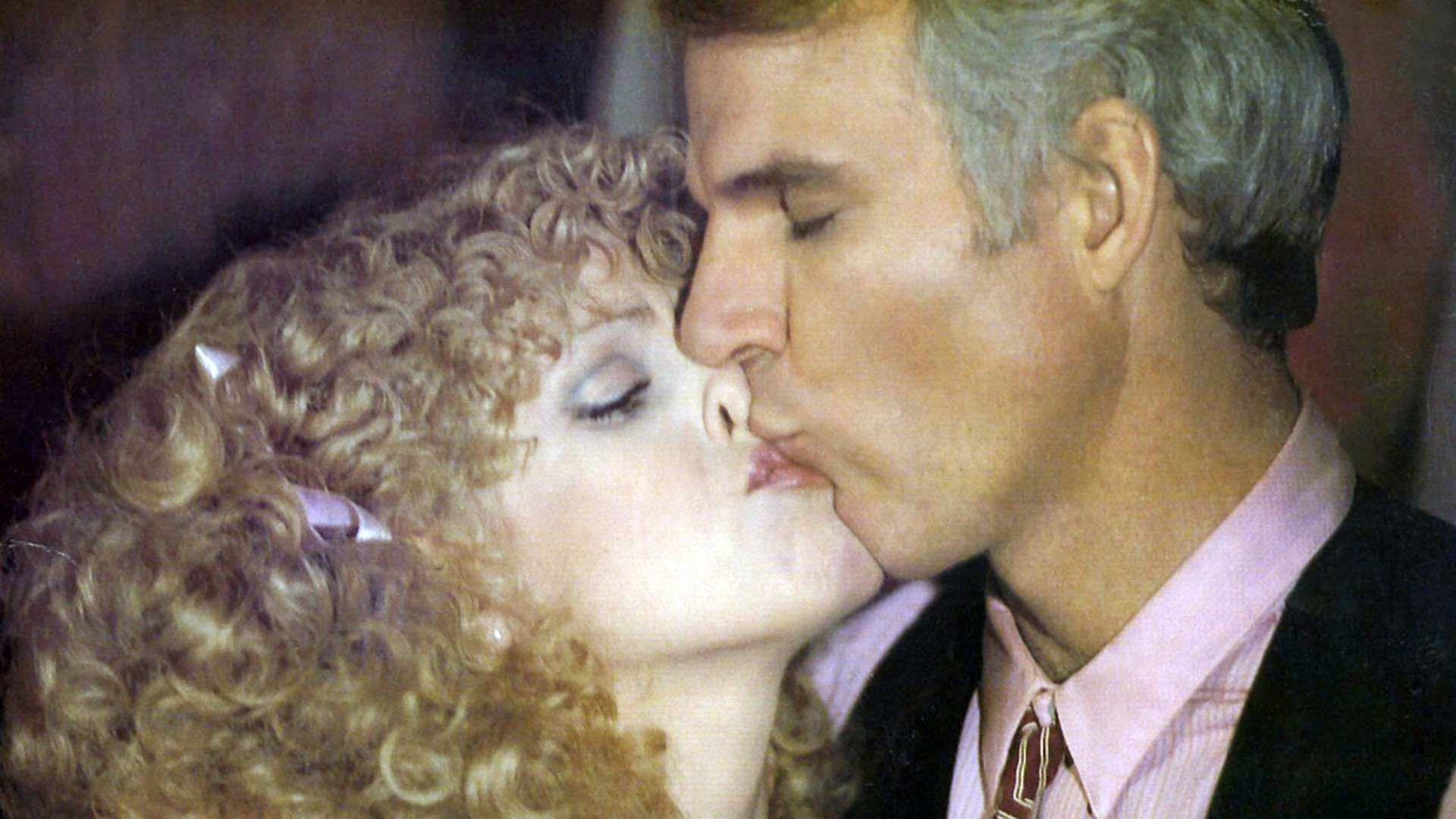
No moment speaks to lovelorn nerds quite as much as the moment in “Freaks And Geeks” when young Sam Weir takes dreamgirl Cindy Sanders to see “The Jerk” only for her to trash the picture and spend the runtime without laughing once. It wasn’t just that Cindy now had rotten taste, but more that she didn’t see the heart busting out between the jokes of “The Jerk.” They couldn’t be friends, yes, but more importantly, they could NEVER be lovers. Although not traditionally considered a “romantic” comedy, there’s no doubt the union of an at-his-peak Steve Martin and the bubbly, warm Bernadette Peters provided the heart for what would have still been a funny, though far less memorable movie. Martin’s Navin Johnson doesn’t exactly have direction until he crosses paths with squeaky voiced Peters as Marie, a kewpie-doll angel that joins him on a beach date both funnier and more romantic than any of Martin’s contemporaries had pulled off. As the two tackle the harmony to “Tonight You Belong To Me,” the heart soars — this was back in the day when a comedy could be more than just a laugh-fest — and the break in action provided a welcome respite from the film’s string of gags. No doubt an entire generation of nerd offspring owes their existence to Mom and Dad watching Martin and Peters hum along like a well-oiled comedy machine. — Gabe Toro
 “Reality Bites” (1994)
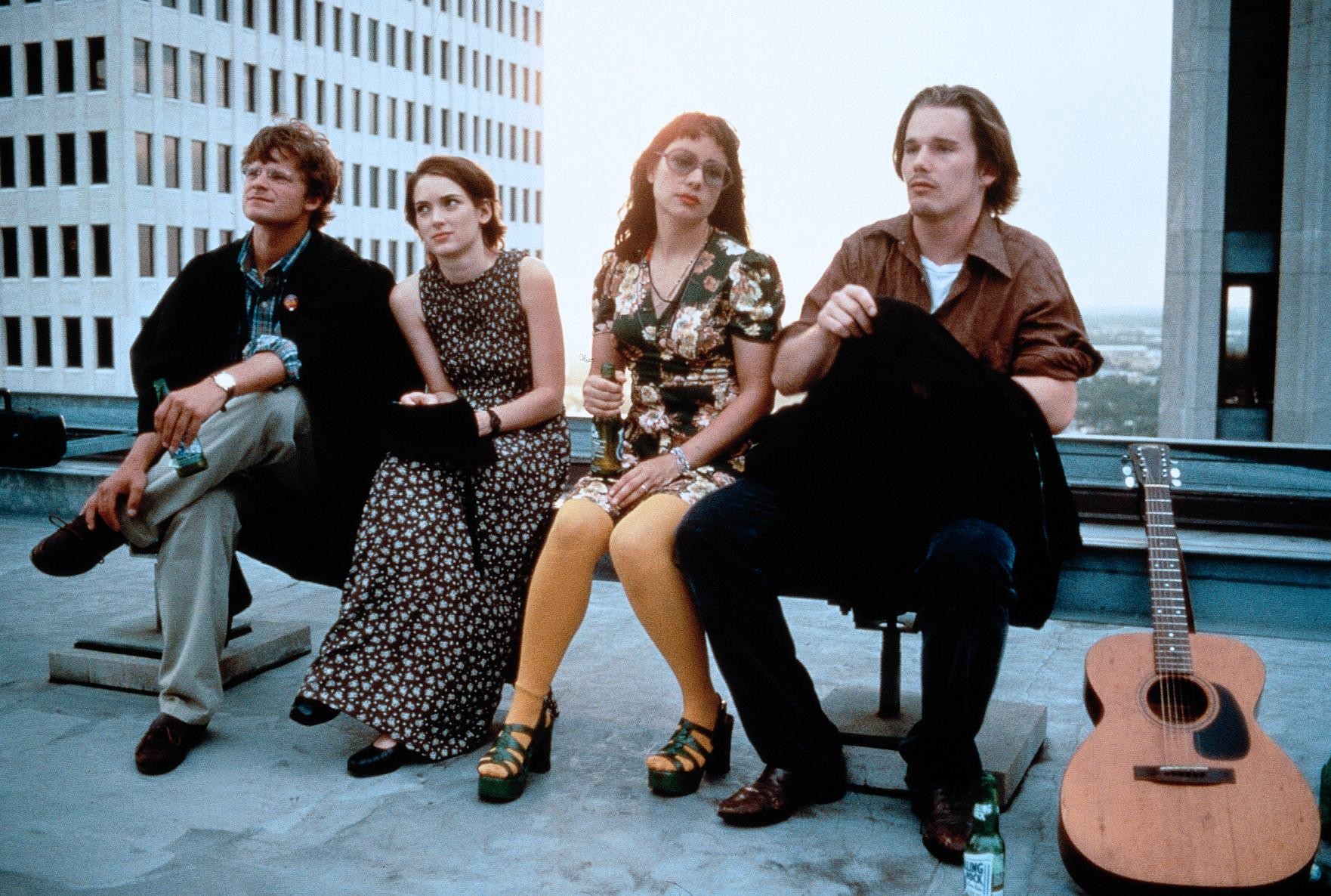
When in doubt to pick a “favorite,” it’s always safe to default to “the one you’ve seen the most times” and as far as romantic comedies go, for this writer it would have to be “Reality Bites.” I was born in November ‘81 so I just made the Generation X cutoff, though missed the film upon its initial 1994 release. However, a few short years later it became an indispensable part of my high school years, playing on a loop (along with Alfonso Cuarón’s “Great Expectations” and a lot of Radiohead) during a stretch of teenage heartbreaks. Helen Childress’ excellent screenplay pivots between comedy and drama effortlessly, tackling big issues like AIDS and coming out to your parents while still making room for a gas station set dance party to “My Sharona.” (Disappointingly this is Childress’ only screenplay credit to date though there was talk of her reteaming with Stiller on a new project.) Like many guys of my generation, this film was responsible for a massive decade-long crush on Winona Ryder. As Lelaina Pierce, the valedictorian-turned-documentarian, the actress has never been better: intelligent but naive, driven and charming, Ryder’s character was the antithesis of the quirky MPDG’s that would rule the screen in the decade to come. Here she’s pursued by two contrasting love interests: idealistic slacker Troy Dyer (Ethan Hawke, playing what to this day people believe to be a version of himself) and yuppie TV exec, Michael Grates (Ben Stiller, also making his directorial debut). Stiller unselfishly takes the douchebag role and manages to play him as a likeable but misguided counterpoint to Hawke’s flaky rocker Troy, but in the end there can be only one. Featuring ace supporting turns from Janeane Garofalo and Steve Zahn, sharp cinematography by Emmanuel Lubezki and a great soundtrack featuring gems from both the ‘80s (The Knack, Squeeze) and ‘90s (Dinosaur Jr., Lisa Loeb), the film may be a time capsule but it’s one I’m happy to dig up again and again. — Cory Everett
 “Trouble In Paradise” (1932)
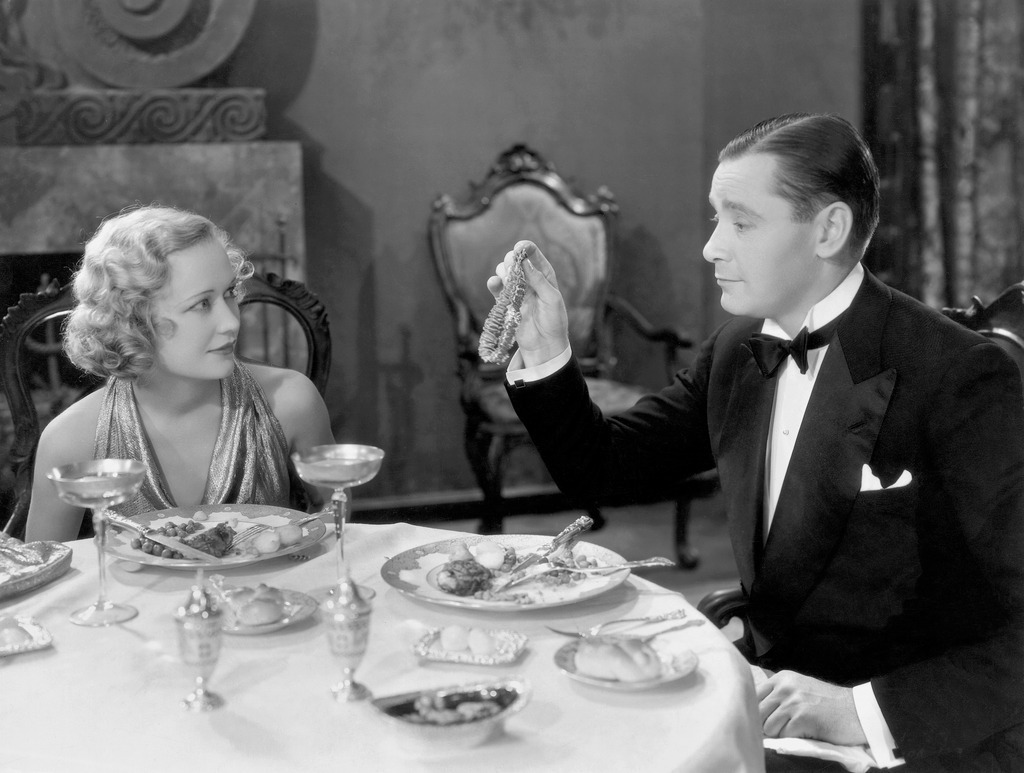
It may be eighty years old, but few rom-coms since have matched the cleverness, wit, sexiness and sheer joy of the meet-cute (a term that barely holds a candle to the sophistication of the film) that opens Ernst Lubitsch’s “Trouble In Paradise.” The dashing and infamous Gaston Monescu (Herbert Marshall) and the gorgeous Lily (Miriam Hopkins) — both thieves — are in Venice, and on a date under the guise of being a Baron and a Countess, but it isn’t long before the crooks realize they are in like-minded company. After they flirt by showing what they have lifted off one another over the course of the evening, Gaston closes the deal with a simple rhetorical question, “You know the man that walked into the bank of Constaninople, and then walked out with the bank of Constantinople?” It’s love. Fast-forward and Gaston and Lily are happily together, scheming their way around Europe, when Gaston sets his eyes on Madame Mariette Colet (Kay Francis), the widowed owner of a lucrative cosmetics company. With more money than she knows what to do with, Gaston wheedles his way into becoming her personal secretary, taking over both her business and personal finances with an end game to make off with as much cash as he can. But of course, he starts falling for her too, and Gaston is forced to choose between his love of money and the love of his life. Based on a play, the film isn’t exactly cinematic, but it hardly matters when the wordplay is as sharp and dazzling as it is here. Marshall carries the film with a confident swagger that makes you believe this man could work his way into the heart and business of a woman in a matter of weeks. And Hopkins and Francis are no mere shells, showing two wildly different women — one cool and collected, the other impulsive and passionate — who both have plenty to offer Gaston. It’s a tricky balancing act but the film’s finale, which sees Lubitsch masterfully write his way to an ending that sees all three get what they want and then mirror the opening sequence to top it all off (has pickpocketing ever been done as an act of affection since?), is a total joy to behold. Yes, the film is a total fantasy — two thieves moving from European capital to another, swindling their way through life — but Lubitsch knows if the feelings aren’t genuine it won’t work, and by the end of the picture, you really are rooting for Gaston to make the right choice. It’s hard to explain just how brilliant and breezy (the movie runs at a crisp 82 minutes), deeply romantic and laugh out loud funny “Trouble In Paradise” is without just rolling out a bunch of quotes, but this one, spoken by Lily trying to hang on to her man, sums it up best: “Darling, remember, you are Gaston Monescu. You are a crook. I want you as a crook. I love you as a crook. I worship you as a crook. Steal, swindle, rob. Oh, but don’t become one of those useless, good-for-nothing gigolos.” Divine. — Kevin Jagernauth
 “It Happened One Night” (1934)
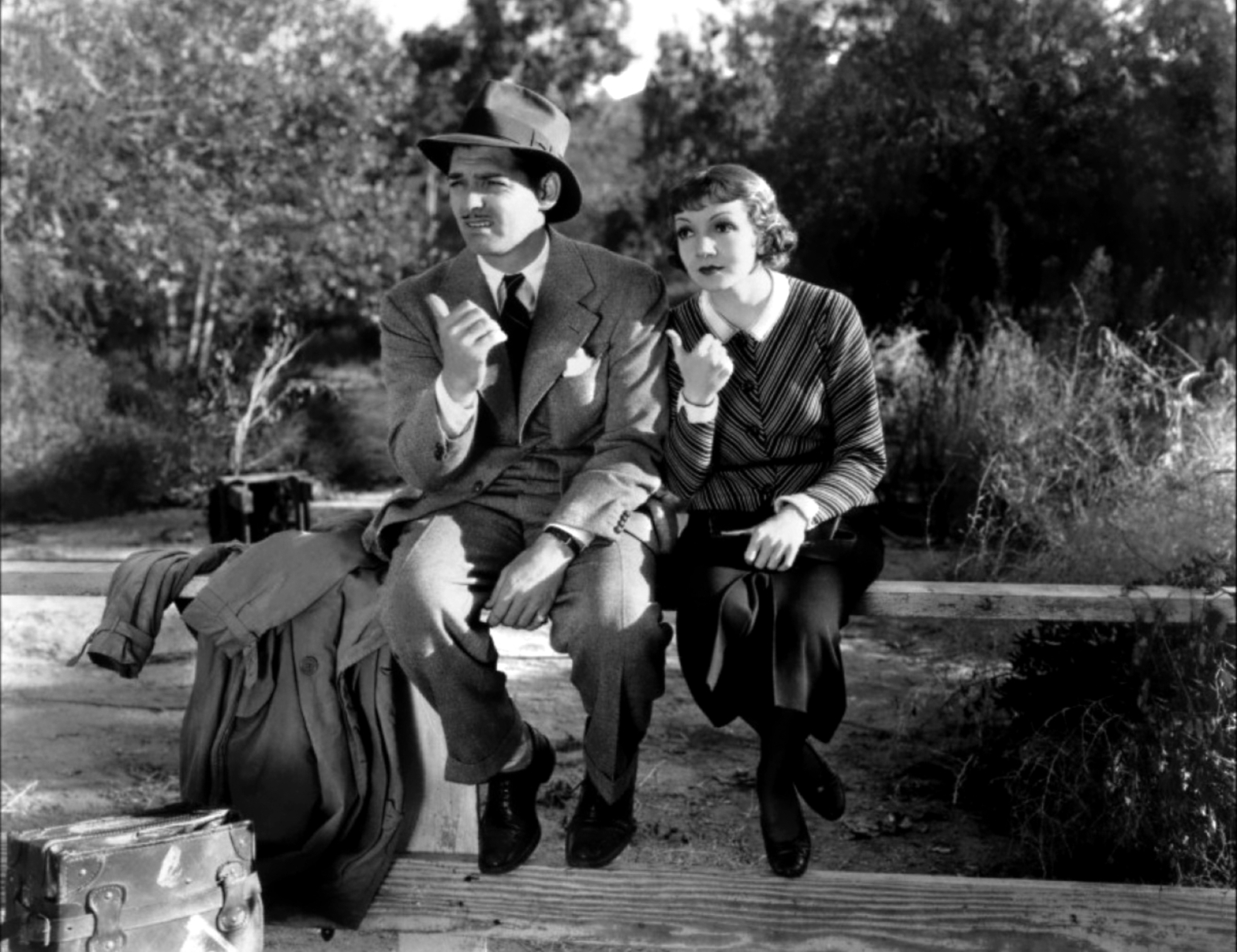
While Howard Hawks‘ “His Girl Friday” is a wonderful almost anti-romantic comedy and perhaps considered the blueprint for couples that have to duke it out before they can fall in love, perhaps an even more pugnacious would-be relationship film is Frank Capra’s “It Happened One Night.” The first film to win all five major Academy Awards (Best Picture, Director, Actor, Actress, and Screenplay and only two other films have done that since), while “It Happened One Night” is often considered a classic romantic comedy, it’s actually quite sarcastic and much more of a traditional screwball comedy with its elbow-to-the-ribs repartees. And to be blunt about it, it’s not that romantic. Clark Gable and Claudette Colbert star as a rakish newspaper reporter and a pampered and recently married heiress who fall for each other on a cross-country trip despite their clashing temperaments. The pair are as mismatched as can be; she’s trying to get out from under her overbearing father’s thumb (who’s trying to annul her marriage) and runs away and he selfishly smells the scoop of the century when he realizes who she is. What ensues are almost corrosive verbal fireworks between the two. He thinks she’s a spoiled brat, and she believes he’s a gruff, self-serving jackass. While they’re both on the mark, this witty, hilarious picture, written by Capra-regular Robert Riskin, makes the most of this unlikely pair with its jagged and droll battle-of-the-sexes humor and unsentimental approach to romance. There’s a lot of deep and understated affection in the comedy, but the way the picture uses diverting sharp barbs to mask those sentiments is incredibly sophisticated for its time. Then again, maybe this movie just indicates that I was born four decades too late. Extra bonus points. I’ve always loved a wisenheimer and Clark Cable’s character in the film is a big influence of one of my most beloved wiseasses of all time: good ol’ Bugs Bunny. — Rodrigo Perez

