


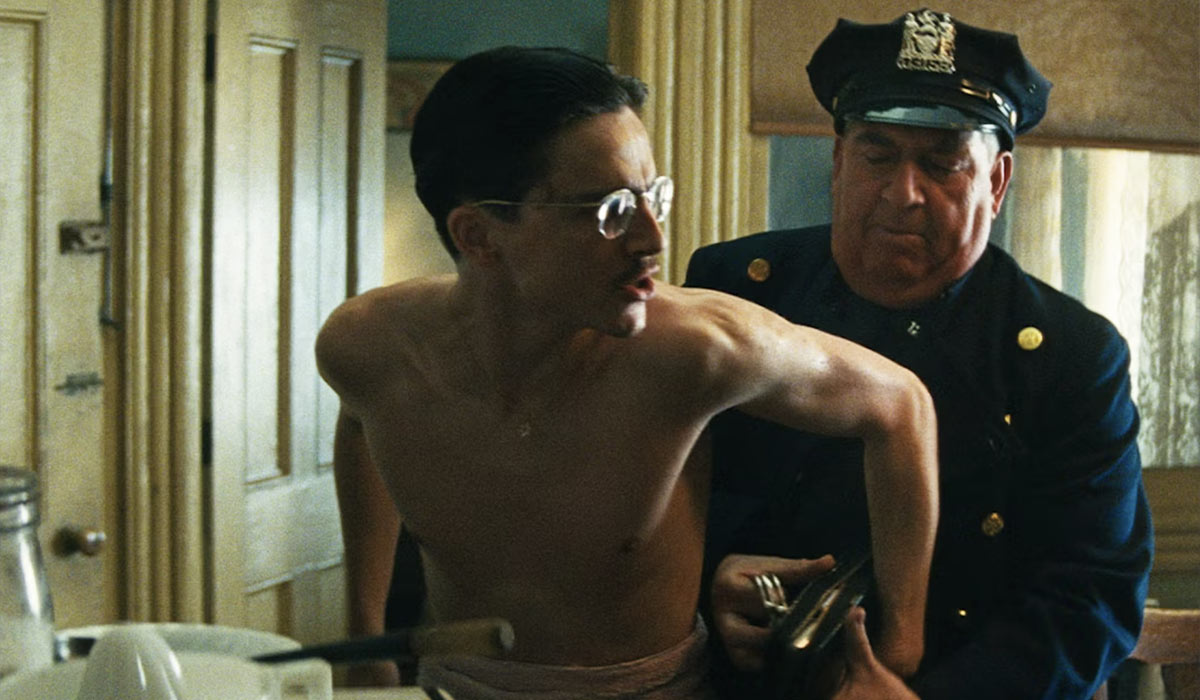
Sometimes fate has a way. Jennifer Venditti was establishing herself as a filmmaker. She’d won an award at the SXSW Film Festival for her 2007 documentary “Billy the Kid.” But then she met The Safdie Brothers, and they clicked over their love of cinema. Before she knew it, her eye for street casting and unconventional actors saw her casting Ryan Gosling’s “Lost River,” Andrew Arnold’s “American Honey,” the Safdies’ “Good Time,” and the pilot for “Euphoria.” Now, she’s part of the shortlisted class of Casting Directors up for the inaugural Best Casting Academy Award.
READ MORE: From “Marty Supreme” To “I Love LA” Everyone Is Finally Witness To The Talents Of Odessa A’zion
Venditti’s other credits this year include Benny Safdie’s “The Smashing Machine” and Yorgos Lanthimos’ “Bugonia,” but it’s work on Josh Safdie’s “Marty Supreme” that has put her in a much bigger spotlight. The Timothée Chalamet period pic is full of quintessential New York characters. Some played by established character actors, some played by up-and-comers, and others played by established personalities who worked their role into their busy non-acting careers. It’s a credit to both Venditti and Safdie that the latter work so smoothly, because in other hands they could have been an unintended distraction.
During our chat a few weeks ago, Venditti reflected on her career journey, reacted to this reporter’s knowledge of an intriguing footnote to Odessa A’zion’s casting, hunting down a busy Kevin O’Leary to pitch him his role, Safdie’s small-world connection to Isaac Mizrahi, and so, so much more.
This interview has been edited for length and clarity.
_____
The Playlist: Hi, Jennifer. How are you doing?
Jennifer Venditti: Good. How are you?
Good. Thank you so much for taking the time.
Yeah, nice to meet you. I love The Playlist. I made a film a long time ago called “Billy the Kid,” and I feel like I got a good, I review. Anyways. I’ve always loved The Playlist, so it’s nice to talk to you.
Thank you. Well, I was going to ask how you got into casting, because I was looking over your resume, and I was so impressed. Not just the trajectory, but the sort of projects you’ve worked on over the past sort of decade or so. How did it happen?
Well, just to recap, way back when I started, actually originally in fashion, I was interested in the story of clothing, and then I very quickly was like, “Oh wait, this is not creative. It’s just like it’s a farce.” But I was always interested in people, and I always loved people watching in the cinema of real life, and I was like, “Oh, this is so limited. We’re only seeing one kind of beauty.” This was 20 years ago, so a friend of mine was becoming a famous fashion photographer and he was like, you populate these photos with what you like, and I started streets finding people from the street and mixing it with models and cut to, I started traveling around the world doing that and I started filming the people I was scouting and then I made this documentary called “Billy The Kid,” and it went to SXSW and Josh and Benny were in the audience, and Ryan Gosling had been given the film for something and all these people in the film industry started calling me and being like, “Oh, I love the way that you see the world. Will you find people for me or do this?” And that’s kind of how it happened. It was like I was on a director track. I was not trying to do this, but I was upset. And then when I met Josh, it was like this kindred spirit. He was obsessed with characters too, and we saw that we had this love of the cinema of real life, as I like to say. I was obsessed with this film called “Streetwise,” which was a documentary about homeless kids in [Seattle]. It’s an amazing film. And he loved things like that, too. And we would just talk about these things, and you see it in the work. We’re both obsessed with the combination and the alchemy of actors and narrative filmmaking mixed with real-life influences and textures of people from all walks of life. It’s like our happy place.
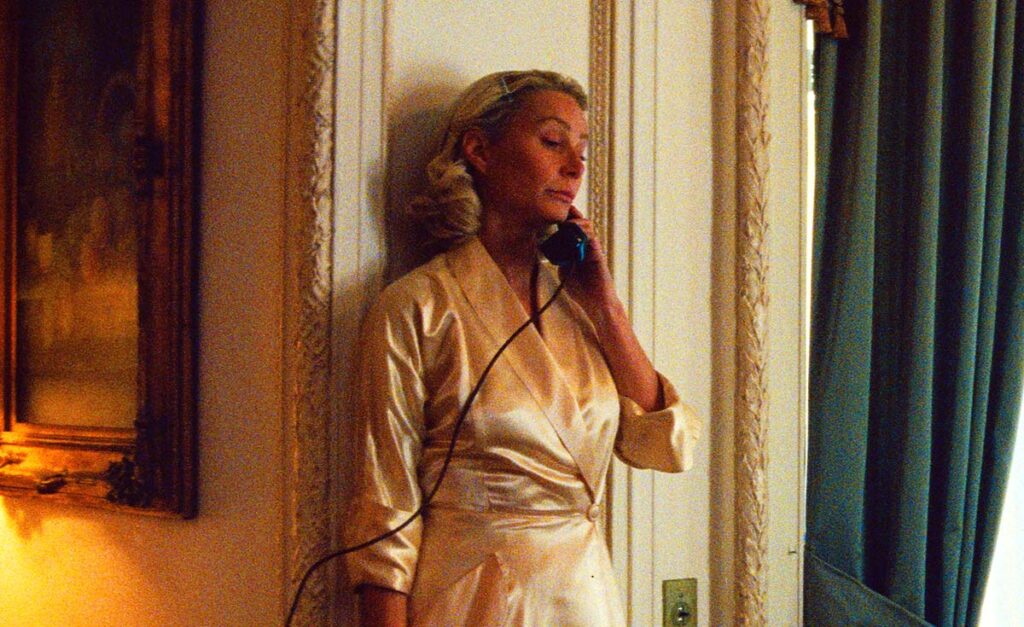
What’s notable about what you do is that, in theory, you are doing a much harder job than a traditional casting director who just has videos sent to them and headshots.
Is it? Thank you for noticing.
Do you get stressed about it, or are you excited about the prospect of hitting city streets to cast?
No, no. I’ll tell you, it’s two things. First of all, I don’t do it the same way that I used to do it. It was just like, “Oh, you’re just going to find some people. I can just go by myself.” Now, it’s like there are a lot of people in here that aren’t street scouted. You know what I mean? So it’s like we’re doing the lists of actors, we’re doing the auditions, we’re doing tapes, it’s a combo of everything. But I have to say I couldn’t do it without the support of a studio like A24. They recognize what this takes. You need support. I had a huge team. I had four scouts. I had two associates. This would not be possible with me, just myself and an assistant. And so when someone’s going to support the process and gives me the infrastructure that I need, I love it. When it’s not? It’s not possible. And, also, it’s not necessary in every project. The thing that is also great about this project is that I live in New York City. We have this huge stomping ground of resources for things. There have been other projects where we’ve had to fly places, but a huge part of doing work like this and me getting excited about it is having the support and the infrastructure to do it well. And this movie is a testament to that, but it’s still hard. I’m not going to say it’s not hard and it still takes a lot of time and it’s still very tedious, but when you have the support and the infrastructure, it’s inspiring because it’s exciting when you find this great face and then you bring them in and you go through the process with them and they can do it and you’re like, this is incredible. And then you add them to the pot. Then you meet an actor, and like Odessa [A’zion] or someone, and you’re like, “This is incredible.” This person has all the stuff of the realness and the rawness that we like, and she’s an incredible actress. Then you find someone like Isaac [Mizrahi] who’s just this larger-than-life person in his life already, and we’re like, “Oh, he can do this. I don’t need to audition him. We’re just going to pepper him into this thing.” And then it’s a hodgepodge.
Someone like Isaac Mizrahi. I know who Isaac Mizrahi is. He’s a legendary fashion designer, but does that come up in a brainstorming session? Is it Josh with a list of people to reach out to? How does it work in that respect?
No, it’s definitely brainstorming, and it’s definitely riffing, and it’s definitely inspired. Isaac Mizrahi just came to me, and I knew Josh knew Isaac growing up. Josh is a New York City kid, and Isaac’s been here forever. I can’t remember if it was Isaac or Isaac’s boyfriend, who lived above one of Josh’s friends. So, Isaac knew Josh as a little kid. But like I said, I came from the fashion industry, so I know “Unzipped,” and I just always thought Isaac was an amazing character. And just one day, I’m like, “Isaac should be her publicist.” “What?” Josh was like, “Oh my God.” Then we set up a meeting. Or Josh met Tyler the Creator, a long time ago and always just knew he wanted to use him in something. And then David Mamet, I was thinking of a New York play. It’s a combination of going back and forth, taking each other’s ideas. It’s a combination of one person getting inspired and saying, “This is the person.” And then there’s a process of just me going through getting self tapes on people, picking the people. Curating a thing, sending it to Josh, and then there’s a process of scouting tons of people. And then I go through all the scouts’ work, and I pick people that I think are worth seeing. And then we bring them in, and then we go through a whole bunch of paces with these people, tape ’em, make a link for Josh, show him that.
You’re based in New York. Josh had many ideas because clearly it’s a very New York movie. But compared to something like “Euphoria” where it’s almost all unknowns, what is, or maybe not, but…
That process was similar, too. We go through all the agencies, see tapes of people, meet actors, scouting. Same thing. Most of the actors, even though you didn’t know who they were, some of them had experience, like Jacob [Elrodi] had done things, Sydney [Sweeney] had done things. But Hunter [Schafer], no. I knew her from the fashion industry. She had only been a model, and then we had to go through the steps with her of helping her. But she was a natural. Her instincts were amazing. Angus [Cloud], rest in peace. He was another person where it was just like he was magic when he came in. It is the same thing where we’re pulling from different pools of people, whether it be actors with agents that are self-taping or whether it be scouting and people that we have to bring in, and we have to take them through the steps and get them there. But it’s the mixture of the texture of real life and then these other discoveries of people that this is what they’ve wanted to do, and they’ve been working towards it.
But you do have people, for instance, I don’t know if Kevin O’Leary ever wanted to be an actor. And he’s so out of the box. Did he meet Josh at a basketball game or in the Hamptons? How did that even happen?
No, but that’s an example of making lists. And he is a character. If you watch “Shark Tank,” that is a performance. First of all, I just thought we’d never get him because his schedule was so insane. And it is not like he has acting agents. It took a while, and then when we finally got him engaged, Josh and Ronnie [Bronstein] flew to where he was and met him. And Josh could talk anyone into anything. But I think it’s similar to Isaac, where it’s like the person has a persona that is a character that informs the thing that’s written on the page and can bring it to life and away from lived experience. Kevin on “Shark Tank” has qualities that Milton has on the page. Not every director can create that environment and coach. I mean, he literally is an amazing coach. Not only do we see what the person naturally has, but Josh has to then be able to get them there on set. Once they’re with these other big stars and they’re in this environment that can be very intimidating, and he’s a master at that.
How hard is it? Because in theory, someone could look at the cast list, watch the trailer, and go, Fran Dresher, so on the nose, why would you do that? But then you see the movie and know it works. It’s perfect. How do you know as a casting director tell your director give honest feedback?
It’s instincts. This is this job. That’s why I am like, “How do you teach this job?” First of all, Fran was one that we both loved forever and that we wanted to use her before on another project that never happened, so we always kind of had her on the side as someone. So it was great to be able to have something for her. But I think with casting specifically, it’s so much about instincts and being an empath and seeing things and trusting your eye, basically having an eye and having good instincts is the superpower, I think. And when people work for me, it’s like certain people have these qualities, but they’re just haven’t been developed yet. And that’s exciting. But then there are other people. If you don’t have the foundation of being connected to your inner voice, and you have an eye that can see things cinematically, you can teach parts of it, but not all of it. And I think that I always saw things through as a little girl. I would just watch people in big public settings, and it was like little mini movies to me.
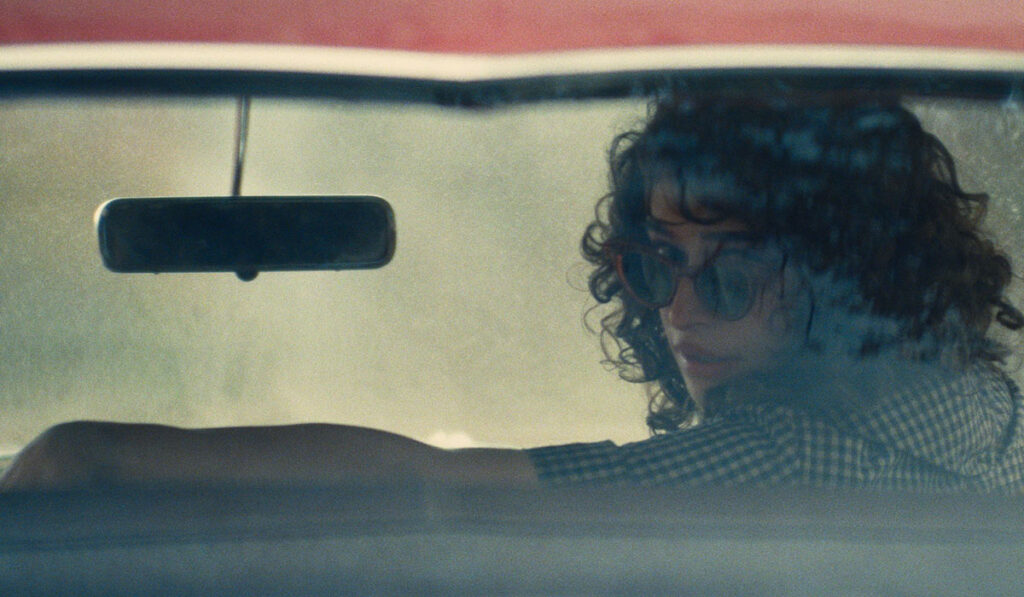
How much of your job is making sure that the backup or the third choice is just as good as the first? I won’t say who it was, but I actually heard randomly that Odessa’s character was actually offered to another actress who was then unavailable due to a larger commitment.
I have not talked about this with anyone. [Laughs].
We don’t have to say who it is, but now that I know who it is, I can’t see it.
Exactly. But can I tell you [Odessa] was always my first choice, and this was divine intervention. And Josh agrees.
For example, I’m sure Gwyneth Paltrow was a first choice. If Gwyneth had said no, and she hasn’t done a lot, she has turned down so much stuff. You guys must have been like, “O.K., our second…”
Third choice? We’re not like that. That’s the thing. We have lists that we can make and things like that, but it’s never like, oh, if this falls through, we’ll go because you love your first choice. But the case with Rachel’s character, I had someone because I was obsessed with her, so I was ready to go, but it wasn’t like she was my second choice. She was always my first choice. I just want to put it out there. She was always my first choice.
No, of course.
And I’m not just saying that to be political, I am dead serious. That’s why it was one of those things where, as a casting director, it was because sometimes you got to let go. Someone likes someone else better than the person you like. And it was really hard for me. It wasn’t like I was prepared. It was just like, “Oh my God, I can’t.” And we still went through the process. We still auditioned. I had to prove it, which seems crazy now. Isn’t she just amazing?
She is, but also it’s not a bad thing because if you think of Joel Edgerton, who was supposed to be the lead of “The Brutalist” and then dropped out a few months before they were supposed to shoot.
Oh, I didn’t know that.
He had a conflict and couldn’t do it. So, Adrian Brody came in a few months before so they could get the movie made, and then he won an Oscar. Sometimes divine intervention works out.
And everyone feels that way. Josh will tell you, oh my God, he is like bow down. He gets it. For sure. I’m just saying it’s interesting. But to answer your question, it’s not like we’re like, “O.K., here’s the list and here are all the backups.” Never, never have that. It’s just when it happens that you scramble. And this one wasn’t like that. But usually, you’re like, “O.K., go back to a list.” Or “Who do we think?” You’re not prepared to have it happen.
You’ve worked with three amazing directors this year, two who used to work together. Two are not at the moment. What is the difference from your perspective in terms of casting and working with Josh, Benny, and Yorgos?
Oh God. I mean, it’s so crazy. I would rather say, what’s the similarity? I mean, oh, sure, they’re all different in terms of how they do it. But I think the whole thing is they’re all such visionaries, and so decisive. They’re all very clear on their vision, and they’re all just incredible creative partners. They allow you to do these. Look at Aiden [Delbis]. That was Yorgos’ vision. It wasn’t written as a neuro diversion autistic character, and it was so brilliant. When I said to you, “I am allowed to do this interesting out-of-the-box casting,” they know how to take care of the person, support them, and bring it home into this incredible cinematic experience. And they all do it differently, but they all do it. And I think because they’re all super visionaries and they’re all very confident, and they’re all incredible with humans, and they love it as much as I do.
“Marty Supreme” is playing nationwide.
Follow Gregory Ellwood on Bluesky
Follow Gregory Ellwood on Threads
Follow Gregory Ellwood on Instagram
Sign Up For The Breakdown Newsletter


