


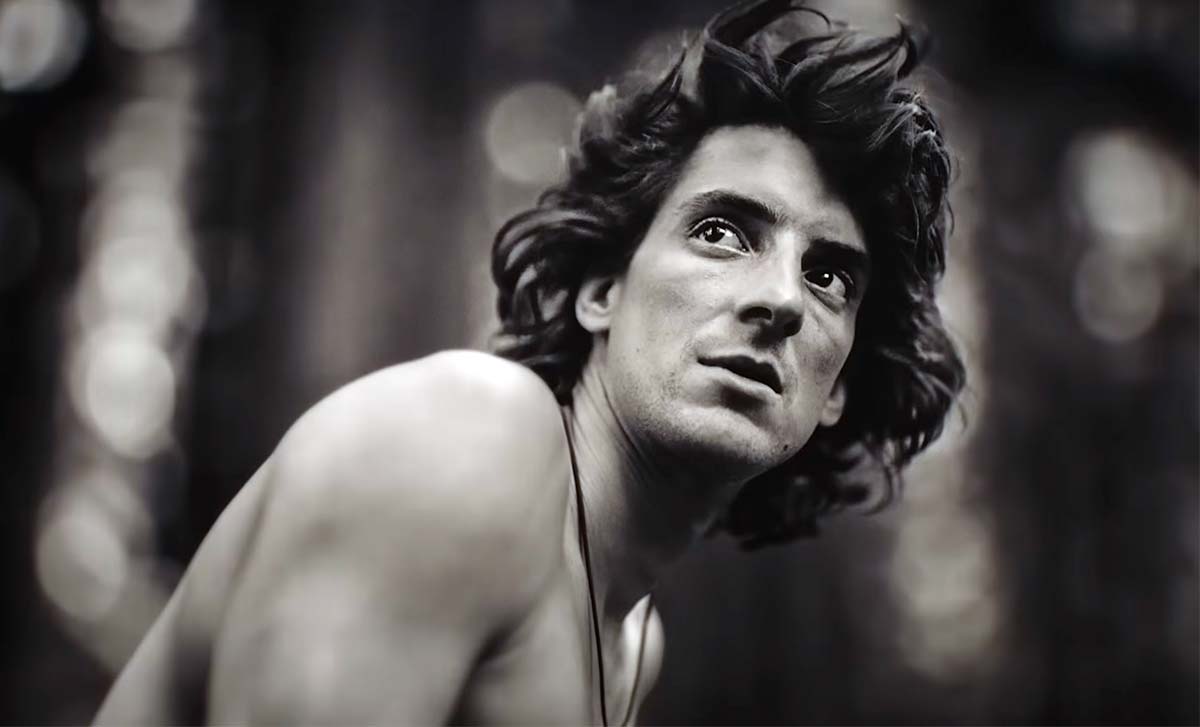
Take your pick. When it comes to adrenaline-laced sports like BASE jumping and big-wall rock climbing, both carry severe, undeniable risk, where a small mistake can have deadly consequences, and the thrill of pulling it off delivers its own dopamine rush. Enter Dean Potter, once regarded as a climbing legend thanks to his pioneering solo ascents of Yosemite’s El Capitan, the controversy surrounding several of those feats, and the personality behind it all, many considered polarizing at best. “The Dark Wizard,” a four-part HBO Max series documenting his life and everything that unfolded each time he took to the rocks—or, later in life, the air—is here to cover it all.
READ MORE: The 75 Most Anticipated TV Shows and Mini-Series Of 2026
He wasn’t your typical dirtbag, the term often applied to those living a semi-homeless lifestyle as they drift between climbing walls and bouldering spots. However, his childhood certainly laid the groundwork. Born into a military family, the constant relocation only deepened his sense of being an outsider, while his mother’s spiritual, meditative nature helped shape a personality that would later fully emerge after he dropped out of the University of New Hampshire, driven by a desire to see where climbing might take him.
Interviews with those who knew him best describe someone intensely focused on his goals, almost to a fault, as tandem climbs and record attempts could bring out a competitive, hair-trigger temper, one seemingly unwilling to accept defeat. Slacklining also became a passion of Potter’s, and in one scene, watching him nearly plunge to his death while attempting to cross a vast abyss doesn’t inspire cries of fear so much as screams of frustration—a reaction that appears more than once throughout the series.
Journal entries reveal an unexpected depth, the kind one might not readily associate with the wandering-climber archetype. Yet as fame caught up with Potter, and his initial reticence toward publicity gave way to magazine covers, photo shoots, and appearances in the climbing video series “Masters of Stone,” his feats became bolder.
One of the most controversial was his climb of Delicate Arch in Utah. This act divided the climbing community over the ethics of the stunt, especially after indentations were found that appeared to align with Potter’s ropes—though he later claimed the notches were already there. His competitive streak also surfaced in his speed climbs up El Capitan routes like “The Nose,” where the gifted Hans Florine always seemed ready to reclaim any record Potter broke.
Free-spirited and fiercely determined in equal measure, that’s the version of him nearly everyone here seems to remember.
Nowhere was that more evident than in his relationship with Stephanie Davis, another climbing talent whom Potter married in 2002. As others established themselves at the top of the sport and Potter began reassessing his ultimate goal, fractures in the marriage began to show. One particular event cost not only Potter his sponsorship with Patagonia, but also Davis’s, simply by association.
In a neat transition, mention of the next generation of climbers cuts to Alex Honnold, who discusses Potter’s early influence and how, when he started tackling some of Potter’s most famous climbs, he began to reassess his elder’s legend, finding some of Potter’s previous feats relatively easy—even as Potter, in turn, wondered about Honnold and how free soloing had once been his own domain before a new phenom arrived on the scene.
Clearly, it was time for a change. After leaving Davis somewhat abruptly amid mounting tension, a chance screening of a film about BASE jumping, paired with a showing of Potter’s climbing documentary, quickly reignited something in the battered climber.
Almost as soon as the credits rolled, Potter threw himself headfirst into BASE jumping, convinced—if his journal entries are any indication—that he was still destined to achieve something truly great. His groundbreaking method of “freebasing,” in which a free solo climb involved carrying a parachute in case of a fall, was met with both excitement and more than a little doubt about whether the altitude would even allow for a successful jump.
Unfortunately, it led many toward the conclusion they had long feared was inevitable. It’s easy to guess what that was.
Directors Peter Mortimer and Nick Rosen, no strangers to high-altitude athletics thanks to their work on “The Alpinist” and “Valley Uprising,” have crafted an undeniably detailed look at a complicated figure, one who was always more than what could be seen in his climbing or BASE jumping alone.
In many ways, the four parts of “The Dark Wizard”—itself a nickname once applied to Potter—carry the familiar shape of a modern docuseries, but the recollections from friends and family, combined with an avalanche of footage both of Potter in action and in his own talking-head reflections, paint a portrait that feels worth seeing whether you care about climbing or not.
His demons were clearly many, but just as the series makes you wonder whether these increasingly dangerous pursuits had become a soulless professional compulsion, the whoops and cheers that erupt whenever he pulls off a goal feel wholly genuine. Even his conflicts with park authorities—an ongoing issue as his BASE jumping, prohibited in Yosemite, pushed him further—only seemed to sharpen that drive, with Potter himself describing how the moment his parachute opened, he was already scanning the ground for police.
Mention is made of “the edge,” that mythical line marking where a person’s limits may lie, and whether it makes any sense to cross into territory unknown, especially to oneself. Dean Potter clearly had no issue pushing beyond it, even as his own limits began to take shape and his ambitions shifted toward new forms of reinvention.
That’s where the real Potter seems to have lived—restless, unsatisfied, unwilling to stop short even when the cost was obvious. A recurring dream throughout his life had him falling from a great height, only to wake just before impact. Maybe that’s what drove him into the life he chose. Maybe not. The series can’t answer that for certain, but it makes the question linger. [A]


