


 “Atlantic City” (1980)
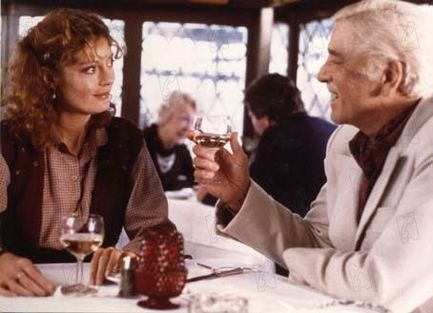
As we speak, Jersey’s Atlantic City has been battered by Hurricane Sandy, but if you’re to believe TV and movies, the damage was done long ago (HBO‘s “Boardwalk Empire” is currently documenting the city’s early years as an organized crime stronghold, for instance). But likely the definitive cinematic depiction of the city is the film that bares its name, Malle’s 1980 film “Atlantic City,” probably the best and most satisfying of his American works. The film has a curious history. Malle had close to free rein from French and Canadian financiers, so long as he was in production on a film before the end of 1979. Near the start of the year, without a project, Malle’s then-girlfriend Susan Sarandon recommended a script by her playwright friend John Guare (“Six Degrees Of Separation,” “House Of Blue Leaves“). The result, rushed into production only a few months later, ended up picking Oscar nominations in the top five categories, and the Golden Lion at Venice. It’s critical reputation has faltered a touch over the past thirty years, but the set up is familiar: the story tracks relationship between Canadian emigre Sally (Sarandon) and her older would-be protector Lou (Burt Lancaster), both residents of a run-down of a crumbling apartment block, who have their lives upended when Sally’s no-good husband (Robert Joy) turns up having stolen drugs from the Philly mob. But Malle shies away from a simple genre tale, creating something far sadder and more beguiling, much of which is down to a phenomenal performance from Lancaster, perhaps reaching the peak of his talents in his twilight years. It’s often said that the best movies about America are made by foreigners, and here Malle stakes his own claim to one of the more definitive pictures about the American Dream.
 “Au Revoir Les Enfants” (1987)
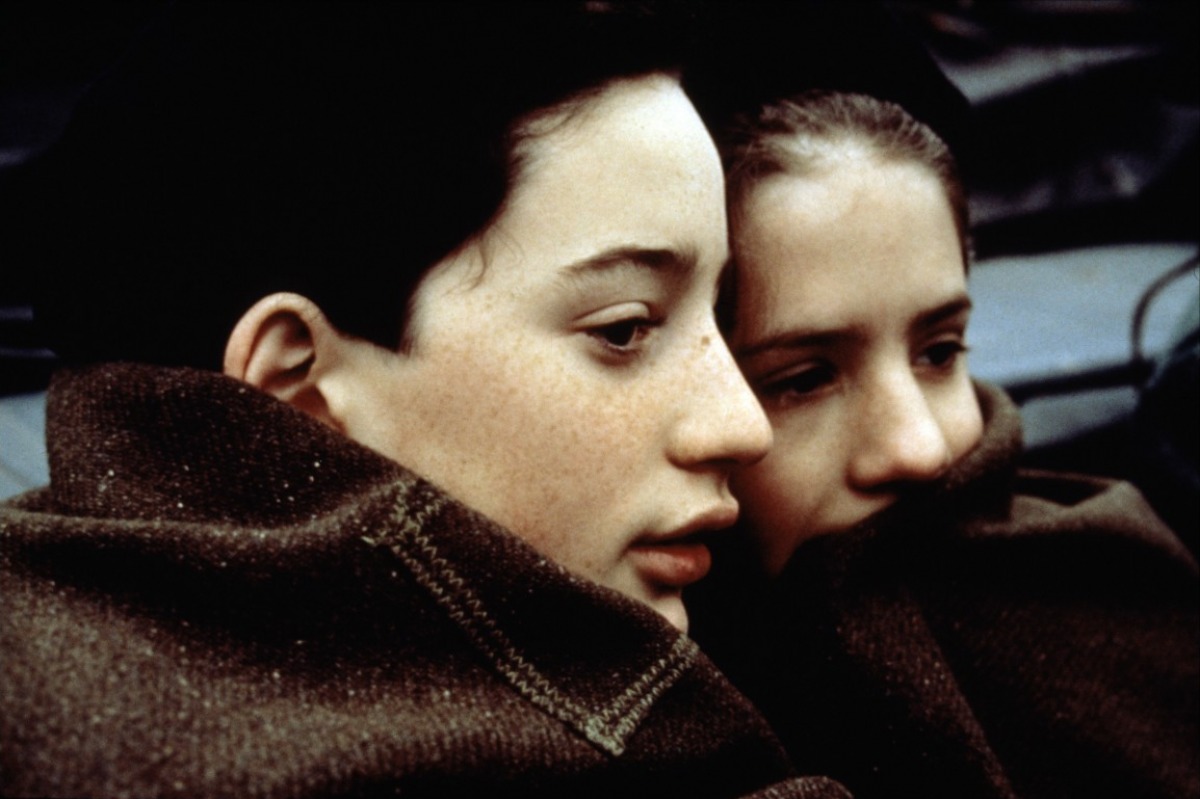
A heartbreaking tale of innocence lost, Malle’s 17th feature-length drama was his most critically well-received film, winning the Golden Lion at the Venice Film Festival, sweeping the Cesars with seven awards (including Best Film, Best Director) and scoring two Oscar nominations including Best Foreign Language Film at the 60th Academy Awards. But it came at a cost. After the critical roasting of 1985’s “Alamo Bay,” like a wounded animal, Malle retreated to France and immersed himself in his most personal and partly autobiographical film. Centering thematically on guilt, fear and shame, the picture is set in 1940s Nazi-occupied France in a Catholic boarding school that secretly harbors a few Jewish students, thanks to its compassionate headmaster. Anti-semitism is ugly enough, but when discovered through the eyes of naive, innocent children who don’t fully comprehend the evils and injustices around them, it can be truly agonizing to watch. Two boys, a French Catholic and a masquerading Jewish boy, become best friends, but an accidental and painful Judas kiss tears them apart. Meanwhile, moments illustrating the ugliness of which humankind is capable abound, such as the subplot of a hostile cook caught selling food supplies on the black market who betrays the children in a contemptible attempt to save his own skin. In ways an act of atonement, ‘Enfants’ is extremely personal, based on Malle’s own childhood during which he had to watch the Gestapo haul away four of his schoolmates to be deported and eventually gassed at Auschwitz. Perhaps because of Malle’s unique connection to the material, he creates such immediacy that the audience cannot but feel the same helpless impotence that the children do during the film’s conclusion as they wish their friends goodbye. Devastating. Moving and yet matter of fact, the picture is ultimately a heart wrenching but unsentimental and eloquent statement on prejudice.
Don’t fret, Malle enthusiasts, this is of course is just a brief taste, but for those not intimately familiar with the filmmaker, let’s remind you once more: 16 films in the Criterion Collection is not too shabby, and has to mark Malle as someone worth paying attention to. There’s a huge amount more to discover too, including “Calcutta,” Malle’s celebrated doc about poverty in India, later broadcast as a seven-part TV series called (“Phantom India”) on the BBC, upsetting the Indian government so much they disallowed the network from shooting in their country for several years. It’s among the few times a documentary film played in competition at Cannes. Other feature-length pictures not widely known or seen include the harmless comedy-adventure pic “Viva Maria” starring Brigitte Bardot and Jeanne Moreau, “A Very Private Affair” also with Bardot, and the Jean-Paul Belmondo vehicle “The Thief of Paris.”
As mentioned, “My Dinner With Andre” is another Malle classic, heralded by Siskel & Ebert and perhaps best remembered for defying every screenwriting 101 rule in the book (and paid homage to in “The Simpsons” and, more recently, “Community“). “The Fire Within” is another early great one; while it can be unintentionally funny in its now-cliched depiction of European ennui leading to mass depression, the picture (bolstered by its Erik Satie score), is actually a penetrating portrait of a man on the edge of suicide. Another essential picture is “Lacombe, Lucien,” again a personal coming of age story set during the German occupation of France that centers on French guilt over collaboration (the teenager becomes part of the German Police but soon falls in love with a Jewish girl).
While similarly controversial for its nude scenes featuring a pre-teen Brooke Shields, the brothel-set “Pretty Baby” (1978) is perhaps best remembered for its comely shots of a very young, naked and gorgeous Susan Sarandon, and like most Malle films, the content may be superficially contentious, but the form is always well-handled. The critical and commercial bomb “Crackers” starring Sean Penn and Donald Sutherland remains an elusive picture on DVD, though it was released on Universal‘s bare-bones vault series earlier this year (the filmmaker wasn’t entirely happy with it either, and worried he had finally compromised his work on a non-labor of love). His seabound paean to John Ford, “Alamo Bay,” starring Ed Harris also remains AWOL, largely because of its critical roasting, but it did precipitate his most personal work “Au Revoir Les Enfants.” Based off of Chekhov’s play “Uncle Vanya,” “Vanya On 42nd Street” starring Wallace Shawn and Julianne Moore would prove a nice closing note to his career — Malle passed away soon after at the age of 63 from cancer. Again, all this is just a taste. At the very least we hope this motivates someone (Criterion?) to finally release “The Silent World” on DVD. We haven’t seen it since childhood and the homage in “The Life Aquatic” just doesn’t cut it.
— Rodrigo Perez, Oliver Lyttelton