



 “The Book of Life” (1998)
Working with French TV money (“The Book of Life” was financed and produced by the French television company ARTE), Hartley found himself turning to theological concerns — a theme that would arguably consume the rest of this career — in this surprisingly spry, biblically infused tale of a turn-of-the-century Apocalypse upheld by Jesus’ ambivalence. That Jesus and the Devil are represented by Hartley regulars Martin Donovan and Thomas Jay Ryan, in dueling suits and temperaments, on December 31st, 1999 in New York City is a tough pill to stomach, but it proves pleasant enough to watch. But it does feel tremendously dated, and not just by the very slender, sixty-two-minute-long production’s most interesting aspect: its use of almost hallucinogenic early miniDV-grade video. Hartley blissfully engages a low-rent, “Wong-Kar-Wai in one press of a button!” aesthetic for the scenes of Donovan and the otherworldly P.J. Harvey (as a sultry but ultimately dry Mary Magdalene) gliding across the streets of New York, while Ryan’s Devil drinks red wine and muses on his relationship to God and human frailty with detached bemusement. That certain ironic distance is characteristic, of course, but less welcome are the seemingly endless dutch angles, awkward jump cuts and legalistic ramblings that began to hamper much of Hartley’s work throughout the next decade. This film appeared in the same Cannes as “Henry Fool” and in many ways seems just as significant a marker in his career, as his films from here on out turned darker and broader thematically, if seemingly less vital to the citizens of Cannesistan at large. The Yo La Tengo cameo is fun, but don’t we all wish he had let P.J. Harvey sing more? [B-] BH
 “No Such Thing” (2001)
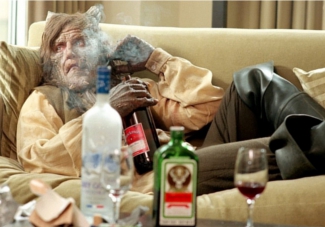
If Hartley’s cult popularity started to wane in the late ‘90s (it was clear at that point, he wasn’t about to reach the mainstream), it was evident by the time the aughts rolled around that some significant actors had, in fact, been paying attention — “No Such Thing” features Helen Mirren, Julie Christie and Sarah Polley — but it all arrived a little too late. It perhaps didn’t help that Hartley’s style is of a time and place and with a new decade dawning, this comedic monster drama felt wildly out of step. Set in New York and abroad, the rather preposterous picture centers on a monster located off a remote island of Iceland that has killed a New York news crew. Turns out the monster (Robert John Burke) is a surly, drunken misanthrope who can talk and just wants to end it all, but his curse is he’s essentially indestructible so he takes out his suffering on humanity. The fiance of one of the deceased cameramen (Polley) turns out to be the intern for the New York news outlet and she convinces her ruthless, headline-hungry editor (Mirren) to send her to Iceland to investigate. While it’s high-concept in nature, “No Such Thing” is another typically talky and philosophical Hartley dramedy, but at this point in his career, his mien was beginning to yield diminishing returns. Not entirely worthless, still the picture is inessential and for the die-hards only. [C]
 “The Girl from Monday” (2005)
Perhaps everyone needs a bottoming out. Looking back it’s hard to see “The Girl from Monday” as anything but the nadir in Hal Hartley’s career; his 2005 science fiction movie, which took quite the critical drubbing, will take its spot alongside the mid-career stumbles of many otherwise pretty consistent auteurs. In this labyrinthine, “Alphaville”-esque tale, Corporations are the new states, Triple M being the biggest and baddest, and our protagonist, played Hartley regular Bill Sage, looking positively Brad Pitt-like with his frosted tips and a grizzled quality that’s as affected as it is effective, was instrumental in the corporate takeover. But once he starts encountering gorgeous aliens played by vaguely European women and has his desirability rating (the new form of credit) lowered for sleeping with the wrong woman, the narrative he finds himself in reaches a Pynchonian level of complexity and dread. The terrific scores that powered so many of Hartley’s earlier features had evaporated by this point and nothing in the thing seems to have much conviction, although there is a bizarro cameo by Hartley alum/fellow Purchase College grad Edie Falco as a judge who sentences a woman to “two years teaching at a high school” for going to a club where people have sex for fun. Plus there’s a nice little supporting turn by Leo Fitzpatrick as a counter-revolutionary whose death scene is positively campy — we wish that were the compliment it could have been — and some genuinely searching formal choices that, even if they don’t quite work, were probably worth a shot. [D+]

