




It feels natural to expect blood-dripping gore and reckless violence from a film titled “Victorian Psycho,” but, with his latest, Zachary Wigon chooses instead to lure the audience with the fresh smell of ripped flesh, only to trap them under a heavy blanket of frustration.
READ MORE: 27 Most Anticipated Films From The 2026 Cannes Film Festival
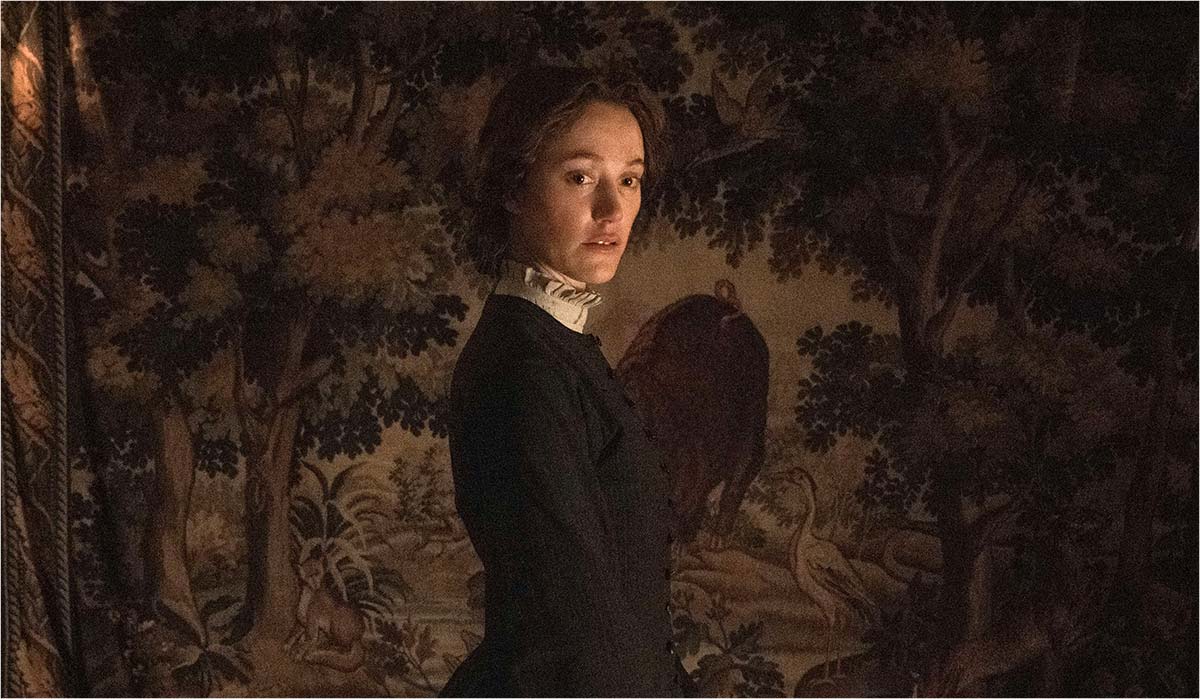
Adapted from Virginia Feito’s book of the same name, this period horror sees scream queen Maika Monroe as the whimsically named Winifred Notty, a governess about to start her new post at Ensor House when we first meet her. The wealthy manor is home to Mr. and Mrs. Pounds, played by Jason Isaacs and Ruth Wilson, respectively, as well as their two children, Andrew and Drusilla. Notty is tasked with overseeing the children’s education, both academically and behaviorally, a job that mostly involves pruning the bratty boy destined to take over the house while ensuring the teen girl is fit enough to find a husband.
Monroe stares playfully at the camera during the film’s first moments to alert the audience she is “the sanest person” she’s ever met. That direct address continues throughout the film, with Notty’s unreliable narration creating a dissonance between the factual world of images and the imagined world of her twisted personal truth. Much like in “Sanctuary,” Wigon seesaws between comedy and classic horror cues to push his main character further into satire, emphasizing that disconnect.
Wigon benefits from a committed cast, with horror veteran Monroe building her deliciously twisted psychopath through escalating mouse-like tics and an undulating voice that accommodates her affected English accent. She finds a great scene partner in Isaacs, here fashioned with a luscious dark brown wig and matching mustache, and leaning into the pompousness of his manor master with the signature gusto of a great character actor. The “White Lotus” star relishes the perversion of his Mr. Pounds, hounding Notty like a clumsy dog in heat, his body cumbersomely pushing the warm body of his young servant against the freezing cold of slate and marble.
The similarly wigged-out Thomasin McKenzie proves a welcome surprise, her whiny voice—which can sometimes induce a nails-on-the-chalkboard level of irritability—the perfect affectation for the overly religious nurse Miss Lamb. The yin to Notty’s yang, Lamb trembles in fear at the idea of a ravenous murderer roaming the nearby forests, comforted only by a staunch belief in the God that will surely spare her anything but eternal salvation. Lastly, “Hamlet” breakout Jacobi Jupe is the ideal rascal, his pouty lips savoring the fruits of his precocious vileness as he lashes out at the servants in the house he knows will one day be his to rule cruelly.
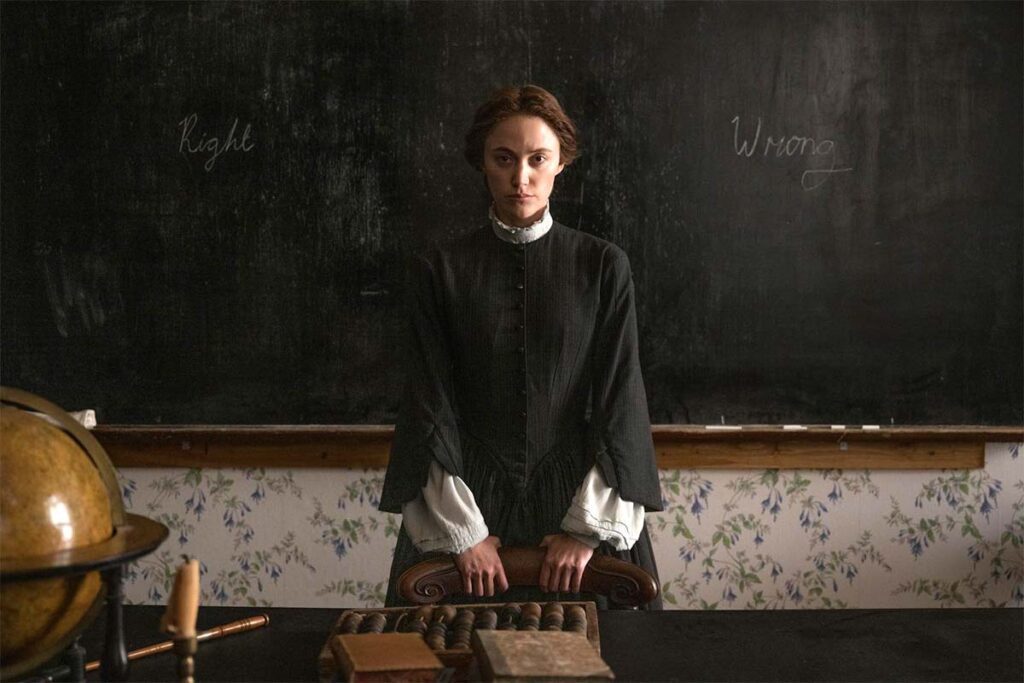
Alas, the cast can only sustain Wigon’s unfulfilled teasing of the film’s promised violence for so long. Split into six chapters, “Victorian Psycho” creates the illusion of a grand climax at the end of its crescendo, but what the American director builds up to is frustratingly mellow. Monroe’s character work feels wasted in a villain who seems to exist in the realm of pretense, even when we are confronted with the fruits of her brutal labor. A bastard rejected by her bitter mother and raised under the military-like guise of a religious man, Notty’s psychopathy is brewed from the same elixir that spawned some of horror’s greatest antagonists, but her unleashing is cut short by a film that seems much more interested in the idea of her than the delivery.
One of the crowning achievements of “American Psycho,” whose brilliant ghost hovers over Wigon’s film like an executioner, is how Mary Harron meticulously establishes Patrick Bateman’s carefully concocted routine. Hence, his unraveling has the big, blunt effect required for the film’s glorious payoff. While Wigon tries his hand at something similar here, honing in on Notty’s obsession with pleasing her employers so she can find belonging in a life of rejection, her unraveling offers no such catharsis. Instead, what we get is the implication of carnage, with the verbose “Victorian Psycho” too dearly attached to the original material, believing suggestion alone is enough to fulfill the promise of a great horror movie. It isn’t. [C]

Rafa Sales Ross is a Brazilian film journalist, critic and programmer currently living in Scotland. She contributes to Variety, BBC Culture, Sight & Sound among others, and can often be seen writing about Latin American Cinema and explorations of death and desire.


