




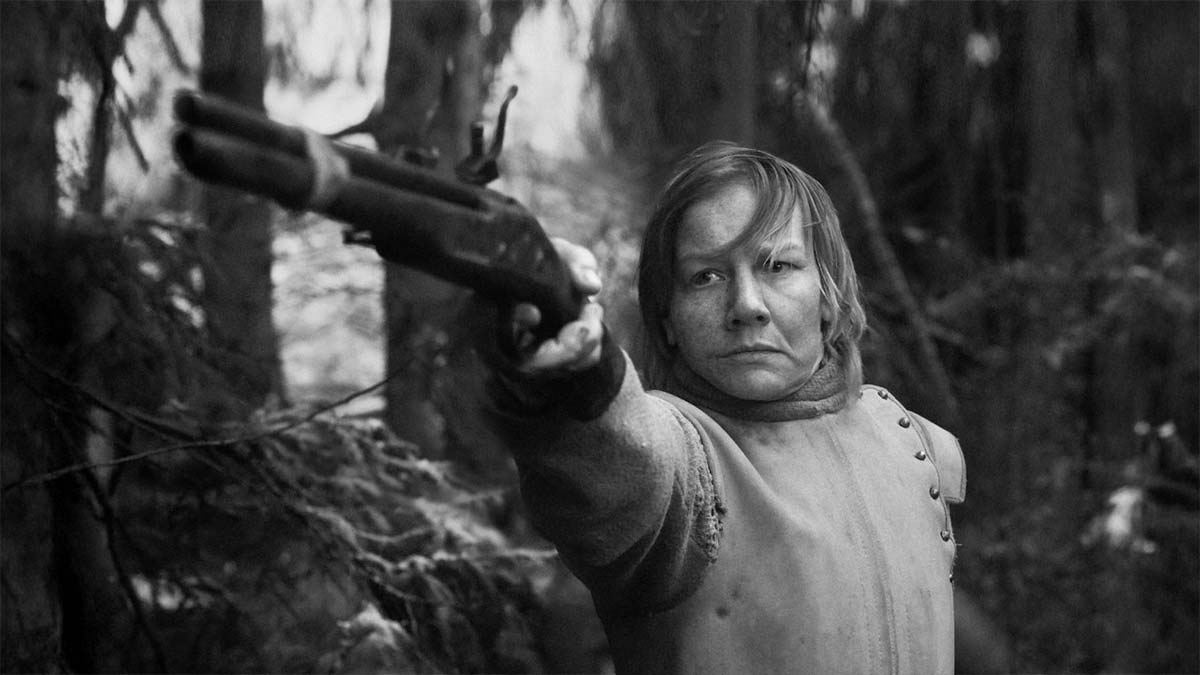
After the success of her back-to-back performances in Jonathan Glazer’s “The Zone of Interest” and Justine Triet’s “Anatomy of a Fall” in 2023, leading German actress Sandra Hüller has firmly crossed the pond into Hollywood. For 2026, she has upcoming roles in Phil Lord and Christopher Miller’s “Project Hail Mary” and Alejandro G. Iñárritu’s “Digger.” Before the two big studio films hit screens, however, Hüller returned to the Berlin Film Festival — where she won the Best Actress Silver Bear two decades ago for Hans-Christian Schmid’s “Requiem” — with Markus Schleinzer’s “Rose.”
Set in Germany sometime in the 1600s, “Rose” introduces Hüller’s character, dressed as a combat soldier, returning from the battlefield after the Thirty Years’ War. His clothes are rugged, and his face is heavily scarred from a gunshot wound. When he tells the people in this small village that he is a landowner returning to claim his assets, there is a brief moment of doubt by the locals, but the man recalls tales only one of them would know, so he is, even if somewhat reluctantly, welcomed to set into what was a neglected farmstead. In the months that follow, the newcomer smartly tends the land and the people who work for him, turning the once-scarce field into a burgeoning agricultural success.
When his meagre peace of land grows beyond its scope, the former soldier seeks to expand by marrying the eldest daughter of a landowner. Suzanna (Caro Braun), whose striking face resembles that of a young Rossy de Palma, comes into the story to beautifully tie up Schleinzer’s refined prodding of genre. While Rose is all stern containment, framed carefully by Gerald Kerkletz in her measured stomping and lowered gaze, Suzanna moves as if a bird, poking and pushing at imposed limits until she is pushed back. Her rebelliousness comes hand in hand with playfulness, while foregoing the shroud of condescension — even, at times, mockery — that often accompanies such portrayals.
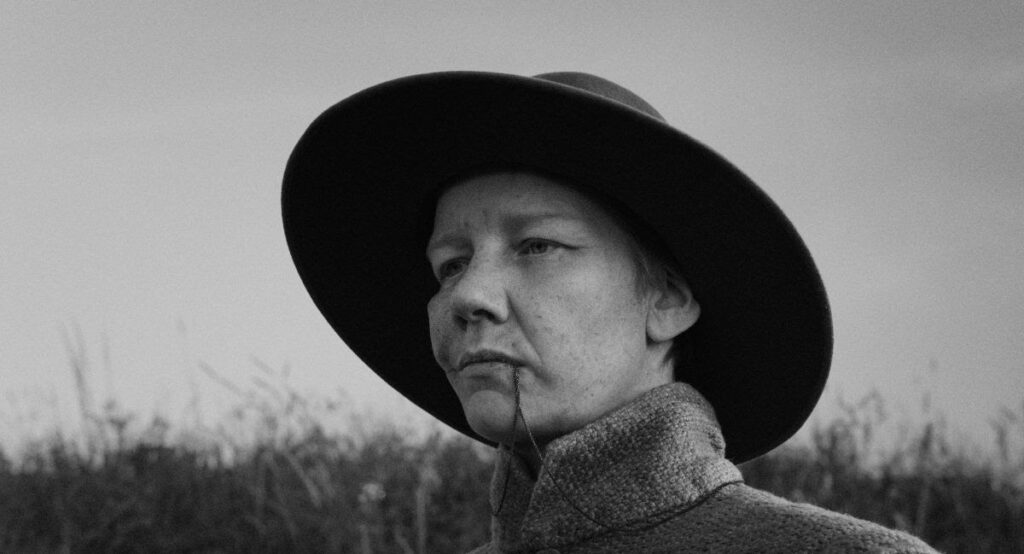
If the first act of “Rose” takes its time to allow the viewer to settle into the lulling rhythms of the seasons that dictate the success or failure of the harvest, once Suzanna comes into the picture, the director entirely shifts his gaze to the regimented nature of gender. Before finding himself a wife and fathering a puzzlingly conceived baby boy, Rose managed to thread the lines of suspicion delicately. Once intimacy comes into play, things become much murkier. And herein lies the greatest strength of Schleinzer’s immaculate drama, for it does not overplay the drama of the deceit to the point of the pantomime, as is often the case with films on the subject. Instead, Schleinzer observes the changes in Rose and Suzanna’s relationship, the intricacies of their dynamics acting as the perfect springboard for exposing the unbudging shackles of sexism.
Hüller delivers another stunning lead turn as a woman unorthodoxly paving her way into independence. In her precise understanding of constraint, the German actress encapsulates at once the tension of living under disguise and the quiet, calming effect of freedom. The general understateness of her performance is what grants “Rose” the leeway to seep into the overwritten and slightly didactic in its final act, when Schleinzer and Alexander Brom’s script does away with the nuance of what came before in favor of openly revealing the film’s grand thesis. “There is more freedom in trousers. So I put on trousers,” explains Rose.
At a time of growing tension and oftentimes criminal maligning of transness and the trans identity, “Rose” works as a parable on gender as a societal construction without necessarily claiming to be about the trans identity. Rose repeatedly says her gender-swap came not out of dysphoria but a need to exist in society in a way that was not viable for a woman. Still, Schleinzer ends up broaching the issue of transness via the community’s perception of Rose in a heart-shattering, deeply moving look at the weaponization of otherness and the dangers of government-sanctioned ostracization. It is a critique made all the more poignant when one realizes the relevancy of the conversation has only grown in the four centuries that separate Rose’s woeful condemnation from the ruthless, unlawful tribunal of public opinion that currently perpetuates life-threatening marginalization. [A]

Rafa Sales Ross is a Brazilian film journalist, critic and programmer currently living in Scotland. She contributes to Variety, BBC Culture, Sight & Sound among others, and can often be seen writing about Latin American Cinema and explorations of death and desire.


