




It’s been over half a decade since news first started swirling that Argentine auteur Lucrecia Martel was set to make a film about the real-life case of Javier Chocobar, a member of the Indigenous Chuchagasta community who was shot in cold blood by while trying to stop his people from being forcibly evicted from his land. That film, for many years, was a docufiction hybrid named “Chocobar,” but when its world premiere at the Venice Film Festival was announced, the title was suddenly changed to “Landmarks (Nuestra Tierra),” and its fictional elements scrapped.
READ MORE: 2025 Venice Film Festival Preview: 23 Must-See Films To Watch
It doesn’t take long into Martel’s first documentary feature to realize the reason behind that change. The opening scenes start from the vastness of outer space before zooming into the strained stiffness a courtroom, announcing that this is by no means an ordinary film about legal proceedings. After laying out the circumstances of the case and profiling the three men on trial, Martel shifts her attention to the complex colonialist background of the story, chronicling the history of land disputes in Argentina’s northwest Tucumán Province.
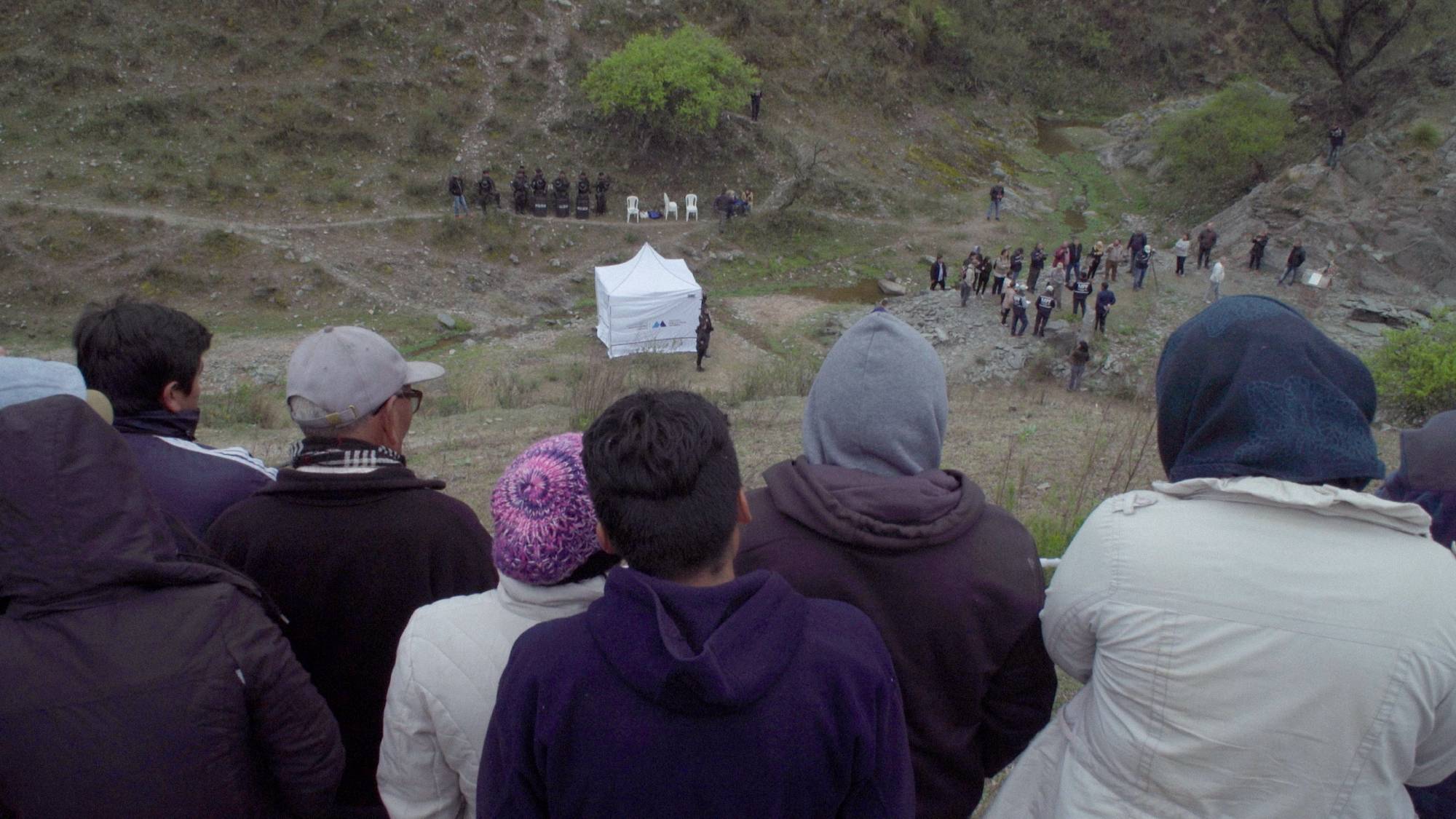
Structurally, the director uses the 2018 trial as a trampoline to jump from what is said in court by those meant to uphold rights and those prone to usurping power, to the rich patchwork of tales told by the members of the Chuchagasta community. Instead of chronologically tracing the history of Argentinian land conflict from its settler roots to modern day, Martel grounds her film in a vast array of archival material and first-person interviews, favoring placing the voices of the Indigenous people front and centre instead of traditional narration.
“Landmarks” is a film about documentation and serves as a document itself. To talk about ownership within organized society is to discuss the flawed nature of bureaucracy and its inherent injustice. Who washes the hands of those who sign papers that lead to death and displacement? In capturing the trial, the film constantly brings up unanswered questions, both in court and broadly within Argentinian society, about the machinations of a supposedly democratic system built upon the welfare of signatories. It is a question asked clearly towards the film’s conclusion, begged in desperation by one of the members of the Chuchagasta community: “The Republic has respected the papers of the colony more than Argentine citizens. Is God seeing this?”
Calling the film “Landmarks” in the English-speaking market does away with the emotional quality of its original title, “Our Land,” as well as its implied question of possession. It is also a decision that mirrors the distance often permeating Martel’s documentary, almost as if the director’s deep rooting in the community results in an impossible measure of closeness and a presumption of knowledge. The long-gestating project, and the metamorphosis it seems to have undergone during that period (the film underwent several edits over the last few years), acts as two hungry hands pulling the film in opposite directions, never fully settling into one rhythm or another.
On one side, you have a film about the case of Javier Chocobar, a 68-year-old husband, father, and leader, brutally killed live on camera, and the controversial trial that followed his death. On the other, an anthropological excavation of Argentina’s hardened colonial scars and the wounds that have yet to heal. In its scattered zigzagging between the two, “Landmarks” often dilutes its potency on both ends. Martel’s signature contemplation is mostly reserved for the land itself, with lingering sequences of the region’s valleys, dirt roads, and forests. But the people are largely denied the same breathing room, hurriedly brought in and out of rooms, or viewed on the burnt edges of old pictures.
Still, despite the frustrations of its labyrinthine rhythms, “Landmarks” is a worthy companion to Martel’s “Zama” in its prodding at the contradictions of a country whose denial is so grave it will bend its language and its laws before acknowledging truths that shed light on the horrors of its past that painfully echo in the present. And, if nothing else, the film reflects the frustrations of a filmmaker tackling a subject that doesn’t allow for a neat summary. [C+]
Follow along with all our coverage of the 2025 Venice Film Festival.

Rafa Sales Ross is a Brazilian film journalist, critic and programmer currently living in Scotland. She contributes to Variety, BBC Culture, Sight & Sound among others, and can often be seen writing about Latin American Cinema and explorations of death and desire.


