


 “Black Swan” (2010)
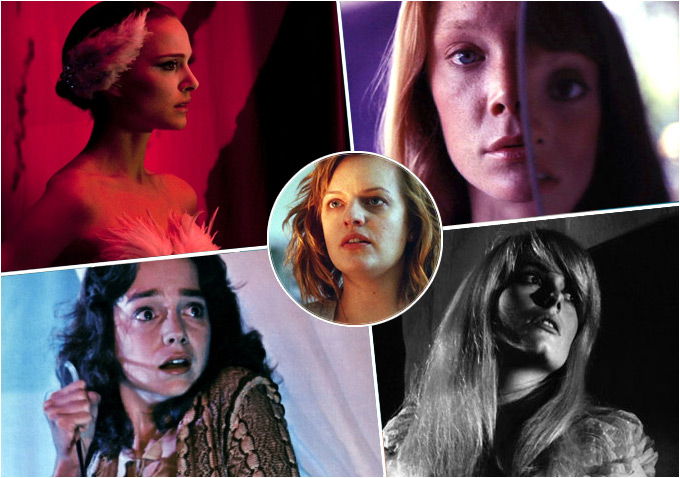
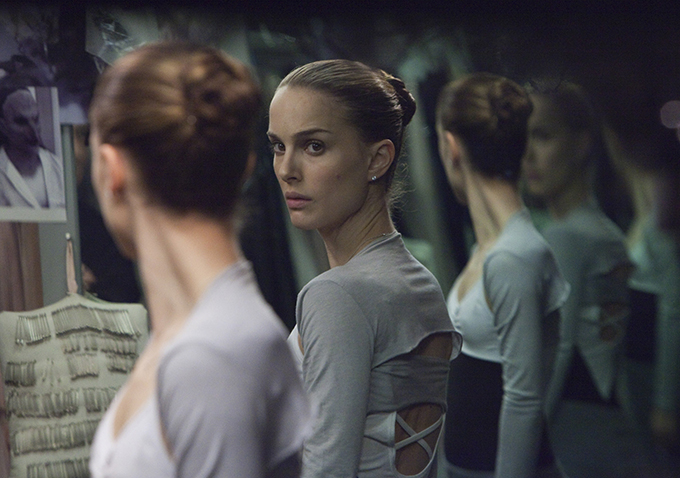
Darren Aronofsky’s characters have always had a proclivity for going off the rails. His shattering debut “Pi” was about a chess-playing loner convinced of God’s existence through arcane puzzles coded in stock market numbers. The junkies of “Requiem for a Dream” and the battered brutes of “The Wrestler” throw themselves into the gaping maw of oblivion with big, glorious abandon. But “Black Swan,” his “Repulsion”- and “Suspiria“-indebted ballerina melodrama, might be his most emotionally devastating picture. Walking a sometimes-wobbly line between camp and genuine horror, Aronofsky’s film traces the mental collapse of Nina Sayers (Natalie Portman): a career dancer whose domineering mother has basically forced her into this highly demanding and exhausting profession. When Nina’s ambitions are threatened by the arrival of a rival dancer (Mila Kunis) who turns out to be her lithe, younger counterpart, Nina’s anxieties are made manifest in the form of horrifying daytime hallucinations. Aronofsky has fun blending Nina’s increasingly batty nightmares with the living, waking New York City that the film takes place in, and he certainly never looks away as his protagonist sinks deeper and deeper into a hell of largely her own making. The finale is go-for-broke in typical Aronofsky fashion and some scenes, to be sure, go straight for histrionics. Yet Portman’s quietly assured, heartbreaking central performance holds it all together, even when it threatens to come undone. Her Nina is brittle and socially closed-off, but she’s so completely innocent that, as the film progresses, we eventually become as afraid for her safety as she is. “Black Swan” is a splashy, unapologetic leap into melodrama, with little to no interest in restraint and Aronofsky, as usual, throws in everything but the kitchen sink. This makes the picture itself both ravishing and also occasionally frustrating, yet Portman’s dazzling embodiment of broken womanhood is one for the ages.
 “Carnival of Souls” (1962)
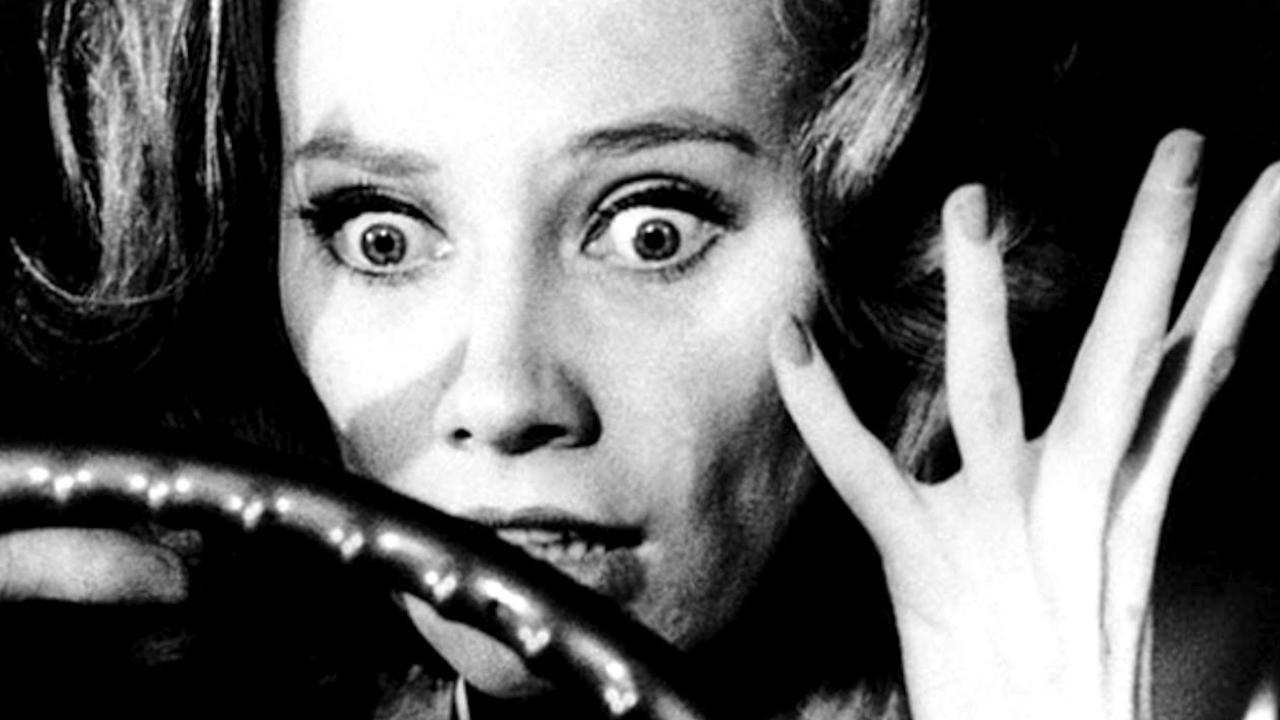
If “Let’s Scare Jessica To Death” (below) doesn’t wholly deserve its cult status, “Carnival of Souls,” the other film Perry bracketed with it, absolutely does. In fact, Perry is far from the first filmmaker to count this early ’60s, independently made curio as an inspiration: David Lynch and George Romero are reportedly both fans, and it’s not hard to see why. Unfolding as a sort of “Occurrence at Owl Creek Bridge”-style story (it even starts with a car falling into the water from a bridge), the film follows Mary (a striking, oddly modern-looking Candace Hilligoss), the sole survivor of a drag-racing accident who moves to a new town to take up a position as a church organist. But she is plagued by visions of a creepy white-faced man (played by the film’s director, writer and producer Herk Harvey), hears foreboding organ music wherever she goes (a stunning organ score by Gene Moore, whom we hope received at least a fruit basket from Danny Elfman at some point) and at times seems to phase out of existence altogether, unable to hear or communicate with anyone around her. But aside from the slim plot, the film is an excuse for several genuinely chilling motifs to appear and recur, most memorably the titular carnival, an abandoned ornate structure on a pier that houses a coterie of damned souls as they dance eternity away. It may have been made on the cheap, but in many ways that makes the imagery, as practical as it had to be, even more evocative and surprising, while the gorgeous black and white cinematography shows DP Maurice Prather’s background in stills photography in terms of composition and clever lighting. Often playing around Halloween in rep cinemas nowadays and reissued recently by Criterion, “Carnival of Souls”‘ is having an appropriately long afterlife: you can even watch the entire thing in HD on youtube.
 “Images” (1972)
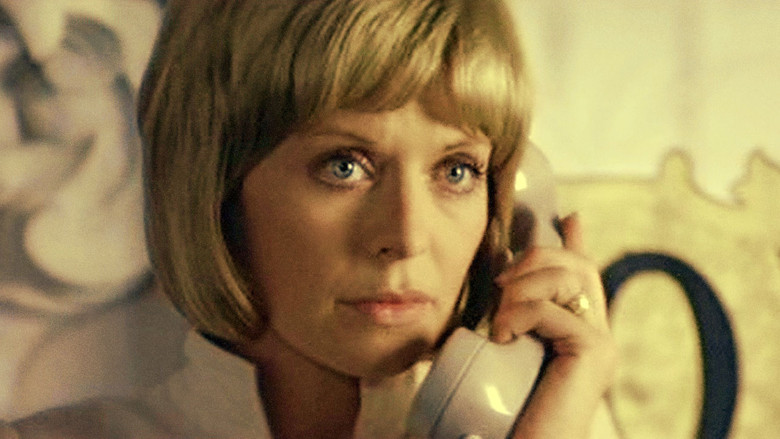
An inexplicably undervalued “minor” Robert Altman film, “Images” is an effectively chilling take on the female madness genre, lent a further eerie dimension by the profession of the heroine and by Vilmos Szigmond‘s terrific photography. In probably her career-best performance, Susannah York plays children’s author Cathryn, whose rising tide of insanity feels uncannily linked to her tales of supernatural, Narnia-like creatures, which she narrates in voiceover and which come to represent a sort of inner life. Outwardly, she’s a successful, creative woman in a happy marriage to Hugh (Rene Auberjonois) that is only marred by his frequent absences, which allow her imagination to conjure the suspicion that he’s having an affair. Following a psychological breakdown where she mistakes him for her dead ex-lover Rene (Marcel Bozzuffi), the couple retreats to an isolated country house in rural Ireland, where they are joined by their artist friend Marcel (Hugh Millais) and his young daughter Susannah (Cathryn Harrison). So you’ll have noticed the hi-jinks Altman is engaging in, with the names of his characters switching with the actors they play, but such meta flourishes are merely icing on an already deliciously poisonous cake. Cathryn’s paranoiac insanity takes further hold —she’s constantly caught up in fraught erotic fantasies in which the men conflate into each other and she lashes out at the phantasms in murderous fashion. Which leads to some extraordinary scenes where the banal rubs up against the gruesome and inexplicable: having “killed” the already-dead ex-lover who was tormenting her, Cathryn has to coolly step over his body time and again on the way to the kitchen. It’s a self-indulgent and rather academic puzzle to work out, but there’s a level of compassion and sympathy unusual for the genre, and Altman’s genius is in summoning not only the horror of madness, but the seduction of it too —how succumbing to delusion might feel strangely liberating, even, God help us, sexy.

