


You may not recognize her name, but Nina Gold is responsible for some of the most celebrated performances on film and television this century. The lauded casting director’s big screen credits include “Conclave,” “The King’s Speech,” “Vera Drake,” “Prometheus,” “The Iron Lady,” “The Theory of Everything,” “1917,” “Paddington,” and “The Martian.” Her small screen resume begins with “Game of Thrones,” and just happens to feature “Andor,” “Baby Reindeer,” “Chernobyl,” and, oh yes, “The Crown.” Gold is very, very good at what she does, so it’s no surprise she’s nominated in the first Casting class for the 98th Oscars for “Hamnet.”
READ MORE: “Hamnet’s” Chloe Zhao: “It’s Not My Job To Tell People How They Should Feel”
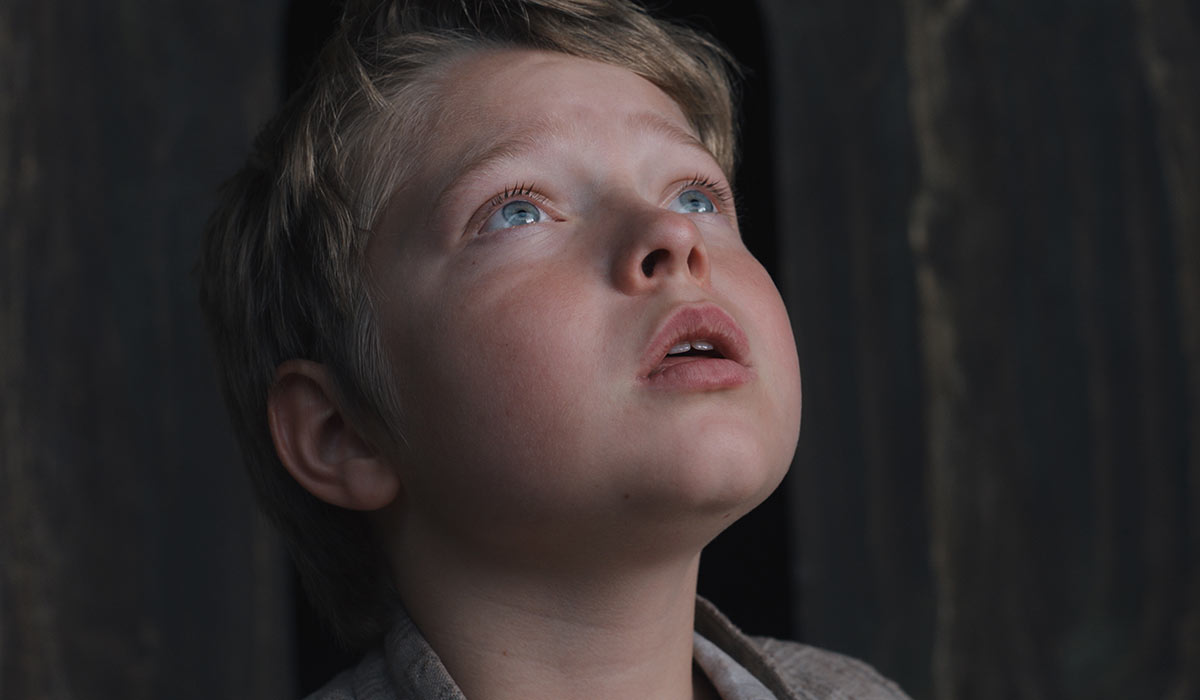
Gold, her team, and director Chloe Zhao had a formidable task ahead of themselves when casting the Best Picture nominee. Not only did they have to find the perfect William and Anne Shakespeare (Paul Mescal, Jessie Buckley), but cast their three children, including the title role, essentially the heart of the film (Jacobi Jupe). To say this could have gone terribly wrong is an understatement. Even Gold admits, “The magic has to happen, doesn’t it?” And, boy, did it.
During our conversation earlier this month, the Emmy and BAFTA Award winner reflects on her first Academy Award nomination, working with Zhao, securing Noah Jupe for a key role extremely late in the process, the best and worst parts of the job, and much, much more.
This interview has been edited for length and clarity.
_____
The Playlist: You are a legend in this business. You’ve won many awards from your peers, including Emmys, and all sorts of accolades. What does this Oscar, the first Oscar nomination for Casting ever, mean to you?
Nina Gold: It is a complete and total thrill. It’s very gratifying. It’s the culmination of so much work by so many people, so many of my colleagues and people before, really campaigning and trying to get it to happen, and it’s just great. It really means a lot to be recognized in the same way as our other creative colleagues in the filmmaking world.
Youcould have been nominated for other films this year. What did it mean to be particularly nominated for Hamnet?
I mean, it’s wonderful for me. “Hamnet” has kind of resonated a lot with a lot of people, which is really quite brilliant. I love the other films I cast this year as well, and I think they’re really good.
This was your first time working with Chloe Zhao, correct?
No, I haven’t because Chloe had never worked in the UK – I don’t think anyway – and hadn’t really done much work with actors. Most of her brilliant, really totally amazing work before [was] with real people, for want of a better expression. And so this was a new journey for both of us.
Was there anything that she made clear was really important to her in terms of the casting process?
She is an incredible collaborator, and so was very clear from the get-go that she would want to be able to really rely on me to fill in her knowledge of actors in the more formal sense was not where she was starting from, and she wanted to rely on me to point her in the right direction to the right people. Also, the process was going to be kind of, actually, no, forget, I can’t remember what I was going to say, just whatever I just said.
Was the process different than other films? Was it unconventional in any way?
I don’t know if it was maybe more kind of organic flowing. A feeling kind of way of getting there rather than a kind of more formal analytical approach, I guess. But all directors are different basically.

For this film in particular, was it important to land on Agnes and William’s characters first before casting the rest?
It was really important to start with Agnes because she really is the heart of the story. I mean, I find that with all ensembles, you’ve got to start somewhere and then branch out. We had to figure out the couple, the connection. The couple is the heart of it, and then we branched out towards the other sort of wider family. And then the whole thing about the kids was a kind of ongoing, separate, extremely worrying thing until we actually started doing it, and then it all turned out great.
So little is known about Agnes. She’s not given much love in history, and it’s never been understood why, but by many of the historians at the time…
I think we do understand why we?
We do, yes. But I guess in the context of did she do something personally to these historians or…
It’s just the patriarchy.
1000% agree. But in that context, I was going to ask, even for Shakespeare, there is always so little to go by for casting him. Did you feel like you had an open book because of the novel itself?
I mean, the novel is so incredibly brilliantly researched that the detail of the research in the novel is just immense. But I mean, there’s one kind of portrait of Shakespeare that springs to mind, certainly in England anyway, but I think we weren’t worried that it was not about that. It was about capturing the essence of this character. Any physical concerns really didn’t matter if he was tall or short or any of that stuff. It was about the human being part and trying not to be daunted by the concept of, “Oh my God, we’ve got to cast Shakespeare.” We were just casting this man.
In terms of casting Mary, how did Emily Watson come into the picture? In hindsight, she feels like almost the perfect actress to work in Chloe’s directing style.
She just seemed to be the perfect choice. So phenomenally brilliant. And if you go back to her first ever, well, the first thing that she was known for, which was “Breaking the Waves” and that performance, you can see the kind of development and trajectory of how that performance leads to this performance somehow. She’s so completely, incredibly excellent.
You also made an intriguing choice in casting Jacob Jupe and Noah Jupe as both young Hamnet and as the actor who plays Hamlet later on. Was that something you were trying to do from the beginning? Or was it just happenstance?
I mean, it wasn’t happenstance, but we did have a last-minute stroke of luck because for quite a long time we really were trying to cast an actor for Hamlet who would make Agnes feel that she’d was seeing her son again. We weren’t going to be able to cast Noah because of the words, which are the curse of casting, “unavailable.” And then some fabulous miracle happened, and our dates shifted, his dates shifted, and we could have him with a tiny bit of no notice, but we got it together.
Were you still hunting for an actor to play that role close to filming?
Kind of, yes.
Is that the most stressful part of the job?
Yes, it’s absolute hell. [Laughs]
I’m going to assume that’s the one part you hate the most.
The part I hate the most is when you have to tell some great people that they haven’t got the part.
Oh, does that always fall to the casting director?
Well, yeah.
Oh, no. I always assume it’s the producer or the director who has to tell them, “Sorry, you didn’t get it.”
Well, sometimes, I guess, but it is fantastic when people do get the part, and it’s really awful when you’re disappointing people, not because they’ve not been really, really good, just because [the role] was just seen a different way for some reason.
Was there one part in the film that was hardest to nail down?
Chloe and I, hand in hand, really agreed quite quickly on the people that we thought would be best, but the casting of the kids was a real daunting thing, I have to say. To begin with, we had this idea that maybe we should actually be trying to cast real twins, because in the book, there’s a lot more talk about the twins being kind of so alike that people got them confused, and we kind of haven’t leaned into it quite as hard in the film. So the casting of the kids was the thing that kept me awake at night quite a lot. But then we did meet these incredible kids, and they just really, really owned it and rose to this massive challenge incredibly. The stuff they have to do is so demanding for anybody, but particularly for a child.

Did you audition them together?
First of all, we just did the regular audition, then we auditioned them together. Then they did loads of improvising together. Then the final thing was we auditioned them with Jesse and Paul, and now they’re best friends.
Is a final casting decision usually obvious, or is it still a crapshoot? You think it’s going to work, but you’re not always a hundred percent sure it will.
This time? It seemed really clear, which was good. I guess there’s always an element of hoping for the best, even with the most incredible, brilliant, accomplished, perfect actors. Still, the magic has to happen, doesn’t it?
Yeah.
And that’s what you’ve got to keep hoping is that the alchemy will somehow transpire.
I just wanted to ask in general about what you do. You’ve been doing it for a long time. Your resume is absolutely incredible…
I’m really old. [Laughs.]
Oh, please. What do you love about what you do? You work on a lot of projects every year. You don’t have to, well, I don’t know, maybe you do.
Well, I do. [Laughs.]
What about it keeps you going and passionate about it?
I mean, I love stories and character. I’m really, really interested in character and people. And when you can make the character on the page and the real-life human being intersect in the way that just seems completely spot on, it’s pretty thrilling.
Correct me if I’m wrong, but you are producing your first film, “Clarissa”?
Oh, yes.
Has this been a long-term goal? What made you want to go down this road?
I’m interested in that. God knows how I have time while I’m busy doing all this casting, but “Clarissa” is this incredible script written by these brilliant filmmakers, and it’s a wonderful idea. It’s a brilliant script. They’re great filmmakers, and I just really, really wanted to be involved. It was an incredibly inspiring situation.
Has it shown you a different side of the business?
I mean, I had a real glimpse into what a roller coaster it can be. Trying to pull something together with not much money, and to do something outside of the norm.
My last question for you is, are you: Do you know who you’re bringing to the ceremony?
I think I’m going to bring my son, but don’t tell him that yet.
Do you want me to keep that out of the interview?
No, you can just print that. That’ll be fine.
“Hamnet” is still playing in theaters
Follow Gregory Ellwood on Bluesky
Follow Gregory Ellwood on Threads
Follow Gregory Ellwood on Instagram
Sign Up For The Breakdown Newsletter


