


KARLOVY VARY – The events in Iran over the past 12 months can only be described as seismic. A little over a year ago, Iran and Israel engaged in a 12-day war. In January, civilian protests erupted over a crippling economic crisis that soon turned into a mass movement attempting to topple the current Islamic regime. Those efforts failed, with the ramifications still being felt against those who protested today. In February, only a few weeks after the height of the unrest, the United States and Israel attacked Iran in a military conflict that escalated throughout the region, resulted in the deaths of innocent civilians, destabilized global oil prices, and, five months later, has no official brokered peace agreement.
In the midst of all this, and the global tensions leading up to those events, Iranian filmmakers have thrived. Over the past two years, Mohammad Rasoulof and Jafar Panahi unveiled contemporary, political thrillers that wowed juries at Cannes, earned Oscar voters’ attention, and acclaim from audiences around the world. At this year’s Sundance Film Festival, as Iranians protested 7,000 miles away, filmmakers Hossein Keshavarz and Maryam Ataei screened “The Friend’s House Is Here,” a rare international entry in the prestigious U.S. Dramatic competition. Shot during a short window of relative peace last summer, the movie is a portrait of Iranian society unfathomable to most Western audiences.
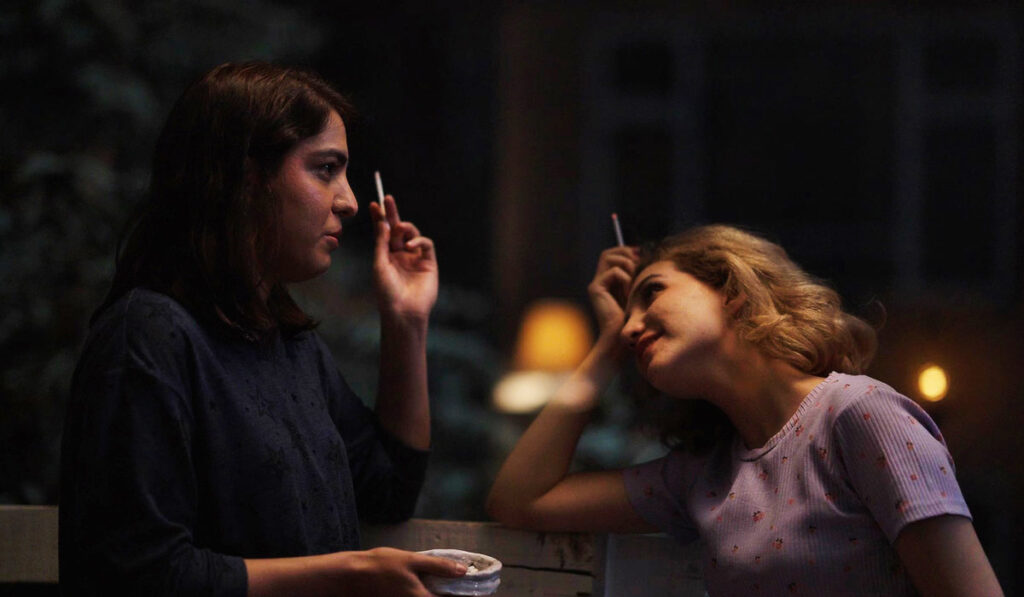
Set in as close as you can get in Tehran to bohemian enclaves, “Friend’s House” centers on the friendship between Pari (Mahshad Bahraminejad) and Hana (Hana Mana), two twentysomethings who find moments of joy in the city’s burgeoning art scene. Pari is a playwright and director of an underground theater company, while Hana is making a name for herself on social media for her dance videos set in front of public monuments (a political protest in and of itself and something most Westerners assume is dangerous). Just as Hana’s dream of moving to Paris begins to materialize, the authorities take Pari into custody for her unsanctioned performances. The women’s bond is tested as the future begins to become less certain.
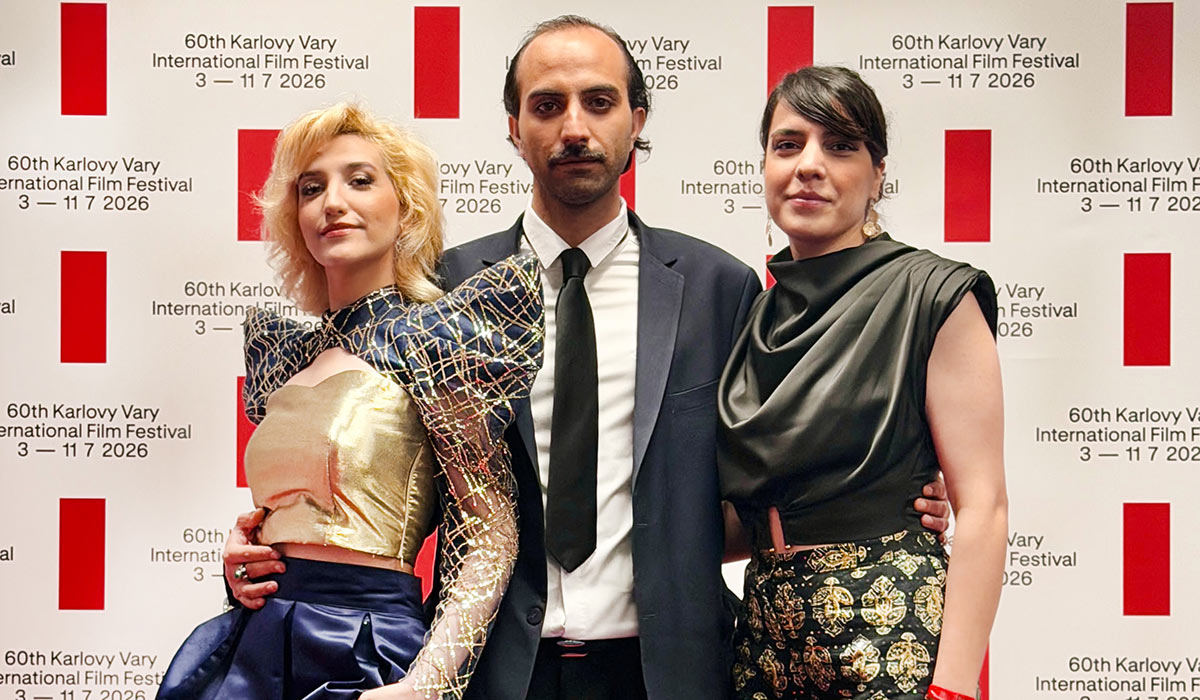
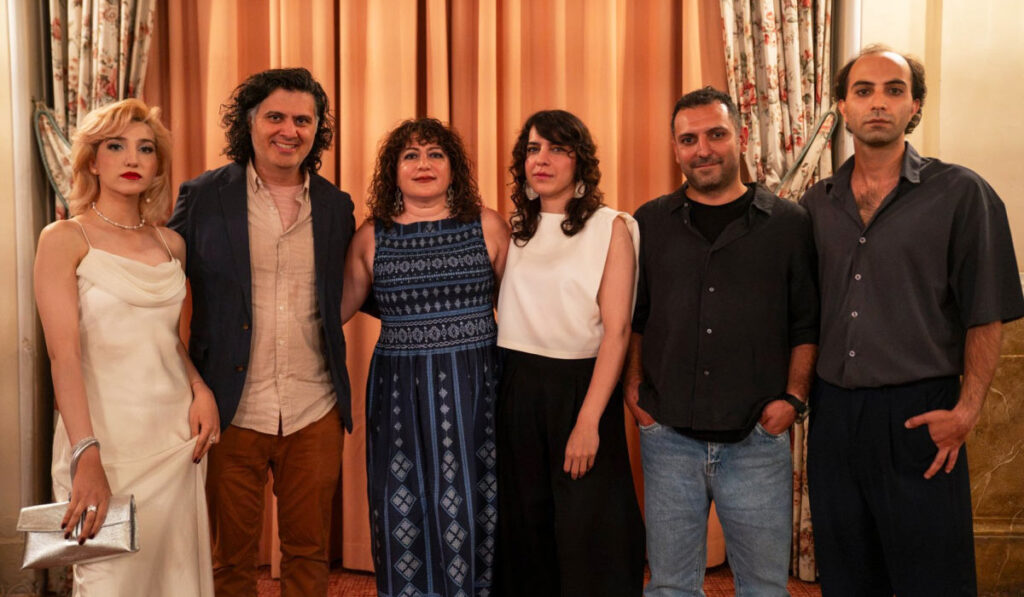
The three lead actors, Bahraminejad, Mana, and Farzad Karen, who plays Hana’s boyfriend Ali, were unable to attend the Sundance premiere because of the protests. Their trip to the 2026 Karlovy Vary International Film Festival is their first chance not only to see the film on the big screen (or at all), but to support and discuss the project. Both Bahraminejad and Kazen are part of a real dramatic improv group that inspired the film’s storyline. Remarkably, despite the government crackdowns since the protests and bombing runs by the United States and Israel, Bahraminejad says their troupe has begun performing again.
“We just started again after the war. We were not able to just feel our emotions,” Bahraminejad reveals. “We don’t know how to act. We don’t know how to just be sad in a play or be happy in a play. We just haven’t had the accessibility to our emotions. It was really hard to just come again, but we did it. We just found that it’s our life, and we should go on, and if not doing acting, what we should do. That’s what we can survive with. That’s what we can just get out of everything for some hours, and then we should tolerate the life and the stressful situation.”
Keshavarz, who was raised in the United States, and Ataei, an Iranian citizen, have spent the past seven years living in Tehran. He recalls, “Marim and I were going to a lot of theater events and art events and this very unlikely art scene in Iran. And one of the events we went to was this underground improv group, and that’s when we met Mahshad, and we were so taken by her.”
Ataei adds, “The first improv was Mahshad and our dear friend Jose, whom we worked with on another short film. And then the first play we saw, Mahshad entered the room, and we both looked at each other. We were like, ‘Wow, she’s fantastic.’ So, from that moment I knew we wanted to work with her in something.”
Eventually, the creative collaborators befriended Mahshad’s group and “thought it’d be great to kind of introduce them to the world.” They realized the project could be a contemporary portrait of Iran, but there were fears of another war on the horizon. Keshavarz says, “Everyone was thinking that the war was in September, and then we were saying ‘We have to finish, we have to shoot now, we have to shoot now.’ We almost thought like, ‘Well, if the war starts, then what do we do?’ But we knew it was a portrait of a particular moment in time.”
Bahraminejad was passionate about the project because she believed previous movies or programs with international platforms have not shown “the true culture” of Iran.
“I believe all the themes are talking about the disabilities of the people in Iran, but what we are talking about is the ability of the people in Iran,” Bahraminejad says. “I mean what they can do, the challenges they are facing, and what they are going to fix. It is not something that they cannot fix. That’s something that, in the issues, they find the solution, they can resolve it, and that’s what we are talking about. That we help each other to resolve all the issues we just get in all the troubles we are in, and that’s the, I believe that’s the best part of our film too.”
She adds, “We are willing to show the true culture in Iran and not to just pay attention to festivals. They are important, but I want everybody to see the true culture in Iran and also the people, the friendship in Iran and also the people who help each other to just get over these troubles, get over these issues we have in Iran. I believe that that’s the most important thing for me to just show the world.”
For Mana, dancing is her passion. Raised in a very conservative city, the only way she could dance publicly growing up was in the context of, in all seriousness, kickboxing competitions. Her talent, however, was unbridled. At 15, she was choreographing adults and discovered relative freedom when she moved to Tehran. The crackdown has affected everyone, but like Bahraminejad and her theater group, Mana is dancing in public again. Where she can.
“I think everything about Iran in the world is vibe,” Mana says. “We wanted to show the vibe of Iran, full of stress, but we are like [the] Smurfs. They had some challenges, but they were happy. Yeah, they were happy together. Iranian people, they are so happy even when they have more challenges in life, but it’s O.K., Nobody can do something more than something normal. You know what I mean? But this film, I think, is the part of something we wanted to say to the world.”
Even today, Mana, Bahraminejad and Karen say all is not what it seems in the media. The production was shot without permits on the streets of the city. The women you see walking in public around town without hijabs are not extras. They are everyday civilians caught on camera as Keshavarz, Ataei and their very nervous cinematographer, Ali Ehsani, avoided being caught by security personnel (the production had a backup plan saying they were shooting a commercial for the UberEats of Iran). In fact, the filmmakers say if the authorities see someone filming, only then will they go up to women in the street and tell them to put on hijabs. Of course, Keshavarz admits “everything is in flux.” Everything but the spirit of the Iranian people.
“The thing that always amazes us whenever we’re in Iran, and we lived out of the last 10 years, almost seven years, is that, besides all the difficulties, every single time we see people helping each other overcome challenges,” Keshavarz says. “And so when we see films that are just the negative part, which is definitely true, it’s not showing the true character of the people because they’re helping people, and I think this is actually an important message for the world is that this kind of unity and this kind of like will to overcome all the challenges.
He adds, “I think this film could speak outside of Tehran, like when we were showing at Sundance, all the stuff was happening in Minnesota. We see now every single day something is happening. All these kinds of crazy stories, but we see neighbors helping each other out, we see people having each other’s backs, and I think kind of like unfortunately the powers that be kind of want us to feel hopeless. They want us to feel divided. [That] we’re so different from each other. But I think what Hanna is saying is that like we’re all similar and we all have this respect, desire to live our lives to the fullest with our creativity and friendship. And I think hopefully when people watch this film, they can be empowered, and that was important for us. And on an uplifting note, you know that they’re going to continue and they’re going to persevere.”
What the future holds for Bahraminejad, Mana, and Karen remains to be seen, but speaking through a translator, the latter notes the obvious, universal truth, “We’re kind of a calm and respectable people. And the thing that we want and deserve is peace and kind of like happiness, opportunity to live our lives.”
“The Friend’s House Is Here” should arrive in theaters sometime in 2026.
*Photo courtesy of Maryam Ataei
Follow Gregory Ellwood on Bluesky
Follow Gregory Ellwood on Threads
Follow Gregory Ellwood on Instagram
Follow Gregory Ellwood on TikTok
Sign Up For The Breakdown Newsletter


