


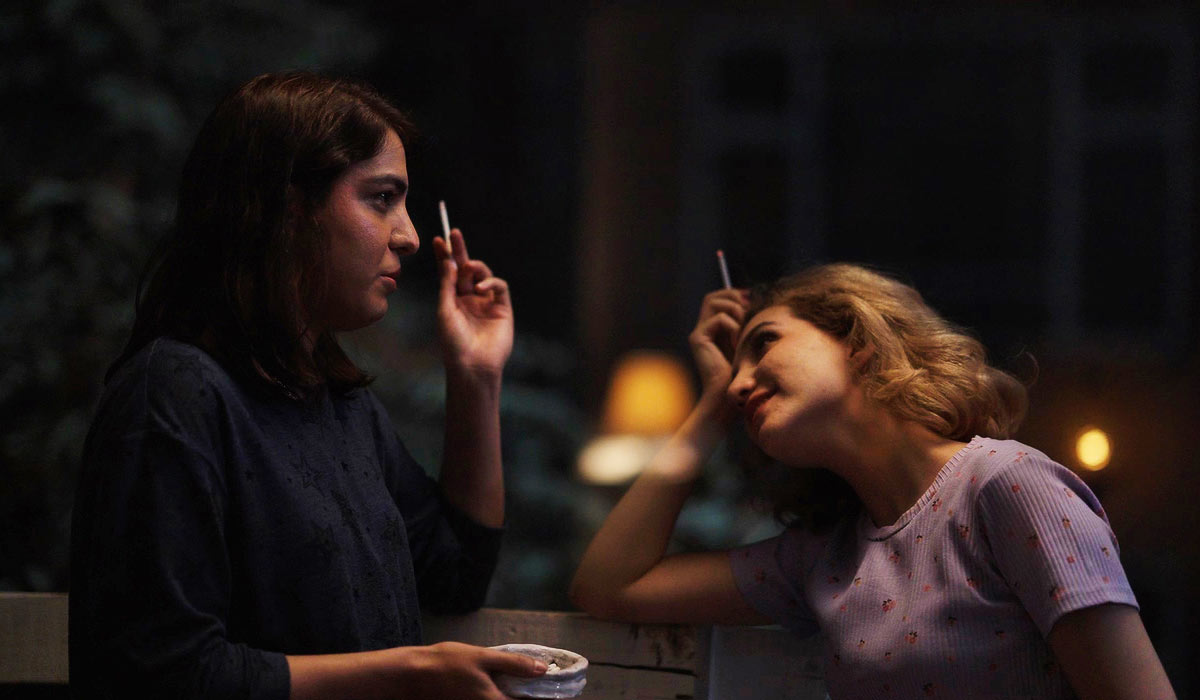
PARK CITY – This past summer, filmmakers Hossein Keshavarz and Maryam Ataei secretly filmed a remarkable new drama, “The Friend’s House Is Here” in Tehran, Iran. It was just weeks after June’s 12-day war between the Islamic Republic and Israel. At the time of its world premiere at the 2026 Sundance Film Festival, just five months later, the Iranian government was in the final days of another brutal crackdown on political dissent. Reports have spread of over 6,000 people killed and another 17,000 missing. Defacto martial law is in effect. In that context, is “The Friend’s House” a snapshot of a brief moment of artistic freedom or a hopeful sign of things to come for a new generation of Iranians?
READ MORE: “Leviticus” Review: Spirit-Fueled Conversion Therapy Haunts A Passionate Gay Love Affair [Sundance]
The film begins with a live performance, which we later learn is an underground play, set in a stark white enclosed space. Pari (Mahshad Bahraminejad) is playing a woman searching for her friend Hanna, who has not shown up as planned and is unreachable by phone. Also, the director and writer, Pari goes from one abstract location to another, interacting with Hanna’s friends who don’t know where she is. They attempt to calm Pani’s character, who is increasingly frazzled over the fate of her friend. Watching the performance on the sidelines is Pari’s closest friend, Hana (Hana Mana), the inspiration for the play. She is safe and was never taken away by the authorities. But the real-world circumstances play out in front of her, and the fear Pari is trying to convey is striking.
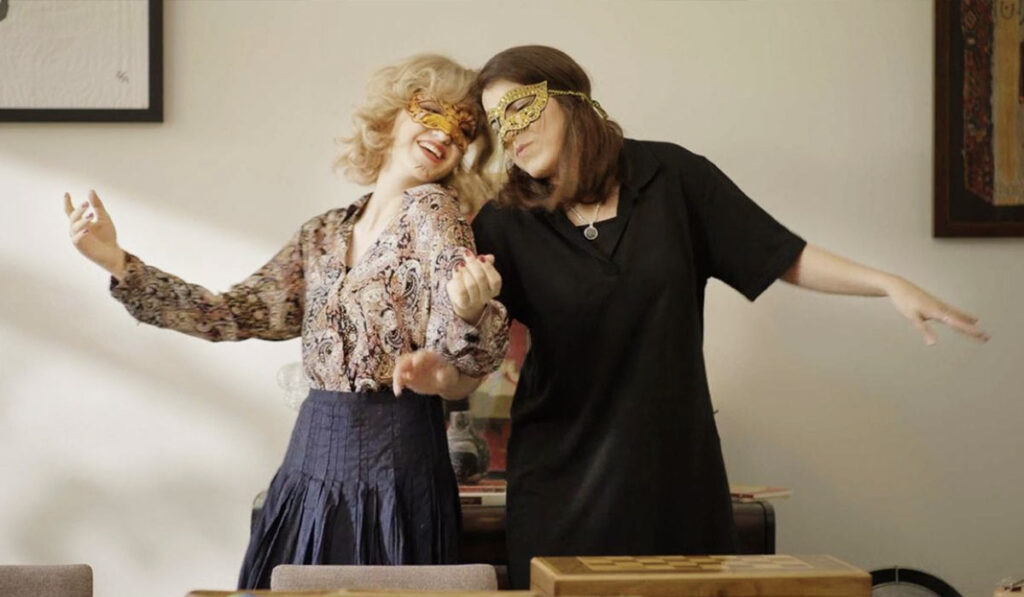
First seen in the context of a small house party, the two women share a beautiful old school apartment in an unspecified part of Tehran that feels like a liberal oasis. The women never wear the “mandatory” hijabs outside (Hanna does love a signature hat that gives Diane Keaton vibes), and as the movie, often shot guerrilla style, progresses, other women in the streets or caught on scooters aren’t wearing any either. Hanna even works in a retail fashion store in an upscale mall without one. This seemingly contradicts everything the West has been told about life in Iran, especially after the protests over the mandatory hijab that began in 2017. That is, until a woman approaches the pair at a restaurant scolding them, “Have shame. Wear your hijab.” After she walks away, Pari and Hanna hold a beat and then laugh. They have no fear. You would think they should, but that’s not the tale Keshavarz and Ataei want to tell.
While Pani supports her theater work by working at an art gallery, Hanna is patiently waiting for a visa that will allow her to further her dance and acting career in Europe. Hanna’s family doesn’t want her to go, but Pani is a true friend. She’ll support her in whatever she wants to pursue.
With her move potentially imminent, Hanna grows increasingly closer to Ali (Farzad Karen), who helps her with videos for her popular social media accounts. Like everyone in their circle, he’s a contradiction of your preconceived notions of Iranians, let alone Iranian men (their entire crew could be plucked from a pack of Brooklyn or Echo Park twentysomethings). At one point, as they lounge around on the couch, Ali volunteers about being comfortable enough to embrace his feminine side, and Hanna doesn’t flinch. It’s a subject matter you rarely hear a character discuss in American indie, let alone an Iranian film.
Despite their joyous liberation, neither Pani, Hanna, nor their friends are truly free. At one point, while smoking on a balcony, Hanna remarks that when she hears a sudden noise, “I get frightened. Even the quiet scares me.” Pani bluntly responds, “There is nothing to be done. It’s become part of our lives.”
That horror rears its ugly head after one of Pani’s performances. In one of the most striking scenes in the movie, Pani is approached by an audience member who starts asking her questions about the play. In a long continuous shot, Keshavarz and Ataei keep the camera’s perspective on Pani, never letting the audience see the man’s face. At first, she’s happy to talk to such an engaged, handsome fan who seems well-versed in theatrical staging. But as the conversation progresses, she realizes he has ulterior motivations. Why is she performing underground? Why is she putting this play on illegally? “Underground is not a good place,” he remarks, “Why were your last six works underground?” The blood slowly drains from her face.
Keshavarz and Ataei spare the viewer from witnessing what happens next, instead focusing on Hanna and the sacrifices both she and everyone in Pani’s life have to make to get her to safety. And for Pani, the question becomes whether continuing with her artistic ambitions is worth putting her life at risk. These are potentially life-or-death choices, but when this was filmed, there was still hope in the air. You have to wonder whether Pani, Hanna, or their friends could even contemplate making the same choices today.
Framed by fearless and charismatic turns by newcomers Bahraminejad and Mana and beautifully shot by cinematographer Ali Ehsani, “The Friend’s House” is a remarkable depiction of life in contemporary Iran that will haunt you for weeks. Not because the events in the film are tragic. But because you are afraid these artists won’t come close to this freedom again for years to come, if ever. [A-]
Follow along for all of our coverage from the 2026 Sundance Film Festival here.
Follow Gregory Ellwood on Bluesky
Follow Gregory Ellwood on Threads
Follow Gregory Ellwood on Instagram
Sign Up For The Breakdown Newsletter

Editor-at-Large Gregory Ellwood is one of Hollywood's most respected awards journalists, covering the Oscars and Emmys beat with the access and institutional knowledge that comes from decades reporting at the center of the industry. Based in West Hollywood, he has written for the LA Times, Variety, The Hollywood Reporter, HitFix, and Vox, among others.


