



“Star Wars” has spent the last decade trying to figure itself out, and its identity crisis has only fed the culture-war arguments burning around it.
For Lucasfilm—which arguably wanted to have its cake and eat it too—the franchise had to honor the past of Luke, Leia, Han, the Skywalkers, and the original trilogy’s mythic pull while also pointing toward the future with Rey, Finn, Poe, and a new generation of heroes. The results were mixed, and the trilogy was arguably further compromised by “The Rise of Skywalker,” which inelegantly mashed those impulses together and only deepened the frustration of an already warring fandom. The streaming era of “Star Wars” continued with newer characters and fixtures—“The Mandalorian,” Grogu, “Ahsoka,” and others—but the current timeline largely remained on pause as the studio tried to sort out its feature-film strategy and answer a central question: who, or what, is “Star Wars” actually supposed to be centered on now?
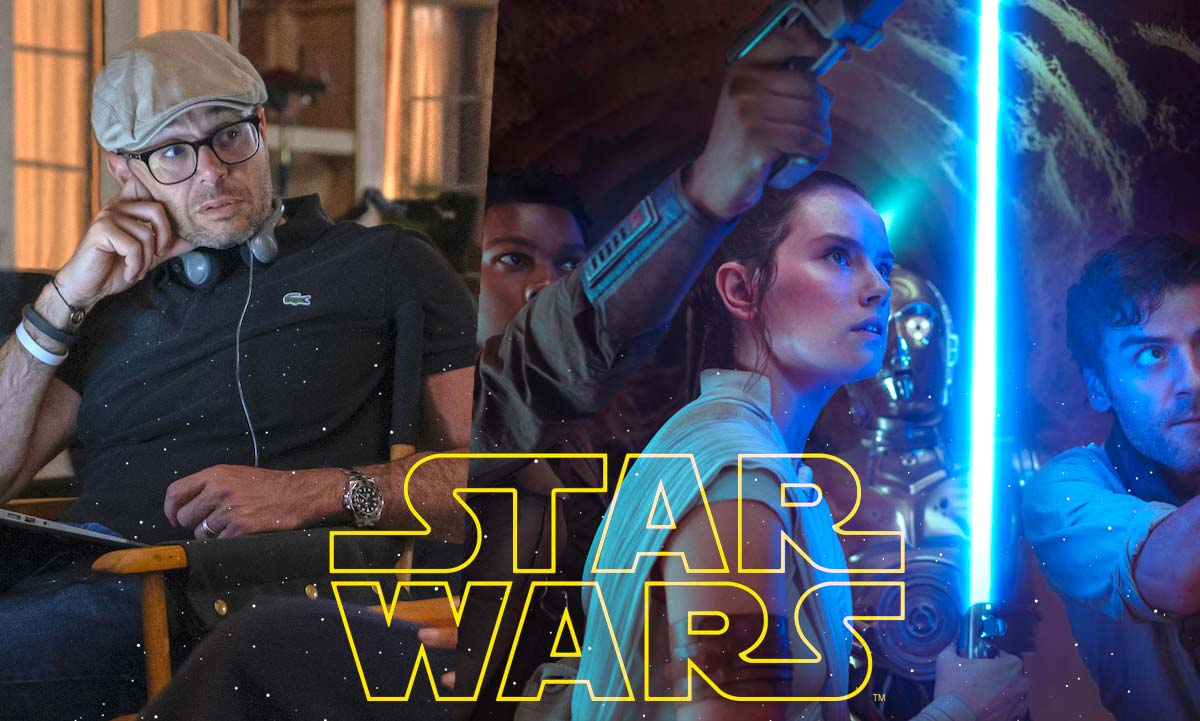
And that argument was apparently baked into Damon Lindelof’s scrapped, ostensibly Rey-led “Star Wars” movie.
During an appearance on The Ringer-Verse’s “House of R” podcast, the “Lost,” “The Leftovers,” and “Watchmen” co-creator explained that his version of the project was built around the tension between nostalgia and reinvention—not just as a Lucasfilm development problem, but as the fan debate that has followed the franchise since the sequel trilogy. Lindelof had been developing the movie with Justin Britt-Gibson (“Lanterns”) and Rayna McClendon (“Briarpatch,” “Willow”) before parting ways with Lucasfilm, and he was candid about what happened.
“And just to talk about the Bantha in the room, I was fired off of a ‘Star Wars’ movie,” Lindelof said. “So, they asked me, ‘What do you think a ‘Star Wars’ movie should be? ‘And I said, ‘Here’s what it should be.’ And they said, ‘Great, you’re hired.’ And then two years later, I was fired. And so I was wrong, at least through that time.”
Lindelof then explained that the version he and his collaborators were trying to crack was not just about bringing Rey back after “The Rise of Skywalker.” It was about turning the larger argument around “Star Wars”—the one between legacy and reinvention, fan service and forward motion—into the movie itself.
“What we were attempting to do was to have this conversation in the movie,” Lindelof said, “Which is to say there is a force of nostalgia and there is a force of revision and they are at odds with one another. And let’s do the Protestant Reformation inside ‘Star Wars.’”
That last comparison is Lindelof at his most Lindelof-y, but the idea underneath it is pretty straightforward. “Star Wars” has been pulled between preservation and change for years. “The Force Awakens” essentially restarted the franchise by introducing Rey, Finn, Poe, and Kylo Ren while also bringing Han, Leia, Luke, Chewbacca, and the original trilogy’s iconography back into the center of the frame. By the end of the sequel trilogy, the franchise had theoretically handed itself to a new generation, but the gravitational pull of the Skywalker saga never really let go.
Lindelof’s version apparently would have made that tension explicit without breaking the fourth wall.
“And it didn’t work,” he admitted candidly about the screenplay they were working on. “And so you get —you have your cake and eat it too, but the conversation that the fandom is having without winking and looking at the audience…that didn’t necessarily feel that risky.”
In other words, the movie would not have just been about Rey rebuilding the Jedi Order. It would have been about whether “Star Wars” itself could build something new without constantly being dragged back to its own past. That is a big idea for any franchise film, and an especially tricky one for Lucasfilm, where every creative choice tends to be treated as a statement about what the entire series should be.
Lindelof also seemed very aware that the concept may have been easier to pitch than to execute.
“I may have been fired not just because they seemed to like the premise,” he said. “It was just that the writing was really hard. It was slow. Like the tone, getting it right, where it was inside of the canon, what its relationship was with to episode nine. Is it starting a new trilogy? Is it like all of those things? They’re so massive. They’re so big.”
That tracks with the long, complicated development history of the Rey movie. Lindelof and Britt-Gibson exited the project in 2023, with Steven Knight later coming aboard to write a version for director Sharmeen Obaid-Chinoy. Lucasfilm formally announced Obaid-Chinoy’s film at Star Wars Celebration Europe 2023, with Daisy Ridley returning as Rey in a story set after “The Rise of Skywalker.” Knight later left the project as well, and its status still seems to be up in the air.
For Lindelof, the larger question was where “Star Wars” was supposed to place its creative and emotional center after the sequel trilogy.
“When episode seven came out, we all knew what it was,” Lindelof said of the franchise’s center. “It was Rey, and it was Finn, and it was Poe. And it was like all these, and then we were migrating back in, Luke and Leia and Han and Chewie and all those guys. But we’ve got the sense that when this new trilogy was over, we were going to be launching with these new characters, and that was the center of ‘Star Wars.’”
That center has only become harder to define. The streaming era gave Lucasfilm new breakout figures in Mando and Grogu, returned to pre-existing icons like Ahsoka, and continued expanding around the edges of the Skywalker timeline. But theatrically, the franchise has not released a new film since 2019 (well, until this weekend anyhow), and the Rey movie remains one of several announced projects still trying to define the next big-screen phase.
“The new question is, is Mando, are Mando and Grogu the center of ‘Star Wars’ now?” Lindelof said.
Whatever shape Lindelof’s version might have taken, his comments suggest a movie aimed directly at the franchise’s most persistent argument: whether “Star Wars” should keep returning to the iconography and emotional architecture that made it a generational phenomenon, or whether it has to risk alienating part of its audience in order to become something new. Lindelof did not answer that question, and the conversation moved on. And, of course, the movie did not survive development, but the debate behind it has clearly not gone anywhere.