





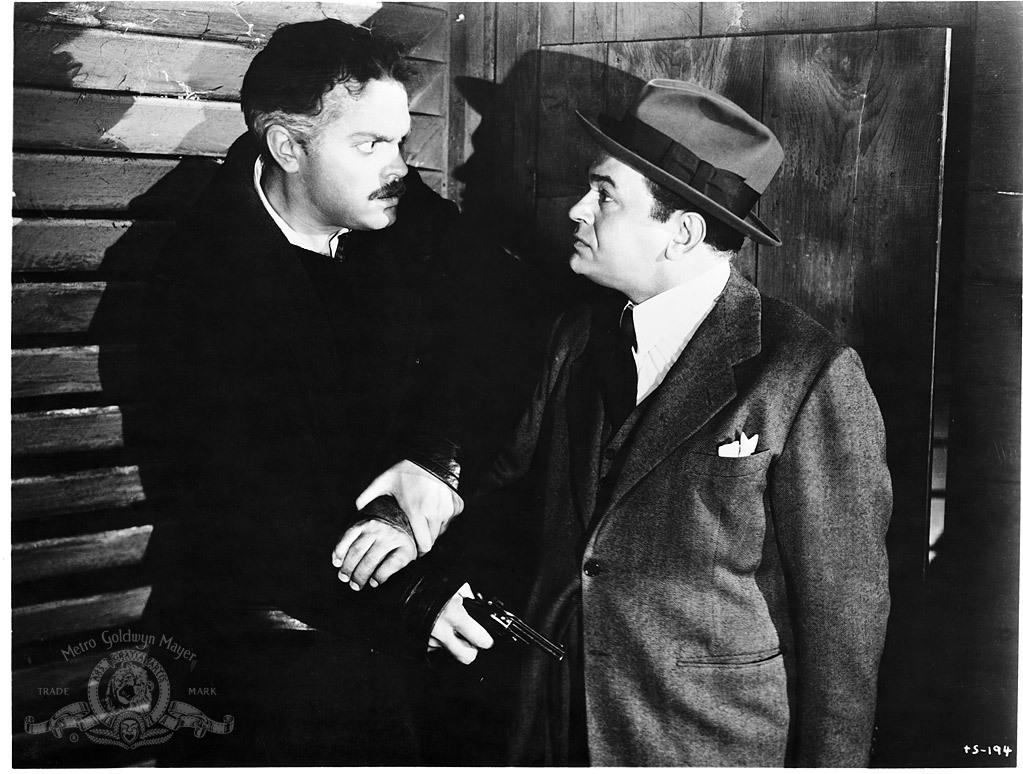
“The Stranger” (1946)
In the canon of Orson Welles movies —you know, the classics— the writer/director’s third feature-length effort “The Stranger” is curiously overlooked. And if the vanity of most writer/director/stars might dictate that they must play the hero, Welles’ film, arriving four years after the heartbreak of ‘Ambersons,’ at least flipped the narrative in this respect. A white-knuckle film noir, “The Stranger” is a post-WWII thriller about a former Nazi mastermind escaped to the U.S. under an assumed identity living among Americans. But the movie begins with the hunt: FBI agents are tasked with uncovering the identity of clandestine Nazis at home. Edward G. Robinson stars as Mr. Wilson, the dogged War Crimes Commission chief trying to track down Franz Kindler (Welles). Posing as Professor Charles Rankin, a teacher living in a sleepy New England town, Kindler is on the eve of marrying his faithful but naïve wife (Loretta Young). A plan hatched by the authorities, to let a captured known Nazi associate (Konstantin Shayne) go and watch as he leads them to Kindler, almost works, but the crafty German covers his tracks with murderous sociopathy. As Wilson and the feds begin to encroach on Kindler —the walls begin to close in and his lovelorn wife slowly comes to grips with her husband’s revelations— “The Stranger” boils with tea-kettle screaming pressure. It’s no “Citizen Kane,” and the shrill, melodramatic third act threatens to undo what is a well-crafted and classical thriller in Hitchcock mode. But it also has its nail-biting strengths, and for a filmmaker who suffered from the curse of completion anxiety and an uneven career that could never live up to its maximum potential, “The Stranger” is still a strong and respectable early work that Welles enthusiasts —not just the completists— should know. [B]
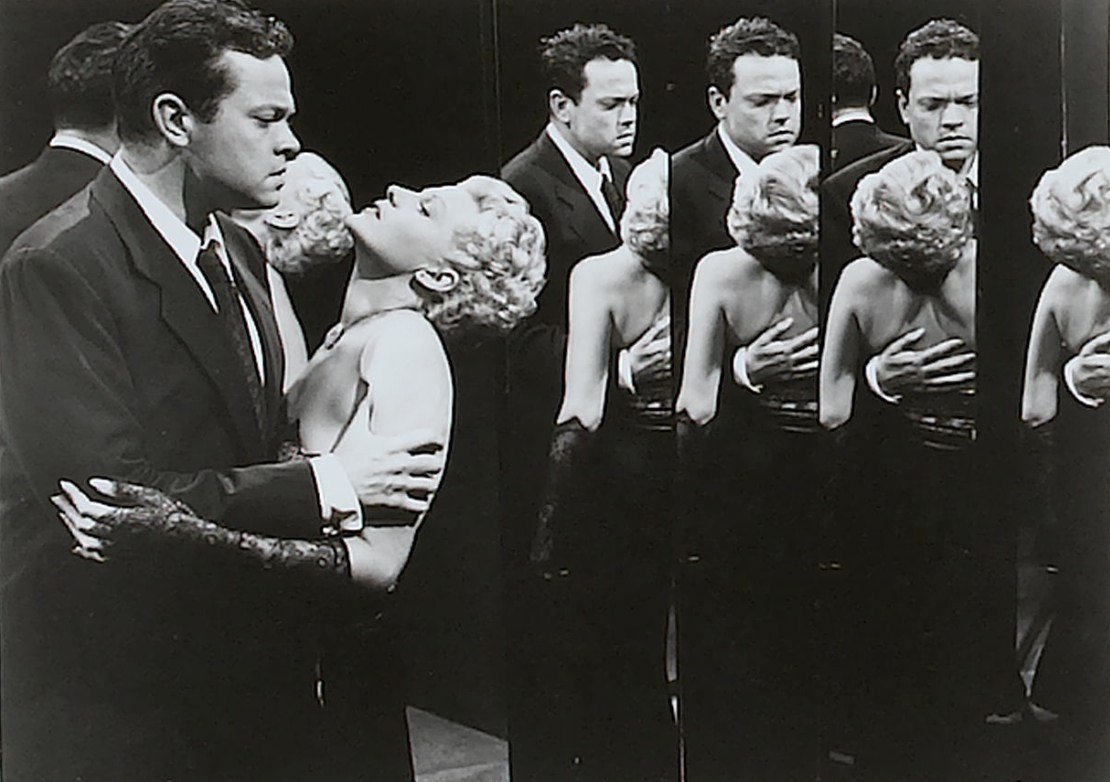
“The Lady From Shanghai” (1947)
Like too many other pictures after “Citizen Kane,” it’s a complicated business to assess the only available cut of “The Lady From Shanghai” as it’s been so mauled by grubby studio fingers against Welles’ wishes. Going Irish for the adaptation of Sherwood King’s novel “If I Die Before I Wake,” Welles plays able-bodied seaman Michael O’Hara, who falls fast and hard for the elegant Elsa (a breathtaking Rita Hayworth). She’s just arrived from Shanghai with her husband, crippled criminal defense attorney Arthur Bannister (a perfectly cast Everett Sloane), who’s got a mean face and an even meaner reputation. Back stabs, plot twists and swooning expressions of desire ensue when O’Hara agrees to assist the Bannisters on their yachting trip to San Francisco. One can’t help but wonder what could’ve been if that climactic, since infamous surreal shootout was realized as it was originally intended: 20 minutes long and 20 times more cinematically grandiose than its current 3-minute form. And yet the brilliance of those three minutes have resonated enough to influence a plethora of films since. Despite its maimed state, “The Lady From Shanghai” still contains examples of Welles’ signature virtuosity in cinematic storytelling that has had critics and directors discussing the film for decades. Like panning for gold in order to extract the most precious elements, one has to flick away the studio-stained staples of 1940s motion pictures (Heinz Roemheld’s abrasive score is a painful example), the better to look to the scenes of Hayworth and Welles silhouetted to the backdrop of an aquarium and to feel the atmosphere in the sequences shot on location in Acapulco, the yacht, and of course, that hall-of-mirrors in the amusement park at the end. It’s neither Welles’ greatest work nor his most ambitious, but enough of his talent remains intact in the version we know today to mark it a towering example of film noir. [B+]
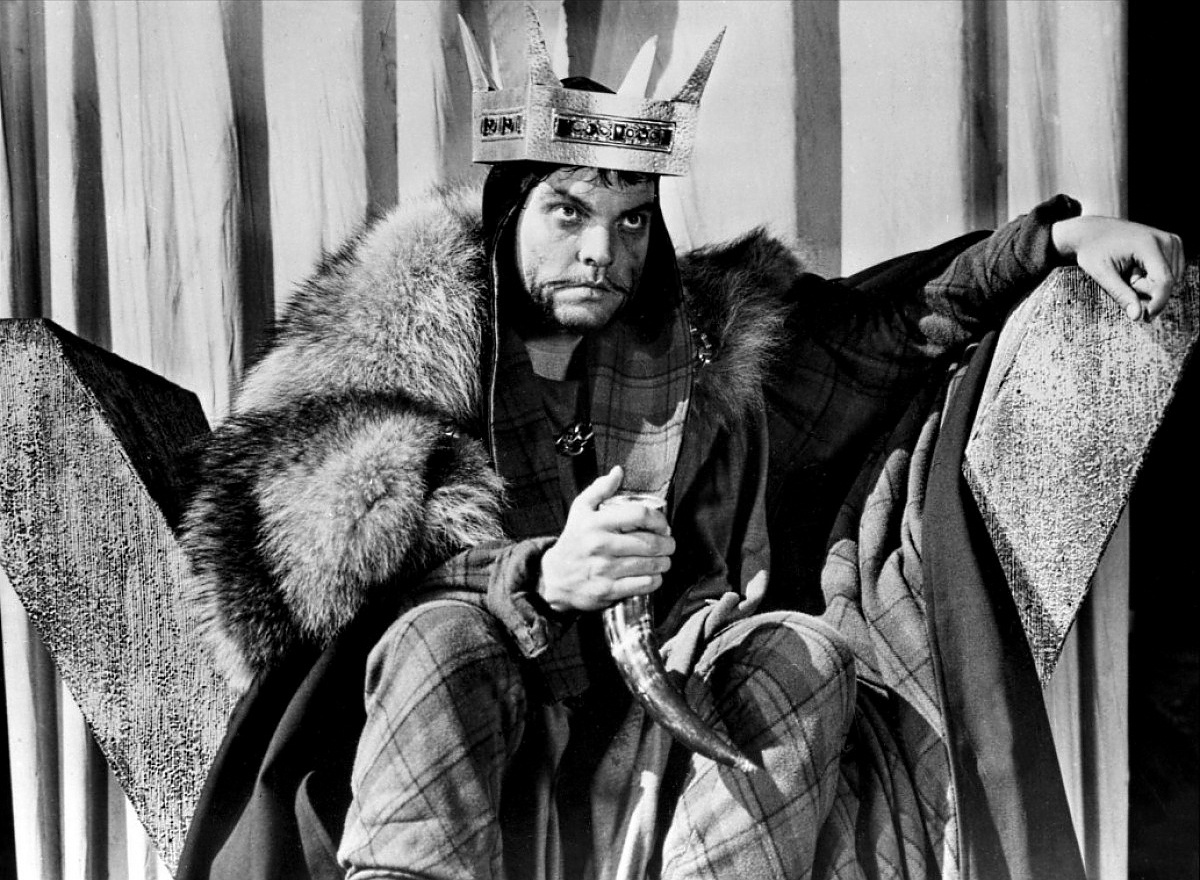
“Macbeth” (1948)
We’re only a week or so from the debut of Michael Fassbender and Marion Cotillard in Justin Kurzel’s new take on Shakespeare’s classic tale of ambition and murder at Cannes. With apologies to Roman Polanski’s decidedly flawed take, the bar that film or any other Bard adaptation has to clear in terms of cinematic Macbeths is probably Welles’ 1948 film, a thrillingly expressionistic, unsparingly pared-down version that more effectively than most Shakespeare film productions before or since makes the play truly cinematic. Shot on a low budget in just three weeks for B-movie Western specialists Republic (he recorded the sound in advance and lip-synced the production musical-style, which doesn’t always work), the film draws on his all-black 1936 ‘Voodoo’ production of the play (the brilliant opening sequence sees the witches construct a doll of Welles’ Macbeth out of clay), though with a more traditional Scottish setting and white cast. Elegantly and absorbingly designed in a sort of Gothic/sci-fi apocalypse manner (the director described his vision as “a perfect cross between ‘Wuthering Heights’ and ‘Bride of Frankenstein’”) and gorgeously shot by future “Psycho” lenser John L. Russell, it’s a vivid, nightmarish world, drenched in smoke and enclosed by rock, complete in its execution in a way that sadly few Welles films after this would be. Critics attacked Welles’ cuts to the play (exacerbated by more made by Republic), comparing it unfavorably to Olivier’s “Hamlet,” which debuted at the same time, but “Macbeth” only works as drama if you’re bold with your cuts, and it’s one of the reason this version takes off in a way that many others don’t. Not every actor lives up to Welles’ performance (Jeanette Nolan as Lady Macbeth took the role after Vivien Leigh and Tallullah Bankhead passed, and she’s a little weak), but on the whole, this is terrific stuff. [B+]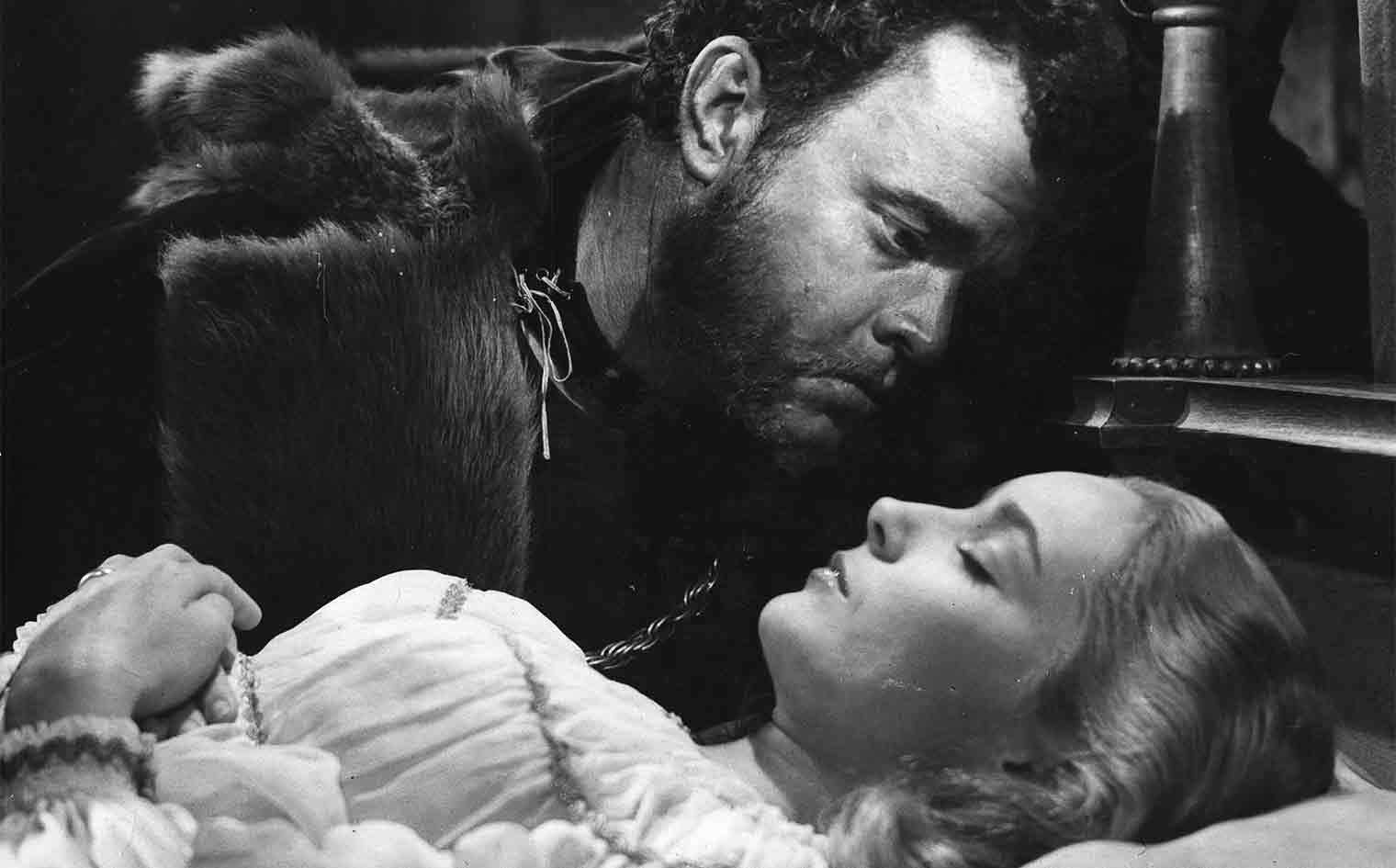
“Othello” (1952)
Both suffocatingly dense and scrappily ragged, Welles’ Palme d’Or-winning 1952 adaptation of Shakespeare’s play about handkerchief-prompted homicide is a very peculiar kind of masterpiece. Available exclusively now in controversially restored form, the film famously took more than three years to make, required various cast replacements and was perpetually on the verge of being shut down entirely due to lack of funds. And it absolutely bears the hallmarks of a constantly interrupted, troubled production, as scenes start in one location and end in another, closeups often fail to match wides, sound slips in and out of sync and edits happen herky-jerkily with none of the polish of which Welles was capable. And yet as often as those obstacles lent a wheels-about-to-come-off edge, they also spurred an intoxicating creativity: take Welles’ inspired idea to stage Roderigo’s murder in a Turkish bath, which came about because the production’s costumes had been impounded. But nor is it just a series of innovative solutions to logistical problems —Welles’ “Othello” (in which he plays the central role in unfortunate blackface after the fashion of the day) feels oddly uncompromised in its final roughshod form, as though it might have turned out in this borderline experimental state even with solid finances. Such is the sense of Welles’ singleminded, unwavering directorial confidence which shows in some of his most extraordinary shotmaking that brings the story far from its stagebound roots and into the realm of purest expressionist cinema. Insolently flouting the laws of classical filmmaking and held together entirely by force of the director’s iron will, Welles’ “Othello” is broken but monumental; a magnificent ruin. [B+]