

![‘In The Grey’: Guy Ritchie On Making Exposition Entertaining, Original Action Movies, TV Success, & ‘Sherlock Holmes 3’ [Interview]](https://cdn.theplaylist.net/wp-content/uploads/2026/05/15104856/UGR_01409.jpg "‘In The Grey’: Guy Ritchie On Making Exposition Entertaining, Original Action Movies, TV Success, & ‘Sherlock Holmes 3’ [Interview]")
Few filmmakers can turn paperwork, debt recovery, offshore money, and legal pressure into something that still feels like a swaggering action movie with expensive suits and danger in the vents. But Guy Ritchie has made a career out of finding the pulse inside systems that should feel hopelessly dry. Crime, leverage, loyalty, debt, class, cash, violence, rules, broken rules, and clever bastards trying to outmaneuver each other. That is very much his lane.
His new film, the aptly titled “In The Grey,” seems to live right in that strange, profitable fog between the legal and illegal worlds. The film stars Henry Cavill, Jake Gyllenhaal, Eiza González, and Rosamund Pike. It follows a team of elite operatives trying to recover a billion-dollar fortune from an island-owning criminal (no, not that one). It hits theaters May 15.
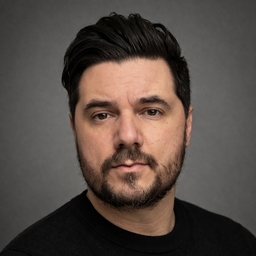
Speaking with Mike DeAngelo of The Playlist, Ritchie said the hook for “In The Grey” came from discovering the true stories within that very specific moral and legal middle ground.
“There needs to be a genesis of interest,” Ritchie said. “And for me, the genesis of interest in this was – it was a story I heard, a true story. And I realized that there’s a whole world that exists in the grey, where you take professionals used to the conventional world of legality. And then it’s much more profitable and volatile to operate outside the white world. And you don’t quite swing all the way to the black. But you oscillate in this kind of grey area.”
For Ritchie, that made the subject feel narratively rich. Not just because of the money involved, but because the rules themselves become unstable.
“Is it legal? Is it illegal? And there’s accountability,” he explained. “So this world exists. And when I found out about this world, it took me a while to develop an understanding of it. Because you think a debt is a debt. But it’s legal, it’s sort of illegal. And I found that very provocative from a narrative point of view.”
Of course, “In The Grey” also has to explain quite a bit. Debt recovery, military extraction plans, offshore accounts, legal pressure, shell games, and all the other machinery humming under the action. In the wrong hands, that material could flatten a movie into a PowerPoint with explosions. Ritchie knows the danger.

“If you’re not careful, it’s a cure for insomnia,” Ritchie said. “The administrative explanation is not interesting. However, there is an interesting shorthand version of that. And then you do the long-winded version. And then you’ve got to pick the peanuts out of the poo.”
That colorful image prompted him to offer a more detailed explanation of how he thinks about exposition, education, and storytelling. For Ritchie, the goal is to remove as much dead structure as possible and protect the thing that actually makes the subject exciting.
“I wasn’t very good at school. I left school at 15. And because I couldn’t understand the academic process. And it just wasn’t interesting to me,” he said. “It was all poo, no peanuts. And then as soon as I left school, I became very interested in academic pursuits. And I realized it was really just, they killed it, as far as I was concerned. It was all structure, no essence.”
He continued, “Somehow, what you’ve got to do is as little structure as possible for as much essence as possible. As much structure as possible for as little essence as possible. And what happens is, inevitably, habit creates the death of essence as it drowns in structure.”
That balance has become a major part of Ritchie’s recent run of no-nonsense action movies, including “The Covenant” and “The Ministry Of Ungentlemanly Warfare.” Still, original action movies face a strange marketplace. They can be well-liked and widely watched and still not look like obvious hits in the old box-office math. Ritchie said the modern business has become much harder to read.
“The sands change,” Ritchie said. “And by the way, the business is not as transparent as it used to be financially. So what works financially isn’t as obvious as it used to be. We’ve made films that don’t seem commercially viable or successful. And then you find out a year later, they’re very commercial and viable.”
![‘In The Grey’: Guy Ritchie On Making Exposition Entertaining, Original Action Movies, TV Success, & ‘Sherlock Holmes 3’ [Interview]](https://cdn.theplaylist.net/wp-content/uploads/2026/05/15105223/UGR_04813-1024x672.jpg)
He pointed to “Fountain Of Youth,” his Apple film, as an example of a project that did not seem loud at first, but later revealed stronger staying power than expected.
“It really didn’t make a noise at all,” Ritchie said. “And then it’s the most successful after ‘F1.’ And it plows away, right? And it’s absolutely nothing. And we had to bump into an article that told us that!
For Ritchie, the whole ecosystem now feels like a maze of different revenue streams, audience behaviors, and critical divides.
“What works, what doesn’t work, what’s popular with critics isn’t popular with the audience, what’s popular with the audience isn’t popular with critics,” he said. “The industry isn’t transparent at all.”
That uncertainty has not slowed him down. In fact, Ritchie has also found major momentum in television, with “The Gentlemen,” “Young Sherlock,” and “MobLand” all moving forward after strong audience responses. He recently wrapped his part on the next season of “The Gentlemen” and sounded particularly energized by what television gives him.
“I’ve only done three TV shows, and I’m going back for three bites of all of those three,” Ritchie said. “The only thing I do know is I think ‘The Gentlemen,’ which I’ve just finished, I really think that’s a successful second season. And I really enjoyed that process. It opened up all sorts of gateways for me.”
He also confirmed he has done his part on “MobLand” and remains interested in the ongoing fight of making things in an industry that keeps mutating.
“There’s a lot to be learned and experienced within the business, within the industry, within the creative aspect, with new actors, with old actors, what they think works, what you think works, and what you both think works doesn’t work,” he said. “And so there’s a sort of galaxy of complications, and it just feels like you want to be in the fight.”
And because no Guy Ritchie conversation can escape without at least one “Sherlock Holmes 3” check-in, Ritchie offered a small but hopeful update on the long-discussed sequel with Robert Downey Jr. and Jude Law.
“No, I very much, by the way, every year we go through this process,” Ritchie said when asked if fans should give up hope. “And I love the idea of it. I have no idea where we are with it, but every year it looks like it’s about to happen and then something happens.”
So there it is. The grey area continues, the TV empire expands, and “Sherlock Holmes 3” remains alive in that mysterious Hollywood waiting room where hope sits under bad fluorescent lighting.
Watch the full interview with Guy Ritchie below.

Mike DeAngelo is a film writer, podcaster, and entertainment journalist whose work has appeared in Variety, The Hollywood Reporter, IndieWire, and beyond. He is the host of The Playlist's podcasts The Discourse and Bingeworthy.

