


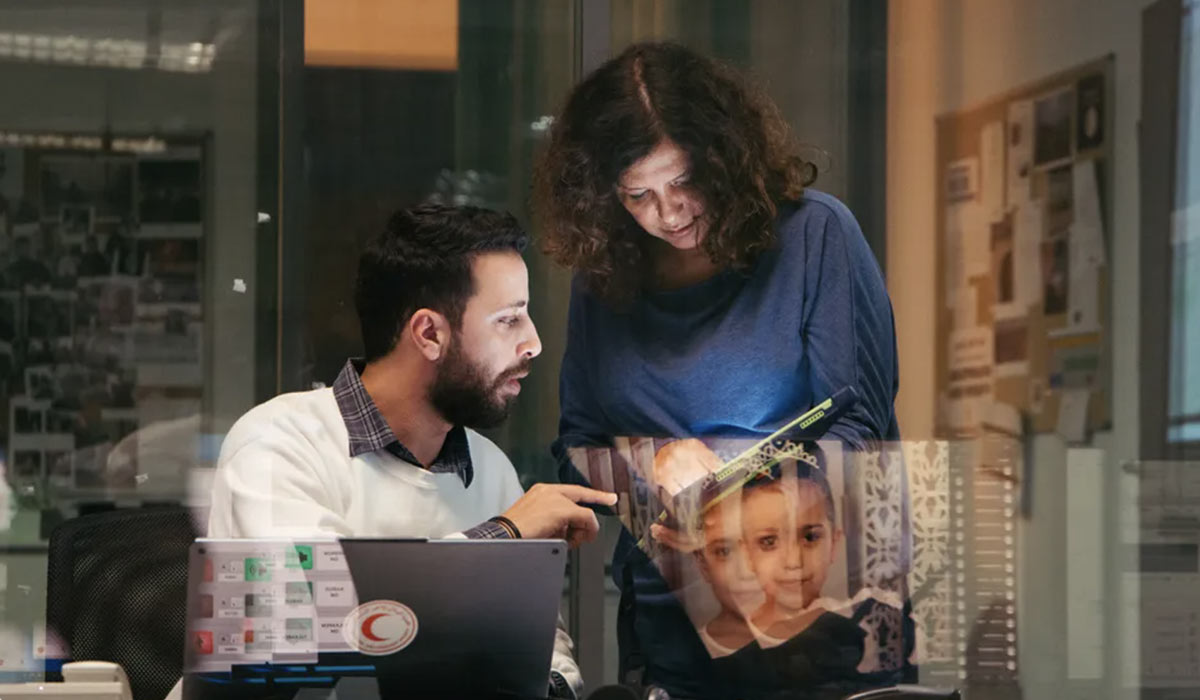
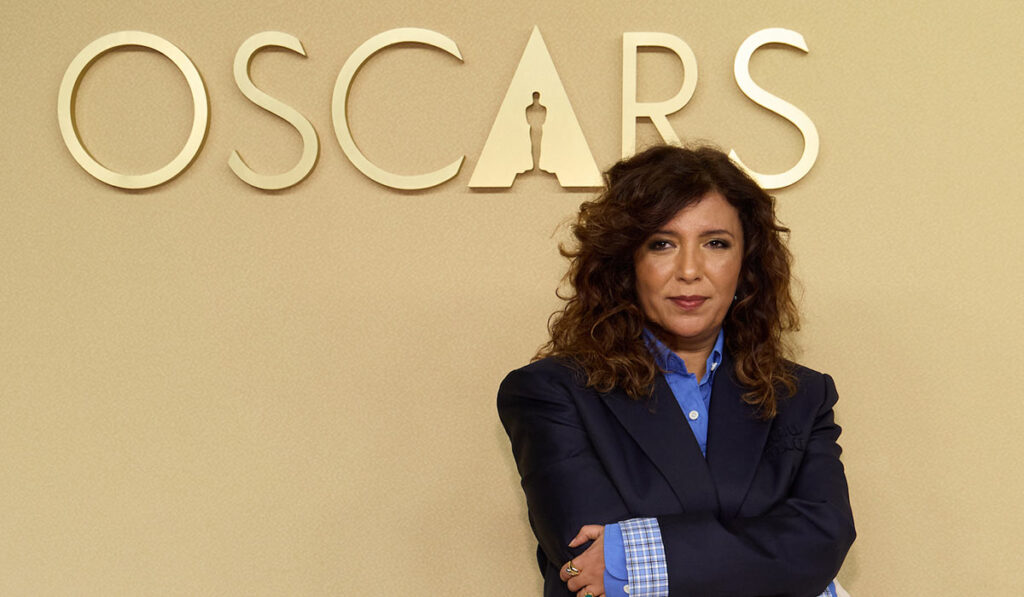
On Tuesday night in Berlin, Kaouther Ben Hania made some news. The Oscar-nominated filmmaker of “The Voice of Hind Rajab” was set to accept the Cinema for Peace Dove for Most Valuable Film of the Year prize at the annual Cinema for Peace gala. She gave a speech, but with a former Israeli general also being honored at the event, she did something intentionally dramatic. She purposefully left the trophy on stage.
Ben Hania reportedly remarked, “Without accountability, there is no peace. The Israeli army killed Hind Rajab; killed her family; killed the two paramedics who came to save her, with the complicity of the world’s most powerful governments and institutions. I refuse to let their deaths become a backdrop for a polite speech about peace. Not while the structures that enabled them remain untouched. So, tonight, I will not take this award home. I leave it here as a reminder. And when peace is pursued as a legal and moral obligation, rooted in accountability for genocide, then I will come back and accept it with joy.”
Yes, Ben Hania doesn’t just talk the talk; she walks the walk. But no one would expect any less, considering her increasingly acclaimed resume. We caught up with the Tunisian native last week before she headed to Berlin to chat about the reaction to her third Oscar-nominated film in six years, after “The Man Who Sold His Skin” and “Four Daughters,” batting the middle east caricatures the movie industry keeps perpetrating, what she loves about filmmaking (it may surprise you), how she landed on that ending, and much, much more.
This interview has been edited for length and clarity.
____
The Playlist: After this long road, what does this particular recognition for “The Voice of Hind Rajab” mean to you?
Kaouther Ben Hania: This Oscar nomination means that “The Voice of Hind Rajab” will echo more and more. More people will hear about her story and maybe watch the movie. Oscar has the power of a spotlight.
What did it mean personally to you, though?
I don’t know. Now, I’m doing Arabic-speaking movies. The first one was about Syria. The second was about Tunisia, my home country. This is about Palestine. Stories from the region, not very feel-good movies. And in general, the market is not very welcoming to our kind of movie because the market wants English-speaking movies with stars. “Let’s do the caricature.” So the fact that to make those movies visible and to propose another perspective, stories told from inside, it’s a fight. It’s not like by chance those movies were nominated. No, it was a long fight, and I did other movies before. And so for me, it’s something that means that maybe we are in a period where it’s still difficult, but the world and Hollywood maybe is open to other perspectives, other kinds of stories. And this is good news, I can say, but it’s not an easy thing. It’s worth fighting for because I think we need a world where we don’t have one story. We need a world where we have all perspectives and all perspectives are interesting. By building all perspectives, you can maybe understand what’s going on. But when you have one point of view, one way of seeing things, it’s not good.
I know you’ve done a ton of interviews, but when I spoke to you in September, you had just started this journey, and the movie had only been at Venice. After attending so many screenings, so many Q&As, what has struck you the most about people’s reaction to the film?
I mean, this movie is very special. Why? Because when you watch it, the act of watching it makes you witness any crime in a way. You bear witness to something. And with becoming a witness, you feel responsible for something. So, the main reaction I heard from audiences from all over the world, from different cultures, backgrounds, is, “What can I do?” “I can’t see this and not do anything.” There’s something about action. And a lot of people also told me, “This movie changed me.” This is something I hear a lot. You know, at the Venice Film Festival, the emotion was so big. And every time we had many Venices everywhere, the same strong reaction. And this is something that honestly went beyond my expectations when I was doing the movie. I mean, I did it with all the love and the respect. I was hard on myself. I wanted to do the best film possible. But what is happening around the movie makes me think that there is hope, because the movie provoked this reaction, not only tears, but also a desire to do things to change the reality we live in.
It’s not an overstatement to say that the world is on fire in 20 million places at once. Because so much is happening, it feels like some crises are getting forgotten. I just moderated a Q&A with Jafari Panahi, and people have already forgotten what happened in Iran last month. Do you have hope that the world will pay attention to what is still happening in Gaza?
Yeah. It’s two different things. Our attention is limited. We can’t pay attention to every single event in the world. The human brain can’t. We live in a world where our attention is asked for all the time. Social media wants you to pay attention. TV wants you to pay attention. Advertisements want you to pay attention. So, it’s the war for our attention. And in this context, it’s normal. So, that’s why I think that we live in a world of amnesia in a way. And that’s why when I heard the voice of Hind Rajab, it was through social media, actually. And for me, it was in the right place. That’s why I think that the lasting memory of people is what we produce as impactful art. That’s why I did this movie, because for me, at some point, people will stop talking about Gaza because there is a ceasefire. It’s not a ceasefire, but anyway, because we have this label like, “Ah, Gaza is too horrible. Let’s stop talking about…” So, you have the mass media deciding what to talk about and what not to talk about. But in parallel, you have our effective memory, let’s call it. And this effective memory is built by a lot of things. One of them is cinema, and I did this movie for this kind of memory.
Is there anything that you look back on the whole journey and wonder how you pulled that aspect of the production off?
I am always surprised that we made this movie at all. I mean, it’s a paradoxical thing because when I started, not doing it wasn’t an option. And I was in this kind of energy, “Let’s do it.” And I brought with me everybody, and it was a great energy because everybody was mad. Everybody was angry. And everybody around me, at least the people who helped me, wanted me to do this movie. And there is something miraculous about movies because when you go back to the process, it’s so complicated. Everything is complicated. Making decisions, what to shoot, what not to shoot, and how to organize the people you should work with. That’s why it’s always complicated to talk about the process for me, because when I finish the movie, and it’s outside people watching it, I have this tendency to forget all the complicated stuff before. Like a pregnant woman, she forgets about the pain because she likes her son or something. So, I have total amnesia about all the problems I faced, and I only remember the good things. I mean, the movie in itself and all the reception it’s receiving is a miracle, I would say.
Was it difficult to cast? Was it harder to find any of the actors than you thought it might be?
No, it wasn’t difficult. It was casting, and I needed to find the right person, and they are great. I mean, we had some issues bringing all those actors to Tunisia, because the world is punishing Palestinians. It’s not easy for them to travel. They need a visa everywhere. They need documents. So this was a little bit complicated to make them travel. And still it is, we have the actor playing Motaz Malhees playing Omar. He can’t come to the United States. Why? Because he’s Palestinian. He can’t get a visa. He can’t come to the Oscars. He has a movie at the Oscars, and it’s not possible for him. So, you already have an injustice established by the world that’s treating Palestinians differently. So, this was complicated, but it’s a thing of organization. It was very stressful, but we finally succeeded in doing it.
![‘The Voice Of Hind Rajab’ Review: This Ripped From the Headlines Film About Gaza Will Rip Out Your Heart [Venice]](https://cdn.theplaylist.net/wp-content/uploads/2025/12/18182126/The-Voice-Of-Hind-Rajab-1024x579.jpg)
And then, in the editing, for example, I remember this big question: how to end the movie? What is the last thing we see in this movie? And this was a complicated decision because it will impact how the people leave the theater. And then one day, when Donald Trump published this AI clip about Gaza, the future of Gaza, and he said, “Ah, it’s a fine piece of real estate because it’s in front of the sea.” I just remember that his mother told me that Hind loved the sea. And she explained to me that it’s because it’s a place where you have refugee camps and they breathe in the sea. The sea is everything for them. And I remember that in the scene in the middle of the movie, if you remember, when they Hindi stopped talking on the phone, and Nisreen [Clara Khoury], the psychologist, starts giving her this breathing exercise, and she wasn’t speaking. And then she told her, “Remember the beach of Gaza, remember the sea of Gaza.” And then we have a kind of resurrection, this little girl saying, “Hello.” She brought her from the dead with the sea. So, I was thinking about how this sea can be for Trump, a fine piece of real estate. What does it mean for Israeli? And what does it mean for people from Gaza? And this moved me a lot. So, it gave me the answer on how to end the movie with this little girl and her brother playing in the sand near the beach of Gaza.
You’ve made narrative films, you’ve made a sort of docu-narrative with “Four Daughters.” You had another project you were going to make before you made this, but you felt compelled to tackle “Voice” first. What about filmmaking calls to you? What do you love about it?
What I love about it is the research. When I was a student, I said, “I love being a student. I want to stay a student all my life, learning stuff, but I have to work.” Welcome to the adult world. And by doing movies, actually, I learn a lot. What I love is the research, watching all the movies that can resemble what I’m working on. Talking to people, writing, doing the research, searching the form, and actually experimenting. I like the fabrication, the craft, trying stuff. For example, I love cooking. And when I’m stressed, I go to the kitchen, and I start cooking. And for me, filmmaking is like cooking. You experiment with things, and then you have this dish you offer to the world with all the love and the tasteful essay that you did.
I believe that the delayed project was something you had wanted to film for 10 years. Is that your next film?
I shot it, actually.
Oh, wow. I didn’t even know this. Can you tell us the title? Can you tell us what it’s about at all?
It has a working title. I’m sure it will change, but I put it aside because I couldn’t do it at the time for me. The urgency was to tell the story of this little girl. And the movie is about cinema, actually. It’s about storytelling. So, for me, doing this movie, knowing what happened to Hind Rajab, being this kind of artist who is thinking about her own craft. So, I put it aside. And we showed the movie at Venice, [then we went to] Toronto. And from Toronto, I took a plane, and I landed directly on the set. So, now it’s shot. I need to edit it.
“The Voice of Hind Rajab” is still available in select theaters.
Follow Gregory Ellwood on Bluesky
Follow Gregory Ellwood on Threads
Follow Gregory Ellwood on Instagram
Sign Up For The Breakdown Newsletter


