


 10. “Nosedive” (Season 3, Episode 1)
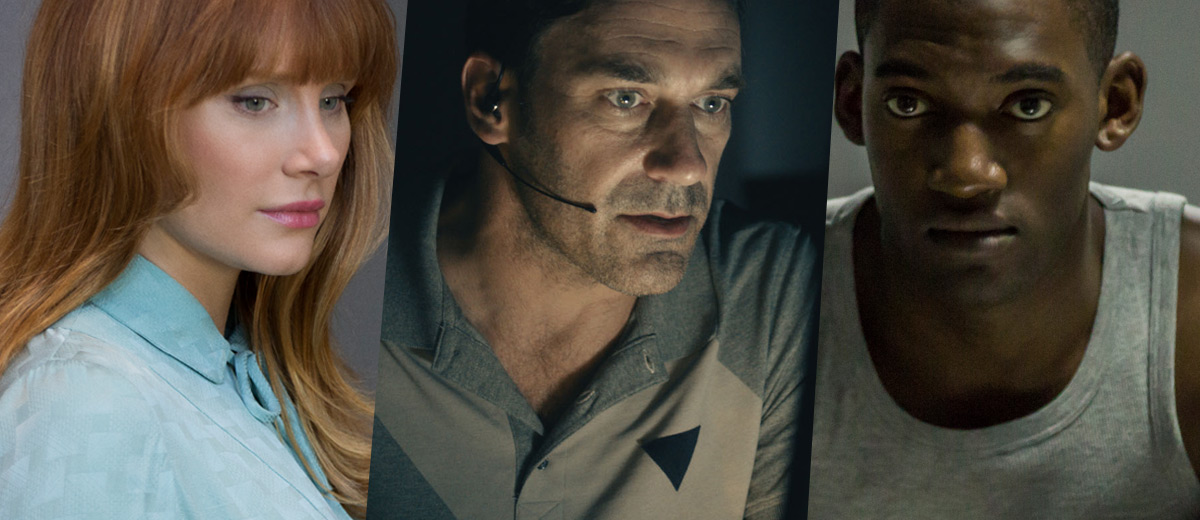
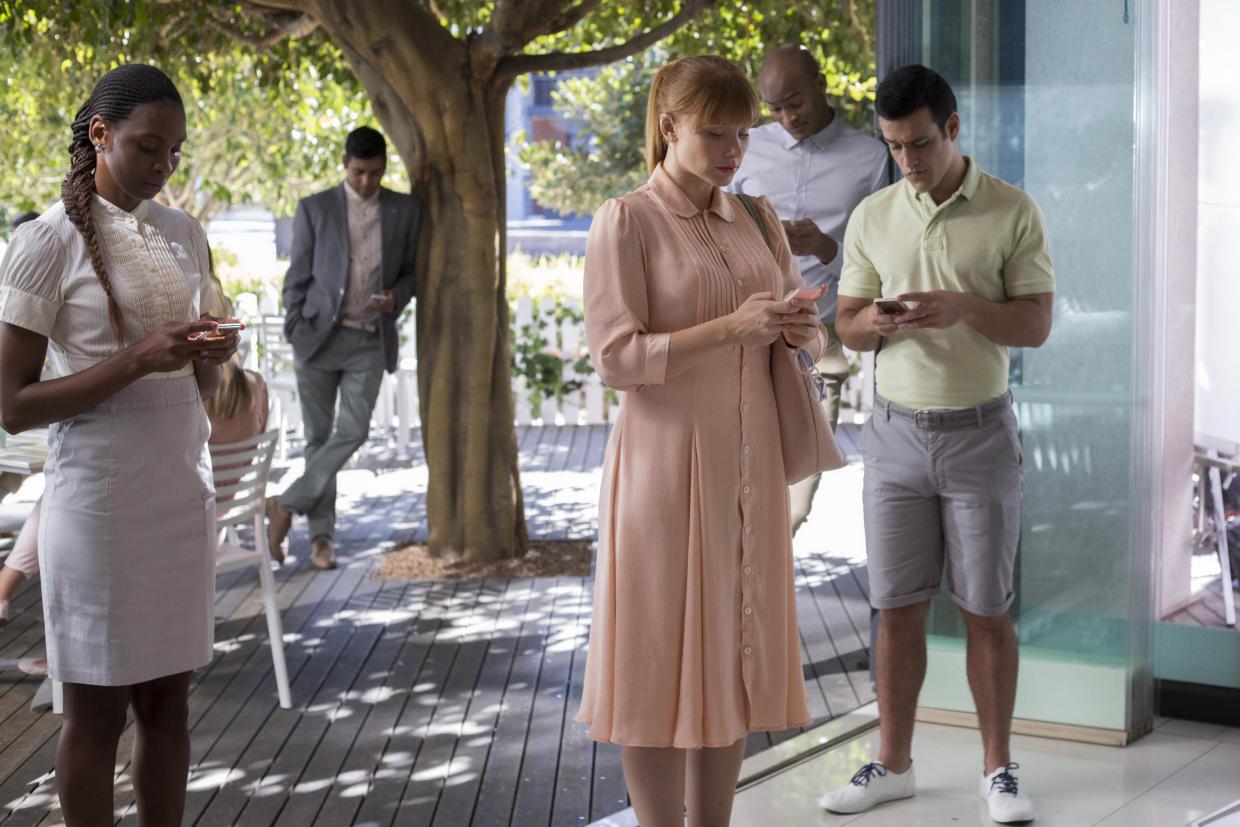
The first of the new batch of episodes, and probably the most overloaded with A-list talent (Oscar-nominated helmer Joe Wright directs, Bryce Dallas Howard and Alice Eve star, and the script comes from “Parks & Rec” creator Michael Schur and Rashida Jones), “Nosedive” also appears to be one of the most divisive. It’s set in a world where your social status is created by the ratings you’re given after every interaction (Uber-style), with ones and twos are virtual outcasts, while fours get to live the high life. Lacie (Howard) is a low four, who hopes to bump her status up in order to move into a fancy apartment, and gets the opportunity when her childhood friend Naomi (Eve) asks her to be her maid of honor at her upcoming wedding, an event that’ll be full of high fours that give her a boost if she gives a great speech. But as she tries to get there, a series of incidents causes her score to begin to plummet, putting everything at risk. In some ways, it’s the first “Black Mirror” take on utopia rather than dystopia: this is a world where your place in society is based on how nice you are to others, and everyone is smilingly polite at all times. But as you might imagine, Schur & Jones’s script soon exposes the nightmarish quality of that concept, Wright’s sterile, pastel-colored visuals and a great Max Richter score brilliantly capturing the superficiality of the conceit (Eve is particularly good too, capturing the perfect girl with a well-hidden black heart). But there’s a slightly repetitive sense to the story as Lacie’s status falls, and perhaps more crucially, Howard’s arguably too likable for the part. Sure, she’s a social climber, but her punishment feels a bit sadistic for someone who doesn’t entirely deserve it, and the ending doesn’t quite sell the sense that she’s free from the system either.
 9. “Playtest” (Season 3, Episode 2)
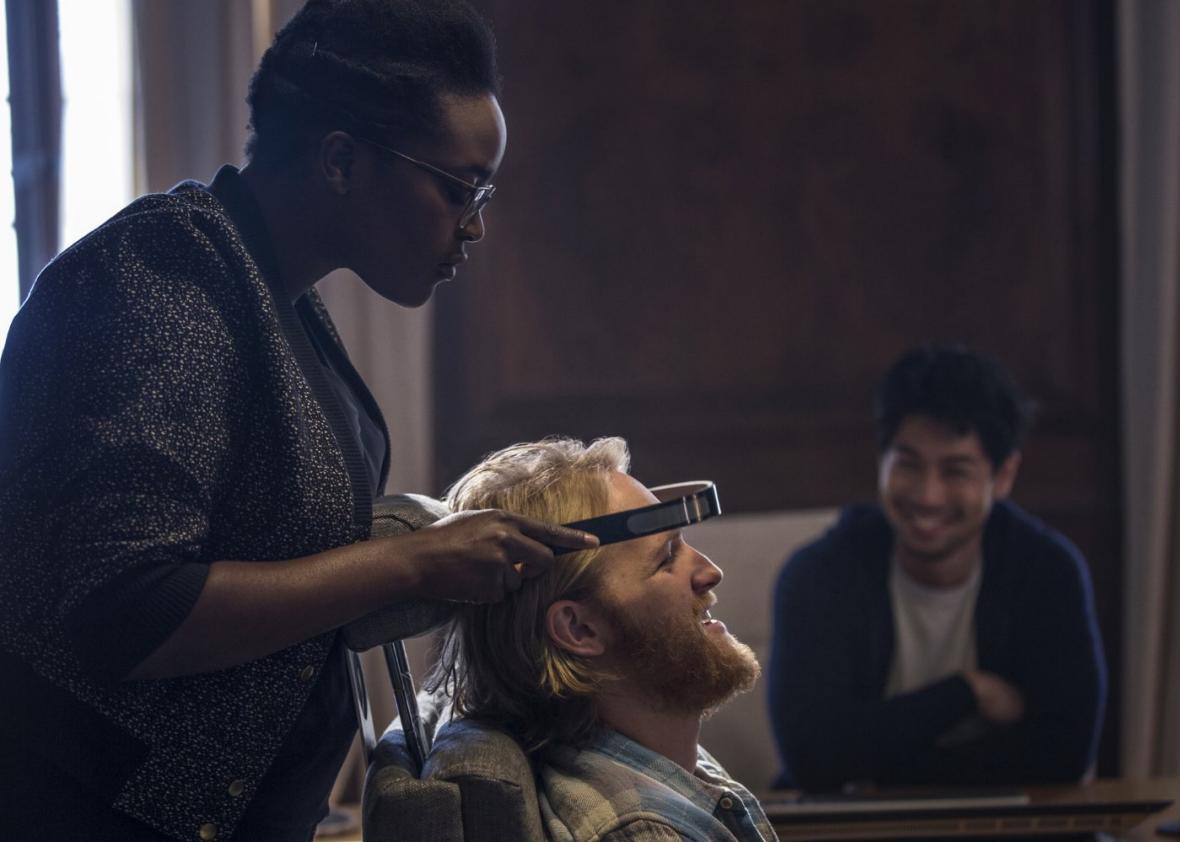
The purest horror episode the show has ever done (indeed, Brooker has suggested that it was deliberately tied to a bow near Halloween), “Playtest” is brilliantly directed and performed, but ends up feeling a bit empty: it’s terrifying in the moment but ultimately as disposable as a ghost train. Directed by Dan Trachtenberg, who impressed earlier in the year with the unexpectedly terrific “10 Cloverfield Lane,” it’s the show’s first direct riff on video game culture — something that it’s surprising it has taken so long, given that Brooker began his career as a games journalist. Wyatt Russell (son of Kurt Russell and Goldie Hawn, who’s had roles in things like “22 Jump Street” and “Everybody Wants Some”) as a thrill-seeking backpacking American, who lands in London for the final leg of his trip. There, he hooks up with a beautiful tech journalist (Hannah John-Kamen), who suggests he volunteers for the trial of a new immersive VR game from a legendary Hideo Kojima-like creator (Ken Yamamura). It starts harmlessly enough, with a high-tech whack-a-mole, but after that he’s taken to a mysterious mansion, where his worst fears start to manifest themselves. It’s a smart take on the staying-overnight-in-a-haunted-house trope, and Trachtenberg has a ton of fun wreaking horrors on Russell (aided by an excellent score by Bear McCreary), and the your-greatest-fears conceit means he’s revealing character all the way. He’s aided by a great performance by Russell, who’d certainly made an impression but proves a compelling leading man worthy of his folks here, and gives the story some emotional backbone. But it all builds to an almost literal damp squib, after a fake-out ending that you can see coming from a mile off, and like with “Shut Up And Dance,” it gives a sense that what came before was somewhat meaningless.
 8. “White Christmas” (2014 Christmas Special)
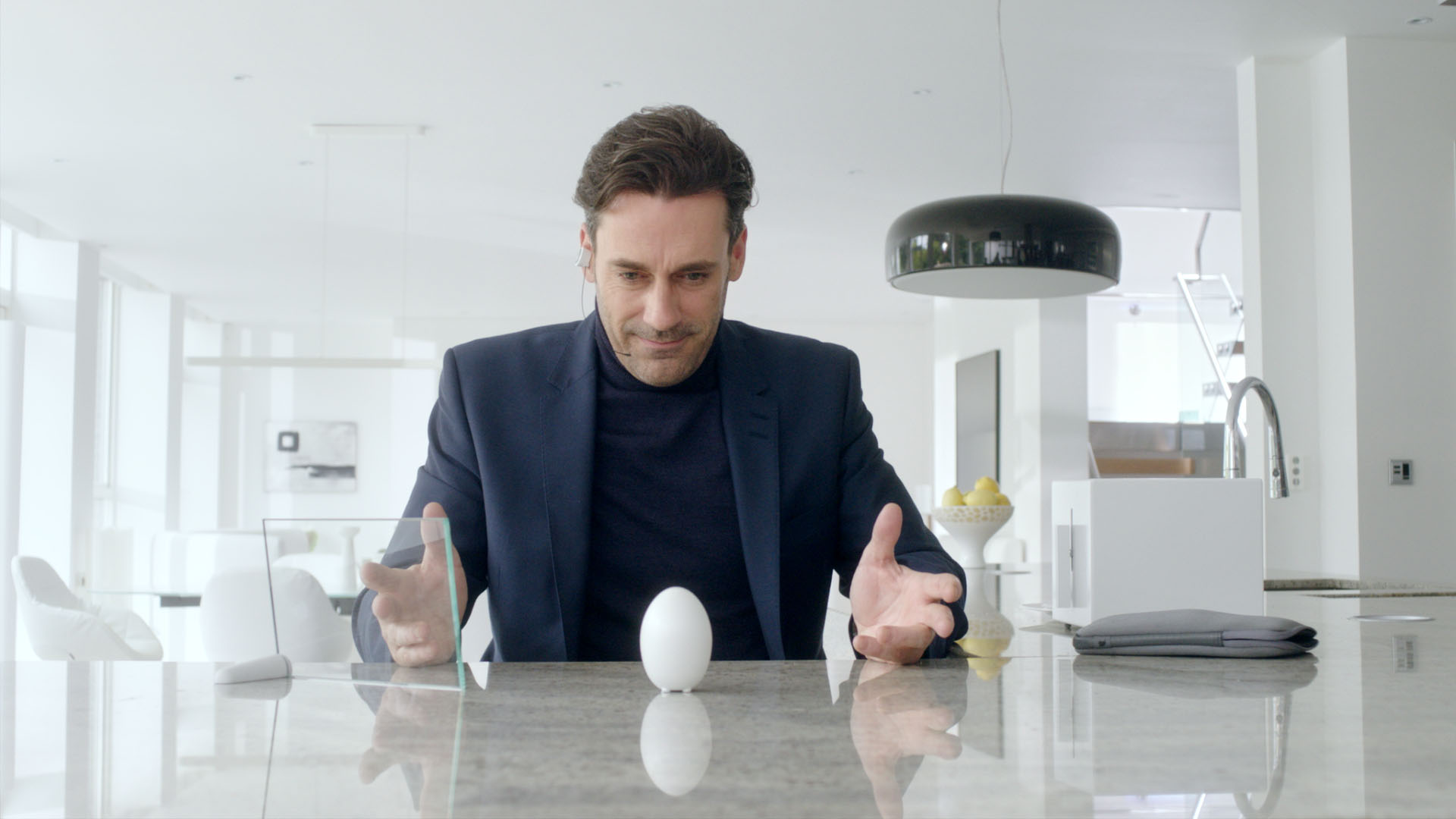
The first feature-length installment of the show (produced as a one-off Christmas special in 2014), “White Christmas,” directed by Carl Tibbetts, shows the show at both its best and its most forgettable, hence landing in the middle of the list here. Borrowing a sort of “Treehouse Of Horror” structure, it tells three micro stories across a framing structure that sees strangers Rafe Spall and Jon Hamm sharing Christmas dinner together in a remote, snowy cabin. The trio of stories they share see Hamm as a sort of pick-up advisor encouraging a shy young man (Rasmus Hardiker) to pick up a woman (Natalia Tena) at a Christmas party, then attempting to break an AI slave (Oona Chaplin) who will run a smart home, before Spall tells his story, of how he was ‘blocked’ by his ex-partner (Janet Montgomery) through a Google Glass-type app. There’s some really elegant storytelling here, the three threads building towards one of the most devastating and nightmarish conclusions the show’s ever done. The ending’s undoubtedly the most memorable part of the episode, but the running time isn’t quite enough to carry that and the smaller stories. The second is the best, thanks in part to Chaplin’s performance, but the first is rather forgettable, and the third ends up feeling like a bit of a reprise of Season 3’s “The Entire History Of You.” The ending, with a guilt-stricken Spall left facing an eternity reliving the death of his daughter to the tune of “I Wish It Could Be Christmas Everyday,” is so indelible that it’s worth the trip, and the ambition is laudable, but it’s definitely a mixed bag of an episode.
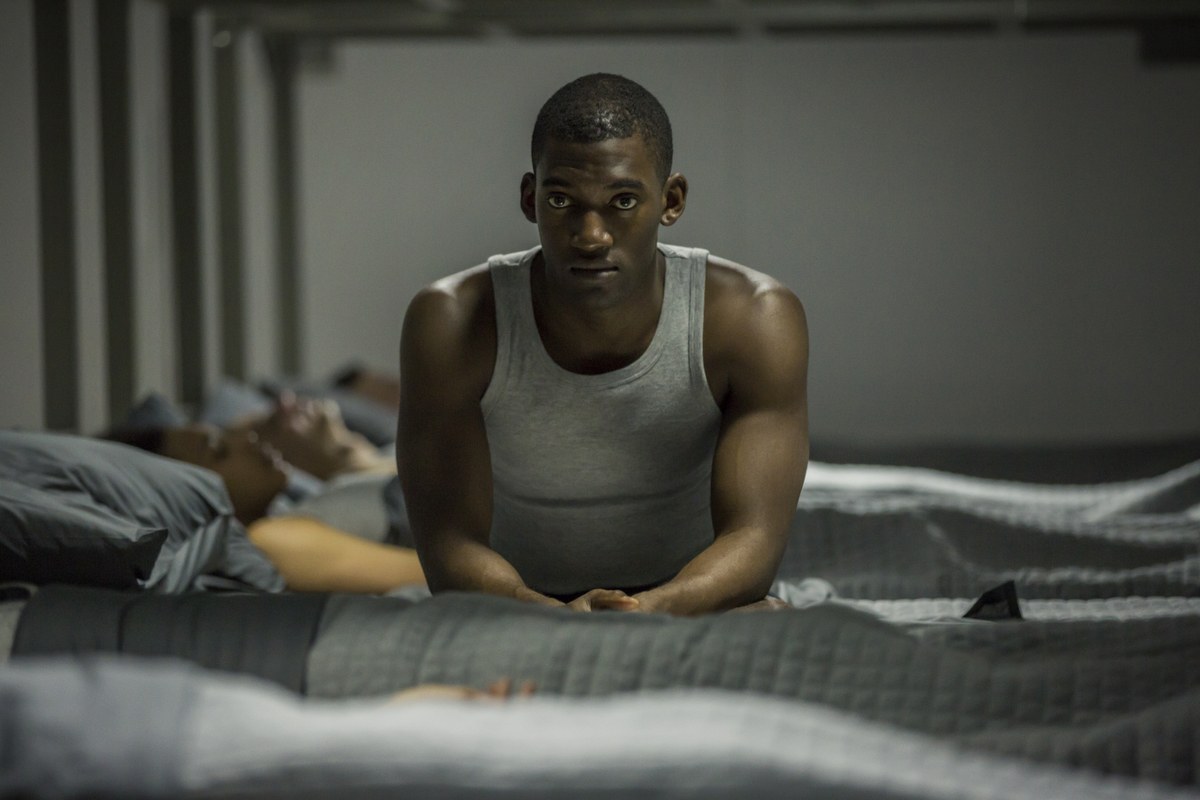 7. “Men Against Fire” (Season 3, Episode 5)
Immediately after viewing “Men Against Fire” over the weekend, we felt like it might be the weakest of the new batch of episodes. But it’s definitely lingered in the days since, and while it has its problems, its cumulative impact pushes it up towards the top tier of the show. Directed by “London Spy” helmer Jakob Verbruggen (who just replaced Cary Fukunaga on miniseries “The Alienist”), it’s led by “Roots” actor Malachi Kirby as Stripe, a rookie soldier in a conflict somewhere in Eastern Europe, with a mission to help eliminate so-called ‘roaches’ — monstrous, pale, inhuman vampire-like creatures. But in one encounter, he’s zapped with a homemade bit of technology by a ‘roach,’ which gradually reveals to him that the roaches are actually human beings, despite the efforts of a psychologist (Michael Kelly of “House Of Cards”) to convince him otherwise. Verbruggen shoots the hell out of the episode, walking the line nicely between capturing the horrors of conflict and an almost video-game like feel that the theme requires, but we were underwhelmed a little at first, in part because of some uneven performances (Kirby and Sarah Snook slightly struggle with the accents, though Kelly and Ariane Labed of “The Lobster” are both very good), and in part because you can guess where the episode’s going long before the narrative gives it up. But there’s a real blunt power to its message, which tackles the way that the military encourages its members to disassociate from conflict, the demonization of minorities and refugees, and drone warfare, that makes it chilling in a way that’s hard to shake. Whereas some episodes can feel knee-jerk and zeitgeist-chasing, here the technology’s part of the story rather than the reason it exists, and it makes it feel more vital than most.
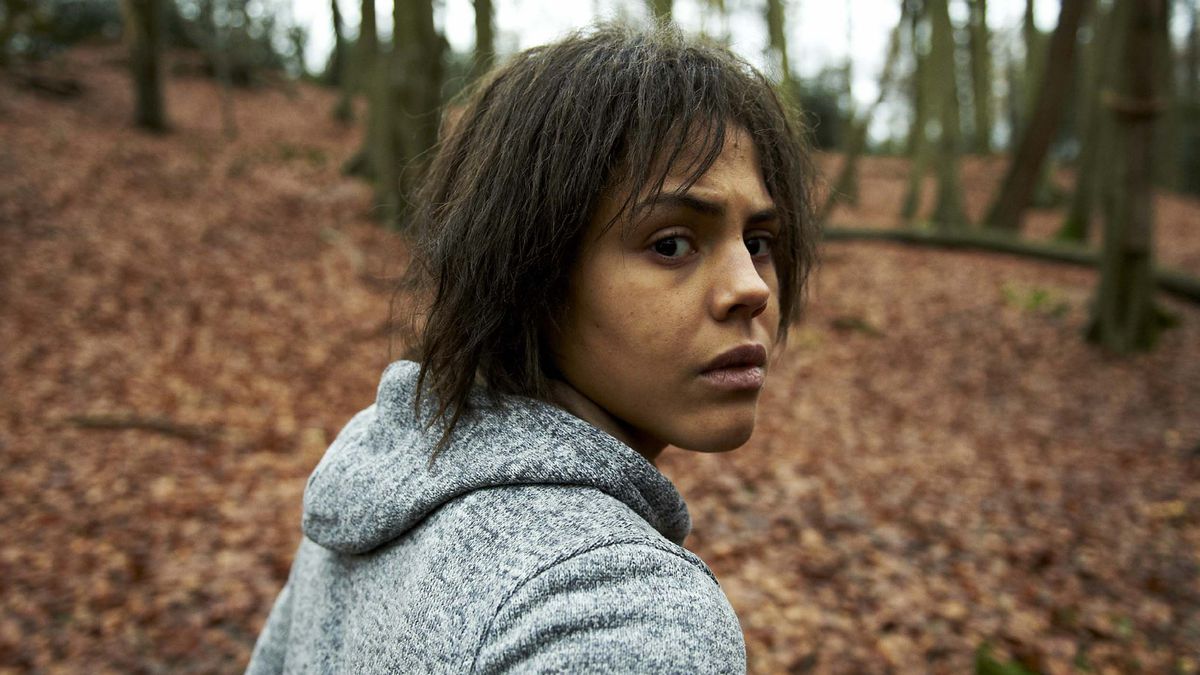 6. “White Bear” (Season 2, Episode 2)
Probably the darkest and bleakest episode that the show has ever done — and that’s really saying something — “White Bear” feels a little uninspired in its early stretches, but turns it around with the rare twist that makes you reevaluate everything that you’ve seen. Directed by Carl Tibbetts (one of only two directors to shoot two episodes, his other being “White Christmas”), it starts with a bit of a “28 Days Later” by way of “The Purge” vibe, as a Victoria (Lenora Crichlow) wakes up after a suicide attempt, only to find a world full of people who, if they aren’t randomly and violently attacking her, are silently recording her on their phones. She meets a couple of unaffected people (Tuppence Middleton and Ian Bonar), who tell her that a strange signal turned most of humanity into voyeurs, and that they’re out to try and shut down a transmitter. Brooker says that this was actually as far as the story went as they approached production, and it might have been a forgettable, if well-executed installment had that been the case. But a last-minute rewrite saw a nightmare layered on the nightmare: it turns out that Victoria was convicted of assisting her boyfriend in the kidnap and murder of a child, and this is her punishment, endlessly repeated “Groundhog Day”-style with her memory wiped, with members of the public the voyeurs that watch her. Other episodes, notably the very similar “Shut Up And Dance,” have tried similar tricks, but never with the same effect as the truly “Twilght Zone”-worthy turn here (inspired by UK figures like Myra Hindley), which brings real ambiguity and unease to the set-up, leaving very uncomfortable questions in the viewer’s mind, boosted to no end by a superb performance by Crichlow.


