


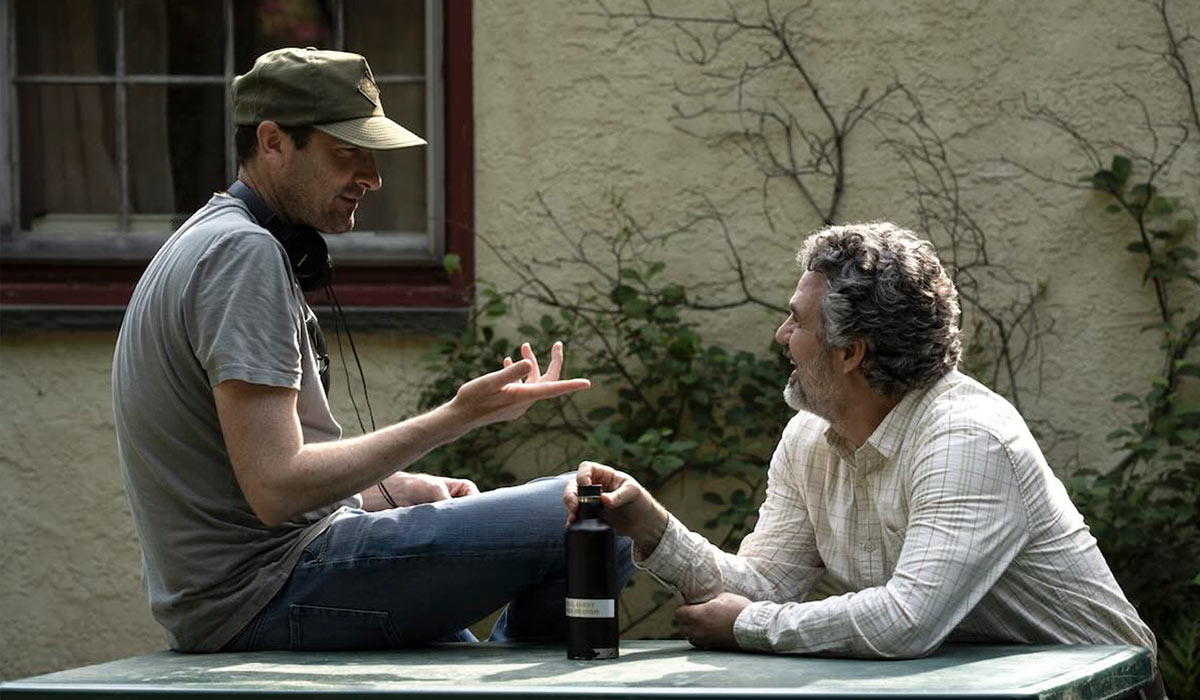
Somewhere in the suburbs of Philadelphia, showrunner Brad Ingelsby is hard at work prepping the second season of HBO’s “Task.” Originally intended as a limited series, the thriller earned rave reviews and was a hit with viewers. Enough that HBO convinced the PGA and WGA Award winner for “Mare of Easttown” to continue the story of FBI Agent Tom Brandis (Mark Ruffalo). For Ingelsby, a new mystery wasn’t the issue. It was finding that emotional hook.
READ MORE: Mahershala Ali Joins Mark Ruffalo In Season 2 Of “Task”
“I felt like we had built in this idea, ‘Well, what happens when Ethan comes home? What does that look like?’ And I had had many conversations with the therapist that we used as a tech advisor, and I just really, I felt like it was such a fertile ground to explore a character that comes out and has committed this crime and is filled with such shame and feels like he has a scarlet letter,” Ingelsby explains. “And I loved Tom as a dad, having to explore that with his son, and what does that look like? And I felt like there was a lot of strong emotional stuff left to play. And then of course we’d have to come up with another case, another pursuit, another engine, but that stuff is always secondary to me. If I don’t have an emotional charge, then I just can’t do it. The plot stuff I can conjure, we have enough tech advisors we use, and there are always stories to be told in that zone, I feel. It’s the emotional stuff that scares me to death. Is it emotional enough? That to me is always what’s really scary. And when I started to play with the idea that, well, his son’s coming home and what does that look like and how can we explore that in a way that feels really nuanced and tender and sad? And when I started to go down that road, I felt like we hadn’t seen that before, really.”
Over the course of our conversation, Ingelsby explains some of the narrative choices for season one, including why they occurred in which episodes, his love for Mark Ruffalo, provides an update on a future “Mare” season, which star Kate Winslet has recently been quite vocal about, and much more.
Please note there are major spoilers for “Task” season one in the context of this discussion.
This interview has been edited for length and clarity.
_____
The Playlist: Congratulations on the season. I know it’s been, gosh, maybe now six months since it ended?
Brad Ingelsby: Yeah. Yep. A little while here.
You work on a show for so long, and you put blood, sweat, and tears into it. Were you nervous about what the reaction to “Task” was going to be compared to other projects you’d worked on, or were you pretty confident?
Oh no, I’m always absolutely terrified of what people will think. I never have one ounce of confidence in anything, so I’m always incredibly, incredibly nervous. With the movies I’ve done, we’ve been able to screen them, you’ve been able to sit with an audience, and you get the test screening results. You sort of get a sense for where it will land with an audience. With the shows, you’re sort of pumping out episodes while you’re still in the edit sometimes. And so you’re really kind of blind in some ways to how it’s going to be received. I also think you’re with the material so much that you’re numb to its charms and surprises. And so it’s always a very unnerving thing to put something out in the world. I was definitely terrified.
This season had a ton of twists and turns. What surprised you the most about what people liked or gravitated towards?
I try to avoid reading too much about it. I’ll get texts from my sisters, my brothers, or friends about what people are responding to. I think I wasn’t surprised that they were so attached to Tom Pelfrey’s character, Robbie, because I knew just from being on set and being in the edit how great he was and what an attachment they would have to him. I think that was one thing I was pretty confident in because I’d just seen so much of his performance. I think that I always get a kick out of the questioning of who the mole is or who was the person who was stealing information. So, I like to see the fan reaction to that. And I think a part of my job as a writer is to try to have an audience lean into one person and then have them lean into another person and then subvert expectations in those ways.
So, I like that kind of reaction. I like to create these little mysteries within the larger arcs of the story. I was excited that people seemed to get caught up in trying to guess who the bad person on the task force was. I did get a kick out of reading the responses to that.
I do have to say, I did have a sigh of relief when Martha Plimpton’s character, Kathleen, turned out not to be the mole that we thought she was going to be, because she’s just so good.
She’s great. She’s amazing.
Are you strategic? I know you had some collaborators on the story aspect of it, but you wrote everything, which is such an accomplishment.
Oh, thank you.
Are you strategically mapping it all out? Do you have narrative bullet points? Is there a big board when you’re writing on a show like this?
It’s funny, again, I think I always say this to some of the writing students I mentor. I’m such a bad outliner. As a writer, I’m a terrible outliner. And I think it’s because a part of what I like about writing, which is scary for the executives that work on the shows with me, is that I really like to discover things along the way. And I think my problem has been with outlining that if I get so attached to an outline, discovery is impossible. I’m just going, “Oh, I’ve already mapped it out. Here are the beats. This leads to this, leads to this. ” And I’m just sort of placing those things into the script. And I really like that the longer I live with the characters, the more they tell me, and the more I’m able to follow that and pursue that and investigate that. Whereas if I know exactly who a person is, then they’re doing this, this, and this. I like to live with them. And so a lot of what I do as a writer is allow myself to discover the characters and have them tell me where they go. But with stuff like what we were just referring to, the mole, I did know at a certain point in the fifth episode, I was going to have to reveal it. And so in earlier episodes, as you said, I was trying to have an audience lean into Martha. So some of those more plot-heavy elements I do try to map out, but then the emotional stuff, I try to just allow the characters to tell me where it’s going. And I really liked that part of the process.
Robbie, you could have waited and killed him at the end. It didn’t have to be when you did it. What made you decide to do it at that point in the series? Why did you map that specific plot point out?
I think with that, I think I felt like his arc was complete. In my mind, his arc was an arc of sacrifice. He realized he had gotten in so deep that there was no real way out of it. And the only way out of it was to at least give his family a chance at a better life. And so it felt to me that I was able to bring him to a certain place where his arc was complete, and that was a natural point. He had thrown the money into the river. He was hoping the Dark Hearts would imagine it was gone or the drugs were gone, and they wouldn’t look for it. And so I felt like, as an arc, it was complete. And also, I felt that his arc had to inform Tom’s arc in their journey together in the fifth and sixth episodes. I felt like Robbie influences Tom in a way that he’s able to bring some goodness into his life again. And Tom’s journey was a journey where he had to return to some kind of faith. Now, I didn’t think that was a particularly Catholic faith or that he was going back, and he was kneeling at the altar, but it was a belief in goodness again. And that belief in goodness allows him to take a leap of faith at the end of the show, which is, I’m going to let this boy go, and I’m going to believe that this family is going to take care of him and that this family is, in fact, a better family than anything I’m capable of in this moment. So for Tom to get there, I felt like he needed to be influenced by Robbie in some way, that Robbie as an example of goodness and kindness and sacrifice influences him and gets into his bloodstream in some way and allows him to do the things he does in the seventh episode, which is he has to forgive his son, and then he has to take another leap of faith, which is I have to recognize that I’m not the best parent for this kid now. Even though I really care about him, it’s not good for him. And so I felt like I needed Tom to sit with that as well. And if I pushed Robbie too far up against the end of the show, I would’ve lost those contemplative moments where Tom’s able to absorb Robbie’s influence and sit with it and live with it and then make his own decision.
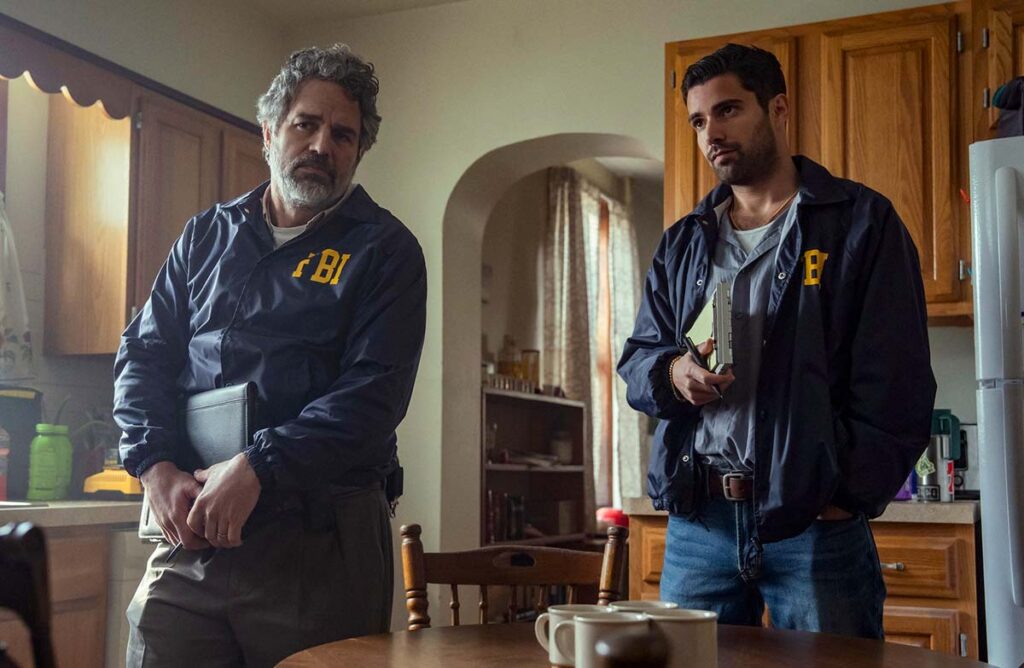
Was Fabien Frankel’s character, Grasso, always going to be the mole? Did you start writing episode one knowing this is who he is, this is where he is going?
It’s funny, I think I had talked about making it Martha’s character. And then I thought, well, actually let’s have the audience believe it’s her and then have it be Grasso. Then the trick was trying to humanize him in a way. And that’s what I loved about having Lilli Kay, who’s such a wonderful actor and was so awesome about coming in and giving us a couple of days of work to play his sister. And I love that scene between the two of them. So, at first I thought Martha, but then when I really started writing the first episode, I think at that moment I had switched to Grasso, and then we wrote the script with Grasso in mind, and then it would happen in the fifth episode, and it was going to be a game of having the audience lean into other people along the way.
I have many friends who are screenwriters and television writers, and they will talk about how they get afraid of writing themselves into a corner. You specifically said at this point that you don’t always plot everything out. How often do you get to a point where you go, “O.K., damn, now I have to go back and revisit how I’ve laid out either Grasso’s character or even Thuso Mbedu’s character, Aleah. How often on a show like that does this happen, or is it more organic than one might think?
Oh, it happens literally every single day. And I think I’m constantly going back and saying, well, if this is what happens, and I have to go back to episode one, and I think I’ve just grown quite used to doing that now. But again, it’s a frustrating process because the idea that you’re constantly going back and you’re taking one step up and two steps back can be really maddening. And it is for me too. But I guess what I’ve grown quite used to over the years is always being open to making something better, even if it’s a lot of work. And I think that’s really what it is. At its core, I like what we have now, but can we make it better? And if we can make it better, it’s going to require me going back here and adding some element to the character or planting some seed of doubt or fixing some clue that could lead to this. I think it’s having the stamina to say, “Can we make this better and not settle for something?” But I’m always, always writing myself into a corner. But I’ve grown to see that as just a challenge of trying to do something with more incident, with more surprise that embraces the genre, but also subverts it. And I think that is a process of constantly challenging yourself. And sometimes you have to write yourself into a corner. If it’s ever too easy, I think something’s wrong. I mean, that’s sort of the lesson I’ve taken over time, is if it’s too easy, then I’m worried. If I’m always struggling, I feel like at least I’m on the right path, Greg.
Initially, this was set up as a limited series, correct?
Yes.
In your mind, you’re writing it, and you’re thinking there’s a beginning point and an endpoint. Did you feel any pressure at all to keep a door open for future seasons?
I think what’s nice about the crime genre specifically is that it sort of allows you to at least explore that. Even with “Mare of Easttown,” it felt like, “Well, Mare’s still a detective, there’s still another crime that could come down.” I think that’s part of it, and HBO didn’t put any pressure on me. I would say two things happened that opened the door to us considering it to be another season. One, it was a great time. And I don’t always say that. We just had such a good time working on the show. We just had a blast. The actors were amazing. Our directors, crew, and producers, we just had a lot of fun, and we all really got along. And when you have an experience like that, you sort of go, well, maybe I could do that again because we did have such a great time, and it was a real family. And secondly, I felt like we had built in this idea, “Well, what happens when Ethan comes home? What does that look like?” And I had had many conversations with the therapist that we used as a tech advisor, and I just really, I felt like it was such a fertile ground to explore a character that comes out and has committed this crime and is filled with such shame and feels like he has a scarlet letter. And I loved Tom as a dad, having to explore that with his son, and what does that look like? And I felt like there was a lot of strong emotional stuff left to play. And then of course we’d have to come up with another case, another pursuit, another engine, but that stuff is always secondary to me. If I don’t have an emotional charge, then I just can’t do it. The plot stuff I can conjure, we have enough tech advisors we use, and there are always stories to be told in that zone, I feel. It’s the emotional stuff that scares me to death. Is it emotional enough? That to me is always what’s really scary. And when I started to play with the idea that, well, his son’s coming home and what does that look like and how can we explore that in a way that feels really nuanced and tender and sad? And when I started to go down that road, I felt like we hadn’t seen that before, really. I mean, I think “Rectify” is a show that did a really awesome job in that zone, but I just felt like it was a really interesting thing to pursue and that it could be very, very emotional and surprising. And so when I was able to latch onto that thread, it excited me as a writer, and then I had a good idea for Mahershala Ali’s character that I thought was really rich and a great backstory there that I thought was really emotional. So, I always start from the emotion, and then I have to figure out what the heck the plot is from there. If I have a grasp on the show emotionally, I always feel like the plot eventually emerges and we’re able to play with it enough where it gets the viewer to keep clicking to the next episode.
I’m not sure where you are in terms of production or ideas for season two…
I’m in the production office here. It’s just so early days here, pre-production, but I’m actually like I’m in the production office today.
You’ve answered my question, though. You did find an emotional hook for season two.
Yes, yes, I did. I did. And the emotional stuff, I feel like I knew where season one ended with Tom. I knew that that was a speech that he was going to give. I’m not a good outlier, so I’m not going to go back on my word. I’m a terrible outliner. I am absolutely awful, but I do feel like I know where the show ends emotionally. I knew where “Mare” ended emotionally. I knew where “Task” season one ended emotionally. I didn’t know specifically what he would say in the speech or who would be there or what the ending images of the show would be, but I was confident that he would have to forgive his son. And if I could write a really moving speech, then it would work. And I feel like I know where season two ends emotionally, and I think there are a lot of other issues. I have no idea what the hell happens, but I feel like I know emotionally where it ends. I sort of know that even when I’m writing, there’s a fence. I can’t go beyond the fence. It’s got to stay in that zone.
Before we go, I wanted to ask you what Mark Ruffalo brought to the role as Tom?
I sort of knew what Mark could do, but even I was surprised by just every day on set, I would say he’s such a humble actor. I mean, listen, I think Martha’s great and she’s so funny, but I think it’s why Martha pops so much in the show is that Mark just is such a humble actor. It’s why Alison [Oliver] is funny, and it’s why he allows the people around him to shine in such an incredible way. And I was just always so moved by what a humble actor he is. But I also think he’s such an empathetic person. And I think that is what I would always say to Mark on set. “You don’t have any special talents as an FBI agent. You’re not the first guy through the door, you’re not a great shooter, you’re not a great interrogator. Your superpower is compassion, and that’s what you’re bringing every day to the job.” And in the era or in the climate we’re in right now, to have a hero that represents decency and kindness and inclusivity, which all things Mark represents as a person as well, was really, really moving to me to see every day. And he’s funny. All of my shows tend to be very heavy. So to have a moment of levity to cut through the tension or a respite for the audience to prepare for the next tense sequence is so important. I’m just grateful that we had him here.
Lastly, you did mention “Mare of Easttown” and your star, Kate Winslet, has recently said in the press that she thinks she’s shooting a second season in 2027. I didn’t bring this up. She said it publicly. Is that something you’re aware of or are planning for?
Yeah, I’ve talked to Kate. We definitely want to do it. I said to Kate, “I’ve got to get through ‘Task’ season two. I’ve just got to get through this, and then I’ll turn my attention to ‘Mare,'” but I’d love to do it. I love that character. I love Jean Smart. I love Julianne Nicholson. I love those women. They’re so close to me, and the chance to work with them again, I mean, that’s a no-brainer for me. And so I mean, I just said I got to get through “Task: and then we can chat specifics about it, but I would love to do it. And the chance to work with Kate and Jean again would be…it was a dream the first time, it would be incredible to get a chance to do it again.
“Task” is available on HBO Max
Follow Gregory Ellwood on Bluesky
Follow Gregory Ellwood on Threads
Follow Gregory Ellwood on Instagram
Follow Gregory Ellwood on TikTok
Sign Up For The Breakdown Newsletter

Editor-at-Large Gregory Ellwood is one of the entertainment industry's most respected journalists and critics. Based in Los Angeles, he's the only current awards expert who previously worked on Oscar campaigns at a major movie studio. Over the years, he has written for the LA Times, Variety, The Hollywood Reporter, and Vox, among others. He also co-founded the entertainment news site HitFix, which spawned a legion of influential Emmy and WGA Award-winning alumni.


