


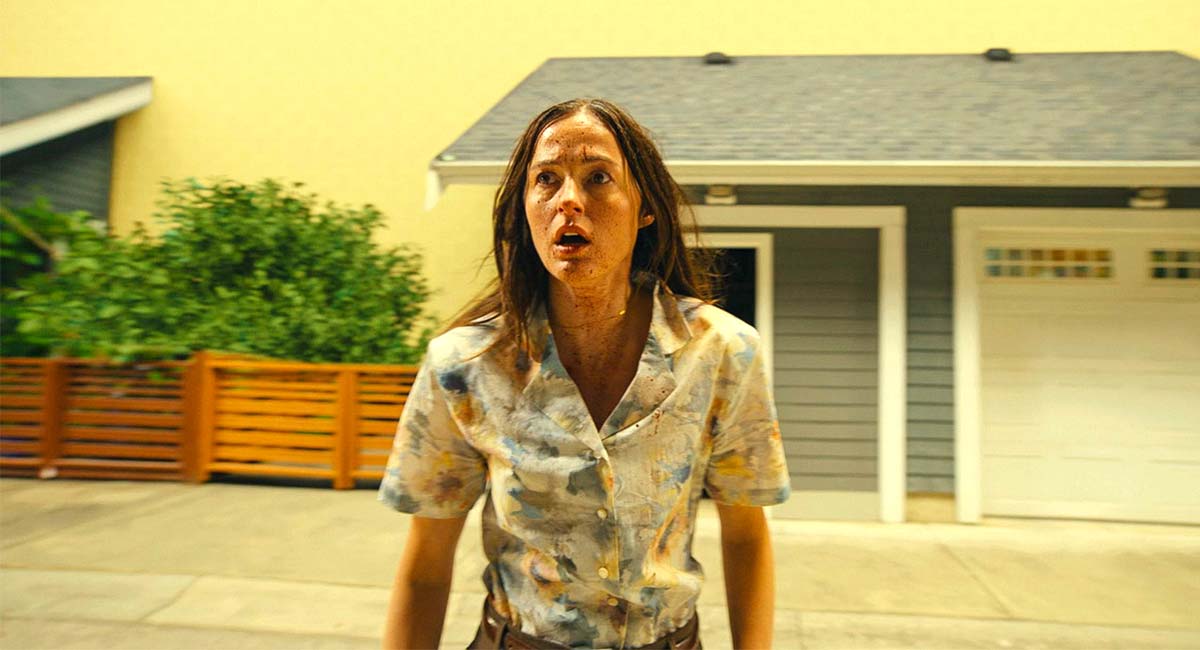
Like conceptual architecture—seductive, striking from a distance, but often impractical once someone has to actually live inside it—most internet-born horror phenomena can’t survive the transition into real-world feature filmmaking. Built for vibes, aesthetics, and fleeting meme logic, they’re creepy for a few seconds on TikTok or YouTube Shorts before evaporating when stretched into narrative form. The “Backrooms” phenomenon, a sprawling creepypasta mythos about endless liminal corridors filled with unknowable horrors, always seemed especially resistant to adaptation because its power was almost entirely experiential.
READ MORE: 53 Must-See Films To Watch Summer 2026
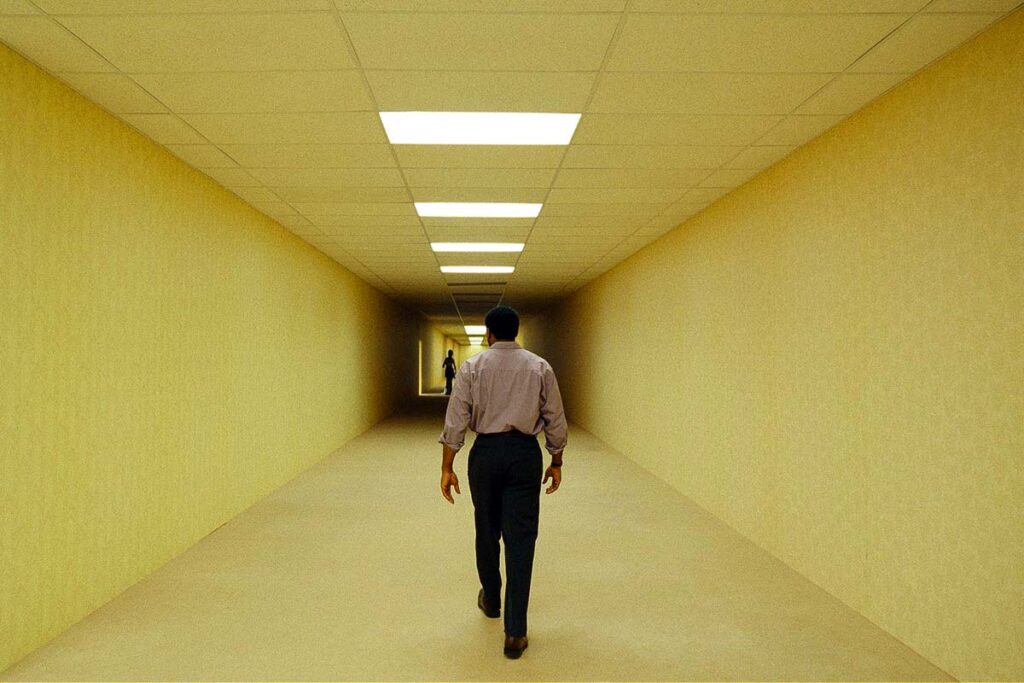
The premise intrigues: infinite yellow office rooms humming under dread-inducing fluorescent light, hidden dimensions just outside reality, and spaces where logic, geometry, and perception collapse. But it barely qualifies as a story, functioning more as an eerie digital campfire tale designed to trigger primal unease. Thankfully, wunderkind filmmaker Kane Parsons recognizes that limitation better than anyone.
The astonishing part of “Backrooms” isn’t simply that Parsons—all of 20 years old—turns this online folklore into an effective feature film. It’s that he transforms it into something emotionally coherent, psychologically resonant, and unsettling beyond internet-horror gimmickry. Produced by James Wan and Osgood Perkins, Parsons’ A24 debut uses its nightmare architecture to shape a suffocating film about memory, grief, paralysis, and the seductive pull of retreating deeper into destructive pain.
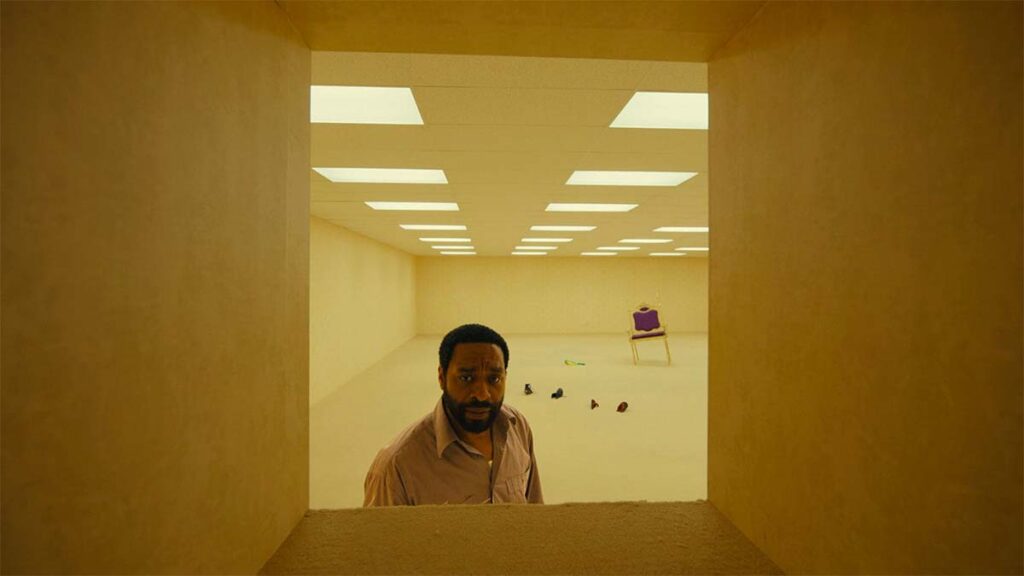
Set during the early 1990s, the film centers on Clark (Chiwetel Ejiofor), a bitter divorcee working a dead-end job at a warehouse furniture store despite choked aspirations of becoming an architect. Clark exists in a state of aggrieved paralysis—still raw over the end of his marriage, replaying the same humiliations, and unable to confront how his own failures may have helped construct the life he now loathes.
His therapist, Dr. Mary Kline (Renate Reinsve), tries to pull him out of those cycles through role-playing exercises and confrontation, but nothing penetrates Clark’s defensive shell. He wants validation more than healing. Even his side hustle filming low-rent local commercials with younger coworkers Bobby (Finn Bennett) and Kat (Lukita Maxwell) feels like a distraction, a way to convince himself he’s moving forward while stuck.
Then reality begins to fracture. A strange lighting malfunction inside the warehouse reveals an invisible doorway into another dimension: a ceaseless maze of yellow office corridors, illogical architecture, flickering luminescent purgatories, and malformed spaces that shift the deeper one travels. Curiosity mutates into obsession, and Clark is pulled toward the Backrooms with the force of compulsion and self-destruction, drawn by the promise of escape from a world where he has run out of excuses. When Dr. Kline, worried by his erratic behavior and absence, comes looking for him, she finds herself caught in the same impossible geography, where professional concern gives way to her own confrontation with memory, fear, and disorientation.
Parsons smartly avoids over-explaining the mythology. The film gestures toward the larger folklore surrounding the Backrooms phenomenon—including a brief appearance by Mark Duplass as a scientist seemingly connected to Async, the mysterious research organization from Parsons’ original web series—but keeps the mechanics wisely opaque. The less tangible this dimension becomes, the more unnerving it feels.
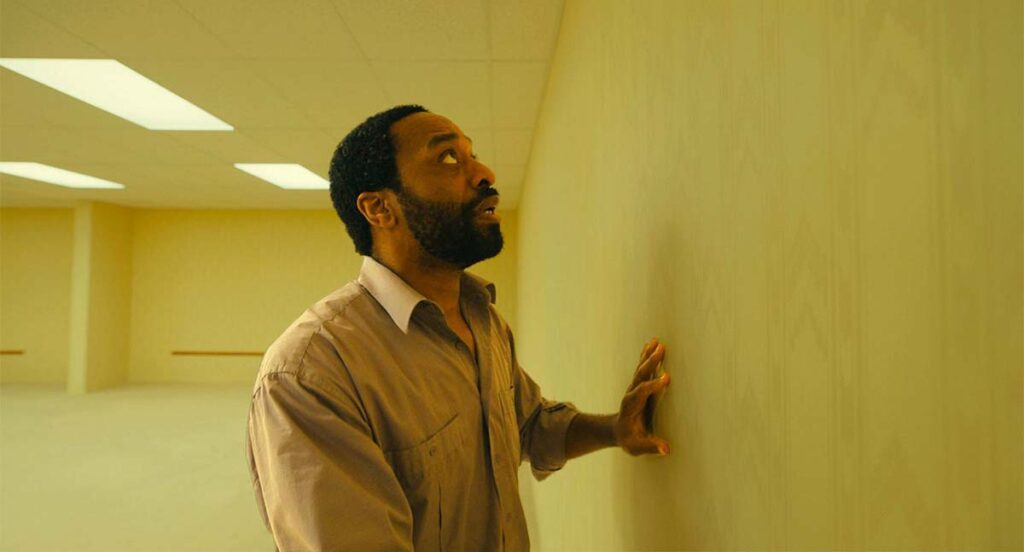
Parsons possesses an unusually mature understanding of atmosphere, spatial tension, and dread. His command of sound is especially remarkable. Distant metallic groans, electrical hums, and half-heard noises reverberate through impossible hallways until every corridor seems to carry some unseen threat. He grasps one of terror’s oldest truths: what cannot be fully seen or understood is often more disturbing than any monster placed directly in front of the camera.
Before the film tightens its grip, Parsons is already ahead, framing his characters as isolated figures—victims, maybe—stranded in vast spaces that threaten to swallow them whole. He foreshadows the nightmare cinematically, turning loneliness and disconnection into visual motifs long before the maze makes those states literal.
That’s where the atmosphere cuts. The fear here isn’t only about what might be lurking around the next harshly lit corner; it’s rooted in being left alone, believing no one loves you, and recoiling from trust because abandonment feels inevitable. Clark’s terror is tangled up in an anxious conviction—formed through years of private wounds—that he has been wronged, discarded, and somehow bears no responsibility for the wreckage around him.
Parsons is especially sharp on how people become trapped inside loops of internal narration, rehearsing grievances, failures, humiliations, and betrayals until those thought patterns harden into architecture. Clark doesn’t merely wander the space physically; psychologically, he’s already been living there for years, circling the same self-destructive stories and listening to the same unhelpful monologue until it feels indistinguishable from reality.
The creatures are grotesque enough—cryptid-like horrors emerging from darkness and distortion—but the real threat comes from the environment itself. Rooms bend against logic. Space folds in on itself. Hallways seem to breathe. Parsons turns liminal emptiness into a kind of spatial gaslighting, a world that keeps insisting reality has rules while violating them at every turn.
What makes “Backrooms” compelling is the way Parsons reverse-engineers meaning into this landscape without reducing the film to trauma-horror cliché. Yes, the maze operates as a metaphor for psychological baggage, grief, depression, and stagnation, but Parsons approaches those ideas with restraint. Monsters aren’t a blunt symbol for repressed trauma. Instead, “Backrooms” explores the uglier reality of people trapped inside destructive reflexes they cannot escape.
Clark’s interior prison becomes physical. In the real world, he revisits the same emotional cul-de-sacs. In the Backrooms, he wanders infinite corridors, convincing himself he’s searching for answers when he’s only becoming more lost. Parsons taps into contemporary anxieties around self-inflicted male loneliness, too, whether intentional or not. Clark doesn’t know how to heal; he only knows how to withdraw further into isolation and self-justification (to make the metaphor extra damning: it’s also about men who cannot change and the women who are destroyed trying to save them).
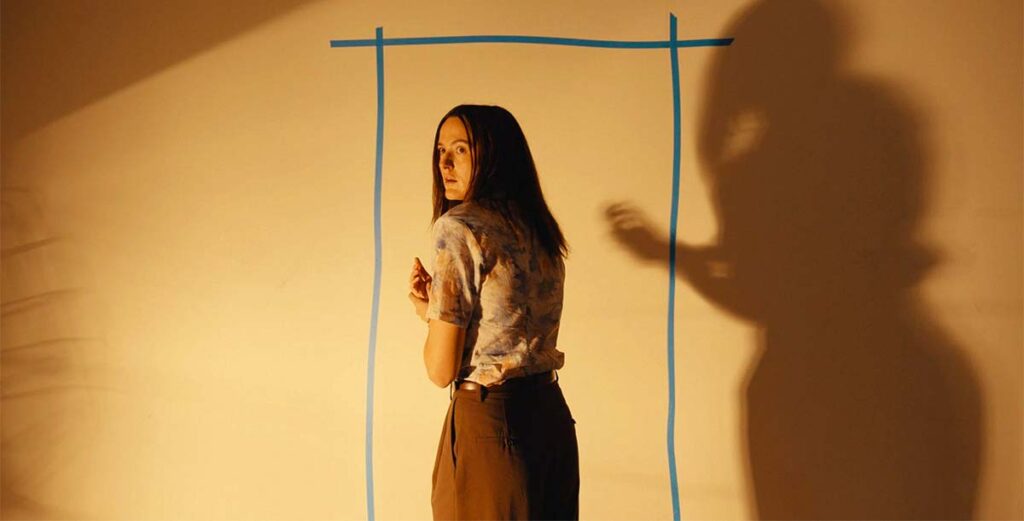
The Backrooms become seductive because they offer the illusion of movement. An eerie melancholy runs beneath the film’s scares, with Parsons suggesting that warped memory and fractured perception can become more comforting than reality. The realm doesn’t merely trap victims physically; it lures damaged people into distorted versions of themselves, where old hurts can be endlessly revisited without ever being resolved.
And yet, for all its thematic weight, “Backrooms” never forgets to work as pure scary af horror. Parsons sustains extraordinary dread across the film’s nearly two-hour runtime. Even mundane scenes feel infected by anticipatory unease.
Most impressive is how fully formed Parsons already feels. So many young horror directors lean on homage, irony, or aesthetic imitation. Parsons possesses a distinct voice, displaying instincts for rhythm, ambiguity, sound, and spatial terror that feel startlingly intuitive, and even the movie’s excesses feel driven by creative ambition rather than empty stylistic showing off.
On paper, the characters risk functioning as emotional avatars wandering through elaborate nightmare spaces, but Ejiofor and Reinsv bring a bruised sadness that always keeps the psychological material anchored. “Backrooms” could have easily been disposable internet-horror junk food—a feature-length extension of creepypasta aesthetics with nothing underneath. Instead, Parsons delivers something far more haunting: an affecting horror film about imprisonment, memory distortion, and the private hell of mistaking isolation for refuge.
The “Backrooms” may appear infinite, but Parsons knows exactly what he’s doing inside them. [A]

Rodrigo Perez is the founder and editor-in-chief of The Playlist, which he launched in 2008. He has worked in entertainment journalism since 2000, including at MTV, and has written for SPIN, IndieWire, Pitchfork, Complex, Magnet, and various music, film, and entertainment publications over the past two decades.

