


 “Southern Comfort” (1981)
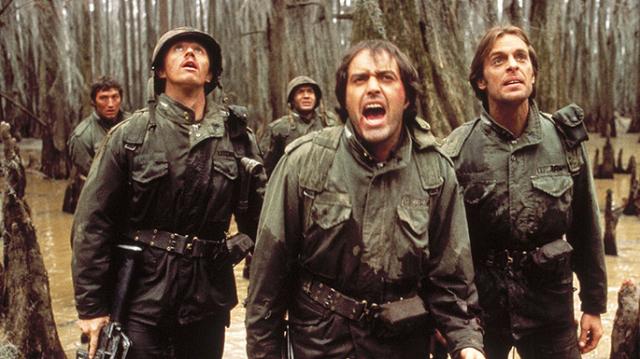
Part of the post-Vietnam wave of actioners that included things like “First Blood,” “Southern Comfort” takes a not dissimilar plot to “The Warriors,” but repurposes it to the bayou of the 1970s, stripping out the more stylized elements of the earlier film to become one of Hill’s most brutal and satisfying films, and probably the closest he’s come to a full-on war picture. Set in Louisiana in the 1970s, it follows a group of National Guardsmen—including Powers Boothe, Keith Carradine, Fred Ward, Les Lannom, T.K. Carter and Peter Coyote—out for maneuvers in the swamps. Their patrol gets lost, and a misunderstanding with the cajun locals causes their commanding officer to be killed, and leaves them fighting for their lives and between each other. It’s something of a companion piece to “Deliverance,” albeit with a more flavorful brand of hillbilly adversary, more overt Vietnam parallels, and more fireworks. The script (by Hill’s regular producer Dave Giler) is smart and profane, and the cast, especially Boothe (in a breakout role) and Carradine are excellent. There’s a lot of subtext at play as well, the nominal heroes as much as fault for their own situation as anyone, and the Cajuns make surprisingly sympathetic villains. Hill’s pretty much at the peak of his powers at this point, and there’s a rough and tumble steeliness to the action, all embellished by an excellent score by slide guitarist Ry Cooder, in his second of seven collaborations with the director.
“48 Hours” (1982)
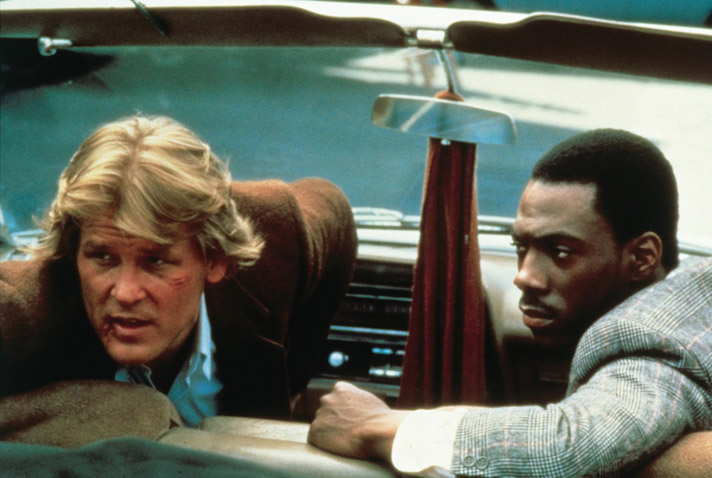
It’s near impossible to cover Walter Hill‘s “essential” works and not mention his breakthrough Hollywood buddy cop dramedy “48 Hours,” but it needs to be said it hasn’t aged very well. What intends to be an unvarnished examination of odd couples through race relations is pretty offensive by today’s standards. The film’s implausible premise centers on a maverick police detective (cue every cop arguing-with-his-chief cliché) trying to chase down a vicious, cop-killing convict (James Remar) that’s on the loose. In order to achieve this goal and avenge the death of his murdered partner, this grizzled, surly, unsympathetic cop (Nick Nolte as boozer, womanizer and bigot), breaks all the rules and springs another crook (Eddie Murphy) out of jail to help assist him track down the criminal. This is where the picture gets downright malicious. Apart from the cop already holding deep contempt for the prisoner he’s supposed to conspire with to catch his man, the ugly storm of odious ball-busting racial epithets he rains down is near unrelenting. Perhaps even more disturbing is how Eddie Murphy’s wisecracking character tolerates it all. Sure, the felon has no choice, has a strong sense of canny irony and he does get his retributive licks in during a street fight, but the hard-R bigotry that colors the film is difficult to stomach even by the standards of those who can’t tolerate today’s prudish, politically correct witch hunting over any casual remark drawn outside the lines (the honky tonk bar scene is particularly bad). If “48 Hours” had lasting value, little of it is held within mostly now-very-familiar odd couple dynamics that’s a lot less funny than we remembered. If anything, Hill’s movie is memorable perhaps for just how unapologetic and brutal it is (Nolte’s character by and large is an unrepentant scumbag). Its violence is nasty, the tone is grim, its characters mean-spirited and vulgar and if it wasn’t for Murphy’s charms, you’d have a completely unlikable picture. To Hill’s credit, “48 Hours” was a box-office sensation, jump starting the careers of all involved, and spawned (an inferior) sequel. Beyond its unpleasantness and dated dynamics, it’s still a (mostly) watchable film, but we’d be lying if we said this was the comedy classic of our youth that we still adored.
 “Streets Of Fire” (1984)
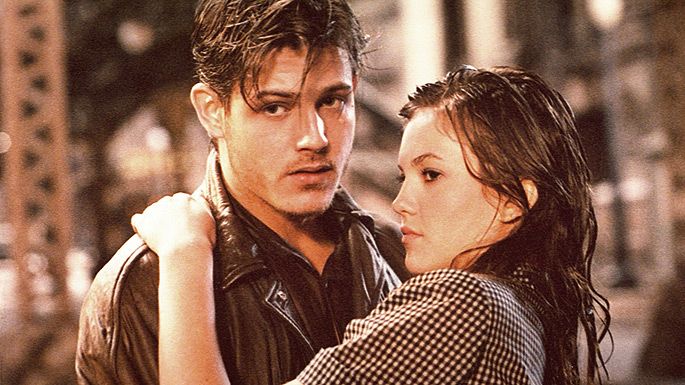
After “Southern Comfort,” Hill had the first major hit of his career with “48 Hrs,” the Eddie Murphy/Nick Nolte action-comedy, which bought him a fair amount of latitude in terms of what to make next. Unfortunately, that subsequent film, “Streets of Fire,” was a major flop (taking back barely half of its $15 million budget), and for a long time was seen as the runt of the litter in the director’s career. It’s growing a cult following, though, and, in our eyes, it’s about time. It might be somewhat style over substance, but it’s an engaging and distinctive piece of work, and one that’s aged surprisingly well. Set in a nameless time and place, a vaguely steampunkish, rock’n’roll-obsessed industrial city, it follows Tom Cody (Michael Pare), a soldier-for-fortune who rolls back into town when his ex-girlfriend, singer Ellen (Diane Lane), is kidnapped by The Bombers, a biker gang led by Raven (Willem Dafoe). It’s an essentially lawless world, like “The Warriors” turned up to eleven, and confirms, as if that earlier film had left any doubt, that Hill was one of the first “comic book” directors—in retrospect the film seems to be influential (for better or worse) on all kinds of contemporary tentpole and action filmmakers. And so it should be: Hill stages the action as impressively as ever, and creates a genuinely distinctive and energetic world (thanks in part to a great soundtrack). While you wonder what would have happened if, say, Kurt Russell had been in the lead role, Michael Pare’s blandness is turned into something closer to mystery in Hill’s hands, while Dafoe’s a great villain, Amy Madigan (as sidekick McCoy) is terrific fun, and Lane (then only 19) is worth fighting through a string of bikers for, even if she and Pare share little chemistry. It’s not the most substantial film Hill ever made, but it might be the most fun.

