

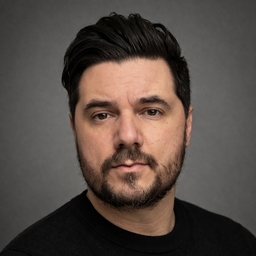
![‘The Man In My Basement’: Nadia Latif & Willem Dafoe On Their Visceral, Poignant Thriller, Robert Eggers’ ‘Werewolf’ & More [The Discourse Podcast]](https://cdn.theplaylist.net/wp-content/uploads/2025/09/26110246/the-man-in-the-basement.jpg "‘The Man In My Basement’: Nadia Latif & Willem Dafoe On Their Visceral, Poignant Thriller, Robert Eggers’ ‘Werewolf’ & More [The Discourse Podcast]")
Homes carry history, and in “The Man in My Basement,” that history can comfort or, more often, haunt. Adapted from Walter Mosley’s novel, the film follows Charles (Corey Hawkins), a rudderless man rooted in and on the verge of losing the house that’s been in his family for generations, and Aniston Bennett (Willem Dafoe), a stranger who pays an absurd amount to live in Charles’s basement. What starts as a transaction becomes a charged exchange about identity, race, power, guilt, and the stories people use to live with themselves. The film is currently in select theaters and arrives on Hulu on September 26th.
Rather than flattening its ideas into a thesis, the movie lets two people work through unspeakable things inside a pressure cooker. Mainly shot in story order for the basement passages, the evolving tension you feel on screen is the same electricity the actors discovered together in the moment. Director Nadia Latif keeps the talk honest and the images tactile, treating the house as a living organism. Rooms carry different temperatures of memory, light compresses or releases space, and the basement becomes the body’s gut, the place where difficult truths are broken down.
In this episode of The Discourse, host Mike DeAngelo sits down with Nadia Latif and Willem Dafoe to talk about crafting a psychological thriller that lingers, designing a home that breathes, depicting a Black man’s vulnerability without stereotype, and the practical reasons Wales could pass for 1990s Sag Harbor.
When asked what intrigued him most about playing Aniston Bennett, Dafoe said it was the way the film used its characters to tackle larger themes without ever losing sight of human detail. “The whole thing. All those elements, really,” Dafoe said. “A dramatic structure is built where they can talk about these things, and it doesn’t feel like just a flat debate because it’s rooted in the psychology of the characters and the situation.”
Dafoe explained that filming the basement scenes in sequence with Corey Hawkins gave their dynamic an authenticity that could not be rehearsed. “Because I’m finding out who he is through the doing,” Dafoe said. “We’re working together to find out the direction of the story. It finds its own rhythm if we both give over to it.”
He also credited Latif with guiding him toward the material in ways that deepened his performance. “She steered me in the direction of some research and gave me some books and some films to look at,” he said. “She accomplished a lot by turning me on to things that would help solidify who Aniston Bennett could be.”
For Latif, the lingering effect was always the goal. She had first encountered Mosley’s book two decades ago and wanted the film to evoke the same after-image for audiences. “The final act of any piece is when the audience can talk about it afterwards on the bus home,” Latif said. “I still wanted to make that in a film.”
Latif described how she and her team built the house as if it were a body, a structure that reflected the internal life of the characters. “We talked a lot about the color theory of those spaces and locating [Charles’s] pain in different rooms,” Latif said. “The ground floor is brighter than the upstairs. The basement becomes where things are digested. Even small details, like a pan of sausages feeling slightly like intestines, were part of making the house feel visceral.”
Part of that vision was about giving space for vulnerability. Latif explained that showing Charles in moments that made him human rather than symbolic was important. “Charles’s problem is not being Black,” she said. “His problems are personality, grief, and how he is with his neighbors. So it was about putting in key moments where we saw him in distress. There’s a scene where he hides under the bed, and a shower scene where he’s simply washing. Suddenly, they stop being the performance of men and become male bodies, soft bodies that can be harmed.”
Regarding location, Latif revealed that production scouted extensively before choosing Wales to double for Sag Harbor. “We looked everywhere and landed in Wales because nature and architecture matched what we needed,” she said. “But we always committed to shooting in Sag Harbor, too. The last three days there felt like a homecoming.”
Dafoe also offered a small tease about his next collaboration with Robert Eggers, “Werwulf,” which also stars Aaron Taylor-Johnson and Lily Rose Depp. “The period is 1300s and we’re filming in Wales and England now,” he said with a smile, already growing an unwieldy beard for the role.
Asked what keeps him invested after decades of acclaimed performances, Dafoe emphasized the importance of collaboration. “You’ve got to earn it every time. Film is a collaborative art. I love to see a director who is dying to do something. They tell me what they see, and then I try to be it.”
Listen to the full Nadia Latif and Willem Dafoe interviews below:
The Discourse is part of The Playlist Podcast Network, which includes Deep Focus, Bingeworthy, and more. We can be heard on Apple Podcasts, Spotify, Soundcloud, and most places where podcasts are found. You can stream the podcast via the embed within the article.. Be sure to subscribe and drop us a comment or a rating, as we greatly appreciate it. Thank you for listening.
The Playlist Presents: Nadia Latif’s Film Recommendation Playlist:
- “Killer of Sheep”
- “Chameleon Street”
- “Sankofa”
- “Mandabi”
- “Hyenas”
- “Onibaba”

Mike DeAngelo is a film writer, podcaster, and entertainment journalist whose work has appeared in Variety, The Hollywood Reporter, IndieWire, and beyond. He is the host of The Playlist's podcasts The Discourse and Bingeworthy.

