


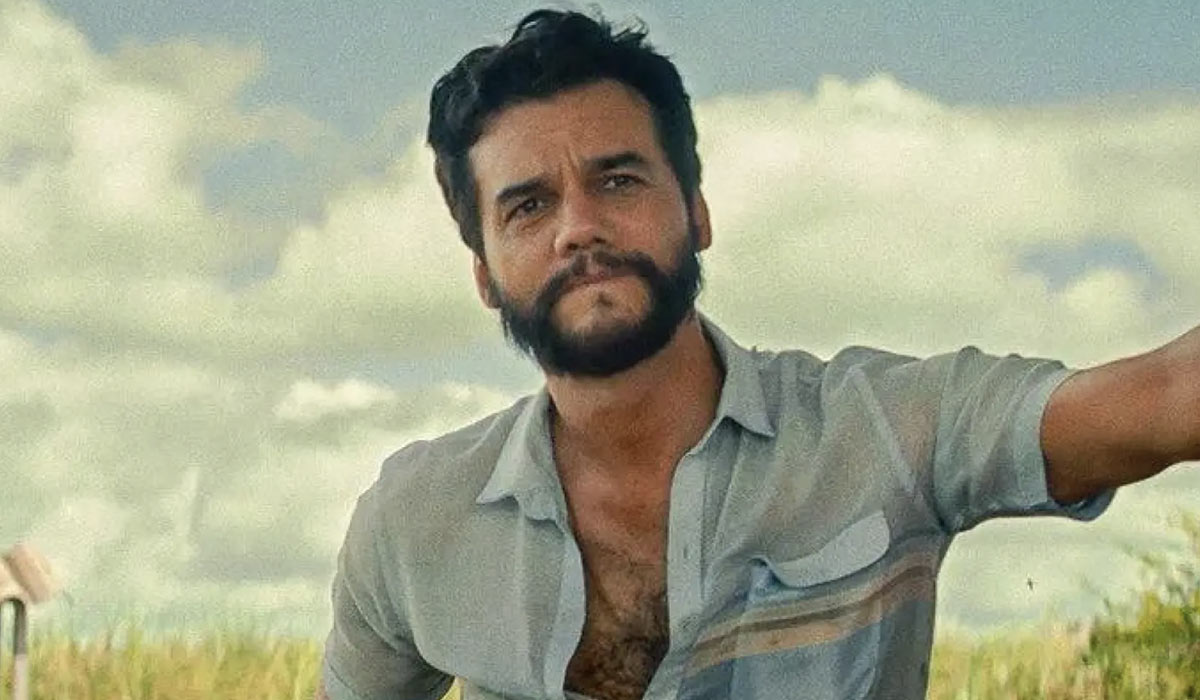
In Kleber Mendonça Filho’s celebrated period thriller “The Secret Agent,” Wagner Moura portrays a former University researcher who becomes a political mark at the height of the Brazilian dictatorship in the late 1970s. He has to assume a new identity as he awaits a chance to be smuggled out of the country. While Moura’s character is fictional, the circumstances are not.
The dictatorship ended in 1985. Moura was just nine at the time, but was still old enough to remember the era. More recently, his directorial debut, “Marighella,” chronicled the leader of the armed resistance during the dictatorship. He’s seen audiences who live through it have emotional reactions to both that film and “Secret Agent.” What continues to surprise him is how little younger generations know of this fascist era.
Moura recalls, “Other young kids, they were like, ‘Holy s**t, did that really happen?’ When I see a kid saying things like that, I always go like, ‘This is insane.’ It happened last year with ‘I’m Still Here.‘ I’ve seen many young kids going like, ‘Wow, that was horrible. Did that really happen?’ And I was like, ‘How can you not know it?'”
While the setting adds tension and depth to Kleiber’s tale, Moura doesn’t believe the filmmaker saw the film as educational, per se.
“I don’t think this is our goal,” Moura says. “Our role isn’t to educate anyone, but I think it’s a collateral thing that I think is important. I think that films, art, and theater in general can do that. And I think that’s to talk about, to preserve memory and to see history from a different perspective.”
Over the course of our interview, Moura discusses his enthusiasm over finally being able to promote the film, where he’s placed his Cannes Best Actor award, the urban legend of the “hairy leg,” and much, much more.
This interview has been edited for length and clarity.
____
The Playlist: What has this journey been like from Cannes to other festivals around the world? And what has it meant to you so far?
Wagner Moura: It’s interesting, Greg, because it’s like every time I make a movie or anything that I do, I have all the best intentions. I’ve never done a film for money or for anything else, but sometimes it really just doesn’t work. And the whole process with “Secret Agent” was very, it was great because I hadn’t worked in a Portuguese-speaking film in 12 years. I was really, really into working with Kiebler and was basically stalking him to work with me. So, the film came from a very particular political situation that we both lived in Brazil from 2018 to 2022. I’m one of the producers of the film, and I was so happy that Recefe, which is in the northeast of the country, would be a part of it. I’m also from the Northeast of Brazil. It’s a very particular region in Brazil, and I was so happy, man. I mean, I’ve done movies that I was happy making the film, and then, again, you go see the movie, and it’s not that great. I’ve done films where everything was chaotic and crazy, and then the film was great. So, this has been amazing because sometimes I’m even like, “Oh, is this because everything has been great from when we started doing it, from when Kiebler showed me the script, and then when we shot it, and then the way the film was received in Cannes, and then the whole journey that we’re doing with it. I wanted to be more present in the campaigning for the film, but I was doing a play in Brazil. I could see the club was traveling around the world, but now we are all together in this journey, and I’m trying to really live it because I know how special this is. It’s not all the time that you have a film that you love. It was great to make it, and everybody seems to be loving it as well.
You noted that it’s been 12 years since you made a Portuguese-language film. Is that because you just got swamped with other projects, or is it because of the scripts that came your way? Or is it just really hard to make a movie in Brazil these days?
Now it’s great. Now Brazil is in a very good moment because now we are again a fully democratic country with all the contradictions that mean what it is to be a full democracy. It’s a country full of injustices and social differences, and lots of things, but it is led by a politician who is a Democratic guy. And we didn’t have that from 2018 to 2022, which is the genesis of this film. And that was one of the reasons, because from 2018 to 2022, Bolsonaro basically destroyed all the means of any [credible] government. They would attack journalists, universities, and art and artists. He basically eliminated all the funding for movies in films in Brazil, art in general. And we always had a tradition of having the state supporting the arts, and that was over completely. So, that was one of the reasons.
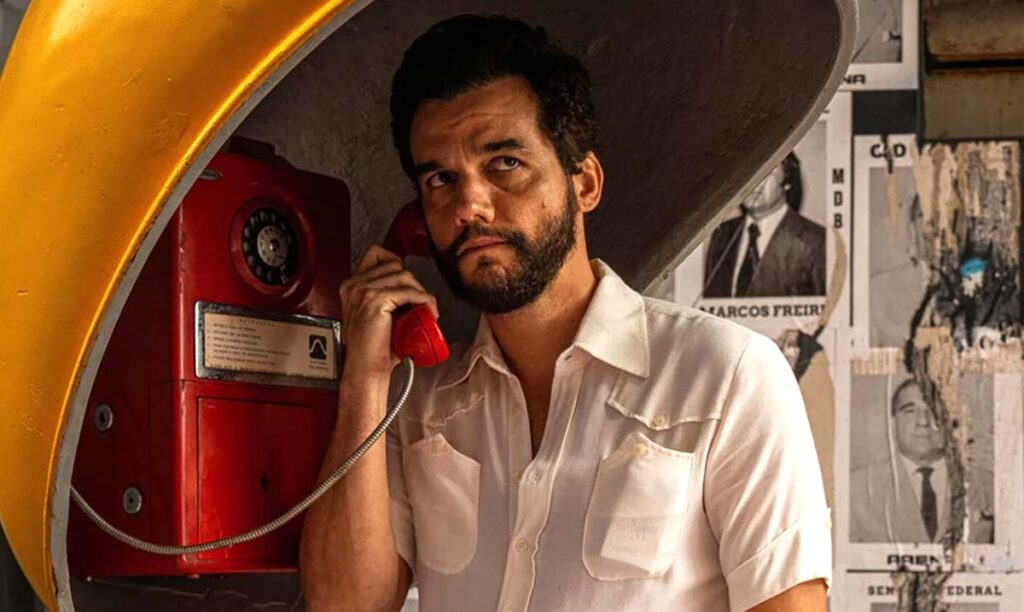
The other reason was that I was doing “Narcos” from basically 2014 to 2016. Then I spent almost two years directing the film “Mariella.” So, I was working in Brazil, but not as an actor, but as a director. And then there was Bolsonaro, and then there was a COVID. But now I was just doing a play there, and many other things were going on in Brazil that I’m excited about.
I randomly took a trip to help support Brazilian Film efforts before Bolsonaro came to power. It was 2017, and I saw all the infrastructure and the people and the funding, and then I never really understood why it sort of went away. So, that does make more sense.
Exactly on the cusp.
I think that money got cut right after I was there. But I know you and Keiber were friends. Have you been surprised by how timeless the subject matter of the film is? None of you could have known that Trump was going to come in and do all these things with university funding. Something your character experienced decades ago. Or should we expect this to keep happening?
Yeah, it’s interesting how a film or any art is an encounter of what a filmmaker wants to say with a particular audience that sees it. I always found that fascinating, even how films are reevaluated throughout time. In the future, they go, “Oh, remember that movie and the way the film was perceived back then?” I always found that very interesting. But the film was, like I said, collaborative, because it sets up during the dictatorship, but it reflects our experiences, because we both suffered the consequences of being vocal against that government. So I had my film, “Marighella,” censored by the government. Kleiber also suffered the consequences of being vocal and saying the things that he’s been saying. So, I’m not surprised that the film finds its connections with the modern world. Thankfully, in Brazil, it’s different right now. I think that we are now in a situation where Bolsonaro is in jail. He was tried, because everything that happened [in the U.S. on January 6, 2021], happened the very same way in Brazil. Brazil was very fast in capturing and imprisoning the guys who did it. Taking out the political powers of the politicians who were involved. Not because Brazil is a more structured democracy, but I guess my take on it is that Brazil knows what a dictatorship is. Brazilians know what that s**t is. It happened like 50 years ago. So, Brazilians were like, “Oh, no, no, this is a big red flag. We don’t want this to happen.” Whereas here, I think sometimes I think that Americans take democracy for granted because you don’t have a past of authoritarianism the way we do. So, it’s kind of interesting to see how the American audiences are finding connections with the film and what’s going on for some people in the U.S right now.
I was going to ask about that again. I saw you and Klieber doing a convo, and one of you brought up the fact that a lot of teenagers did not realize that Brazil had been under this sort of regime. The film has already come out in Brazil. Did you realize while you were making it that this would be an education for a younger generation as opposed to just a piece of art?
The film that I directed, “Marighella,” is a film about the leader of the armed resistance in Brazil during the dictatorship. I have had an experience of encountering an audience with people who were moved by it because they lived through the dictatorship. And other young kids, they were like, “Holy s**t, did that really happen?” When I see a kid saying things like that, I always go like, “This is insane.” It happened last year with “I’m Still Here.” I’ve seen many young kids going like, “Wow, that was horrible. Did that really happen?” And I was like, “How can you not know it?” I don’t think Kleiber had an intention to educate. I don’t think this is our goal. Our role isn’t to educate anyone, but I think it’s a collateral thing that I think is important. I think that films, art, and theater in general can do that. And I think that’s to talk about, to preserve memory and to see history from a different perspective. Because the way history is told, even when we studied in Brazil, the way it is about the way the Portuguese arrived there, there’s nothing about Native people, nor about Africans that were brought. So, I like it when films and art can discuss the way history is told. The secret is that it’s a lot about memory as well.
And, in fact, your character is actually fictional. He’s not based on any one real, if I’m correct.
Yes
Did that allow you freedom in giving him your own backstory beyond what was in the script, or did you feel you needed to research to shape him?
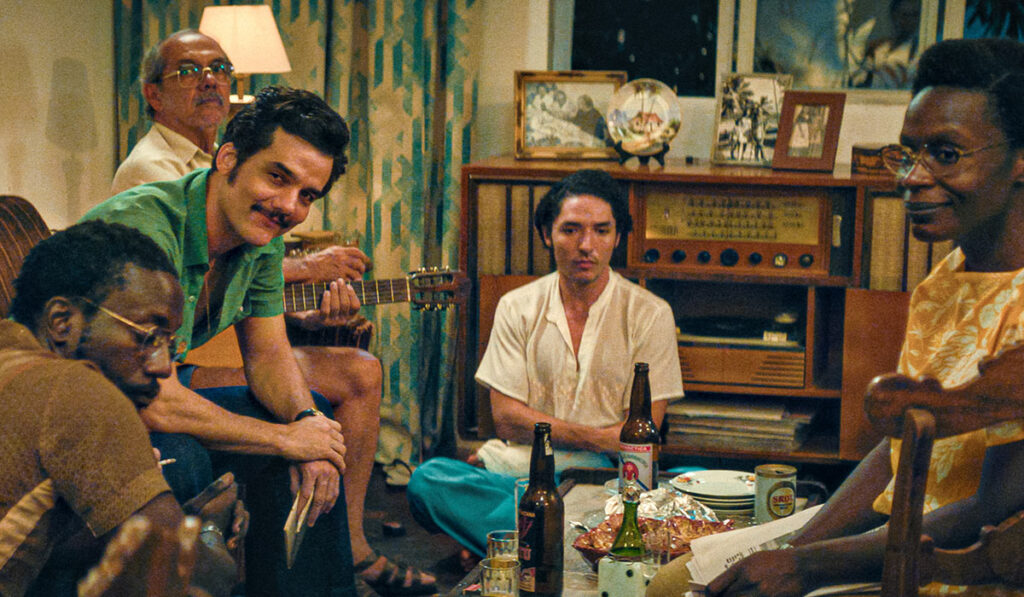
No, it was all in the script. And I had had that experience, like I said, of directing a film that took place in that very same time. So, I had studied a lot about the dictatorship and the movements of the resistance and how Brazil was back then economically, socially, and everything. But to tell you the truth, it feels so close to me. It’s interesting because I was born in ’76, the film takes place in ’77, and those memories…It feels like I’m opening an album of photographs of my family. And when I think about the film, I think about those photos of those photos when I was a kid. I can see my father wearing that kind of t-shirt, a shirt with buttons open like that, the way my character wore it, and with a pack of cigarettes in their left pocket. It feels so familiar to me. And I think that this is also something that Kleiber is very good at doing. He creates a sense of familiarity in his films that is very beautiful.
Do you remember what struck you most about the script the first time you read it?
I mean, I knew exactly what the film was going to be about, but he wouldn’t show me the script until he thought it was great. That was his thing. And I totally respected that. But I knew the film was coming from the conversations we were having. What struck me is that I love the fact that Kleiber doesn’t really follow any rule in terms of scriptwriting. We are nowadays, especially with the streamers, so used to getting a script, and it’s kind of predictable what’s going to happen. The first act, second act, third act, how this should happen on page 77, those things. And he doesn’t follow any of that. If you remember in the film, you can only kind of understand exactly what’s going on in a circuit agent an hour and a half when they have that scene in a cinema, when my character meets Elza, and then we go like, “Oh, so this is what’s going on.” Until then, you’re just putting pieces of the puzzle together and kind of getting to know the characters, and you kind of know that something is happening, but you don’t really know what’s going on. So that was the thing that I was like, “Man, that’s interesting.” It was more like in terms of structure, more than content.
Did you know the legend of the Hairy Leg before you got the script?
No, I knew it. You know what, Greg? Can I give a recommendation?
Yes, of course.
In Brazil, there’s this band from Recife. It was a big thing in the nineties called Chico Science & Nação Zumbi. You can go to Spotify and find them. It was like a thing because it was very original. And Chico Science had a song. It’s crazy because it’s a song that I used in the opening scene of the film that I directed. And in this song, there is a part of the song where he says, “Galeguinho do Coque, who was a bandit.” Galeguinho do Coque was an outlaw. He says, from Recife. He says, “Galeguinho do Coque wasn’t afraid of the hairy leg.” And in the nineties, I was like, “O.K., Galeguinho do Coque wasn’t afraid of the hairy leg. What the f**k is the hairy leg?” So I was like in that loop. That’s when I discovered that there was a human legend of the hairy leg. Do you know about the whole story?
I do know what it means, yes.
Then I only understood what was behind the hairy leg thing when I read the script. But I knew about the hairy leg, and I thought that the hairy leg was just a human legend of a leg that would just jump and kick people up. [Laughs.]
I have just two quick questions for you. And I know this might be giving a plot point away in some ways, but portraying the adult Fernando after playing his father. How did you differentiate the two characters?
I only started thinking about Fernando a week before I played him because I thought that all I really needed to. And that was the last scene that we shot in the film. It was my last week of shooting. So, I knew that I would have time to think about that later. I wanted to understand his father. I think it was important to understand his father to then play a kid who didn’t know exactly who his father was.
Finally, your Cannes Best Actor award. Where have you placed it in your home?
It’s in my garage.
It’s in your garage?
It’s in my garage. But it’s a garage slash office.
O.K. It’s a garage slash office.
It’s a place where I work, but I do jujitsu and many different things. But it’s in there. Yeah, it’s in a very special place there.
“The Secret Agent” is now playing in New York. It will open in Los Angeles on Dec. 5.
Follow Gregory Ellwood on Bluesky
Follow Gregory Ellwood on Threads
Follow Gregory Ellwood on Instagram
Sign Up For The Breakdown Newsletter


