




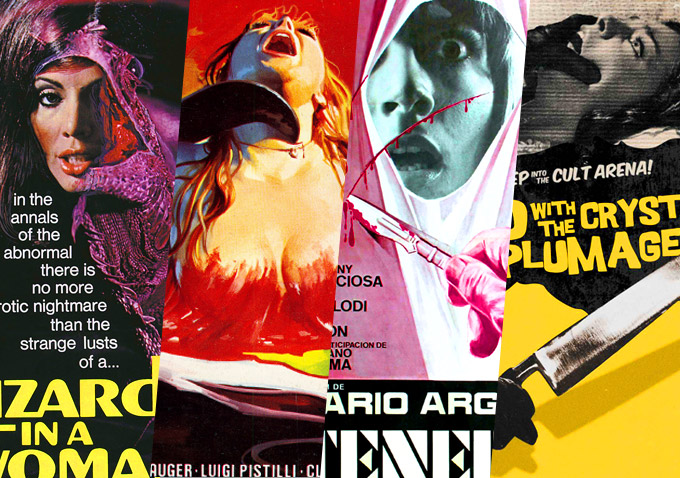
“The Bird With the Crystal Plumage” (Dario Argento, 1970)
An American witnesses an attempted murder during an extended stay in Italy and is drawn into his own investigation of the would-be killer’s actions, which naturally puts the American and his girlfriend in the killer’s sights. Dario Argento’s directorial debut could have been a routine crime thriller, and in places “The Bird With the Crystal Plumage” does fall back on threadbare cop-and-killer material. The director’s inclination towards a baroque, even operatic visual sense is revealed early, however, as the first near-murder involves a black-gloved assailant disguised with hat and raincoat, and takes place within a spacious gallery dominated by Grand Guignol sculptures and separated from the street by a pair of glass walls. The plotting of “Plumage” is more coherent and satisfying than many of Argento’s later movies, and the fascination for objects and textures that would characterize later films is only beginning to bloom. Argento tries on concepts without pushing too hard against established genre confines, making “Plumage” among the more conventional and even audience-friendly gialli, but he caps the story with a late twist and what is essentially a nightmarish coda that shrugs off convention to reveal the first true look at the unpredictable heart of the genre. Bava’s “The Girl Who Knew Too Much” provides the skeleton for the giallo, but Argento’s debut adds the flesh and blood, from the shadow of the modern cop thriller to the exaggerated title, and the visual flourishes and increasingly hazy storytelling that would soon define the genre. In a nice touch, Argento even dresses one character in a bright yellow jacket— an homage to the yellow covers of the original paperback thriller novels which both inspired and ultimately named this filmic genre.
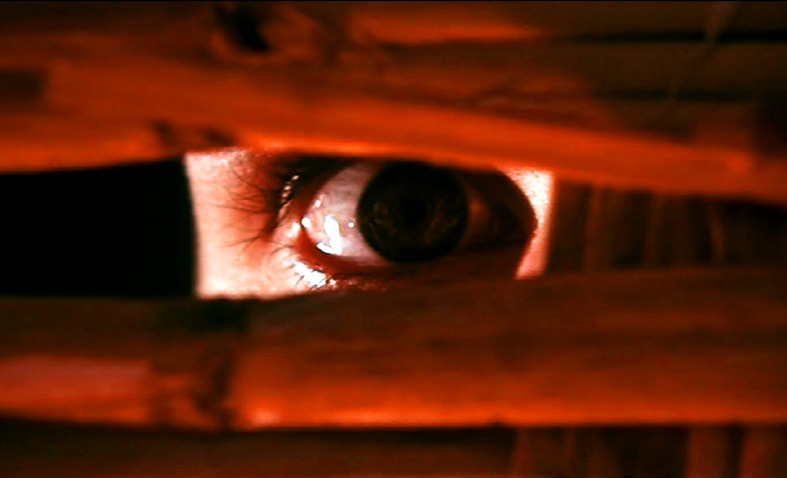
“A Bay of Blood” (Mario Bava, 1971)
A killer opening sequence is a boon for any film, but as with so many other things, gialli sometimes take the idea to extremes. Mario Bava’s “A Bay of Blood” (also called “Twitch of the Death Nerve,” and occasionally “Blood Bath”) features one that encapsulates the genre: an aged woman in a wheelchair slowly rolls through her home, where she’s attacked by an unseen assailant, who is himself murdered as soon as he’s dispatched the old woman. The basic chain of events is absurd enough, but Bava adds to the effect by employing disorienting mise en scene to intensify the sense of danger and isolation. It seems physical laws don’t quite apply, as a figure can simply appear in a room, suddenly revealed by the camera. It’s sequences like that the feel so unhinged, declaring that there is no safety for the characters, and that tropes or character archetypes are as dead here as the first two victims. It is also playful, in a demented fashion, as space and time are compressed, folded, and even disregarded in the action of editing and shooting. Characters are little more than a tangle of limbs and weapons in this demented riff on Agatha Christie‘s “And Then There Were None” as the residents of a small bayfront community, along with a few visitors, find themselves involved in sudden violence. One string of killings, featuring a group of carefree hippies – the sort of young counterculture kids who are more prevalent in later gialli – is essentially a prototype “Friday the 13th,” nearly a decade before Sean S. Cunningham‘s series premiered (American slasher movies owe a great deal to giallo). The wispy plot barely coheres, but audiences are rewarded, and probably baffled, with a cuckoo ending that is as bizarrely satisfying as it is nonsensical.
CORE ’70s GIALLI
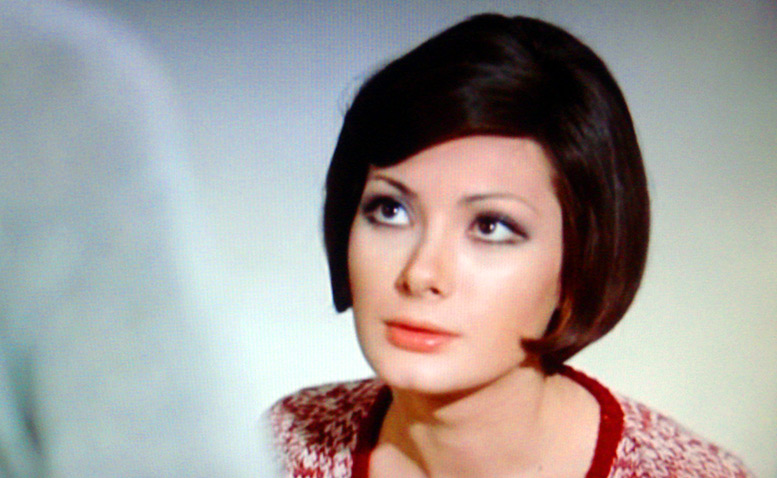
“Your Vice Is a Locked Room and Only I Have the Key” (Sergio Martino, 1972)
This brilliantly titled film follows a washed-up, alcoholic writer (George Hilton) and his long-suffering wife (Anita Strindberg) as they moulder away in degenerate unhappiness in the decrepit mansion once owned by his mother. The deceased matron’s portrait and her gown still linger, and her cat, a bread loaf-sized voyeur in black fur named Satan, stalks the halls as paranoia and long-simmering resentments come to the fore. The title of Sergio Martino’s fourth and greatest giallo effort – no minor accolade for the director who deserves the name recognition of Argento and Bava within the genre – is a repurposed line from his first thriller, “The Strange Vice of Mrs. Wardh,” aka “Blade of the Ripper.” In that film and here, the concept is more a piece of evocative window dressing than anything else, but the repurposing points to a general sense of continuity between Martino’s gialli. His thrillers feature a consistent core creative team, and common cast members such as Edwige Fenech and George Hilton. Several are particularly good at evoking a festering rot in romantic relationships, and none are more accomplished than in this nasty 1972 riff on Edgar Allan Poe‘s story “The Black Cat.” While Martino leaves behind the typical urban giallo setting in favor of rural isolation, the film is still nestled right in the genre thanks to a couple gruesome killings, the Bruno Nicolai score, and the shifty and manipulative actions of Hilton and Strindberg. And of course Fenech, who plays the writer’s niece, whose flinty gaze betrays the potential for selfish plans concealed behind a carefree facade. All three wind each other’s springs until the mansion is pressurized to the point of explosion. Horrific action is taken, and dark plans come to fruition. A grimy, sensual, and tightly-executed thriller, this film also features some of the most potent social critique of the gialli, as Martino depicts the counterculture as a pack of insipid hangers-on whose pretensions are no match for the practiced viciousness of a more experienced social order.
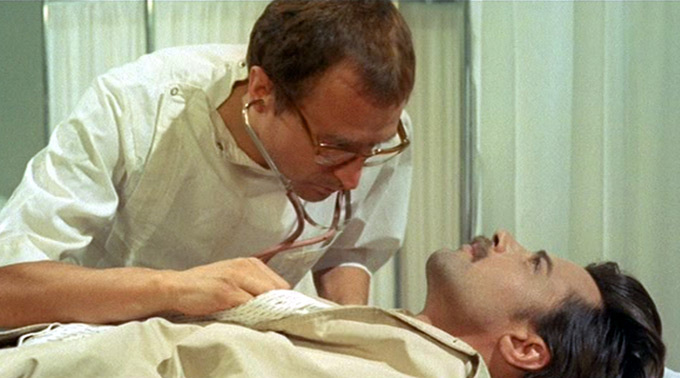
“Short Night of Glass Dolls” (Aldo Lado, 1971)
The directorial debut of screenwriter and “The Conformist” assistant director Aldo Lado is high-concept even in the exaggerated giallo landscape. Jean Sorel stars as Gregory Moore, an American journalist living in Prague, who at the beginning of the film is seemingly dead. Howvere, he is alive in inexplicable stasis, in fact, not able to move so much as an eye or finger, but very much aware of his surroundings as officials process his “corpse.” In flashbacks we see what brought Moore to such a state as he seeks clues to the disappearance of his girlfriend Mira (Bond girl Barbara Bach). The film’s first hour is relatively light on genre trademarks, and also on engaging drama. In that span, the tinkling, sighing score from Ennio Morricone is the chief indicator that “Short Night of Glass Dolls” is something other than a standard thriller… and then Moore stumbles across a secretive club that holds dark secrets and will do anything to protect them. Perhaps to match the repressive, politically careful Prague setting, few of the actors make any great display of overt engagement, choosing instead to maintain a minor-key groove. “It’s a bore,” Moore says, with a weak smile, of the search for his missing girlfriend, and that could also be Sorel jibing about his role. But then hints of stranger and more unsettling activities, delivered throughout the film in flashes of inspired editing, bloom into major-key social repression seen through the lens of arcane ritual. It’s not just that the last half hour of “Short Night of Glass Dolls” becomes more interesting than what went before, but that it finally gives a name to the hazy smog of repression that has lain over the story. This giallo is no masterpiece as a portrait of old-society control in a cold-war milieu, but it is an effective chiller with a final sequence that resonates long after the credits roll.
https://www.youtube.com/watch?v=DlMidH4tmvA

