


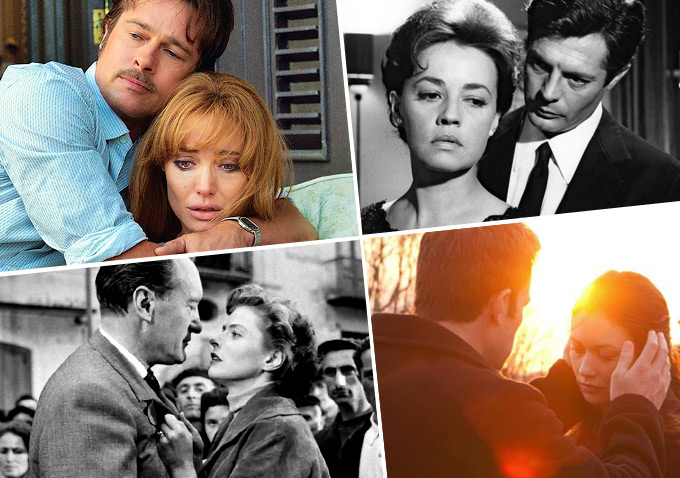
“Journey To Italy” (1954)
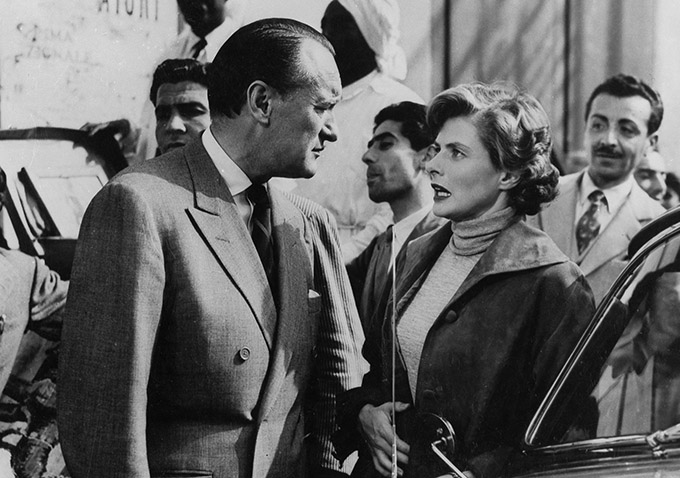
Few films have been reassessed over time so successfully or had such a colossal impact as Roberto Rossellini’s “Journey To Italy,” a film which had a tumultous production and was widely loathed by critics on release, but now stands as an unimpeachable classic. Loosely based on Colette’s novel “Duo,” the film sees English couple Alex (George Sanders) and Katherine (Ingrid Bergman) traveling through the country of the title to sell the property they’ve inherited from his uncle, and finding their relationship crumbling along the way. At one point, Katherine says “this is the first time we’ve really been alone ever since we met,” and the problems as such become immediately apparent —they can’t communicate, have wildly different personalities and seem to be deeply jealous of each other. It’s a seemingly toxic pairing, but Rossellini ends on a note of something like optimism, with the two seemingly brought back together after a religious festival. Rossellini was experimenting here, and alienated his cast (including his soon-to-be ex-wife Bergman) by refusing to show the script or let them prepare, and the film’s lack of traditional narrative was received poisonously by critics, at least until the Cahiers du Cinema gang helped to rehabilitate it. But now it stands as an unbelievably raw, sad picture and phenomenally performed by its two stars, both stripped down to the bone with no actorly tricks to hide behind. It feels desperately personal in places and helped in so many ways to shift the direction of European art cinema to come, influencing everything from Antonioni’s films to, well, “By The Sea.”
“Knife in the Water” (1962)
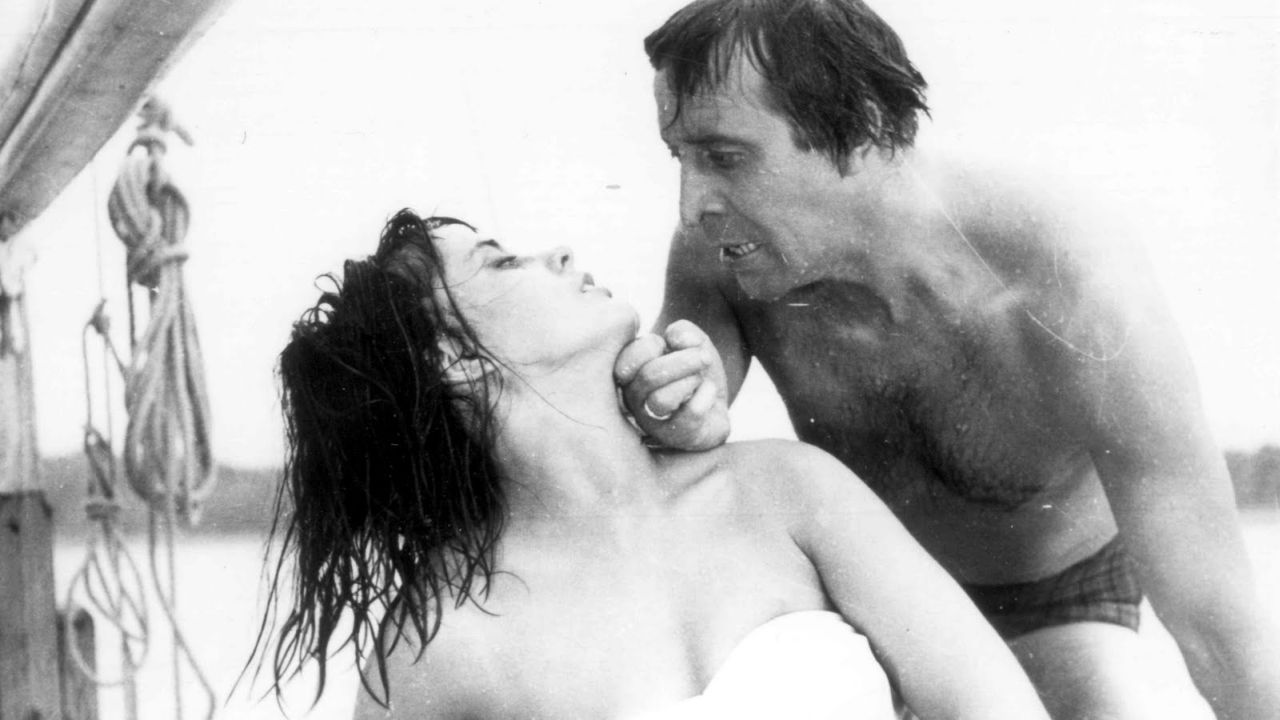
A visibly loveless marriage threatens to crumble and then erode in Roman Polanski’s “Knife on the Water,” a pessimistic and disturbing look at the thin line that separates man from beast. Though it features neither the occult spookiness of “Rosemary’s Baby” nor the outsized, lunatic theatrics of “The Tenant,” the Polish director’s debut stands in many ways as his most unsettling film, mainly for what it says about the essential venality of the human character. The film’s action is mostly limited to a single waterbound boat, where a miserable bourgeoisie couple have brought along a mysterious, handsome young stranger for an afternoon sail. The wife, put off by her husband’s openly nasty and petty behavior, can’t help but linger on the sight of this younger, more virile man as he all-too-happily encroaches on her pathetic husband’s territory. Leon Niemczyk and Jolanta Umercka are delightfully awful practically from the first frame as a couple whose marriage is under siege, while Zygmunt Malanowicz, as the blonde-haired alpha male drifter who becomes the sharpened knife-edge of this twisted triangle, is capable of suggesting degrees of unthinkable menace with little more than a curdled smile. A model of narrative economy and one of the most distressing movies ever made about sexual jealousy, Polanski’s debut lays out many themes and motifs that would come to define his later work, including perversion, paranoia, latent violence and the human capacity for evil. Sinister undercurrents of humiliation ripple teasingly beneath the murky waters of this black-hearted film, until a hair-raising and horribly logical denouement in which Polanski’s jaded view of connubial loyalty becomes all too apparent.
“Marriage, Italian Style” (1964)
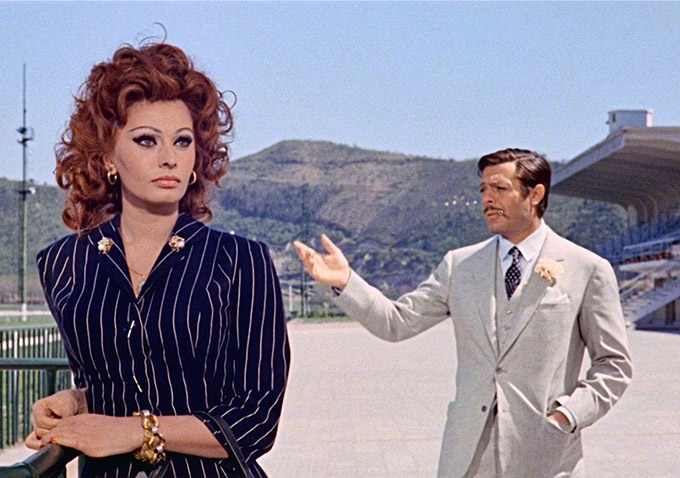
One of Vittorio De Sica’s most successful films abroad (it picked up both Best Foreign Language and Best Actress Oscar nominations), “Marriage Italian Style” steps away from the sex-comedy stylings of the previous film, “Yesterday, Today And Tomorrow,” that teamed the director, Sophia Loren and Marcello Mastroianni, in favor of something closer to ambitious melodrama. This decade-spanning romance sees Loren as Filumena Marturano, a prostitute who’d been rescued by Mastroianni’s Domenico during WWII, becoming his mistress in a relationship that’s decidedly one-sided. In a last-ditch attempt to win his devotion as he’s about to marry a younger woman, she fakes a terminal illness. With a formally inventive structure —it’s flashback heavy, with De Scira jumping through time in a boldly elliptical manner, and then shifts the focus to each of Loren’s three children, each fathered by a different man— it feels somehow sprightlier than some of De Sica’s other pictures, deftly navigating seemingly contradictory tones of broad comedy and fiery drama in a way that someone like Pedro Almodovar would later make his own. But the film’s more than anything a showcase for Loren, who blows Mastroianni off the screen for once. Both brassy and poignant, it’s her film from the first frame to last, and she tops her similarly Oscar-nominated performance in “Two Women” and then some.
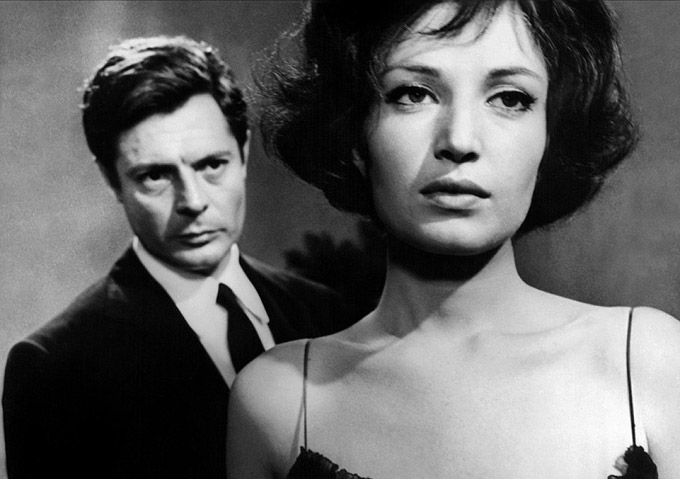
“La Notte” (1961)
Michelangelo Antonioni’s oeuvre feels like one of the greatest influences on “By The Sea,” even if Jolie hasn’t quite said as much —certainly, he tackled similar thematic territory multiple times in his career, including in “Red Desert,” “L’Avvenura” and this tremendous 1961 picture. Over the course of a single day and night, we follow Giovanni (Marcello Mastroianni) and his wife Lidia (Jeanne Moreau) as they visit a dying friend, attend book signings and parties (Giovanni is a celebrated author), but occasionally wander off alone or with potential lovers they meet along the way. By its conclusion, it forces a confrontation of sorts about the nature of their relationship, and though it seems clear that it is irretrievably fractured, we close out on them making love of sorts in a sandtrap on a millionaire’s golf course as dawn breaks. All the way through, the conversations between the couple happen at a kind of heightened remove —as upset and overwrought as Lidia sometimes is, Giovanni fails to comfort her; and as much as Giovanni seems to enjoy the trappings of success and peer admiration, Lidia fails to legitimize his achievements. It’s a chilly, chilling portrait of a bourgeois relationship in a state of peculiar entropy; even as they seek distraction with others, there is a strange inevitability to the fact that they’ll end up together. Beautiful, mutable and ever just beyond reach, “La Notte” is not a film that everyone will find time for, though we’d argue that it’s not exactly patience the viewer needs, but a willingness to allow the film’s rich visuals to draw you in and its cool currents close over your head.
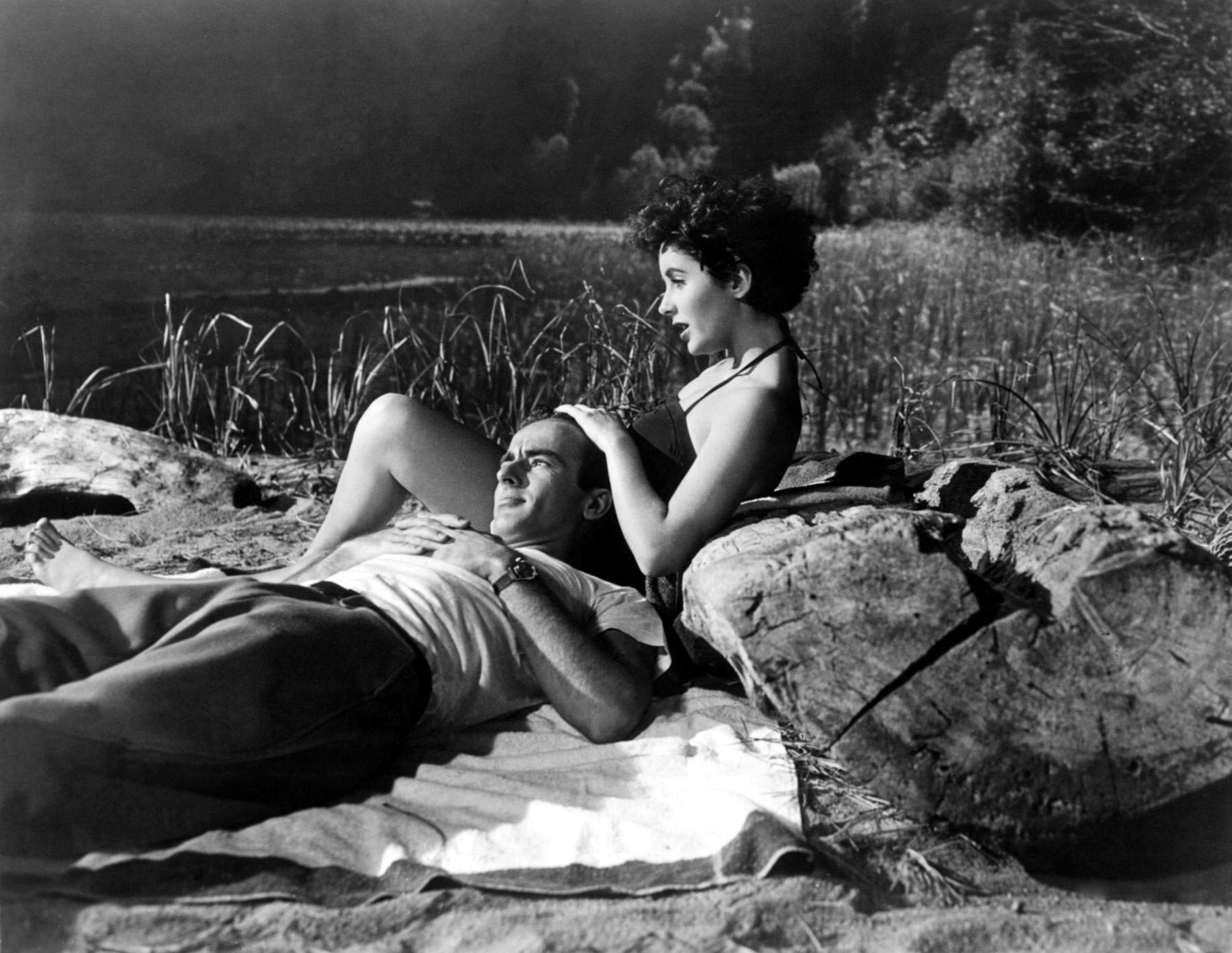
“A Place In The Sun” (1951)
An adaptation of Theodore Dreiser’s acclaimed novel “An American Tragedy” (which was once set to provide the Hollywood debut of Sergei Eisenstein in the early sound era and was also filmed by Josef Von Sternberg in 1931), “A Place In The Sun” has a mostly deserved reputation as one of the classic cinematic melodramas, though time has taken its toll on the film a little over the years. Directed by George Stevens (who won the Oscar that year, one of six the film won), the film stars Montgomery Clift at the peak of his powers as George, an ambitious young man who arrives in a small town to work in his uncle’s factory. A hard-working boy, he soon begins a relationship with colleague Alice (an excellent Shelley Winters), but later falls for the upper-class Angela (Elizabeth Taylor, in a role that as much as anything helped push her into adult roles). When Alice becomes pregnant and demands he marries her, George begins to consider drastic action. It’s a rigorous, powerful story that continues to capture the imagination (Woody Allen’s “Match Point” is essentially a riff on the same basic story), and the twists and turns prove to be true gut-punches when they come, particularly with the three leads doing such excellent work. That said, it feels a little constrained by the Production Code in places, and Stevens is probably too much of a blunt instrument for the more subtle social satire of Dreiser’s work —he hammers you over the head with his themes. Yet as a picture of not just a man who finds himself torn between two women and looking to take the most cowardly way out, but also of class and ambition in the U.S., it still ranks as something of a classic.

