


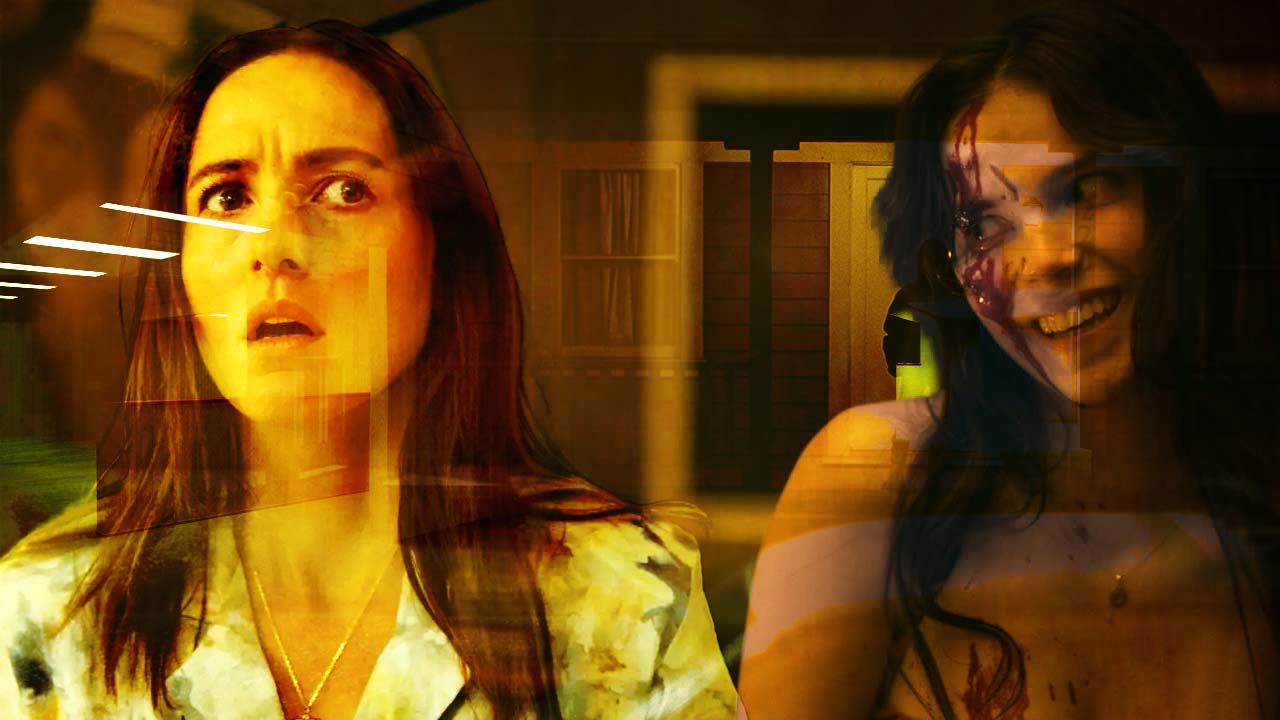
Curry Barker’s wickedly scary horror breakout “Obsession” cleared over $20 million at the global box office following its opening weekend, trailed by strong reviews and a robust $2.6 million in preview earnings. That’s an unbelievably strong showing for a micro-budget horror sensation that had to compete against a Michael Jackson biopic and “The Devil Wears Prada 2” (and let’s not forget those pesky Sheep Detectives).
“Obsession” has since proven to have major legs, cementing Barker as one of the most in-demand genre talents since the rise of Jordan Peele and Zach Cregger. To call the film a hit is an understatement: Barker’s debut is seeing the largest current surge for a non-Christmas release, playing in upwards of 2,500 theaters. It’s currently on track to become one of 2026’s most profitable releases.
READ MORE: 53 Must-See Films To Watch Summer 2026
Peele and Cregger, Barker’s predecessors, cut their teeth in sketch comedy before graduating to A-list status for their critically adored widescreen horror epics. Barker, the prodigious pupil, is emblematic of a more of-the-moment craze (a sketch background is the only thing that unites all three filmmakers). Before “Obsession,” Barker was best known as the creator of “Milk & Serial,” a found-footage oddity that cost $800 to produce and whose success led the writer-director to be signed with UTA.
Barker is hardly alone in this emerging wave. Arguably the best-known members of this class are Danny and Michael Philippou, collectively known as RackaRacka, previously known for prankish viral clips with titles like “Ronald McDonald Tastes Burger King” and “Don’t Touch The Cookie Monster’s Cookies!!!!” Then came 2022’s “Talk To Me,” a crossover smash that proved that these energetic young Aussies had actual chops. If their viral output offered proof that the Philippous had a gift for messing with people, “Talk To Me” proved that they could actually get under a viewer’s skin.
The success of “Talk To Me” ($92 million at the global box office) and A24’s release of its follow-up, “Bring Her Back,” knocked down a barrier. Suddenly, kids who were used to creating content on the weekends and racking up likes were working with movie stars and being handed real budgets. Variations on the trend soon followed. Before he was a filmmaker, Kyle Edward Ball, the man behind 2023’s polarizing “Skinamarink,” managed a YouTube page called Bitesized Nightmares. “Shelby Oaks” director Chris Stuckmann was once best known for his YouTube movie reviews. “Backrooms,” out Friday, May 29th, is inspired by a series of opaque and popular viral videos, which director Kane Parsons first unleashed into the world under the online alias Kane Pixels (some folks are so dumbstruck by the notion that a 20-year-old could have directed a new horror milestone that one of the co-stars of “Backrooms,” Mark Duplass, has felt compelled to leap to Parsons’ defense).
The origins of viral horror actually predate these more recent titles. In 2016, “Beware the Slenderman” aired on HBO, probing the story of a horrific murder tied to a faceless, sinister online entity known as Slenderman. In Irene Taylor Brodsky’s doc, raw terror lives online: the murderous maniacs of slashers past have been replaced by something more uncanny and amorphous. Hollywood capitalized on the trend, providing audiences with a studio-funded Creepypasta adaptation via 2018’s “Slender Man,” directed by French filmmaker Sylvain White (“Stomp the Yard,” “The Losers”) and released to an 8% approval rating on Rotten Tomatoes. Creepypasta horror was never really intended for the mainstream: hence the success of something like Jane Schoenbrun’s “We’re All Going To The World’s Fair,” a tremendous, unnerving indie that paved the way for the liminal horror fixation that informs something like “Backrooms.”
How to account for the ascent of viral horror? Chalk it up, in part, to a downturn in audience engagement with more conventional horror packaging. To put it more bluntly, a lot of what used to work in the genre isn’t working anymore. Take, for example, “Lee Cronin’s The Mummy,” which promised gorehounds an ambitious re-telling of a seminal Universal Monsters legend. Alas, the fusion of Cronin’s signature, viscerally goopy style with the demands of mounting a piece of Blumhouse IP failed to connect with both audiences and critics. Thus, what would have been a surefire mainstream hit even five years ago felt a bit past its sell-by date in 2026. Damian McCarthy’s “Hokum,” meanwhile, grossed a respectable sum against its modest budget, but not enough to qualify the “Oddity” director’s intense, idiosyncratic third feature as any kind of “Hereditary”-style success.
It bears repeating that “Hokum” and the new “Mummy” are flush with familiar horror iconography: haunted hotels, possessed children, and so on. Comparatively, a film like “Obsession” is more interested in threading the line between existential dread and gallows comedy, that uneasy limbo that is practically second nature to the chronically online. There are no apparitions or ancient prophecies in “Obsession”. There is only an obligatory cursed object (“Obsession” is very much be-careful-what-you-wish-for horror), and a perpetually adoring girlfriend (Inde Navarrette, delivering what is sure to be remembered as one of the year’s more purely go-for-broke performances) whose ghastly perma-smile has become the movie’s iconic image.
Part of the allure of horror is the desire to be shown something that you either haven’t seen or shouldn’t be seeing. A movie like “Lee Cronin’s The Mummy” doesn’t work because it fails to deliver on its basic promise: it’s an “Evil Dead” splatterfest crudely transplanted onto the template of a narrative most audiences are familiar with. Comparatively, there is a curiosity regarding the likes of Curry Barker and Kane Parsons. Who are these filmmakers? Where will this new wave of viral-rooted horror take us? Is it built to last, or just another passing fad in a genre that has seen no shortage of evolution? And more to the point, how did these kids, who are tapping into a form of anxiety that is synonymous with being perpetually online, manage to catapult to the apex of this evergreen genre?
One factor to consider is that some of the genre’s former luminaries have had to sidestep the pitfalls of the horror movie hype machine: a vicious, deadening cycle that spares no one artist. Take Ari Aster and Robert Eggers, both of whom made genuinely great horror pictures early in their careers that were instantly, hyperbolically anointed as “the scariest movie since [insert beloved horror milestone here]” by critics and pundits alike. Not wanting to be boxed in, both Aster and Eggers have since branched off into more personal, less genre-dependent fare, with Aster now an author of surreal nightmare comedies (“Eddington,” “Beau is Afraid”) and Eggers inching ever-so-close to mainstream acceptance (2024’s “Nosferatu”).
Audiences can smell manufactured buzz from a mile away. “Longlegs” ran a killer marketing campaign two years ago before Neon unwisely decided to shove director Oz Perkins down moviegoers’ throats with the immediate follow-up releases “The Monkey” and “Keeper,” neither of which managed to justify the Perkins hype (for now, a “Longlegs” spinoff is currently in the works at Paramount). Audiences don’t always want to be told what to love. Often, they want to discover what they love on their own.
The poaching of upstart horror auteurs from the burgeoning online space is not going away anytime soon. Just this past January, YouTuber Mark Fischbach, better known by his online moniker Markiplier, released the self-financed “Iron Lung,” which grossed over fifty million at the box office. The industry has already shifted accordingly: Curry Barker, for example, is leveraging his newfound success to tackle legacy IP, i.e., aligning with A24 for a take on Tobe Hooper’s immortal “The Texas Chainsaw Massacre.” As for Kane Parsons, the road ahead is his to claim.
Good horror almost always reflects historical and political anxieties, the nightmare of the present moment. “Texas Chainsaw” thrums with the curdled venom of an aggrieved, Vietnam-era America. John Carpenter’s “Halloween” imagines our country’s suburbs as the ultimate playground for an indiscriminate sadist. Even “Scream” skewers the myopia of a generation whose understanding of life is predominantly informed by the media they consume. “Obsession” and “Backrooms” are uniquely up-to-the-minute in this context: tales of parasocial obsession, intangible spaces, and the detachment of living online.
Whether or not the online experience is the root cause of all our malaise and fear, it certainly remains the most popular channel for tapping into these sensations. As Daniel Goldhaber’s recent riff on “Faces of Death” suggests, no horror movie is going to scare you more than the act of cycling through the litany of real-life atrocities unfolding on your iPhone. It is no small wonder, then, that the future of horror seems to belong to those who understand the singularly seductive power of a screen you can hold in your hand.


