


New, legitimate theatrical distributors enter the fray
When there is an opportunity in a marketplace, new businesses will appear. It has been painfully obvious for the past 18 months that there are not enough distributors to handle the number of films that want a theatrical release and the exhibitors who are hunting for new product for their screens. It’s no surprise, then, that a fledgling number of new, independent theatrical distribution entities came on the scene during the second half of 2025. Black Bear, which has produced many of its own features for most of the decade, including “Train Dreams,” which it sold to Netflix at Sundance before this offshoot was finalized, arrived and has already released “Christy” following its TIFF debut. It has several films already set, including “Tuner” for 2026. Row K picked up “Dead Man’s Wire” and has TIFF standout “Poetic License” ready for next May as a counter-programming play. Along with, um, new arthouse players, such as 1-2 Special, and the continuing presence of MUBI, there’s now a huge opportunity for indie filmmakers big and small to get these movies in theaters beyond the familiar players such as NEON, A24, Sony Classics, Searchlight, and Focus Features.
What’s Next: We’ll find out when or if they start acquiring films in Park City in January.
Skydance takes Paramount
14 months after it was first announced on June 3, 2024, the Paramount Skydance merger was finally completed. Changes were expected. Painful layoffs were expected (2,600 and counting, with more to come). Executives left. That happens.. There were also surprises. A $7.7 billion 7-year deal was made to make Paramount+ the home of UFC. Johnny Depp, seemingly blacklisted in Hollywood, was cast in a new Ebenezer Scrooge Christmas movie. Will Smith, still recovering from the repercussions of the Oscar slap, was given a multi-picture deal. The Ellisons have agreed to distribute a new “Rush Hour 4” movie from Brett Ratner, who was “canceled” in 2017 after being accused of sexually harassing more than six women, to curry favor from the president. They stole The Duffer Brothers from Netflix for television and film projects and signed director James Mangold to an overall deal. They also installed Bari Weiss at CBS News (more on that later). Ellison and his executive team also lost a streaming goldmine in Taylor Sheridan, who signed a new deal with NBCUniversal beginning in 2029.
What’s Next: With its efforts to acquire Warner Bros. Discovery seemingly thwarted, the question is whether the company looks inward or goes after another media library.
Jimmy Kimmel’s suspension sparks the resistance
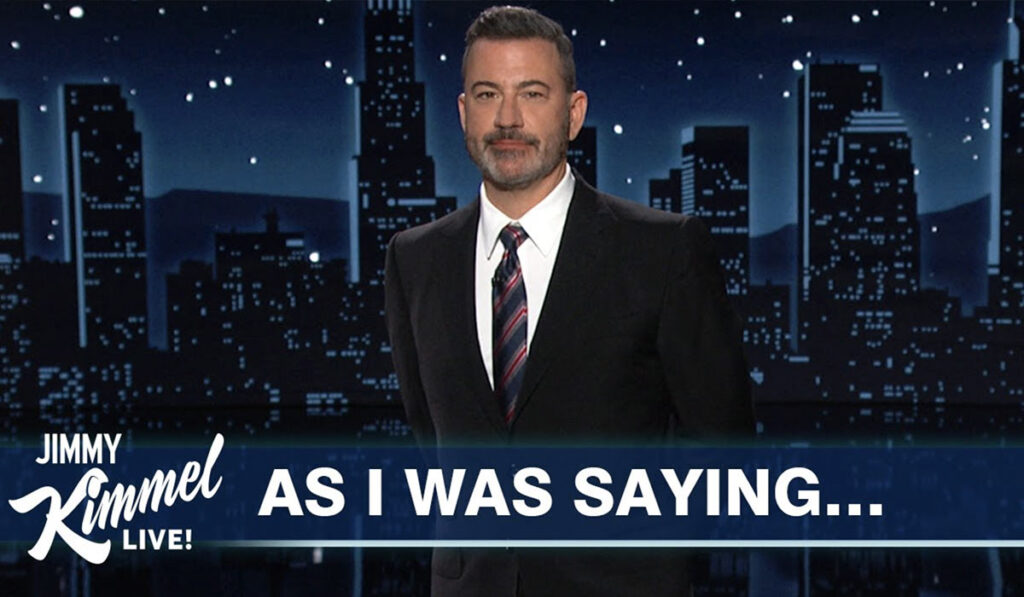
The death of Charlie Kirk became a political lightning rod in the U.S. this year. It was also used to weaponize attacks against his critics. Television talk show host, comedian and sometimes Oscar host Jimmy Kimmel, long in the crosshairs of the current president and Republicans, made a seemingly benign comment referencing the death during his monologue on Sept. 15. After pressure from two affiliate holding companies and the FCC chairman, ABC suspended Kimmel on Sept. 17. The backlash was swift with even some conservative politicians such as Ted Cruz chiming in on FCC overeach. Kimmel’s peers in late-night and all sectors of the entertainment industry ripped ABC for its actions. There was also an ABC and Disney+/Hulu boycott, which was significant enough to register on third-party subscriber trackers. Kimmel returned on Sept. 23 and delivered a 27-minute soliloquy that reframed the debate and, importantly, did not include an apology. His return episode tripled his audience (even with a chunk of the country not airing it) and was a monster on YouTube. But the event only made those on the political left more engaged.
What’s Next: Kimmel recently renewed his contract with ABC through 2027.
James Gunn and Peter Safran’s DC Studios soars with “Superman”
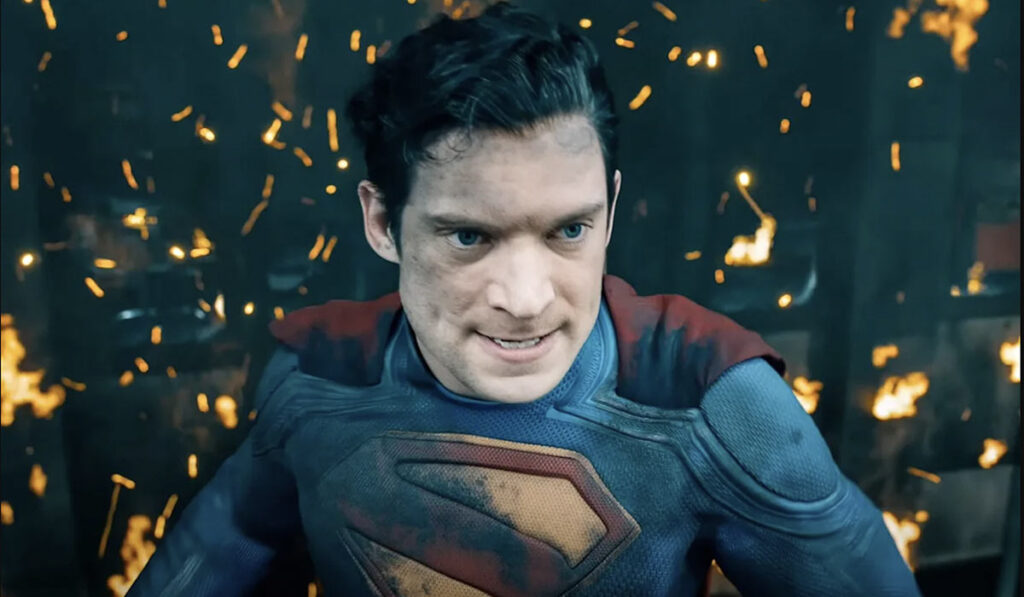
Despite his strong track record in the Marvel Cinematic Universe with the “Guardians of the Galaxy” franchise, and his success with the “Peacemaker” television series, as well as a well-respected “The Suicide Squad” movie, new DC Studios co-chairman James Gunn was, for lack of a better phrase, under fire from sceptics before his reboot of the Man of Steel, “Superman.” Not only did he replace the popular Henry Cavill with the relatively unknown David Corenswet, but he also brought a different aesthetic, perhaps a more optimistic, brighter one, than moviegoers enjoyed in the Zack Snyder era. Not all fans were excited about Gunn’s creative direction before the film dropped, but it turned out to be an unexpected panacea in turbulent times. In fact, “Superman” ended up exceeding Warner Bros.’ own projections, pulling in a profitable $616 million worldwide. That was close enough to the $670 million Snyder’s “Man of Steel” earned over a decade earlier to quiet the naysayers. The film also earned mostly positive reviews, although not at the level of Gunn’s “Galaxy” or “The Suicide Squad.” Most importantly, it accomplished its goal in establishing a “new” DCU on the big screen.
What’s Next: A follow-up film in the “Superman” family is in the works, and “Supergirl,” directed by Craig Gillespie, arrives this summer.
Marvel Studios didn’t have the comeback everyone was hoping for
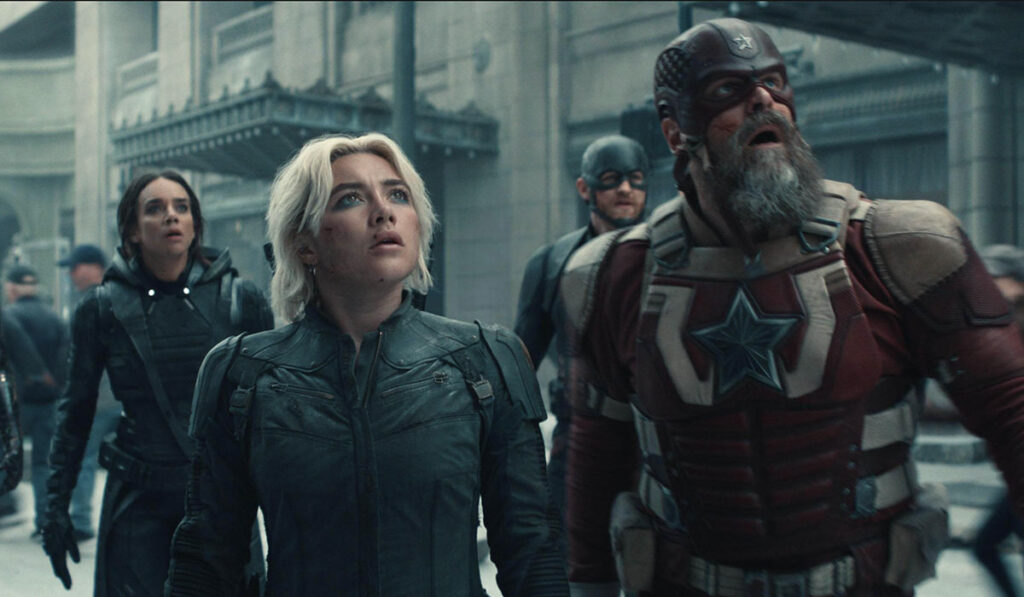
After a rocky few years, Marvel Studios was looking for a big comeback on the big screen in 2025. The results were somewhat mixed, with three films that had moderate success at the box office and better reviews than many expected. They did not, however, return Marvel to the almost $1 billion heights of 2022’s “Doctor Strange: Multitude of Madness.” First up was “Captain America: Brave New World,” which pulled in a solid $415 million worldwide with Sam Wilson jumping from the popular Disney+ streaming series “The Falcon and the Winter Soldier” and introduced Harrison Ford as fan favorite anti-hero, the Red Hulk. Reviews weren’t great, but the box office was just good enough to justify the reported $180 million production cost. Up next, Walt Disney Studios and Marvel took a gamble by opening “Thunderbolts*” on May 2nd at the beginning of the summer moviegoing frame. In theory, they may have done themselves a disservice by simply not referring to it as “New Avengers.” Despite very strong reviews, the movie only pulled in $382 million globally off a reported $180 million production cost. That was barely enough to break even before ancillaries, assuming you take a conservative marketing estimate. More successful, both critically and with ticket sales, was “The Fantastic Four: First Steps,” which introduced a 60s-themed version of Marvel’s First Family. The July release took in $520 million off a $200 million production budget. A nice double down the line for Marvel, but not the slam dunk many were hoping for.
What’s Next: Marvel Studios will produce “Spider-Man: Brand New Day” for Sony Pictures this summer and has “Avengers: Doomsday” set for Christmas, featuring characters from all of 2025’s releases. Thankfully, Robert Downey, Jr., Chris Evans, Chris Hemsworth, Simu Liu, Sebastian Stan, and veterans of 20th Century Fox’s “X-Men” films will be back in the fold, too.