


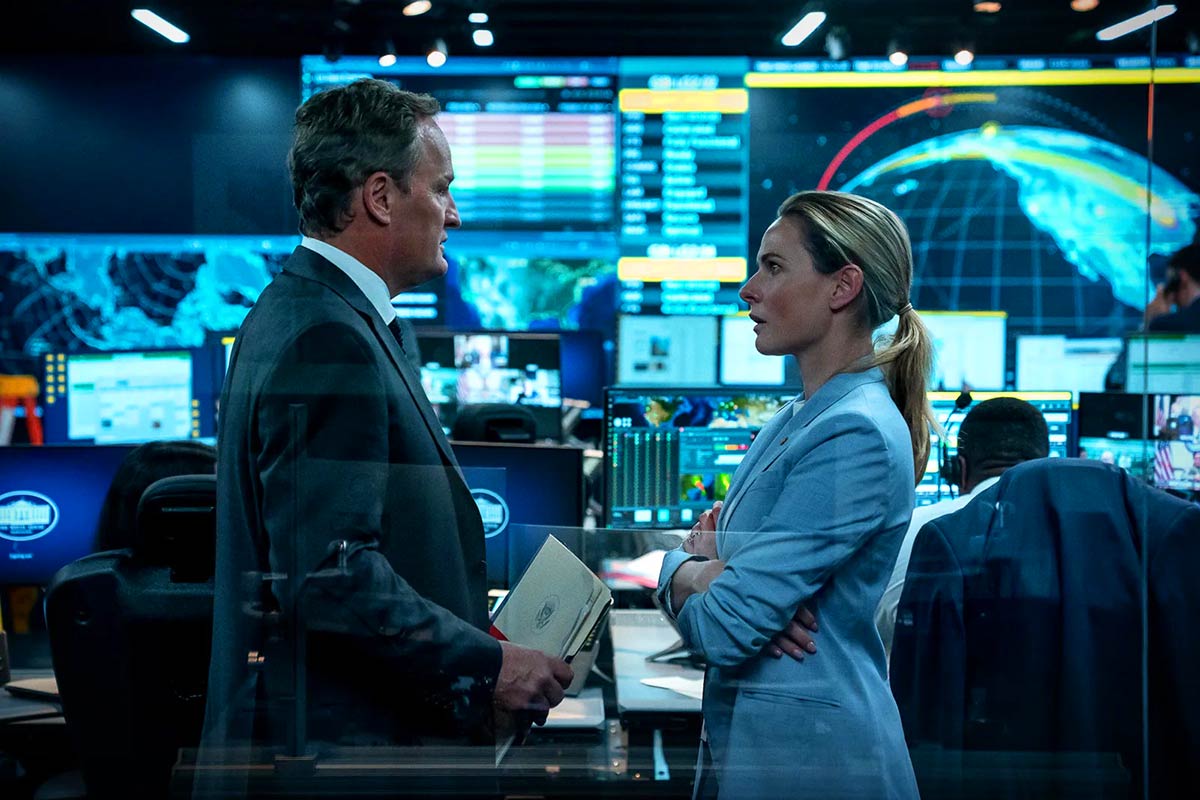
Oscar-winning filmmaker Kathryn Bigelow (“Hurt Locker”) made her big return to the military thriller genre with her latestpic “A House of Dynamite” exploring what the response would be to a rogue missile launch with tensions heightened between various nuclear powers and ultimately led to a grim, but likely logical ending, where there wasn’t a happy solution to the problem at hand. The film ended up seeing mixed reactions from critics and audiences, but someone is defending that choice, and it’s coming from James Cameron, Bigelow’s ex-husband and former creative partner.
Recent quotes from Cameron, while speaking with The Hollywood Reporter, have the filmmaker revealing that he had an exchange with Bigelow recently, telling her he defends her ending of the film, stating it was the “only possible ending.”
READ MORE: The 150 Most Anticipated Films Of 2026
“I said to her, ‘I utterly defend that ending,’” Cameron told THR. “It’s really the only possible ending. You don’t get to the end of [the classic short story] ‘The Lady or the Tiger?‘ and know what’s behind which door.” Cameron continued, “But that’s not even really the point. The point is: From the moment the scenario began at minute zero, when the missile was launched and detected, the outcome already sucked. There was no good outcome, and the movie spent two hours showing you there is no good outcome. We cannot countenance these weapons existing at all. And it all boils down to one guy in the American system, the president, who is the only person allowed to launch a nuclear strike, either offensively or defensively, and the lives of every person on the planet revolve around that one person. That’s the world we live in, and we need to remember that when we vote next time.”
“So the end of that movie was the only way that movie could have ended because, as the computer says at the end of ‘War Games,’ ‘The only way to win is not to play.’”
“A House of Dynamite” was written by journalist turned screenwriter Noah Oppenheimer using all sorts of in-depth research on the U.S. response to these kinds of threats. The cast features a talented group of actors such as Rebecca Ferguson, Idris Elba, Gabriel Basso, Anthony Ramos, Jared Harris, Jason Clarke, Moses Ingram, Tracy Letts, Greta Lee, and more. The controversies didn’t end with audience reactions to a zero-sum conclusion, as the U.S. government shared its own two cents, downplaying the long-shot aspect of ballistic defense abilities, as the movie showed the U.S. military being unable to shoot that rogue missile (questioning the success rate of that specific defense option, being what the government has a gripe with). Both Oppenheimer and Bigelow stand by the film and the background research they did while putting the script together.
If you didn’t already know, Cameron previously worked closely with Bigelow on “Near Dark,” “Point Break,” “Strange Days,” and the pair even attempted their own early iteration of “X-Men” (developed at Carolco Pictures before the studio’s bankruptcy) with a script penned by Gary Goldman (“Total Recall,” “Big Trouble In Little China”) years before Marvel movies became pistol hot at the box office. Seeing the two still being chummy after all this time shouldn’t be entirely a huge shock, given their profession and previous relationship, and it sounds like Cameron isn’t as critical of the film as he was with Christopher Nolan‘s “Oppenheimer,” which he called a “cop-out.”

Christopher Marc is lead writer at The Playlist and the primary engine behind our daily news coverage. Chris is based in Canada and tracks everything from Marvel and Star Wars developments to arthouse acquisitions and festival buzz with equal enthusiasm and an instinct for the story readers actually want to read.
- Christopher Marc
- Christopher Marc
- Christopher Marc
- Christopher Marc
- Christopher Marc
- Christopher Marc
- Christopher Marc
- Christopher Marc


