


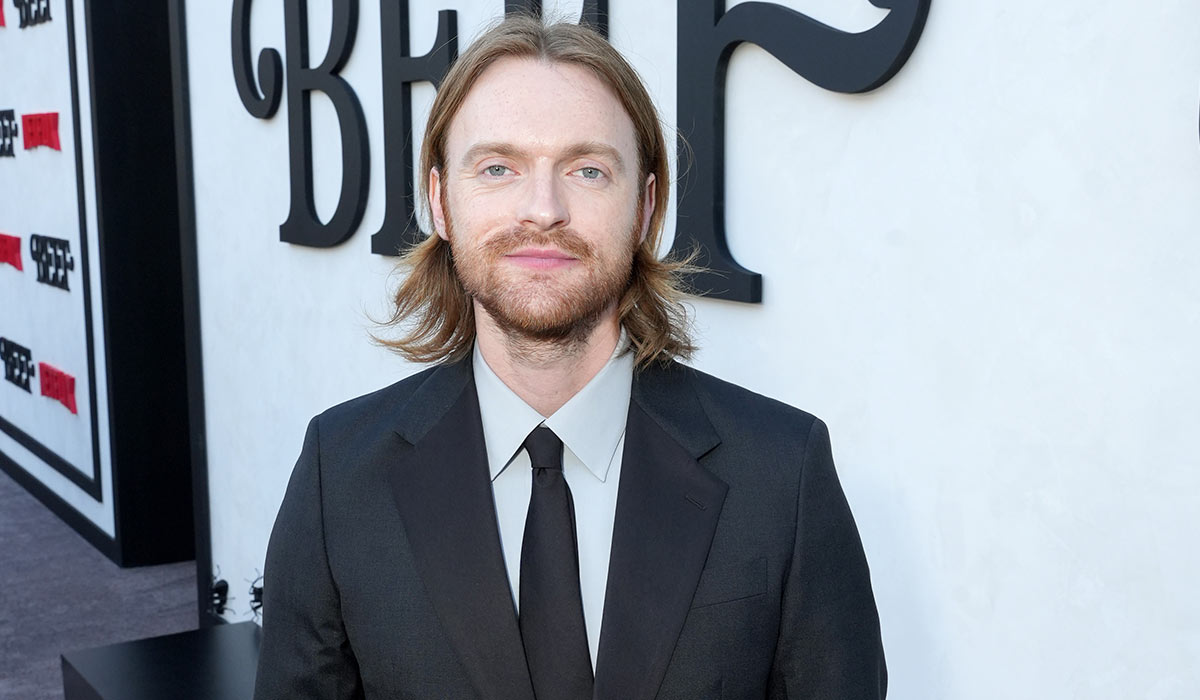
Finneas O’Connell, better known simply as Finneas, has already made his mark in big-screen music. Alongside his sister, Billie Eilish, he’s a two-time Oscar winner for “No Time To Die” and “What Was I Made For?” in the Best Original Song category. He also snagged two of his 11 Grammy Awards in the Best Song Written for Visual Media category for those same James Bond and “Barbie” tracks, respectively. But his work on the celebrated second season of “Beef” is something very different. It’s his fourth original score for film or television, and he’s just getting started.
Speaking to The Playlist earlier this week, the LA-born musician and songwriter says he’s pretty much been a fan of film and TV scores his whole life.
“I’ve been watching shows and movies and thinking, ‘Oh my God, I love the music in this.’ And also I think as a musician, Billie and I, especially together, have always talked about our music with cinematic aspirations,” Finneas says. “We’ll work on a chorus of a song, and we’ll be saying to each other, ‘Imagine a scene in the forest,’ you know what I mean? And whatever it is. So, I think that the visual component of the music I make has always been there.”
Unlike some original song projects, Finneas has come to realize how much work goes into an original score, especially with someone like “Beef” creator Lee Sung Jin (aka Sunny), who was discussing cues with him before filming began.
“I felt like I was involved in the post-production of this show for a year because I would go in and play them the music every week, and we’d talk about what was working and what wasn’t. And it’s such a learning experience for me,” Finneas admits. “And again, I’ve only done four projects. I’ve done two shows and two movies, and all four of those filmmakers are important to me. Megan [Park], Billie, and I worked with very early on. She did Billie’s videos. BJ Novak, I got to know him through a mutual friend, but ‘The Office‘ is the show of my life, to be honest, the funniest show. And then Alfonso [Cuaron], similarly, those films are so important to me. And Sunny, I loved the first season of ‘Beef’ and have loved getting to know him and think he’s going to have an incredible career in the next 10, 15 years. And so again, these are all just real honors to be like, oh, I’m suddenly working with these filmmakers.”
As for how Finneas found himself collaborating with Sunny and the “Beef” team, read the interview below or watch the entire conversation embedded in the video in this post.
_____
How did “Beef” season two and working with Sunny come about?
I think through our teams got set up on a general around the beginning of 2024. Billie and I were going to all of these screenings and dinners and stuff promoting the “Barbie” song that we had done, and he was on the same timeline with “Beef” season one. So, we were seeing a lot of each other and then got sort of like, “You guys should go get coffee.” And we just had a great time sitting and chatting mostly about rap music and Radiohead and a little bit about theater and stuff. So that’s often, to me, the best part about getting to meet another person who’s creating stuff for a living is they’re a fan of stuff. And so you can pretty quickly get to whatever you’re a mutual fan of.
I was talking to Jake [Schreier] the other day, and he was saying about how it’s a process for Sunny to come up with what the show’s going to be, but that before they ever started shooting, you had songs that you were giving them that they were listening to on set. So, how early did you start writing stuff? Did he send you scripts and you were like, “Let me see what I think of”?
Yeah, absolutely. I mean, yes, I was sort of approached after we’d met about, “Well, would you like to do the music on the season?” And I was like, “Oh, that’s amazing.” And I had Sunny over to the studio, and we talked about the characters and the overall plot of the season. And then he said, I’ll send you the first whatever draft I’m on of the first episode or two. And he sent me that, and then I made some stuff. I think that that was helpful for both of us because I think auditioning for me makes me feel like I’ve earned the job. And it’s an opportunity to have a conversation about what you’re liking and what you’re not liking. I very quickly made, it probably took me a few weeks to make this piece of music called Waterbill that was like, I went to a golf course near my house and recorded the sprinkler system and recorded lawnmowers and tennis balls and golf balls and stuff. And it wove that all through the sort of rhythm of the piece and then played these synths over it. And again, that was a great starting point. And then as they got closer to shooting, they would send me episode five and episode six, the scripts, and I would send more and more music. Then I started going to visit set once they started shooting. So by the time they were in the edit, they had a huge amount of music. And then of course, I still made a ton of music to picture. I would watch the scene and think nothing I’ve made so far is perfect for these two minutes of this sequence. But they did have a lot of music to guide them by.
Obviously, “Vicious Thoughts” is the one track that gets a reprise. Was that an early track? Was that something that came after production?
That was an early one, and that’s an example of exactly what you’re talking about. I was making all these pieces, and I think you can get in your head as a person turning in assignments to a boss of like, they’re going to love it, they’re going to hate it, they’re going to love it, they’re going to hate it. And I made this piece called “Vicious Thoughts” and sent it to Sunny. And I didn’t have a specific scene in mind. I just thought I’d read the scripts and I was like, “This makes me feel like these characters.” And it’s funny because you’re like…I don’t know if you’re putting yourself in the shoes of somebody else, you’re like, “I don’t know if somebody else is going to get this, but I love it. I got to send it to him. I love it. ” And I think the best part about working with somebody like Sunny is you can always trust a really creative person to think outside the box. And I think that synth ambitious thoughts is so abrasive that I was like, I don’t know if he’s going to go for this. And he was like, “I love it. I think this is great.” So then I get the draft of episode eight, and in the episode script says, “‘Vicious Thoughts’ plays while Oscar or while Josh and Lindsay embrace.” And to me, again, it’s like as a person writing music for this year, you’re like, “Oh, that is so cool because then you feel useful.” You know what I mean? The thing I want to feel in my life creatively is useful.
In that context, just to clarify, was it picked to be at the end in episode eight first before it ever appeared earlier in the season?
I think that specific … The thing that you hear in episode eight is maybe nudged a little. I maybe went back in and made it a little slower and a little faster or something, but it’s pretty much exactly the piece of music I sent him. And so then once we knew that we had this conclusion, we worked backwards and then you go like, okay, so if that sort of melodic phrase should feel like a acceptance loving thing, then maybe the first episode you only hear it when you’re with the young couple, you only hear it when you’re with Austin and Ashley because you think, well, that couple is really in love. And then as the season twists and turns, you get to episode six, episode five, episode six, where they’re deciding that maybe the acceptance pivots and they’re like, “We should get a divorce.” And so you hear a very tender version of it. And similarly with Austin and Ashley, you start to hear an anxiety creep into their music. So, we had Austin and Ashley start here, Josh and Lindsay start here, and their sonic identities go like that. They do a handoff as the season progresses because I think as a viewer, that’s part of the joy of this season is seeing this incredibly optimistic, naive couple learn and become hardened by the classist world that they find themselves in. And then you see the couple that’s already gotten to that place accept the things they cannot change or impact and own up to the things they have done wrong. I think that’s really cool.
Going back though to the beginning, he loves “Vicious.” You know that he wants to put that potentially earlier in the show as a bookend. Did that influence the choices you made in the rest of the music? Was that the starting point, or was there another piece that you’d done earlier that really was the one main influence for the rest of the show?
I think that that became the thing that I knew was working really well. And then the other stuff that became important to me was the arty rhythmic stuff. I think that and then the sound effect stuff, those were the bags I kept dipping my hand back into to solve problems. And also, as you learn that the most powerful characters in the show are Chairwoman Park [Youn Yuh-jung] and her associates, her bodyguards. And so I thought she needed a very epic theme, and so that just gets crazier and crazier toward the end. And then by episode eight, when she’s walking down the hallway talking about the lizard people, it’s awesome. That’s the other fun part about doing a show or a movie is like, “O.K., here’s a little cute version of this. Okay, here’s the craziest, most dissonant, extreme version of this piece of music,” which is really satisfying.
In the context of all the songs, obviously they’re all your babies, but is there one that you were like, oh, I really love this piece. I wish people were paying more attention to this as opposed to maybe something else?
I think that there’s a couple pieces of music that I think of to answer your question, I think of how I felt making stuff more than judging it. Yeah, I think about how it felt to make. So in episode four, which is the hospital episode, the sequence that I made while she’s being put under anesthesia and then the sequence I made where she’s sneaking around their house and finding his payment forms and stuff, I had a great time making those long, thick sequences. I really loved working on that music. So, that’s a fond memory I have. I also had a really fun time doing the music for the surgery center scene in episode eight, that super percussive piece that plays while they’re running through the surgery center, I had a great time doing.
You are super busy with everything that you do and touring and your music outside of the score stuff. Is there time in your schedule to keep doing more scores? Can you look at 12, 14 months ahead and say, “I’ve got six weeks here to do something if I want to”?
Yeah, I mean I wish it was six weeks. It’s like months and months, but I think anything, the better you get at it, the less mistakes you’re making constantly, you know what I mean? So in terms of making Billie’s records, what took me three months to make a good production on a song from her first EP, now I have a better understanding just technically of what I’m doing. When you don’t know what you’re doing, you’re like, “Why did the drum sound bad?” And you’re solving it forever. So, I think from a film scoring standpoint, even just on a workflow level, I’m getting a better idea of how to do it, but I sure want to keep doing it because every time I do it, I learn so much. I did so much work with old modular synths on this, and this synth called a MemoryMoog. And that’s literally a synth I’ve had for several years, getting dusty on my keyboard stand because I wasn’t good at it. I’d try to use it, but I’d be like, I’m just making stuff sound horrible. And so then I have to, because of the sort of, oh, I want this to be really synthi-score, I have to try. And so then I get way into it, and I spend days working on it. Also, if Billie’s in the room with me or any other songwriter, it’s like I’m not being a good collaborator if she’s like, “What should the second verse be about? ” And I’m like, “Hold on.” And I’m dialing the LFO for two hours. It’s like if I’m just working on film score. I have a lot of time to tinker. So they both make me better at the other thing, and I hope I get to keep doing it.
So there’s nothing imminent, there’s nothing else you’ve been working on on the side or anything that’s about to happen that you know of?
There’s nothing that’s like, “Oh, this is about to come out.” I’m starting to work on another project right now that’ll come out far from today, and just like “Beef,” I’m not allowed to talk about it, but I’m excited about it.
That’s good. That’s great. I’m actually excited that you’re doing more score.
Yeah, I’m doing more score.
When you watch the show in context, now that it’s all finished, what is your favorite moment with your score in it? Maybe you don’t have one.
I think because of recency bias and because it’s amusing to me, there’s a piece of music on the soundtrack album called “Banchan,” and that piece of music is from the scene when they all get to Korea, and they’re sitting at the big giant table and Austin’s trying to get a diuretic. He’s trying to have rice and black coffee. And I don’t know, those are funny performances, and I really had fun making that piece of music. Actually, that sequence is wall to wall. That sequence goes straight into Josh in Troy’s house, goes straight into Josh running out the door and calling his sister, goes straight into Lindsay in her hotel room in Korea. And I think that tying scenes together with the score became one of my favorite parts of working on the show.
“Beef” season 2 is available on Netflix. The “Beef” season 2 soundtrack is available on all streaming services.
Follow Gregory Ellwood on Bluesky
Follow Gregory Ellwood on Threads
Follow Gregory Ellwood on Instagram
Follow Gregory Ellwood on TikTok
Sign Up For The Breakdown Newsletter


